For better focus at your desk, choose a cooler color temperature around 4000K to 6500K, which mimics daylight and boosts alertness. This bright, bluish-white light helps your brain stay engaged and reduces eye strain during long work sessions. Avoid warmer tones like 2700K-3000K, which create a cozy ambiance but may make you feel more relaxed. Keep an eye on CRI and ambient lighting to create a balanced, comfortable workspace—continue with more tips to improve your setup.

Get the little things that make your day delivered free with Prime
- Fast, free delivery on millions of items
- Prime Video, Amazon Music and more included
- Member-only deals all year
Key Takeaways
- Choose a cooler light temperature (4000K-6500K) to boost alertness and improve focus during work.
- Higher Kelvin values mimic daylight, enhancing concentration and reducing eye strain in workspace lighting.
- Avoid warm lighting (2700K-3000K) for desk lamps, as it creates a cozy atmosphere but hinders focus.
- Ensure the desk lamp provides high CRI lighting for accurate color perception and reduced visual fatigue.
- Balance desk lamp brightness with ambient lighting to prevent harsh contrasts and eye discomfort.
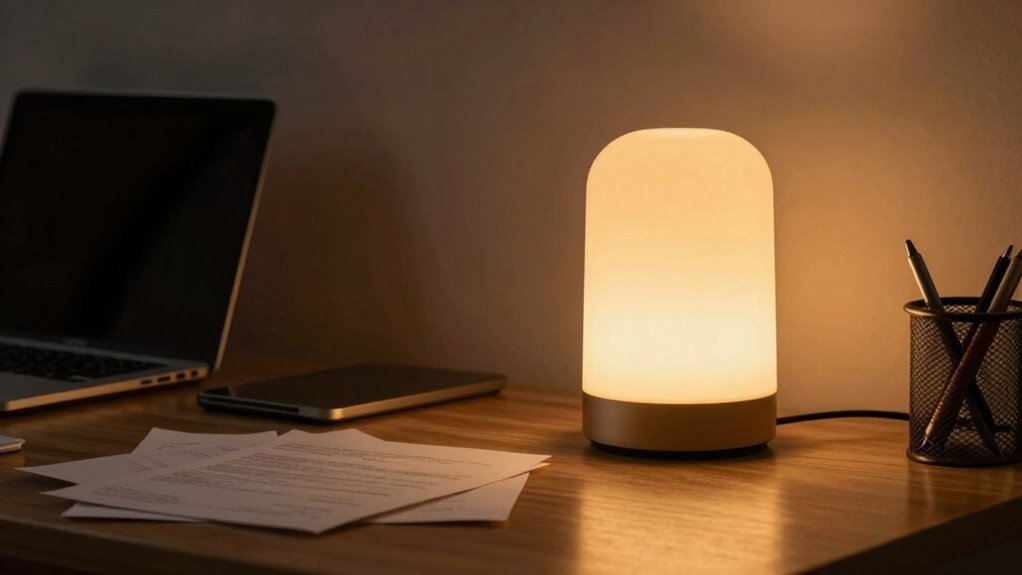
Choosing the right desk lamp color temperature can considerably boost your focus and productivity while working. The color temperature impacts how your workspace feels and how effectively you can concentrate. A well-chosen temperature creates ideal ambient lighting, which is essential for maintaining alertness without causing discomfort. When your workspace is properly lit, it minimizes eye strain, allowing you to work longer with less fatigue.
Color temperature is measured in Kelvin (K), and it ranges from warm to cool tones. Warm light, around 2700K to 3000K, emits a soft, yellowish glow that feels cozy but isn’t suitable for work focus. It’s better suited for relaxation or creating a calming ambiance after hours. On the other hand, cooler light, typically between 4000K and 6500K, resembles daylight and provides a crisp, bright environment that enhances alertness. This type of lighting is perfect for tasks requiring concentration because it simulates natural sunlight, helping your brain stay engaged and awake.
It’s important to contemplate ambient lighting when selecting your desk lamp. Ambient lighting forms the base layer of illumination in your workspace, providing an overall glow that reduces harsh shadows and creates a balanced environment. When your ambient lighting is too dim or too warm, it can cause eye strain as your eyes work harder to focus, especially during prolonged periods. A cooler, brighter lamp helps counteract this by providing sufficient light directly where you need it, reducing the strain on your eyes and preventing fatigue. Additionally, appropriate lighting can significantly improve your overall workspace environment and reduce fatigue. Incorporating lighting quality is crucial because it influences how well your eyes can adapt to different environments and tasks, especially when considering visual comfort and long-term eye health.
Furthermore, understanding color rendering index (CRI) can help you select lighting that accurately reflects colors, which is especially important for detailed work. Your goal should be to find a balance where your desk lamp complements your ambient lighting rather than overpowering it. This way, you avoid creating overly stark contrasts that can lead to eye discomfort. If your room is dim, opt for a lamp with a higher color temperature within the 5000K to 6500K range to mimic daylight, which keeps your eyes comfortable and alert. Conversely, if your workspace already has bright natural light, a slightly warmer or lower Kelvin temperature might prevent your environment from feeling too clinical or sterile.
desk lamp with adjustable color temperature
As an affiliate, we earn on qualifying purchases.
As an affiliate, we earn on qualifying purchases.
Frequently Asked Questions
How Does Color Temperature Affect Eye Strain During Long Work Hours?
Higher color temperatures, like cool white or daylight, emit more blue light, which can cause eye strain during long work hours. Blue light reduces visual comfort by making your eyes work harder to focus and increasing fatigue. To minimize eye strain, choose a warmer color temperature, around 2700K to 3000K, which feels softer and reduces blue light exposure, helping you stay comfortable and focused over extended periods.
What Is the Ideal Color Temperature for Nighttime Work?
For nighttime work, aim for a warm color temperature around 2700K to 3000K. This lighting design reduces blue light exposure, minimizing eye strain and preserving your circadian rhythm. A warmer tone enhances color perception in low light, making it easier to focus without fatigue. You’ll find this setup creates a comfortable environment, helping you stay alert while protecting your eyes and supporting better sleep afterward.
Can Changing Lamp Settings Improve Overall Productivity?
Changing your lamp settings can boost your productivity by up to 20%. When you adjust ambient lighting and task illumination, you create a more comfortable workspace, reducing eye strain and increasing focus. Bright, warm light encourages alertness, while cooler tones help with concentration. By customizing your lamp’s color temperature, you optimize your environment for work, making it easier to stay engaged and perform at your best.
Are There Health Risks Associated With Certain Color Temperatures?
Certain color temperatures can pose health concerns if used excessively. Cooler temperatures (above 5000K) emit more blue light, which may cause eye strain or disrupt your sleep cycles over time. Warmer temperatures (below 3000K) are gentler on your eyes and less likely to interfere with sleep. To reduce health risks, choose a balanced color temperature for your workspace and take regular breaks to protect your eye health.
How Does Color Temperature Influence Mood and Motivation?
Color temperature profoundly influences your mood and motivation through color psychology and lighting preferences. Cooler temperatures (around 5000K-6500K) boost alertness and focus, making you feel more energized and motivated. Warmer temperatures (around 2700K-3000K) create a calming atmosphere, which can reduce stress. By choosing the right color temperature, you align your lighting with your mood and productivity needs, enhancing your overall work experience.
As an affiliate, we earn on qualifying purchases.
Conclusion
Choosing the right desk lamp color temperature can considerably boost your focus and productivity. Did you know that studies show exposure to cooler, daylight-like lighting (around 5000K-6500K) during work hours can increase alertness by up to 20%? So, next time you pick a lamp, opt for a higher color temperature to stay sharp and energized. It’s a simple change that can make a big difference in your workday!
As an affiliate, we earn on qualifying purchases.
desk lamp for focus and productivity
As an affiliate, we earn on qualifying purchases.
As an affiliate, we earn on qualifying purchases.
Fall Picks
fall essentials
As an affiliate, we earn on qualifying purchases.