You might be making common mistakes with monitor size that hurt your productivity. Choosing a monitor that’s too big or too small for your workspace can hinder efficiency. You also need to pay attention to viewing distance and ergonomics to avoid eye strain. Plus, neglecting screen resolution and color accuracy can lead to mistakes in your work. If you think bigger is always better, there’s more you should know to make the right choice.
Key Takeaways
- Choosing a monitor size that doesn’t fit your workspace can lead to discomfort and reduced productivity.
- Ignoring ergonomic guidelines, like monitor height and viewing distance, can cause eye strain and neck fatigue.
- Failing to consider screen resolution can result in poor clarity and legibility, hindering task efficiency.
- Overlooking the benefits of multi-monitor setups may limit productivity, especially for multitasking and complex projects.
- Not aligning monitor size with specific task requirements can lead to wasted space and inefficient workflows.

HUANUO FlowLift™ Dual Monitor Stand, Fully Adjustable Gaming Monitor Desk Mount for 13–32″ Computer Screens, Full Motion VESA 75×75/100×100 with C-Clamp & Grommet Base, Each Arm Holds 4.4 to 19.8 lbs
Compatible with Wide Screens – To ensure compatibility with the dual monitor mount, your each monitor must meet…
As an affiliate, we earn on qualifying purchases.
As an affiliate, we earn on qualifying purchases.
Choosing the Wrong Monitor Size for Your Workspace
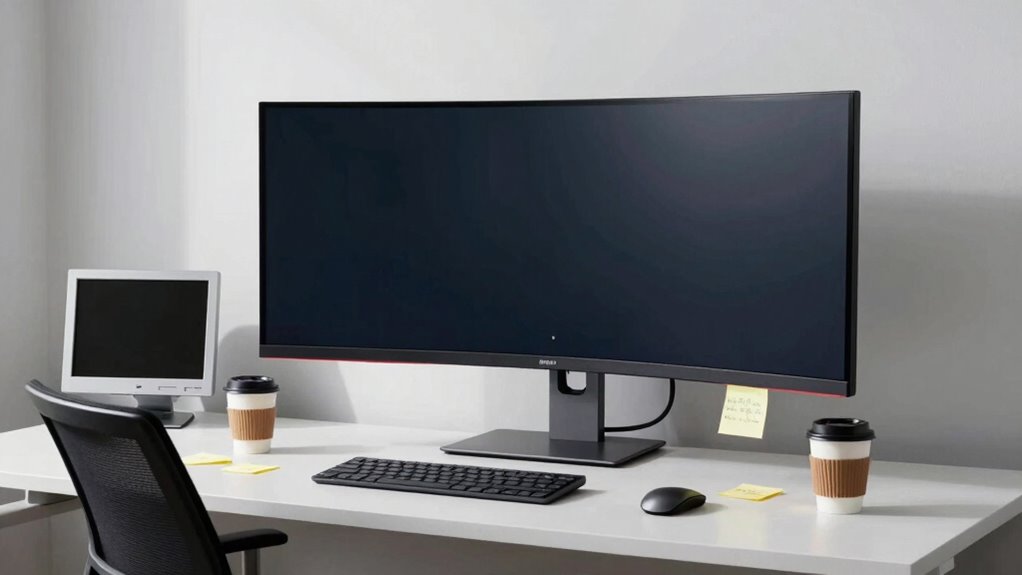
When you choose a monitor size that doesn’t fit your workspace, it can lead to discomfort and decreased productivity. You might find yourself straining your neck or squinting at the screen, which isn’t ideal for long hours of work. To avoid this, consider your workspace layout and verify your monitor compatibility matches your desk space. A large monitor may look impressive, but if it overwhelms your setup, it can hinder your efficiency. On the other hand, a small monitor can feel cramped and limit your ability to multitask. By selecting a monitor that suits your workspace, you’ll create a more comfortable environment that enhances your focus and productivity. Remember, the right monitor size makes all the difference! Proper ergonomics can also help prevent strain and improve overall comfort during extended work sessions. Additionally, understanding screen size and resolution helps you choose a monitor that offers clear visuals without sacrificing workspace. Being aware of ergonomic principles can further optimize your setup for long-term comfort and productivity.

Philips New 24 inch Frameless Full HD (1920 x 1080) 100Hz Monitor, VESA, HDMI x1, VGA Port x1, Eye Care, 4 Year Advance Replacement Warranty, 241V8LB, Black
CRISP CLARITY: This 23.8″ Philips V line monitor delivers crisp Full HD 1920×1080 visuals. Enjoy movies, shows and…
As an affiliate, we earn on qualifying purchases.
As an affiliate, we earn on qualifying purchases.
The Importance of Viewing Distance and Ergonomics
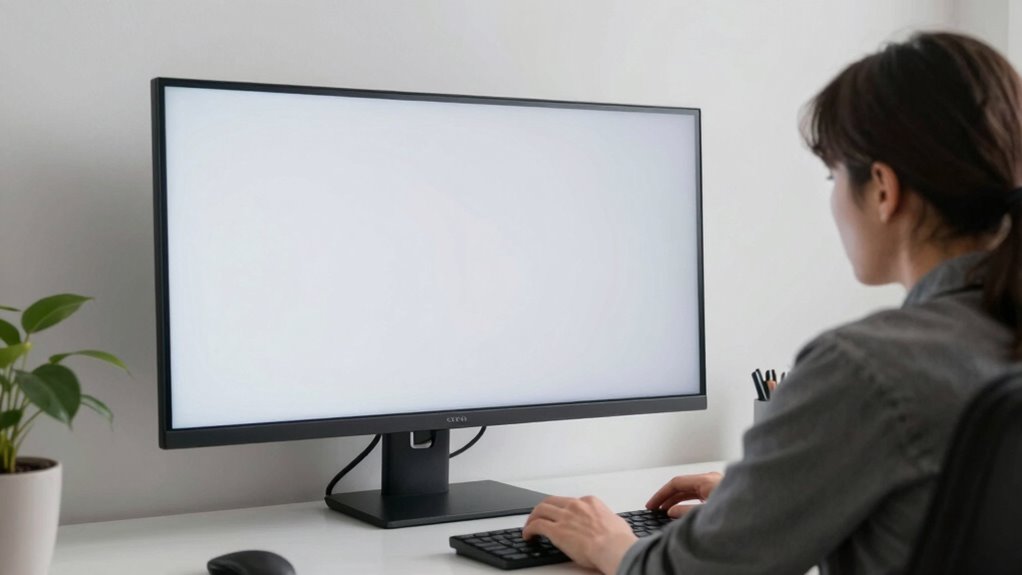
When it comes to productivity, the distance between your eyes and the monitor plays an essential role. You need to guarantee your monitor’s height is set correctly to avoid unnecessary eye strain. Proper ergonomic positioning ensures that your monitor is at the correct eye level, reducing neck and eye fatigue. Additionally, maintaining the right viewing distance can significantly decrease visual discomfort over long periods. By optimizing these factors, you can create a more comfortable and efficient workspace.
Optimal Viewing Distance
Although it’s easy to overlook, the ideal viewing distance from your monitor plays an essential role in your overall productivity and comfort. To improve your viewing comfort and reduce screen glare, keep these tips in mind:
- Distance: Position your monitor about an arm’s length away (20-30 inches) for maximum clarity.
- Eye Level: Confirm the top of the screen is at or just below eye level to minimize strain.
- Lighting: Avoid direct light sources behind or in front of you to reduce glare.
- Breaks: Take regular breaks to rest your eyes, following the 20-20-20 rule (every 20 minutes, look at something 20 feet away for 20 seconds).
Proper Monitor Height
Proper monitor height is essential for maintaining comfort and enhancing productivity, as it directly impacts your posture and eye strain. To achieve ideal monitor elevation, position the top of your screen at or slightly below eye level. This setup helps prevent long-term postural issues and supports your overall well-being. Your eyes should naturally align with the screen, ideally 20 to 30 inches away, promoting better focus and reducing fatigue. When your monitor is too low or too high, it can lead to poor screen alignment, causing discomfort over time. Adjust your chair or use a monitor stand to find that perfect height. Prioritizing ergonomic workspace setup helps prevent long-term issues and supports your overall well-being. Incorporating local automation can also help in adjusting your workspace setup dynamically based on your preferences. Additionally, regularly monitoring your posture encourages awareness and helps maintain ergonomic alignment throughout your workday. Being mindful of proper ergonomic principles can further enhance your comfort and productivity during long work sessions. By prioritizing proper monitor height, you’ll create a more ergonomic workspace that supports your productivity and well-being.
Eye Strain Prevention
To prevent eye strain effectively, it’s crucial to contemplate both viewing distance and ergonomics. Here are some tips to enhance your workspace and minimize discomfort:
- Adjust your monitor brightness: Verify it’s not too bright or dim compared to your surroundings.
- Maintain an ideal viewing distance: Position your monitor about an arm’s length away to reduce strain.
- Create an ergonomic setup: Keep your screen at eye level and tilt it slightly back for comfortable viewing. Proper ergonomic positioning can prevent long-term discomfort.
- Take regular breaks: Follow the 20-20-20 rule; every 20 minutes, look at something 20 feet away for 20 seconds. Using proper ergonomic practices can further support your eye health.
- Reduce glare and dust: Keeping your screen clean and free from dust particles can also help prevent eye discomfort and contribute to better overall air quality air quality.
Implementing these strategies can greatly reduce eye strain and enhance your overall productivity while working.
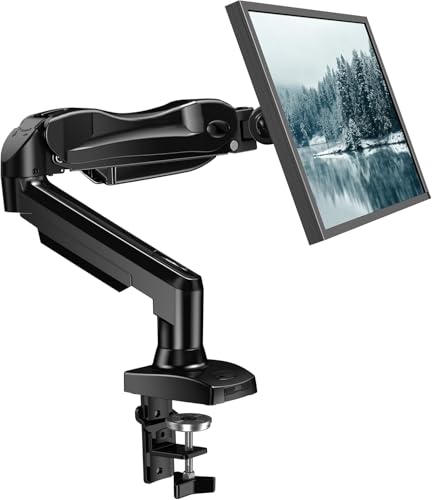
HUANUO FlowLift™ Single Monitor Mount, 13 to 32 Inch Monitor Arm, Adjustable Monitor Stand, Vesa Mount with Clamp and Grommet Base – Fits 4.4 to 19.8lbs LCD Computer Monitors
Great Adaptability: This HUANUO single monitor arm fits 13-32 inch monitors, holds 4.4-19.8 lbs, suitable for VESA patterns…
As an affiliate, we earn on qualifying purchases.
As an affiliate, we earn on qualifying purchases.
How Monitor Size Affects Screen Resolution and Clarity
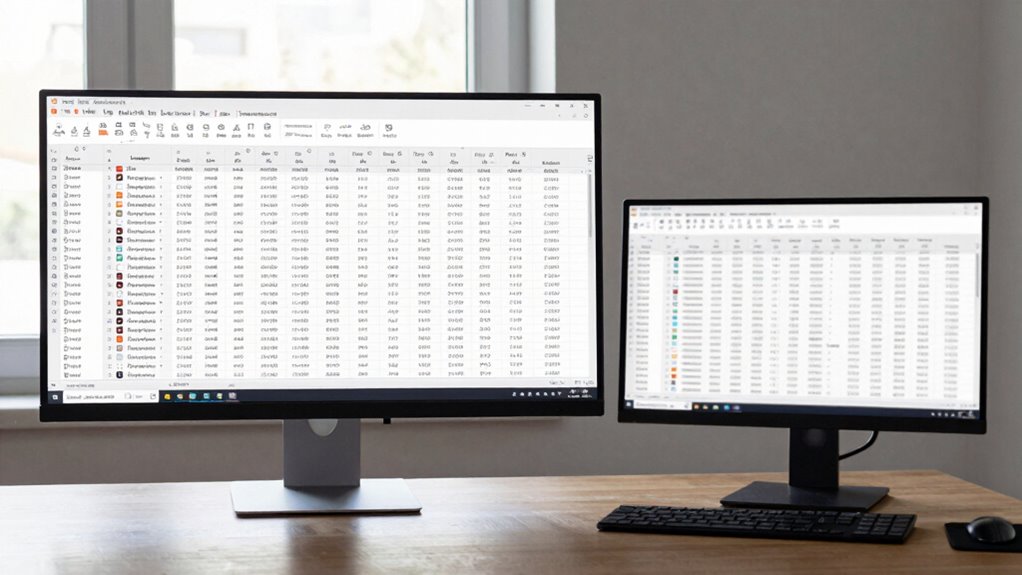
When choosing a monitor size, you need to take into account how it impacts screen resolution and clarity. A larger screen doesn’t always mean better quality; sometimes, ideal resolution ratios and pixel density are what really matter. Understanding these factors will help you make the right choice for your productivity needs.
Optimal Resolution Ratios
Choosing the right monitor size isn’t just about physical dimensions; it directly influences your screen resolution and clarity. A monitor’s resolution must align with its size to guarantee ideal viewing. Here are some key factors to take into account:
- Resolution Scaling: Higher resolutions on larger screens can lead to better clarity, but scaling can affect how everything appears. Proper resolution scaling ensures that text and images remain sharp and legible across different screen sizes. Additionally, understanding pixel density helps in selecting a monitor that offers the best balance between size and clarity. Recognizing how display resolution interacts with monitor size is essential for optimizing visual quality. Moreover, adjusting scaling settings can improve comfort and readability during extended use.
- Aspect Ratio: A 16:9 ratio is common for most tasks, while ultrawide options offer more screen real estate.
- Viewing Distance: Sit farther from larger screens to fully appreciate their resolution.
- Content Type: Different tasks (gaming, graphic design) may require different resolutions for best results.
- Compatibility with Display Standards: Ensuring your monitor supports standards like HDMI 2.1 or DisplayPort 1.4 guarantees optimal resolution and refresh rates for your setup.
Balancing these elements will elevate your productivity and enhance your overall experience.
Pixel Density Considerations
Although you might not realize it, pixel density plays an essential role in how effectively you can work on a monitor. It’s not just about screen size; it’s about pixel resolution and how that resolution interacts with the display technology. A monitor with higher pixel density offers sharper images and clearer text, which can greatly enhance your productivity. For example, a 27-inch monitor with 4K resolution has a much higher pixel density than a 24-inch monitor with the same resolution. This means you’ll see more detail without straining your eyes. In contrast, lower pixel density can lead to pixelation and a less crisp display, making it harder to focus on tasks. Choose wisely for your productivity needs!

Dell 27 Plus 4K Monitor – S2725QS – 27-inch 4K (3840 x 2160) 120Hz 16:9 Display, IPS Panel, AMD FreeSync Premium, sRGB 99%, Integrated Speakers, 1500:1 Contrast Ratio, Comfortview – Ash White
Improved ComfortView Plus: Reduces harmful blue light emissions to ≤35%, for all-day comfort without sacrificing color accuracy.
As an affiliate, we earn on qualifying purchases.
As an affiliate, we earn on qualifying purchases.
The Case for Multi-Monitor Setups
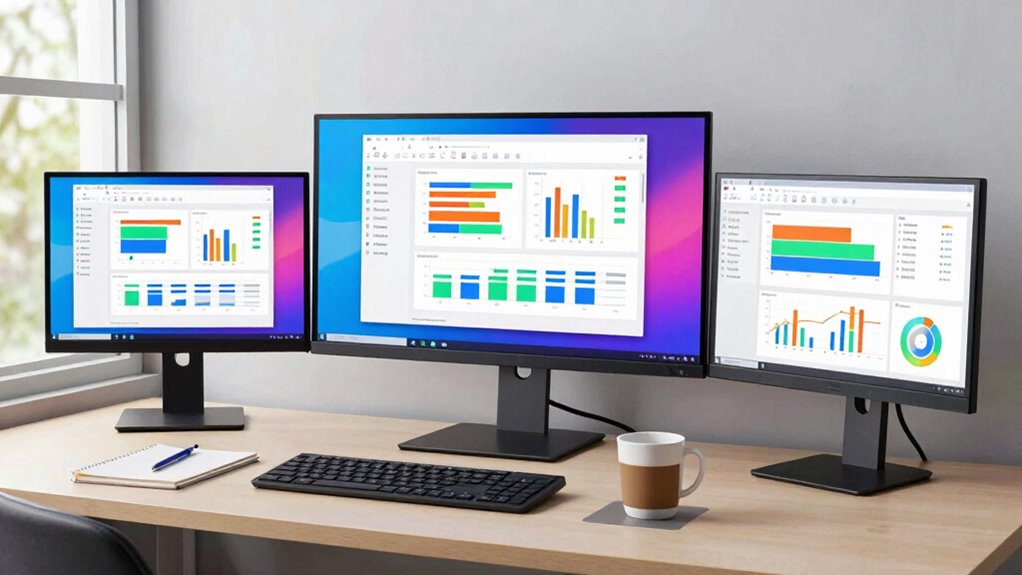
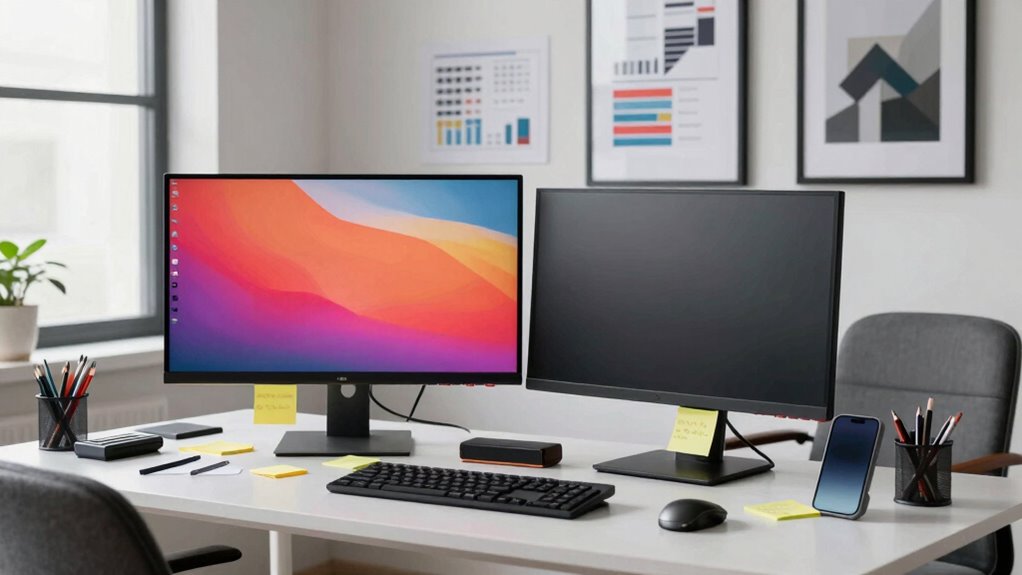
As you seek to enhance your productivity, consider the advantages of a multi-monitor setup. This arrangement can greatly improve your workflow and provide essential multi-tasking benefits. Here are four reasons to make the switch:
Enhance your productivity with a multi-monitor setup for improved workflow and effective multi-tasking.
- Increased Screen Real Estate: More monitors mean more workspace for applications and documents.
- Enhanced Focus: You can dedicate screens to specific tasks, reducing distractions.
- Easier Collaboration: Share your screen on one monitor while keeping notes or references open on another.
- Productivity Boost: Studies show that users with multiple monitors can complete tasks faster and with fewer errors.
How Task Requirements Influence Monitor Size Choices
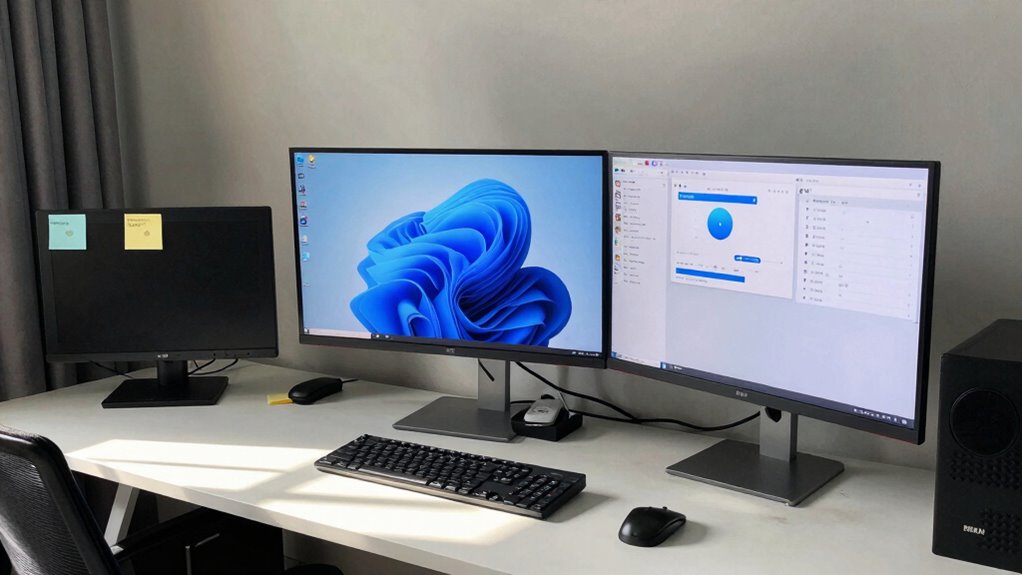
When considering monitor size, it’s essential to align your choice with the specific tasks you perform daily. If you regularly handle complex projects, a larger monitor can help you manage multiple windows and detailed information without feeling cramped. For instance, graphic designers might benefit from a bigger screen to see intricate details clearly, while programmers might prefer more horizontal space for side-by-side coding and documentation. Conversely, if your work involves simpler tasks, like emailing or document editing, a smaller monitor can suffice. Assess the task complexity and project types you tackle most often, and choose a monitor size that supports your productivity without overwhelming your workspace. This strategic alignment can greatly enhance your efficiency and overall work experience.
Why Bigger Isn’t Always Better
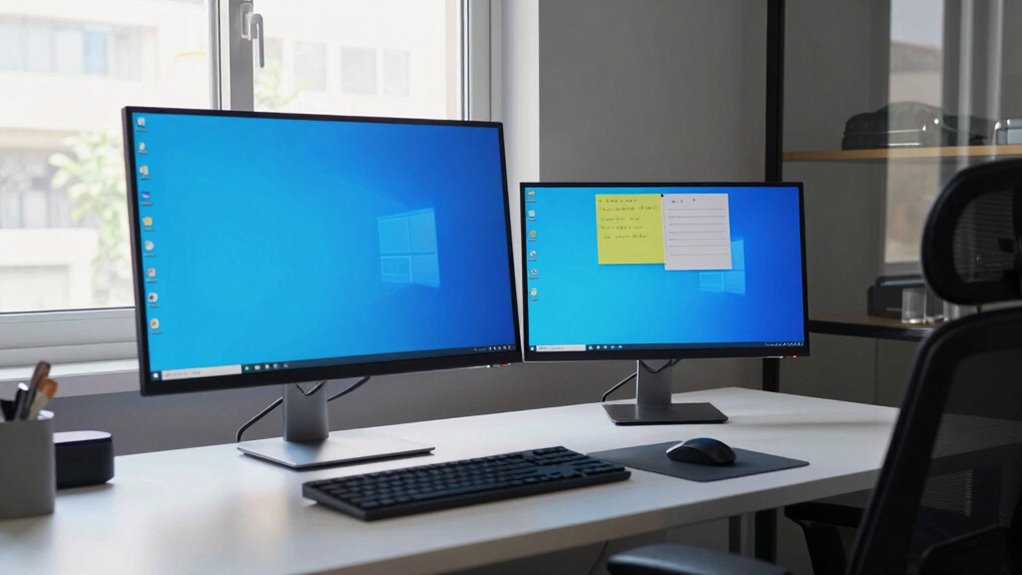
While many assume that a larger monitor automatically boosts productivity, that’s not always the case. In fact, there are some bigger drawbacks to evaluate:
- Eye Strain: Larger screens can force you to move your head more, leading to discomfort.
- Desk Space: Bigger monitors take up more space, potentially cluttering your workspace and reducing efficiency.
- Cost: Higher prices for larger monitors can lead you to underestimate your budget for other essential tools.
- Productivity Myths: Believing that size equals productivity can distract you from the importance of proper ergonomics and screen resolution.
Instead of focusing solely on size, assess what truly enhances your workflow. Sometimes, a well-placed smaller monitor can be more effective than you might think. Additionally, considering ergonomic principles can help ensure your setup supports comfort and reduces fatigue over time.
Ensuring Color Accuracy and Calibration
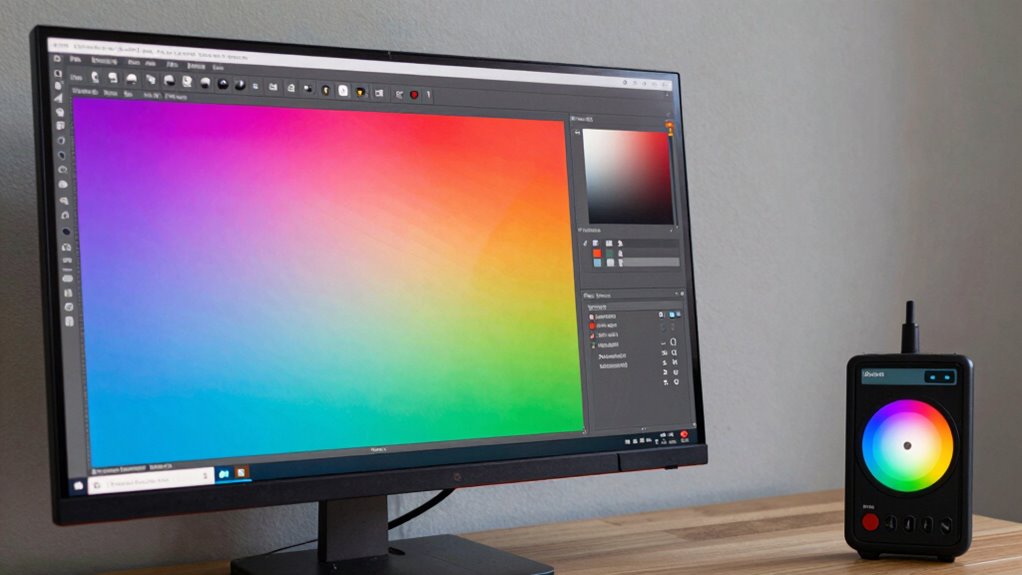
To maximize your productivity, ensuring color accuracy and calibration on your monitor is essential. Without proper calibration, colors can appear distorted, leading to mistakes in design and other tasks. You should regularly check your monitor’s color settings to maintain ideal color accuracy, especially if you work with graphics or images. Using a color calibration tool can help you achieve this by measuring your monitor’s output and adjusting it to industry standards. Don’t overlook the importance of this step; a well-calibrated monitor enhances your workflow and reduces eye strain. Spend a little time on color calibration, and you’ll see a big difference in the quality of your work and overall productivity.
Budgeting for the Right Monitor Size
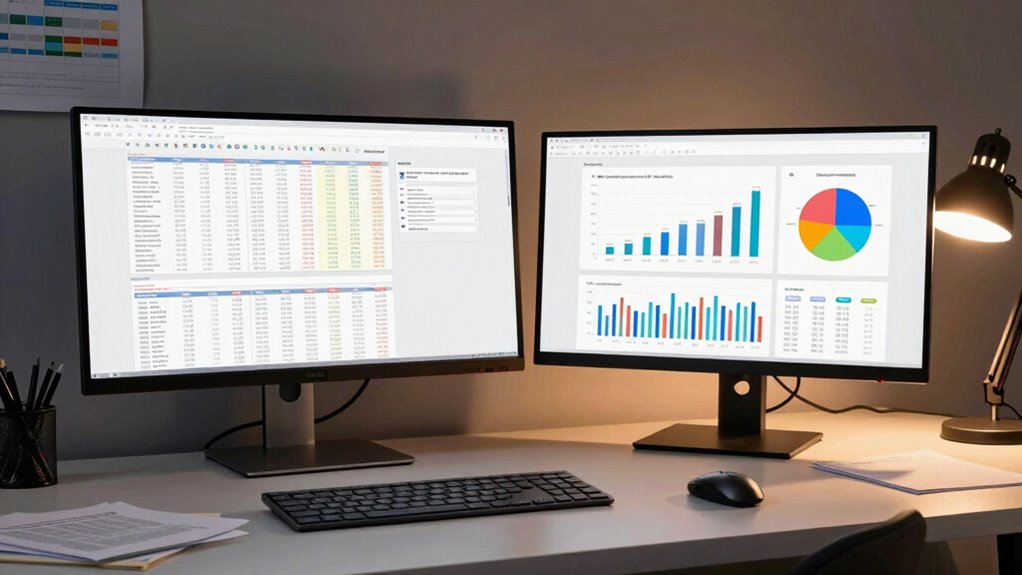
After ensuring your monitor is calibrated for accurate colors, the next step is budgeting for the right monitor size. You’ll want to evaluate a few key factors to make a wise investment, especially if you have budget constraints. Here’s a quick list to guide you:
After calibrating your monitor for color accuracy, budget wisely for the right size to meet your needs.
- Determine Your Needs: Assess the tasks you’ll perform and how much screen real estate you require.
- Research Monitor Brands: Some brands offer better value for larger sizes, so check reviews and comparisons.
- Set a Price Range: Decide how much you’re willing to spend without compromising on quality.
- Look for Deals: Keep an eye out for sales or refurbished models that fit your needs and budget.
Following these steps will help you select the ideal monitor size without breaking the bank.
Testing Monitors Before Purchase: Why It Matters?
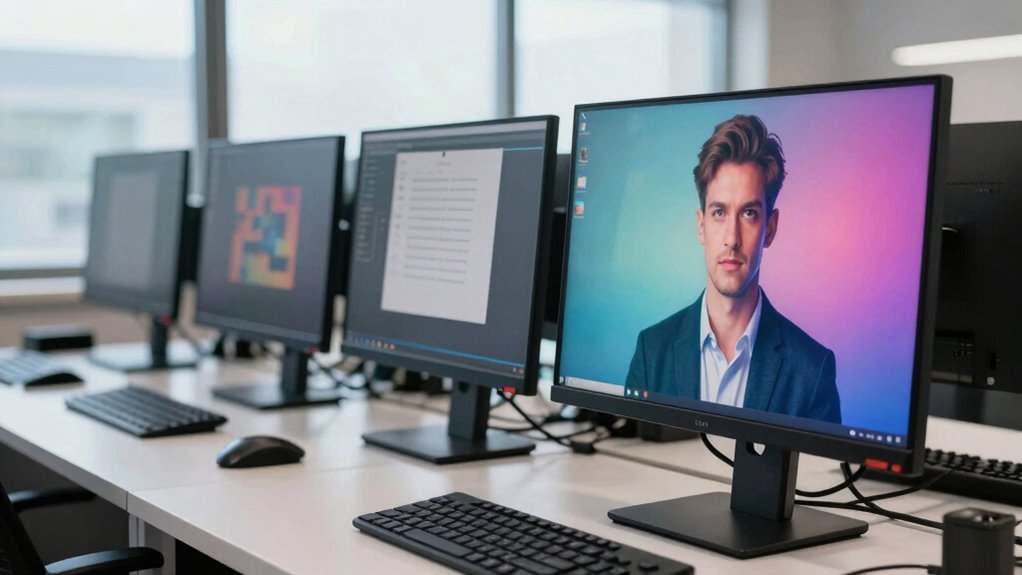
Testing monitors before you make a purchase is essential, as it guarantees you choose a display that meets your specific needs. Monitor testing allows you to evaluate factors like resolution, color accuracy, and ergonomics firsthand. You don’t want to end up with a monitor that looks great online but feels uncomfortable during long work sessions. By actually using the monitor, you can determine if it suits your workspace and productivity requirements. This purchase importance can’t be overstated; the right monitor can greatly enhance your efficiency and comfort. Don’t skip this step—take the time to test different models, and you’ll make certain that your investment pays off regarding productivity and satisfaction.
Frequently Asked Questions
How Does Monitor Size Impact Eye Strain Over Long Periods?
Monitor size greatly impacts eye strain over long periods. If your monitor’s too small, you’ll squint, leading to discomfort. A larger screen can enhance visual comfort by allowing you to see text and images clearly without straining. Proper monitor ergonomics, including the right size, distance, and height, help reduce strain on your eyes. So, choose a monitor that fits your workspace and meets your visual needs to promote a healthier viewing experience.
Can Screen Size Affect My Typing Speed or Accuracy?
Absolutely, screen size can dramatically impact your typing speed and accuracy! If you’re working on a tiny screen, it’ll feel like you’re typing on a postage stamp. Good typing ergonomics can be compromised when the screen’s too small, making it hard to see what you’re doing. Higher screen resolution enhances clarity, letting you spot errors easily. So, choosing the right screen size and resolution is essential for boosting your performance!
What Is the Best Monitor Size for Gaming Versus Work?
For gaming, a monitor size between 24 to 32 inches is ideal, as it enhances immersion and responsiveness, aligning with your gaming preferences. For work, a 27-inch monitor often strikes the right balance, providing ample screen space for multitasking without overwhelming your desk. Ultimately, consider your work requirements and how much detail you need for both tasks. Choosing the right size can greatly improve your experience in both gaming and productivity.
Does Monitor Size Influence Video Conferencing Quality?
You might not think monitor size affects video conferencing quality, but it does! A larger screen offers better visibility, making it easier to see details. If you’re using a high screen resolution, you’ll notice crisp video quality, enhancing your experience. Imagine struggling to spot a colleague’s expression on a tiny screen—frustrating, right? So, when choosing your monitor, don’t underestimate the impact of size. It could transform your virtual interactions!
How Often Should I Replace My Monitor for Optimal Productivity?
You should consider replacing your monitor every 3 to 5 years for peak productivity. Monitors typically have a lifespan of around 30,000 to 60,000 hours, but as technology advances, older models may not meet current productivity benchmarks. If you notice issues like flickering or poor resolution, it’s time to upgrade. Keeping your monitor updated guarantees you stay efficient and can handle modern tasks without straining your eyes or diminishing your workflow.
Conclusion
In the world of productivity, your monitor is like a lighthouse guiding your ship through foggy waters. Choosing the right size can illuminate your tasks, while the wrong one might leave you lost in the haze. Remember, it’s not just about the screen’s dimensions; it’s about how it fits into your workspace and workflow. By avoiding common mistakes, you can navigate towards clarity and efficiency, ensuring your journey remains smooth and productive.