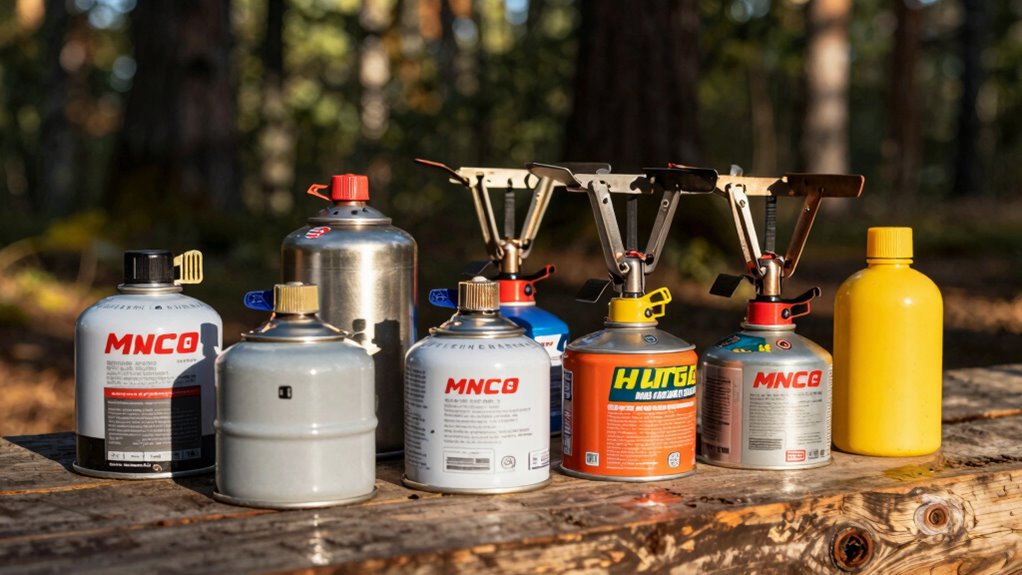

When it comes to camping stove fuels, you’ve got several options. Liquid fuels like white gas are great for high-altitude cooking, while canisters of propane and butane are convenient for quick trips. Propane performs better in cold temperatures, but butane can struggle in the freeze. Wood is renewable and efficient but requires proper sourcing. Alcohol stoves are lightweight and versatile, making them perfect for backpacking. Keep exploring to discover the best choices for your next outdoor adventure!

Get the little things that make your day delivered free with Prime
- Fast, free delivery on millions of items
- Prime Video, Amazon Music and more included
- Member-only deals all year
Key Takeaways
- Camping stove fuels include liquid fuels, canister fuels, wood, and alcohol, each with unique properties and suitable applications.
- Liquid fuels like white gas burn hotter, ideal for high-altitude cooking, while canister fuels offer convenience for short trips.
- Propane excels in cold temperatures and high altitudes, whereas butane struggles in freezing conditions, impacting its efficiency.
- Wood is a renewable fuel source but requires sustainable sourcing and can vary in efficiency based on moisture content.
- Alcohol stoves are lightweight and portable, making them perfect for backpacking, with quick setups and compatibility with reusable containers.
As an affiliate, we earn on qualifying purchases.
Basics of Camping Stove Fuels
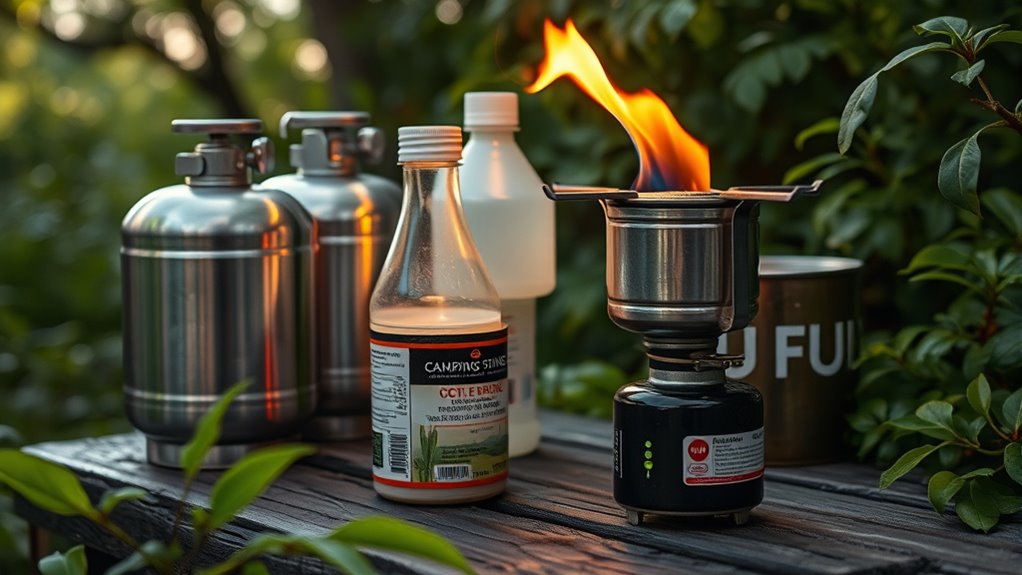
When it comes to camping stove fuels, understanding your options is key to a successful outdoor cooking experience. Different fuels offer unique characteristics that affect your cooking efficiency. Liquid fuels, like white gas, burn hotter and are ideal for high-altitude cooking, but they require careful handling and storage. On the other hand, canister fuels, such as propane and butane, provide convenience and ease of use, perfect for weekend trips.
When considering fuel storage, remember to keep canisters upright and away from heat sources. Liquid fuel containers should be tightly sealed and stored in a cool, dry place. By grasping these basics, you’ll be better equipped to choose the right fuel for your next adventure, ensuring your meals are both delicious and hassle-free.
As an affiliate, we earn on qualifying purchases.
Comparing Propane and Butane: Pros and Cons
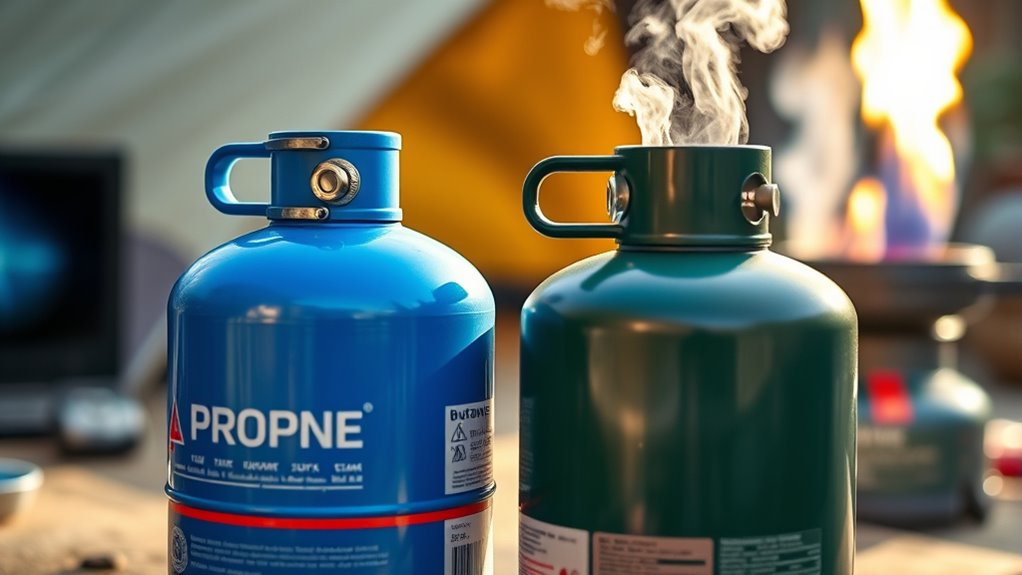
While both propane and butane are popular choices for camping stove fuel, each has distinct advantages and disadvantages that can impact your outdoor cooking experience. Propane advantages include its ability to perform well in colder temperatures, making it a reliable option for winter camping. It also burns hotter, which can speed up cooking times. On the other hand, butane disadvantages arise when temperatures drop below freezing, as it can struggle to vaporize and may not ignite easily. Additionally, butane can be less efficient at high altitudes. Ultimately, when choosing between the two, consider your specific camping conditions and needs. If you’re camping in colder climates or at higher elevations, propane may be your best bet.
As an affiliate, we earn on qualifying purchases.
How Does Wood Compare as a Fuel Source?

When considering wood as a fuel source for your camping stove, it’s crucial to think about its environmental impact and efficiency. Unlike propane or butane, wood can be a renewable resource, but how it’s sourced matters. You’ll also want to evaluate how it performs regarding heat output and cooking time compared to other fuels.
Environmental Impact Considerations
Although wood is often regarded as a renewable resource, its environmental impact as a fuel source can vary considerably based on several factors. To better understand its sustainability practices and emissions impact, consider the following:
- Source of Wood: Harvesting from sustainably managed forests minimizes negative effects on ecosystems.
- Burning Efficiency: Using efficient stoves reduces smoke and harmful emissions, making wood a cleaner option.
- Local Availability: Sourcing wood locally cuts down transportation emissions, enhancing its overall sustainability.
Efficiency and Performance Factors
As you consider the efficiency and performance of wood as a camping stove fuel, it is essential to recognize that its effectiveness can vary based on several factors. Understanding these performance metrics can help you make informed choices. Here’s a quick comparison of wood against other common fuels:
| Fuel Type | Fuel Efficiency (BTUs) |
|---|---|
| Wood | 5,000 – 8,000 |
| Propane | 21,500 |
| Butane | 3,500 |
| Alcohol | 7,000 |
| Charcoal | 13,000 |
While wood can be an excellent option, its fuel efficiency often depends on moisture content and wood type. Be mindful of these variables to optimize your cooking experience in the great outdoors.
As an affiliate, we earn on qualifying purchases.
Why Choose Alcohol Stoves for Backpacking?
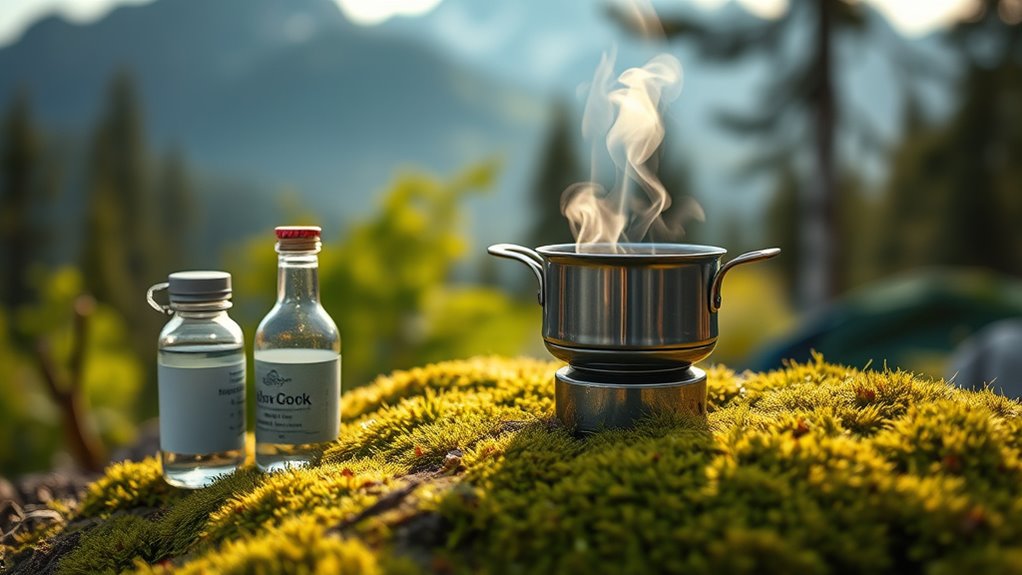
When you’re backpacking, every ounce counts, and alcohol stoves offer a lightweight and portable solution. You’ll find it easy to locate fuel along your journey, making cooking simple and hassle-free. With their straightforward design, you’ll spend less time worrying about your stove and more time enjoying the great outdoors. Additionally, alcohol stoves can be used with smart, reusable fuel containers, making them an eco-friendly choice for sustainable outdoor cooking.
Lightweight And Portable Design
If you’re looking for a stove that won’t weigh you down on your backpacking adventures, alcohol stoves are an excellent choice. Their lightweight and compact design makes them incredibly travel friendly, allowing you to focus on your journey instead of your gear. Here are three reasons to choose alcohol stoves for your next trip:
- Weight: Alcohol stoves typically weigh less than a pound, keeping your pack light.
- Size: Their compact design makes them easy to fit into tight spaces in your backpack.
- Simplicity: With fewer parts, they’re straightforward to set up and use, perfect for quick meals on the go.
With alcohol stoves, you’ll enjoy a hassle-free cooking experience, making your backpacking adventures even more enjoyable.
Easy To Find Fuel
Alcohol stoves not only stand out for their lightweight and portable design, but they also offer the advantage of easily accessible fuel. You’ll find common fuel sources like denatured alcohol, isopropyl alcohol, and even homemade fuel options, all of which are readily available at hardware stores or online. This makes it simple to stock up before your trip. For fuel availability tips, consider checking local camping supply shops or local outdoor stores, as they often carry these essentials. Plus, many backpackers carry small quantities in their packs, ensuring you’re always prepared to cook meals on the go. With alcohol stoves, you’ll enjoy convenience and peace of mind knowing fuel is easy to find wherever your adventures take you.
Simple Cooking Process
Choosing an alcohol stove for backpacking simplifies your cooking process considerably. With its straightforward design, you’ll find meal preparation effortless. Here are three reasons why alcohol stoves enhance your cooking techniques: portable cooking equipment, which makes them ideal for outdoor adventures. 1. Quick Setup: You can light your stove in seconds, allowing you to focus on cooking instead of fumbling with complicated equipment. 2. Lightweight: Alcohol stoves are compact and easy to carry, making them perfect for those long hikes where every ounce counts. 3. Versatile Cooking: They accommodate various cooking techniques, from boiling water to simmering meals, providing flexibility for your culinary needs. Additionally, their compatibility with outdoor‑kitchen essentials means you can create a complete cooking station in the wilderness.
What Should You Consider When Choosing a Multi-Fuel Stove?
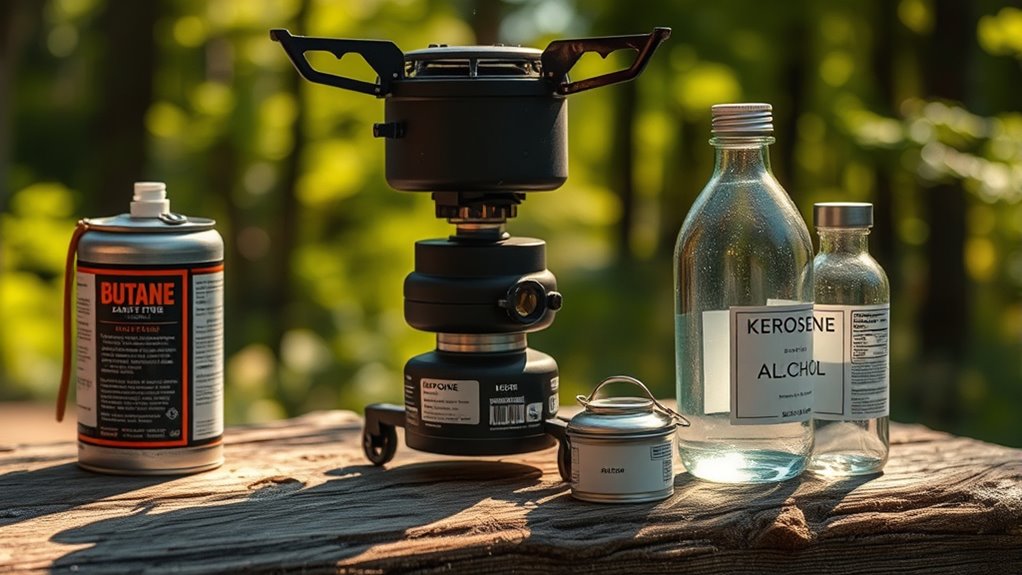
What factors matter most when you’re deciding on a multi-fuel stove? First, consider fuel compatibility; it’s essential to guarantee your stove can efficiently burn various fuels like propane, butane, or wood. This flexibility allows you to adapt based on availability, especially during remote camping trips. Next, think about stove versatility. A good multi-fuel stove should offer different cooking methods, from boiling water to simmering meals. You’ll also want to evaluate the stove’s weight and size for portability, along with ease of setup. Additionally, understanding metal detecting etiquette can help you avoid disturbances when camping near popular outdoor spots. Being aware of primitive survival techniques can also help you make the most of your stove in resource-scarce environments. Moreover, paying attention to fuel storage and safety is crucial to prevent accidents and ensure reliable operation. Incorporating emergency preparedness skills such as knowing how to improvise fuel sources can further enhance your camping experience. Considering backup power options, such as portable generators or solar chargers, can also enhance your preparedness in case of emergencies. By focusing on these aspects, you’ll choose a multi-fuel stove that suits your camping needs perfectly.
Safety Tips for Using Camping Stove Fuels

While enjoying the great outdoors, keeping safety in mind when using camping stove fuels is essential. Here are some tips to guarantee a safe experience:
Staying safe with camping stove fuels is crucial for an enjoyable outdoor experience.
- Proper Fuel Storage: Always store fuels in a cool, dry place away from direct sunlight and heat sources. Keep them out of reach of children and pets.
- Regular Stove Maintenance: Inspect your stove for any damage or wear before each trip. Clean the burners and guarantee all connections are secure to prevent leaks.
- Ventilation: Use your stove in well-ventilated areas to avoid harmful fumes. If you’re indoors, crack a window or use a fan.
How to Choose the Right Fuel for Your Camping Trip
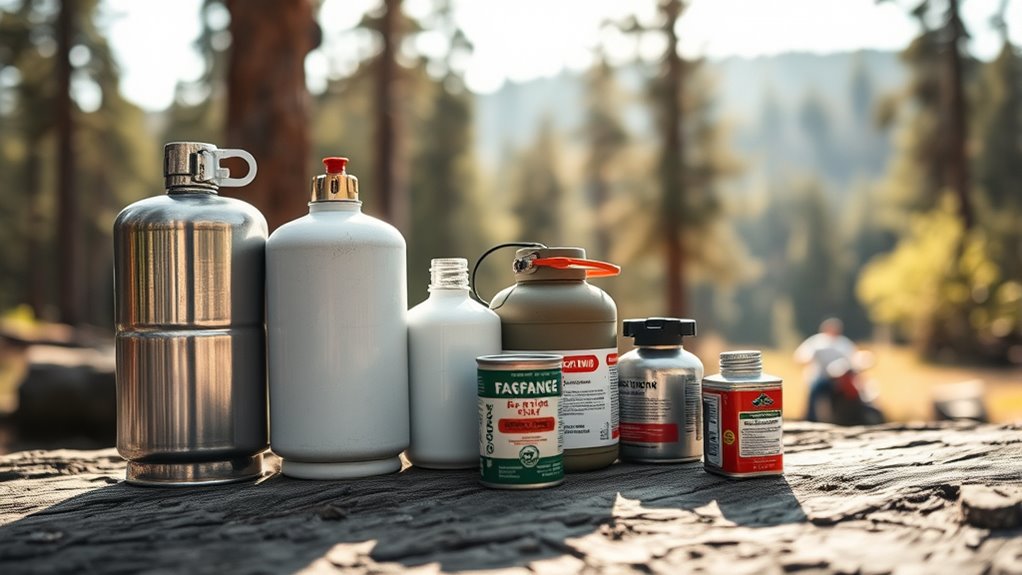
When you’re planning a camping trip, selecting the right fuel for your stove can make all the difference in your cooking experience. Start by considering the type of stove you have and its fuel compatibility. If you own a multi-fuel stove, you’ll have more flexibility in your choices. Next, think about your trip duration. If you’re camping for several days, you’ll need enough fuel to last the entire trip, so opt for larger quantities or a reliable fuel type. Don’t forget to factor in the cooking methods you’ll use; some fuels heat faster than others. By aligning your fuel choice with your stove and trip requirements, you’ll guarantee efficient cooking and a more enjoyable outdoor adventure.
Frequently Asked Questions
Can I Use Regular Gasoline in My Camping Stove?
No, you shouldn’t use regular gasoline in your camping stove. Gasoline toxicity can pose serious health risks, releasing harmful fumes that can be dangerous in confined spaces. Instead, consider alternative fuels specifically designed for camping stoves, like propane or butane. These options are safer and more efficient, ensuring you enjoy your outdoor cooking without the hazards associated with gasoline. Always prioritize safety and choose the right fuel for your adventures!
How Do I Store Camping Stove Fuels Safely?
Storing camping stove fuels safely is essential, whether you’re a seasoned camper or just starting out. Keep your fuels in a cool, well-ventilated area away from direct sunlight. Use proper containers designed for fuel storage and always check for leaks. Remember, your safety precautions can mean the difference between a fun trip and a dangerous situation. By being vigilant, you guarantee both safety and peace of mind while enjoying the great outdoors.
Are There Any Eco-Friendly Fuel Options Available?
Yes, there are eco-friendly fuel options available for your camping stove. You can use biodegradable fuels, which break down naturally and have a lower environmental impact. Look for options made from plant materials or other renewable energy sources. These alternatives not only minimize pollution but also help reduce your carbon footprint while enjoying the great outdoors. By choosing sustainable fuels, you’re making a positive choice for the planet.
What Are the Weight Differences Between Fuel Types?
When comparing weight differences between fuel types, liquid fuel tends to be heavier than propane. Propane’s efficiency means you can carry less for the same amount of cooking power, making it a lighter option overall. If you’re backpacking, you’ll appreciate how much easier it is to manage a compact canister of propane compared to the bulkier containers of liquid fuel. So, consider your cooking needs and pack accordingly!
How Do Fuel Types Affect Cooking Times?
Choosing the right fuel type for your camping stove is like picking the right tool for a job; it greatly affects cooking times. Some fuels offer better combustion, which means they heat up faster and cook your meals more efficiently. If you’re using a fuel with a high cooking efficiency, you’ll notice your food cooks quicker, saving you time and keeping your campfire vibes alive. So, make your fuel choice wisely for those delicious meals!
Conclusion
Choosing the right camping stove fuel can feel overwhelming, but it doesn’t have to be. Whether you find yourself reaching for propane as the sun sets or savoring the crackle of wood on a chilly night, each option has its magic. Just as you discover your favorite camping spot by chance, you might stumble upon the perfect fuel that makes your outdoor meals unforgettable. So, gear up, explore your options, and enjoy every moment under the stars!
NFL season / tailgating Picks
team gear
As an affiliate, we earn on qualifying purchases.