
When traveling internationally, it’s vital to know that travel adapters and converters serve different purposes. Adapters let you plug in your devices without altering voltage, while converters change the voltage to match your device’s requirements. If your gadgets can handle local voltage, you’ll only need an adapter. However, for high-power devices needing specific voltage, a converter is necessary. Understanding these differences guarantees your electronics stay safe and functional. Want to discover more important travel gadgets?
Key Takeaways
- Travel adapters allow devices to connect to foreign outlets but do not change voltage; they only accommodate different plug shapes.
- Voltage converters change the voltage to match device requirements, preventing damage to electronics not rated for local voltage.
- Most modern electronics are dual voltage, often requiring only an adapter instead of a converter.
- Understanding the difference between adapters and converters is crucial to avoid damaging devices while traveling.
- Always check device specifications and local voltage standards before traveling to ensure compatibility and safe usage.

EPICKA Universal Travel Adapter, European Travel Plug Adapter (Not a Voltage Converter) – International Power Adapter Worldwide Charger with USB-C & 4 USB-A Ports, Travel Essentials (TA-105, Grey)
WORLDWIDE ADAPTER – Our all-in-one adapter includes 4 different plugs that cover over 200 countries and regions, such…
As an affiliate, we earn on qualifying purchases.
As an affiliate, we earn on qualifying purchases.
Understanding Key Differences Between Travel Adapters and Converters
When you travel internationally, it’s essential to know the difference between travel adapters and converters, as each serves a distinct purpose. Travel adapters allow your devices to plug into foreign outlets, accommodating various travel adapter types to fit different socket designs. However, they don’t change the voltage. If you need to use devices that require a specific voltage, you’ll need a converter.
Converter safety is vital since using the wrong converter can damage your electronics or even pose a fire risk. Always check the voltage requirements for your devices before choosing between an adapter or converter. Understanding these key differences guarantees that your electronics stay safe and functional while you explore the world.

International Travel Adapter Voltage Converter Combo for 100V-240V with 2 USB Ports, USA to UK Europe Australia 200+ Countries 1
[CONVERTER ADAPTER COMBO FOR INTERNATIONAL TRAVEL] – Ordinary Travel adapters do not convert the voltage, Ours Does! there…
As an affiliate, we earn on qualifying purchases.
As an affiliate, we earn on qualifying purchases.
When Should You Use a Travel Adapter?
Wondering when to reach for a travel adapter? You’ll need one whenever you travel to a country with different plug shapes. Travel adapters come in various types, catering to the different outlet configurations worldwide. If you’re packing devices like your phone, laptop, or camera, you’ll want to guarantee compatibility with local sockets.

Anker Nano Travel Adapter, 5-Port Power Adapter with 1× 2-Pin AC, 2 USB A, 2 USB C for 20W, Smart Temperature Control, Works in 200+ Countries, Not a Voltage Converter, Travel Essentials (1-Pack)
Universal Plug Compatibility: Type A (US / Canada / Japan / China), Type C (EU), Type G (UK…
As an affiliate, we earn on qualifying purchases.
As an affiliate, we earn on qualifying purchases.
When Should You Use a Travel Converter?
When you’re traveling internationally, it’s vital to know when to use a travel converter. If your devices aren’t compatible with the local voltage or if you’re using high-power electronics, a converter is essential to prevent damage. Understanding these factors can save you both hassle and money while abroad.
Voltage Compatibility Requirements
If you plan to travel abroad and want to use your electronic devices, understanding voltage compatibility is crucial. Different countries have varying voltage standards, typically ranging from 100 to 240 volts. Before plugging in your devices, check their power ratings. Most modern electronics, like smartphones and laptops, can handle a range of voltages, but some older appliances may not. If your device’s voltage rating doesn’t match the local standard, you’ll need a travel converter to prevent damage. Always verify that the converter you choose can handle the wattage of your device, as exceeding its power rating can lead to overheating or failure. Being informed about voltage compatibility guarantees your electronics work safely and effectively while you travel.
High-Power Electronics Usage
While many devices can handle international voltage without issue, high-power electronics like hair dryers, curling irons, and some kitchen appliances often require a travel converter. These high-power appliances typically have higher wattage and specific voltage ratings that may not match the local supply. If you plug them directly into a foreign outlet without a converter, you risk damaging your device or causing it to malfunction. Always check the voltage ratings on your electronics before traveling. If they exceed the local voltage, it’s crucial to use a travel converter to safely step down the voltage. This guarantees your high-power devices operate correctly and last longer, giving you peace of mind while you enjoy your travels.
International Travel Considerations
Understanding when to use a travel converter can save you from frustrating mishaps during your travels. You’ll need to take into account the voltage requirements of your devices and the local customs of the countries you visit. Here are some key points to remember:
- Check the voltage of your electronics before packing.
- Use a converter for high-wattage devices like hair dryers.
- Be aware of cultural differences in power supply standards.
- Always verify if a travel adapter is sufficient for your needs.
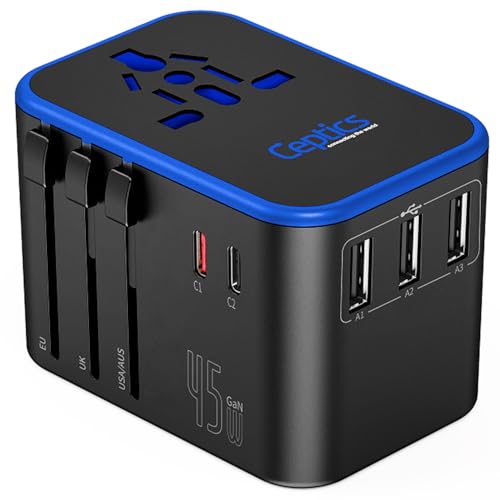
Ceptics Universal Travel Adapter, 45W International Power Adapter with PD & QC 3.0 Dual USB-C, 3 USB Travel Adapter Worldwide, Type I C G A Outlets 110V 220V A/C – EU Euro US UK (11-KU)
[No 1 travel adapter brand] desgined in the USA, makes our adapters the most reliable and no 1…
As an affiliate, we earn on qualifying purchases.
As an affiliate, we earn on qualifying purchases.
Common Misconceptions About Travel Adapters and Converters
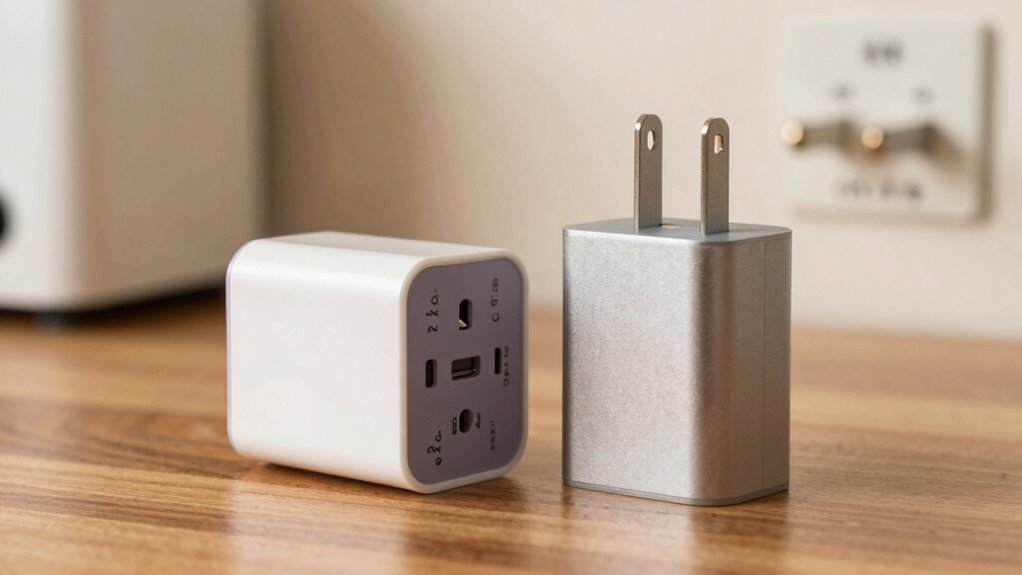
Have you ever wondered why so many travelers confuse adapters with converters? It’s a common issue, often stemming from misconceptions. One of the most common myths is that adapters can change voltage, which they can’t. Adapters merely allow your device to physically fit into a foreign outlet, while converters actually change the voltage to match your device’s requirements. This adapter confusion can lead to damaged electronics if you rely on an adapter instead of a converter for high-voltage devices. Another myth is that all devices need a converter; many modern gadgets are dual voltage, making a simple adapter sufficient. Understanding these differences can save you from hassle and potential damage during your travels.
How Converters Work
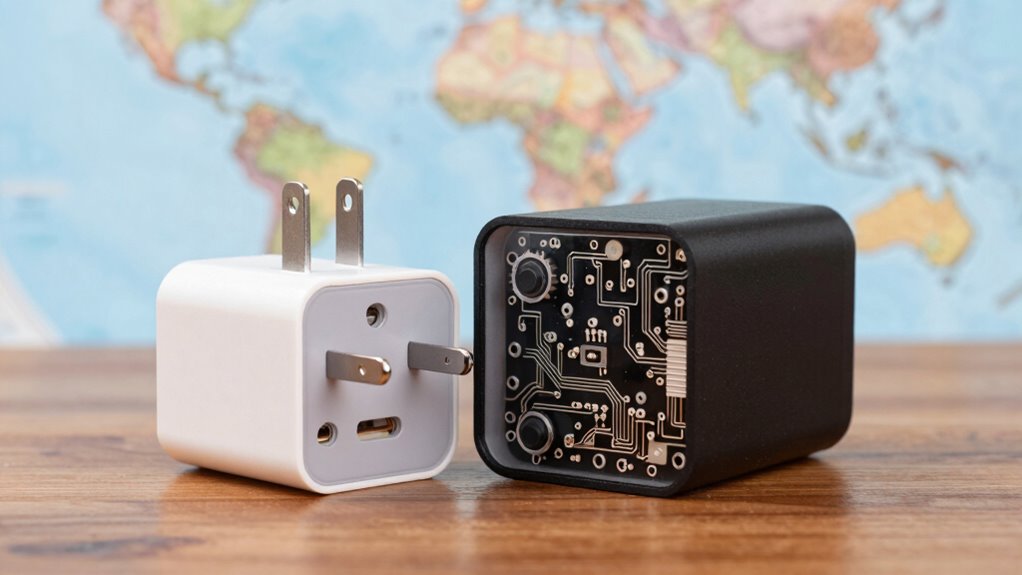
Converters work by transforming the electrical voltage from a power source to match the requirements of your device. They’re essential when traveling to different countries with varying voltage standards. Here are some key points to keep in mind:
Converters adjust electrical voltage to fit your device’s needs, crucial for international travel with differing voltage standards.
- Converter Types: Step-up and step-down converters cater to different voltage needs.
- Device Compatibility: Always check if your device can handle the converted voltage.
- Power Rating: Verify your converter can support the wattage of your device.
- Converter Limitations: Not all devices are suitable for conversion; some may be damaged if used incorrectly.
Understanding how converters operate helps you avoid potential damage and guarantees your devices work seamlessly while traveling.
How to Choose the Right Device for Your Travel Needs
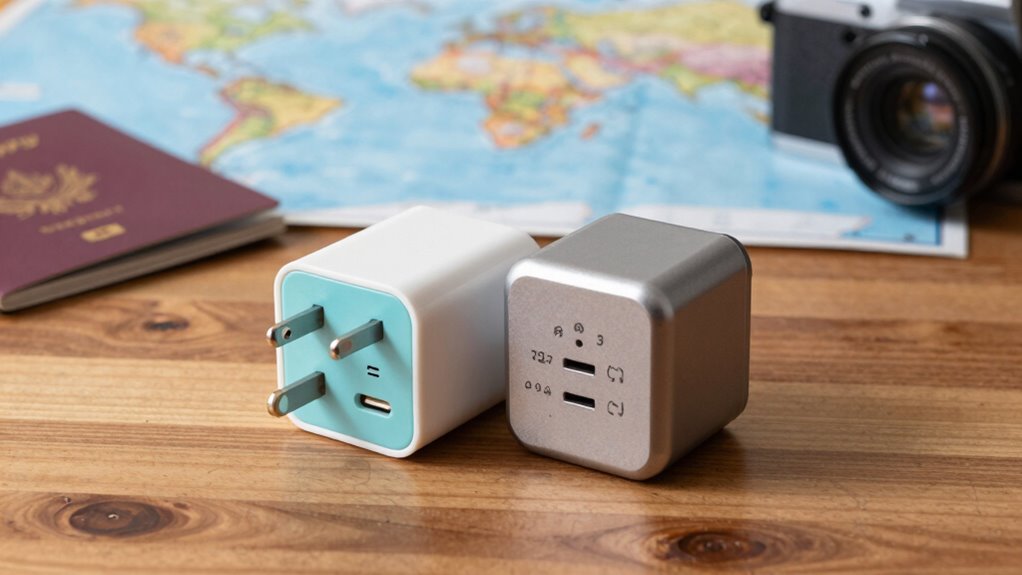
When you’re planning your trip, it’s essential to take into account voltage compatibility, plug shapes, and your devices’ power needs. Knowing these factors will help you choose between a travel adapter or a converter. Make sure you select the right device to keep your electronics safe and functioning abroad.
Voltage Compatibility Considerations
Understanding voltage compatibility is essential, especially if you want to avoid damaging your electronics while traveling abroad. Different countries have varying voltage standards, typically ranging from 100V to 240V. Here’s what you should consider for device safety:
- Check your device’s voltage rating (usually found on the charger).
- Use a voltage converter if your device can’t handle high voltage.
- Look for dual-voltage devices that work on both low and high voltage.
- Always verify if your adapter is suitable for the voltage in your destination country.
Plug Shape Requirements
While planning your travels, it’s essential to take into account the plug shape requirements for your destination. Different countries use various plug types, which can make or break your ability to charge devices. Understanding regional standards helps you choose the right adapter for your needs.
| Country | Plug Type | Adapter Needed |
|---|---|---|
| USA | Type A/B | Yes |
| Europe | Type C/E | Yes |
| UK | Type G | Yes |
Device Power Needs
Choosing the right device for your travel needs hinges on understanding its power requirements, particularly voltage and wattage. To guarantee device compatibility, you need to check the power ratings of your electronics and how they match with the local voltage. Here’s what to take into account:
- Voltage Requirements: Know if your device operates on 110V or 220V.
- Wattage Limitations: Determine how much wattage your device needs and find converters that support it.
- Dual Voltage Devices: Look for gadgets that can handle multiple voltages automatically.
- Usage Frequency: Decide if you’ll use the device often enough to warrant bringing a converter versus a simple adapter.
Being aware of these factors will help you travel smarter and keep your devices running smoothly.
What Other Gadgets Might You Need for International Travel?
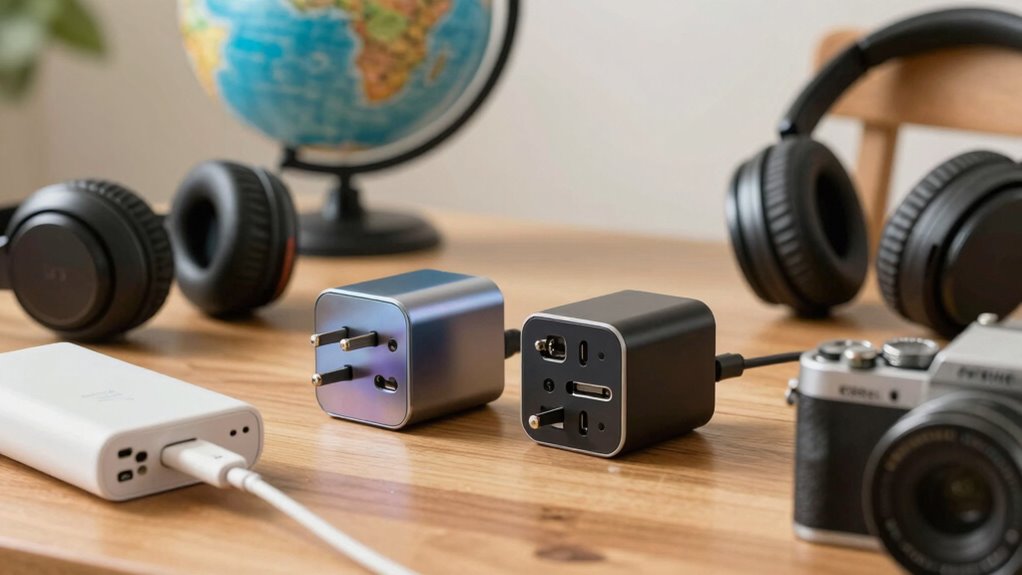
What gadgets should you pack for international travel? Start with portable chargers and power banks to keep your devices charged on the go. Universal plugs are essential for adapting to different outlets, while multi device chargers let you power multiple gadgets simultaneously. Travel-friendly gadgets like compact tech organizers help keep your cables and accessories tidy. Don’t forget your wireless earbuds for hassle-free listening during long flights or layovers. Consider mobile hotspots to stay connected without relying on public Wi-Fi. These tools will enhance your travel experience, ensuring you stay powered and connected wherever you are. Additionally, understanding electrical standards can help you avoid compatibility issues with your electronic devices. By packing smartly, you can focus on enjoying your trip rather than worrying about dead batteries or connectivity issues.
Frequently Asked Questions
Can I Use a Travel Adapter With High-Wattage Appliances?
You can’t use a travel adapter with high-wattage appliances, as it doesn’t convert voltage. Travel adapters are designed to fit different plug shapes, but they don’t handle power levels. If you plug in a high-wattage appliance, you risk damaging it or causing a safety hazard. Always check the travel adapter limitations before connecting any high-wattage device. It’s best to use a proper voltage converter for those appliances to guarantee safe operation.
Do Travel Converters Work With All Types of Electronics?
Do you really think travel converters work with all electronics? Not quite! While converters can handle many devices, they’re not universally compatible. You’ll need to check the converter compatibility with your specific electronic wattage. High-wattage appliances, like hair dryers, may require specialized converters. Always verify the wattage rating before plugging in. It’s better to be safe and confirm your devices won’t be damaged during your travels!
Will My Phone Charge Faster With a Travel Adapter?
No, your phone won’t charge faster with just a travel adapter. The charging speed depends on your phone’s power requirements and the adapter’s output. If your travel adapter matches your phone’s required wattage, it’ll work efficiently, but it won’t boost the speed beyond what your phone can handle. Always check that the adapter supports fast charging for quicker results, but simply using an adapter won’t increase the charging speed on its own.
Is It Safe to Use a Converter With a Hairdryer?
Using a converter with a hairdryer is like trying to fit a round peg in a square hole; it can lead to trouble if not done right. Hairdryer safety comes first, so check the converter wattage. If it doesn’t support your hairdryer’s needs, you risk overheating or damage. Always guarantee your converter matches your hairdryer’s power requirements to keep everything running smoothly and safely, avoiding a potentially hair-raising disaster!
Are There Travel Adapters With Built-In USB Ports?
Yes, there are travel adapters with built-in USB ports! These adapters offer USB compatibility, making it easier for you to charge multiple devices without needing extra plugs. They’re designed for travel convenience, allowing you to power your phone, tablet, and other gadgets simultaneously. Just verify the adapter meets the voltage requirements of your destination. With these handy devices, you can keep your electronics charged and ready to go wherever you are!
Conclusion
In conclusion, when you’re traveling internationally, it’s essential to know the difference between travel adapters and converters. Use an adapter for plug compatibility and a converter for voltage conversion. Equip yourself with the right device to guarantee your gadgets function seamlessly. Remember, whether you’re charging your phone, powering up your laptop, or enjoying your favorite gadgets, being prepared makes all the difference. So pack wisely, travel smart, and enjoy your adventures without worry!