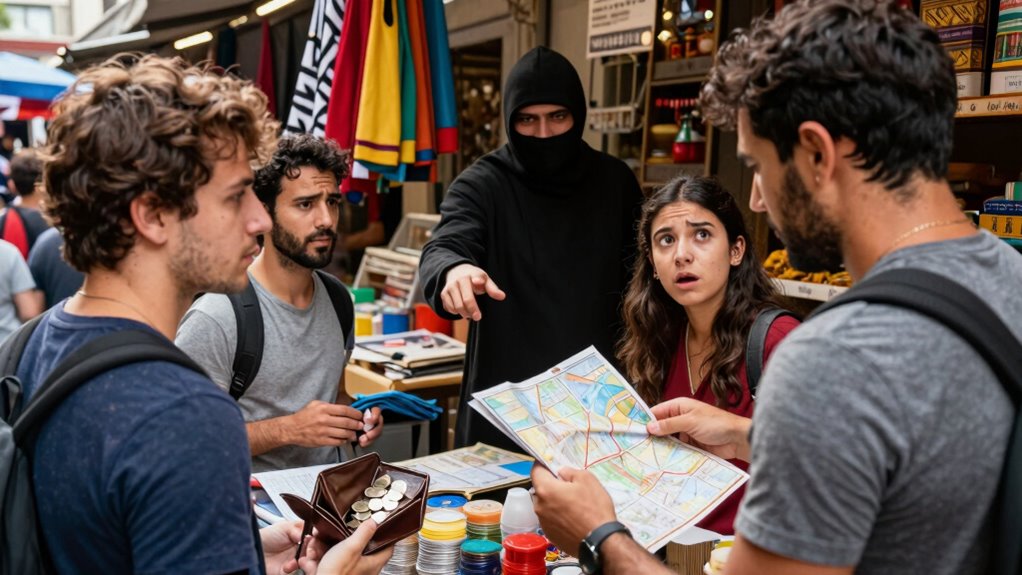

When traveling, watch out for common scams like currency exchange rip-offs, fake tour guides, and unsolicited help from overly friendly strangers. Be cautious of deals that seem too good to be true and pay attention to pressure tactics that rush your decisions. Always trust your instincts and research your destination. By staying vigilant and informed, you can avoid falling victim to these scams. There’s much more you can learn to keep your trip safe and enjoyable.

Get the little things that make your day delivered free — and shop member deals
- Fast, free delivery on millions of items
- Access to Prime Big Deal Days deals on October 6–7
- Prime Video, Amazon Music and more included
Key Takeaways
- Be wary of unsolicited help from strangers, as it may lead to scams or hidden fees.
- Look out for deals that seem too good to be true; they often come with hidden costs.
- Watch for high-pressure tactics that rush decision-making, which can indicate a scam.
- Verify the legitimacy of currency exchanges to avoid counterfeit bills or excessive fees.
- Share your experiences with scams to help inform and protect fellow travelers.
reputable currency exchange services
As an affiliate, we earn on qualifying purchases.
As an affiliate, we earn on qualifying purchases.
Common Travel Scams You Should Know About

When you’re traveling, the thrill of exploring new places can sometimes blind you to potential dangers. One common travel scam involves currency exchange. You might stumble upon a seemingly great rate, only to find hidden fees or counterfeit bills. Always stick to reputable exchange services and avoid street vendors.
Another scam to watch out for is fake guides. They often approach you with friendly smiles, offering tours that sound too good to be true. Once you agree, they might lead you to overpriced attractions or demand exorbitant fees for their “services.” To protect yourself, do your research beforehand and read reviews of any guides you consider hiring. Staying informed can save you from these common pitfalls and help you enjoy your trip safely.
As an affiliate, we earn on qualifying purchases.
Identifying Travel Scams Before They Happen
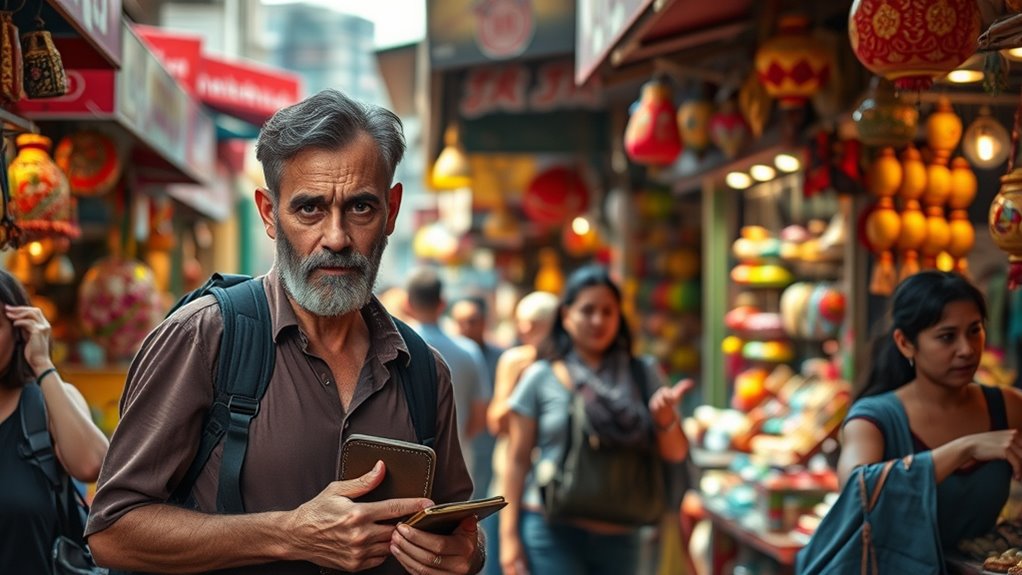
Being aware of common scams is just the first step; knowing how to identify them before they occur can greatly enhance your travel experience. To guarantee scam awareness and maintain travel vigilance, keep an eye out for these signs:
- Unsolicited help from overly friendly strangers
- Too-good-to-be-true deals that seem perfect
- Pressure tactics pushing you to act quickly
- Strange currency exchanges with hidden fees
- Fake official-looking badges claiming authority
As an affiliate, we earn on qualifying purchases.
Popular Tourist Areas That Attract Scammers

When you’re exploring popular tourist spots, be aware that certain areas are hotbeds for scams. In Europe, you might encounter common schemes that target unsuspecting travelers, while Asia has its share of tourist traps designed to empty your wallet. Staying informed can help you dodge these pitfalls and enjoy your trip without worry.
Common Scams in Europe
Europe’s bustling tourist hotspots are often a magnet for scammers looking to exploit unsuspecting visitors. You need to stay alert, as many common scams can ruin your trip. Here are some tactics to watch out for:
- Pickpocket tactics: Distracting you while an accomplice lifts your wallet.
- Fake petitioners: Approaching you with a sob story to solicit donations.
- Counterfeit currency: Receiving fake bills in exchange for your cash.
- Street performers: Using sleight of hand to create a diversion while they swipe your belongings.
- Phony tour guides: Offering tours at inflated prices and delivering little value.
Tourist Traps in Asia
Have you ever wondered why certain popular tourist areas in Asia seem to attract more than just enthusiastic travelers? These bustling spots often become hotspots for scams, like souvenir scams, where vendors sell overpriced trinkets or fake items. You might think you’re getting a great deal, but you could end up overpaying for something of little value.
Additionally, transportation fraud is rampant in these regions. Unlicensed taxis or rideshare services may charge you exorbitant fares or take longer routes to inflate the price. Always be cautious; use reputable transportation apps or official taxi services. By staying informed and vigilant, you can enjoy your travels without falling prey to these common traps that prey on unsuspecting tourists.
As an affiliate, we earn on qualifying purchases.
Tips for Protecting Yourself From Travel Scams

When traveling, it’s essential to protect yourself from scams. Research your destination thoroughly, trust your instincts, and always use secure payment methods. These steps can help guarantee your trip remains enjoyable and safe.
Research Your Destination Thoroughly
Although you might be excited about your upcoming trip, taking the time to research your destination can greatly reduce your chances of falling victim to travel scams. Understanding destination safety and local customs is essential. Here are some tips to help you prepare:
- Familiarize yourself with common scams reported by travelers.
- Learn about the local transportation system and its potential pitfalls.
- Research the typical prices for food and services to avoid overcharging.
- Understand cultural norms to avoid inadvertently offending locals.
- Check recent traveler reviews for insights on safe areas and activities.
With this knowledge, you’ll navigate your destination confidently, making your trip enjoyable and scam-free.
Trust Your Instincts Always
Even with thorough research, it’s important to be aware of your surroundings and trust your instincts while traveling. Your gut feelings often serve as a protective mechanism, guiding you away from potential scams. When something feels off, don’t dismiss it; prioritize your safety. Being mindful of societal influences on perception can help you better recognize trust in intuition and make safer choices.
| Situations to Trust Your Instincts | Reasons to Listen to Your Gut |
|---|---|
| A stranger approaches you too enthusiastically | They may have ulterior motives |
| An offer seems too good to be true | Scammers often bait with unrealistic deals |
| You feel uncomfortable in a crowded area | Your instincts alert you to potential danger |
| A local’s advice feels suspicious | Trust your judgment over uncertain recommendations |
| A sudden change in someone’s behavior | Instinctual awareness can detect deceit |
Listen to these signals, and always prioritize your well-being.
Use Secure Payment Methods
To protect yourself from travel scams, always opt for secure payment methods. Using secure transactions not only enhances payment safety but also gives you peace of mind while traveling. Here are some tips to guarantee your payments remain secure:
- Use credit cards with fraud protection features.
- Avoid public Wi-Fi for transactions; opt for mobile data instead.
- Look for “https://” in the URL when booking online.
- Choose well-known travel platforms with positive reviews.
- Enable two-factor authentication for added security.
What to Do If You Get Scammed on Your Trip?

When you realize you’ve fallen victim to a scam while traveling, it’s essential to stay calm and take immediate action. Start by reporting the incident to local authorities and your travel insurance provider. Familiarize yourself with reporting procedures to guarantee you don’t miss any critical steps. Knowing how to navigate caregiving decisions can also help you manage stress and make informed choices during stressful situations.
Avoiding Online Travel Scams
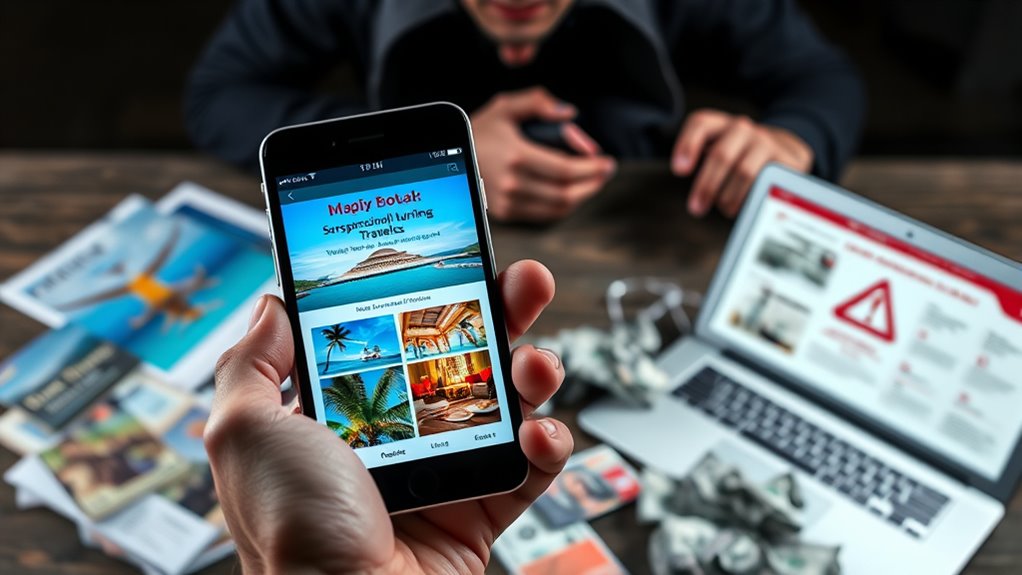
How can you protect yourself from online travel scams? Start by being cautious with online booking sites. Always research the website before making any reservations. Here are some tips to keep in mind:
- Check for secure payment options, like HTTPS in the URL.
- Look for genuine customer feedback; be wary of fake reviews.
- Compare prices across multiple sites to avoid deals that seem too good to be true.
- Verify the legitimacy of the company by reading online forums and travel blogs.
- Trust your instincts; if something feels off, it probably is.
Reporting Travel Scams to Authorities

Although you may feel frustrated after falling victim to a travel scam, reporting it to the authorities can help prevent others from experiencing the same fate. Start by gathering all relevant scam documentation, including emails, receipts, and any communication with the scammer. This evidence is essential for the reporting procedures. Contact your local consumer protection agency or the police to file a report. They often have dedicated units for dealing with fraud cases. If the scam occurred online, report it to the website or platform where it took place. You can also notify your credit card company or bank if financial information was involved. By taking these steps, you contribute to a safer travel environment for everyone.
Case Studies: Learning From Travel Scam Experiences

Sharing your experience after reporting a travel scam can be incredibly valuable for others. Real life anecdotes help travelers recognize the signs and develop effective prevention strategies. Here are some common scenarios you might encounter:
Sharing your travel scam experiences can empower others to identify red flags and stay safe on their journeys.
- A friendly local offering unsolicited tour guidance
- A “too good to be true” hotel deal that disappears
- A scammer posing as a travel agent requesting deposits
- Street performers demanding payment after an unsolicited performance
- Fake charities asking for donations in tourist hotspots
Frequently Asked Questions
How Can I Recognize a Legitimate Tour Guide?
To recognize a legitimate tour guide, check their credentials first. Look for certifications or licenses that prove they’re qualified. Ask for local recommendations from trusted sources or fellow travelers; this can lead you to reputable guides. Pay attention to their communication style and responsiveness, too. A professional guide will be friendly, knowledgeable, and enthusiastic to answer your questions. Trust your instincts—if something feels off, it might be best to look elsewhere.
Are Travel Insurance Policies Effective Against Scams?
Travel insurance policies can be a double-edged sword. While they offer coverage for unexpected events, they might not fully protect you against travel fraud. You might think you’re safe, but if a scammer tricks you into paying for a nonexistent service, your insurance might not cover that loss. Always read the fine print to know what’s included in your insurance coverage, and stay vigilant to avoid falling victim to those scams.
What Are Common Signs of a Fake Taxi Service?
Look out for fake taxi signs like missing or tampered logos and unlit taxi lights. If the driver doesn’t have an ID or the vehicle isn’t licensed, it’s a red flag. Always check for a meter; if they refuse, don’t get in. Taxi driver tips include verifying the vehicle’s license plate and using a rideshare app to book your ride. Trust your instincts; if something feels off, it probably is!
How Can I Verify the Authenticity of Travel Reviews?
Did you know that about 20% of online reviews are fake? To verify the authenticity of travel reviews, look for detailed descriptions and consistent user authenticity across platforms. Check the reviewer’s profile for activity history and ratings. Use tools that specialize in review verification, and be cautious of overly positive or negative reviews. Cross-reference with trusted sources to guarantee you’re getting an accurate picture of the travel experience.
Should I Change My Travel Plans if I Suspect a Scam?
If you suspect a scam, you should definitely consider changing your travel plans. Your safety’s the top priority, and travel flexibility can help you avoid potential risks. Look into alternative options or destinations that feel more secure. Don’t hesitate to reach out to trusted sources for advice. Remember, it’s better to be safe than sorry, so trust your instincts and make adjustments as needed to guarantee a worry-free trip.
Conclusion
When you travel, remember that “an ounce of prevention is worth a pound of cure.” By staying informed about common scams and taking proactive measures, you can protect yourself and enjoy your trip to the fullest. Keep your eyes open, trust your instincts, and don’t hesitate to seek help if something feels off. With a little awareness, you can make unforgettable memories without falling victim to deception. Safe travels!
NFL season / tailgating Picks
team gear
As an affiliate, we earn on qualifying purchases.