
To fix your router issues fast, focus on speed, coverage, and security features. High-speed routers reduce lag, while the latest Wi-Fi standards guarantee better connectivity. Optimize your setup by placing the router centrally and considering dual-band or tri-band options based on your household’s needs. Don’t forget essential security features like WPA3 encryption to protect your network. Each of these aspects can improve your internet experience considerably, and you’ll discover more helpful tips next.
Key Takeaways
- Invest in high-speed routers for reduced lag and buffering during streaming, gaming, and browsing experiences.
- Choose dual-band or tri-band routers based on your household’s device usage and internet demands for optimal performance.
- Ensure robust security features, such as WPA3 encryption and regular firmware updates, to protect your network from vulnerabilities.
- Position your router centrally and elevate it to maximize signal strength and Wi-Fi coverage throughout your space.
- Utilize Quality of Service (QoS) settings to prioritize bandwidth for gaming and streaming, minimizing interruptions during peak usage times.

TP-Link AX1800 WiFi 6 Router (Archer AX21) – Dual Band Wireless Internet, Gigabit, Easy Mesh, Works with Alexa – A Certified for Humans Device, Free Expert Support
DUAL-BAND WIFI 6 ROUTER: Wi-Fi 6(802.11ax) technology achieves faster speeds, greater capacity and reduced network congestion compared to…
As an affiliate, we earn on qualifying purchases.
As an affiliate, we earn on qualifying purchases.
Why Speed Matters for Your Router

Why does speed matter when it comes to your router? Internet speed greatly impacts your overall online experience. A high-speed router can enhance your streaming, gaming, and browsing by providing a seamless connection. When you’re downloading large files or engaging in video calls, you’ll notice that faster internet speeds reduce lag and buffering, allowing you to stay productive and entertained without interruptions.
Router performance also plays an essential role here; a powerful router can handle multiple devices without sacrificing speed. If you’ve got a smart home filled with gadgets, you’ll want a router that can keep up. Ultimately, investing in a high-speed router means investing in a smoother, more efficient internet experience for all your activities.
TP-Link AX1800 WiFi 6 Router (Archer AX21) – Dual Band Wireless Internet, Gigabit, Easy Mesh, Works with Alexa – A Certified for Humans Device, Free Expert Support
DUAL-BAND WIFI 6 ROUTER: Wi-Fi 6(802.11ax) technology achieves faster speeds, greater capacity and reduced network congestion compared to…
As an affiliate, we earn on qualifying purchases.
As an affiliate, we earn on qualifying purchases.
Understanding Wi-Fi Standards for Better Connectivity
Understanding Wi-Fi standards can greatly enhance your experience. Each Wi-Fi generation, from 802.11b to Wi-Fi 6 and beyond, brings improvements in speed and bandwidth efficiency. The latest standards support higher data rates and better performance in crowded environments, making them ideal for streaming, gaming, and remote work.
When choosing a router, consider its compatibility with these generations to guarantee you’re getting the best performance. For instance, Wi-Fi 5 and Wi-Fi 6 offer significant advancements in bandwidth efficiency, allowing more devices to connect without slowing down your network. By staying informed about these standards, you’ll optimize your internet experience and enjoy seamless connectivity throughout your space. Understanding Wi-Fi standards can help you make smarter choices when upgrading your network equipment.
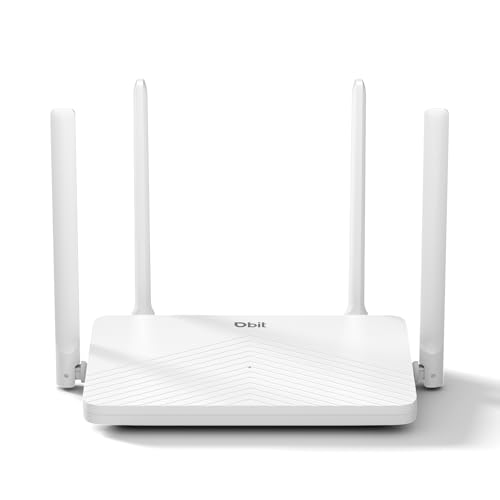
DBIT AC1200 Dual Band Mesh WiFi Router Long Range Wireless Internet Router with 4 x High-Power FEMs, 4 x 10/100/1000 Mbps Gigabit Ports, WPA3 Security, Parental Controls, Guest Network (T18-21K Pro)
𝐀𝐂𝟏𝟐𝟎𝟎 𝗗𝘂𝗮𝗹-𝗕𝗮𝗻𝗱 𝐖𝐢-𝐅𝐢 𝐑𝐨𝐮𝐭𝐞𝐫: Dual-band wireless speeds up to 1200Mbps (300 Mbps on 2.4GHz + 867 Mbps on…
As an affiliate, we earn on qualifying purchases.
As an affiliate, we earn on qualifying purchases.
Maximizing Coverage: Why Range Matters
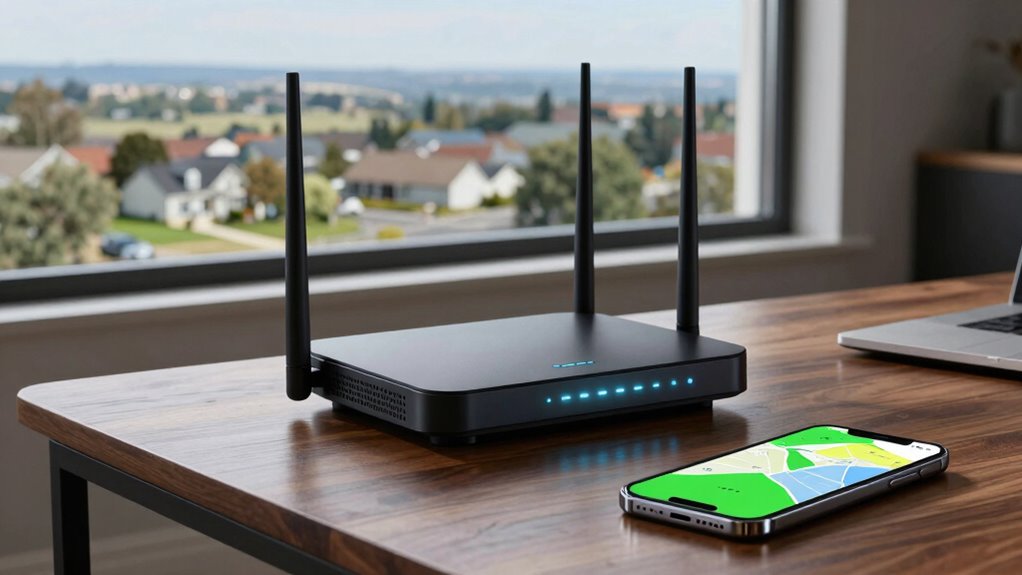
When it comes to your Wi-Fi experience, signal strength is essential for staying connected. You’ll want to take into account the ideal router placement and be aware of obstacles that can interfere with your signal. Understanding these factors can help you maximize your coverage and improve your overall connectivity.
Importance Of Signal Strength
Signal strength plays an essential role in your overall internet experience, especially in larger spaces where obstacles can weaken connectivity. By focusing on signal strength testing, you can identify weak spots in your home or office. Understanding how to optimize placement can greatly enhance your Wi-Fi coverage.
Here’s a quick overview of factors affecting signal strength:
| Factor | Impact on Signal Strength | Tips for Improvement |
|---|---|---|
| Distance from Router | Decreases signal strength | Keep devices closer |
| Walls/Obstacles | Blocks signals | Minimize barriers |
| Router Type | Varies by technology | Upgrade to newer models |
Maximizing signal strength guarantees reliable connections, smoother streaming, and better overall performance. Take the time to assess your environment and make necessary adjustments.
Ideal Router Placement
To maximize your Wi-Fi coverage, placing your router in the right location is essential. Start with router positioning; ideally, it should be centralized in your home to guarantee even distribution of the signal. Avoid putting it in a corner or behind furniture, as this can weaken the signal. Aim for an ideal height by placing the router on a shelf or wall mount, allowing the signal to spread more effectively. Elevating the router minimizes interference and allows it to reach all areas of your home. Additionally, keep it away from appliances that can cause disruption. With the right positioning and height, you’ll enjoy stronger, more reliable Wi-Fi throughout your space.
Obstacles That Interfere
Even with the right placement, various obstacles can hinder your router’s performance and limit your Wi-Fi coverage. Physical barriers like walls, floors, and furniture can block signals, reducing your connection strength. Appliances such as microwaves and cordless phones act as interference sources, causing disruptions in your network. To maximize your router’s effectiveness, identify and minimize these barriers. For instance, place your router in an open space, away from large metal objects. You might also consider using Wi-Fi extenders to reach dead zones in your home. By addressing these obstacles, you’ll enhance your coverage and guarantee a smoother online experience. Remember, the clearer the path between your devices and the router, the better your connection will be.
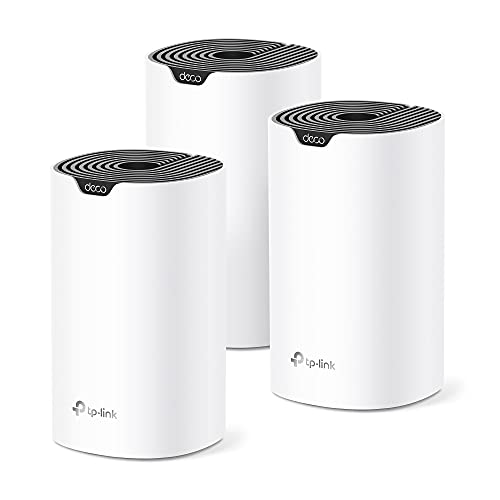
TP-Link Deco S4 Mesh AC1900 WiFi System – Up to 5,500 Sq.ft. Coverage, Replaces WiFi Router and Extender, Gigabit Ports, Works with Alexa, Deco S4(3-Pack)
A New Way to WiFi: Deco Mesh technology gives you a better WiFi experience in all directions with…
As an affiliate, we earn on qualifying purchases.
As an affiliate, we earn on qualifying purchases.
Essential Security Features for Your Router
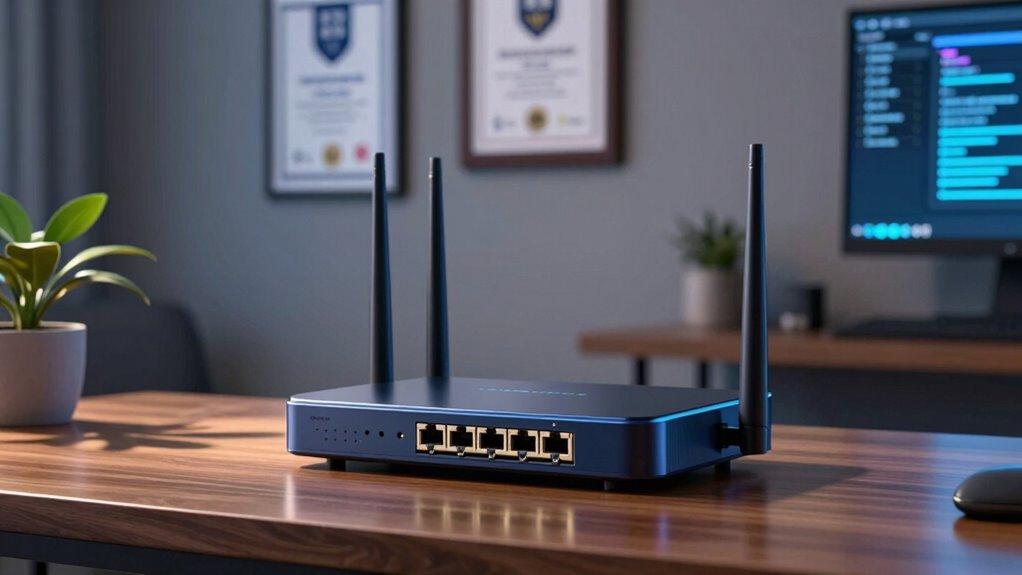
While many people focus on speed and coverage when choosing a router, essential security features are just as critical for protecting your network. Start by ensuring your router has robust firewall settings. A good firewall acts as a barrier between your home network and potential threats from the internet. Regular firmware updates are also crucial; they patch vulnerabilities and enhance performance. Make it a habit to check for these updates frequently. Additionally, consider enabling WPA3 encryption for added security, which helps safeguard your Wi-Fi password from hackers. Finally, disable features like WPS, which can expose your network to risks. By prioritizing these security features, you’ll create a safer online environment for yourself and your family.
Dual-Band vs. Tri-Band: Which to Choose?
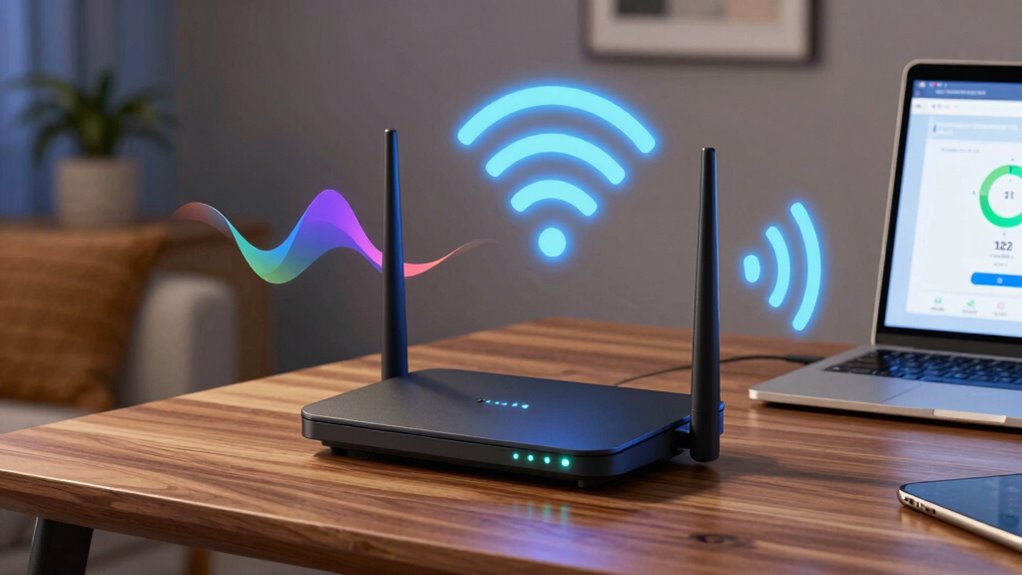
When choosing between dual-band and tri-band routers, speed and performance are key factors to take into account. Tri-band routers can handle more devices simultaneously, which might be essential if you have a busy household. Additionally, think about your coverage area; a tri-band router can provide better signal strength in larger spaces.
Speed And Performance Differences
Choosing between dual-band and tri-band routers can greatly impact your network’s speed and performance. Dual-band routers operate on 2.4 GHz and 5 GHz frequencies, which suits most home users. However, if you’re streaming high-definition content or gaming online, you might notice the limitations of dual-band. Tri-band routers add an extra 5 GHz band, allowing for better distribution of devices and higher performance benchmarks, especially in busy households. If you frequently experience lag or buffering, consider router upgrades to a tri-band model. It can handle multiple devices simultaneously with less interference, providing a smoother experience. Ultimately, think about your internet usage and the number of devices connected to determine which option delivers the best performance for your needs.
Coverage Area Considerations
A router’s coverage area is essential for ensuring strong and reliable Wi-Fi throughout your home. When choosing between dual-band and tri-band routers, consider your specific needs. Dual-band routers operate on two frequencies, which is usually sufficient for small to medium spaces. However, if you have a larger home or multiple devices streaming simultaneously, a tri-band router can enhance signal propagation, giving you that extra coverage area you need. Tri-band routers often distribute traffic more efficiently, reducing congestion. Additionally, understanding channel management can help optimize your Wi-Fi performance further. Ultimately, the choice depends on how much area you need to cover and how many devices you connect. Assess your environment and usage to make the best decision for maximum Wi-Fi performance.
Key Gaming Features: Low Latency and QoS
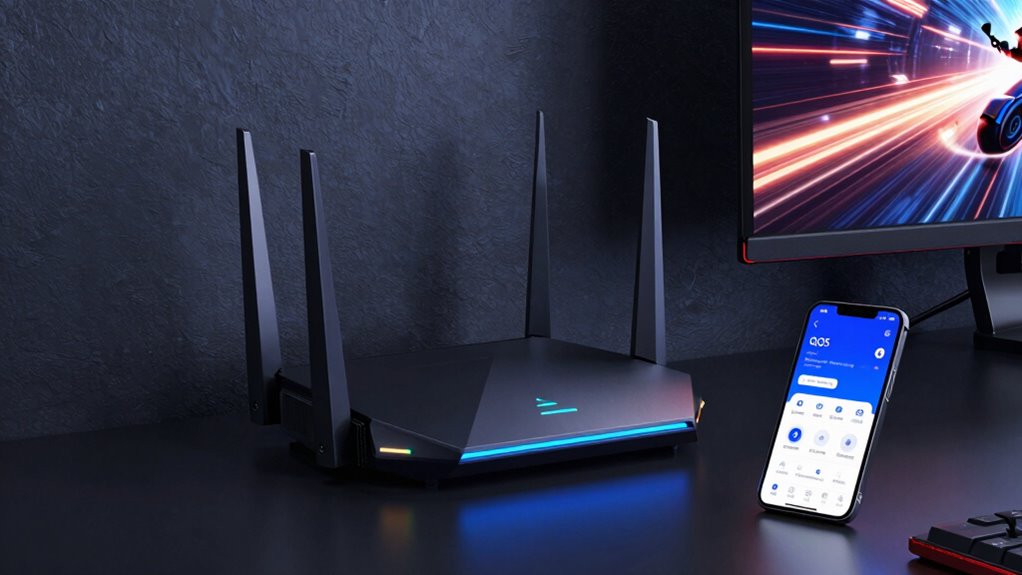
For gamers, low latency and Quality of Service (QoS) are essential features that can make or break your online experience. Low latency guarantees that your actions in-game occur almost instantly, reducing lag and giving you a competitive edge. With high-speed connections, you’ll notice smoother gameplay and better reaction times, directly enhancing your gaming performance. QoS comes into play by prioritizing your gaming traffic over other network activities. This means that during intense online sessions, your router can allocate bandwidth effectively, minimizing interruptions from other devices. By focusing on these key features, you can optimize your network for gaming, assuring you stay ahead of the competition and enjoy an uninterrupted experience. Don’t underestimate the impact of low latency and QoS on your gaming setup!
Smart Home Ready: Choosing the Right Router
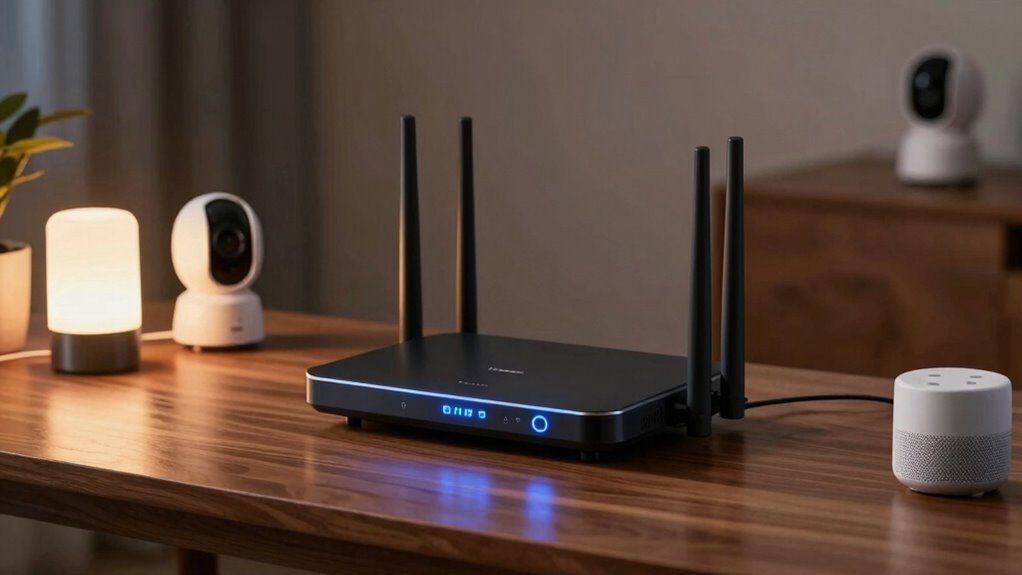
How can you guarantee your router meets the demands of a smart home? First, look for a router that supports multiple connectivity types, like Wi-Fi 5 or Wi-Fi 6. These standards ensure faster speeds and better performance for your smart devices. A dual-band or tri-band router can help manage the traffic from multiple devices without lag. Next, consider routers with built-in smart home features, such as compatibility with Amazon Alexa or Google Assistant. This integration simplifies managing your devices. Additionally, prioritizing security features like WPA3 encryption can help safeguard your network from potential threats. Smart home compatibility is an essential factor to ensure seamless device interaction and future-proof your setup. Also, choosing a router with robust security capabilities can help protect your network from cyber threats. Incorporating local automation features can further enhance your smart home experience by enabling devices to communicate directly without relying solely on cloud services. Understanding the importance of network reliability can help you choose a router that minimizes interruptions and maintains consistent connectivity. Moreover, selecting a router with advanced QoS settings can optimize bandwidth for high-priority devices and activities, ensuring a smoother smart home operation. By choosing the right router, you’ll enhance your smart home’s connectivity and guarantee seamless interaction among all your devices.
Frequently Asked Questions
How Do I Reset My Router to Factory Settings?
To reset your router to factory settings, locate the reset button—usually a small pinhole on the back. Press and hold it for about 10 seconds using a paperclip or similar tool. You’ll see the lights blink, indicating it’s resetting. Once done, your router will revert to its original settings. This can help with troubleshooting issues you might be facing. Don’t forget to reconfigure your network settings afterward!
What Is the Lifespan of a Typical Router?
A typical router’s lifespan is around three to five years. Imagine your router as a hardworking gardener, nurturing your digital garden. To boost its longevity, keep it dust-free and well-ventilated. Regularly update its firmware and place it in a central location for ideal signal distribution. By following these maintenance tips, you can guarantee your router thrives longer, providing you with a flourishing online experience. Don’t let your connection wither away!
Can I Use a Router as a Modem?
You can’t directly use a router as a modem since their functionalities differ. A modem connects you to your Internet Service Provider, while a router shares that connection with your devices. However, some devices combine both functionalities, offering modem compatibility with built-in router features. If you’re considering this option, make sure the device meets your needs for speed and coverage. Always check specifications to confirm it supports your internet service effectively.
How Do I Update My Router’s Firmware?
To keep your router secure, you need to update its firmware regularly. First, log into your router’s settings via a web browser. Look for the firmware update section, often under “Administration” or “Settings.” Click the option to check for updates. If an update’s available, follow the prompts to install it. Don’t forget to reboot your router afterward. Staying up-to-date guarantees you’re not leaving the door wide open for potential threats!
What Should I Do if My Wi-Fi Keeps Dropping?
If your Wi-Fi keeps dropping, check for signal interference from devices like microwaves or cordless phones. Move your router to a central location to improve coverage. You should also look for network congestion—too many devices connected can strain the signal. Try disconnecting some devices or upgrading your plan if necessary. Additionally, consider changing the router’s channel in the settings to minimize interference and enhance your overall connection stability.
Conclusion
In the vast ocean of connectivity, your router is the sturdy ship steering through the waves of data. By prioritizing speed, range, and security, you can sail smoothly through online tasks and adventures. Whether you’re streaming, gaming, or controlling smart devices, the right features will keep you anchored in a sea of seamless performance. So, set your course with confidence—equip yourself with a router that meets your needs and transforms your digital experience into a breeze.