Smart home protocols like Wi-Fi, Zigbee, and Z-Wave are essential for connecting your devices and ensuring smooth communication. Wi-Fi offers high bandwidth but can struggle with coverage in larger homes. Zigbee is energy-efficient with a robust mesh network, making it ideal for sensors and smart lighting. Z-Wave also prioritizes low power consumption and is easy to set up. Each protocol has unique benefits and drawbacks, so stick around to discover how to choose the best one for your needs.
Key Takeaways
- Wi-Fi offers high bandwidth but requires strong range and security measures, making it suitable for most smart devices.
- Zigbee features low power consumption and mesh networking, ideal for energy-efficient applications like sensors and smart lighting.
- Z-Wave also emphasizes low power use and robust mesh networking, with exceptional interoperability and ease of setup for various devices.
- Security in smart home protocols includes encryption, authentication, and regular updates to protect user data and prevent unauthorized access.
- Choosing the right protocol depends on user needs, budget, and preferences for power efficiency and connectivity reliability.

EIGHTREE Smart Plug, WiFi Outlet Works with Alexa & Google Home, Smart Home Socket with Remote Control & Timer Function, 2.4GHz WiFi Only, 4 Packs
Warm Tips: To use Alexa and Google Home for voice control, please connect the plug with the “Smart…
As an affiliate, we earn on qualifying purchases.
As an affiliate, we earn on qualifying purchases.
What Are Smart Home Protocols and Why Do They Matter?
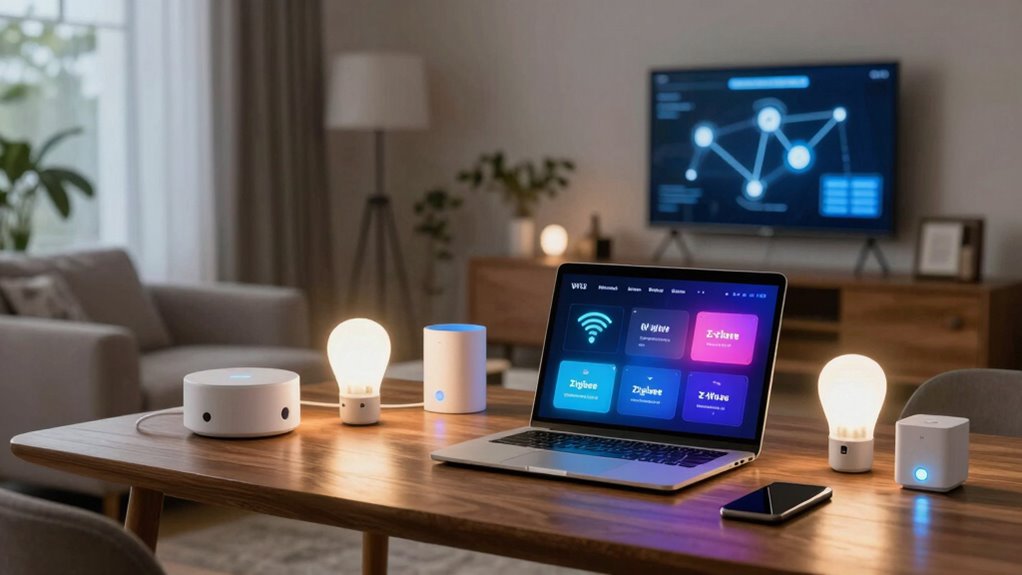
As you immerse yourself in the world of smart homes, it’s essential to understand what smart home protocols are and why they matter. Smart home protocols are the communication standards that enable devices to work together seamlessly. They dictate how devices like lights, locks, and thermostats connect and interact, ensuring smooth smart home integration. Without the right protocol compatibility, you could end up with devices that don’t communicate effectively, leading to frustration and inefficiency. Common protocols include Zigbee, Z-Wave, and Wi-Fi, each offering unique advantages. By choosing devices that support compatible protocols, you’ll enhance your home’s functionality, making it easier to manage everything from lighting to security—all from a single interface. smart home protocols are essential for enabling local automation and cross-platform integration, which can significantly improve your overall smart home experience.

THIRDREALITY Zigbee Smart Color Bulb ZL1 4Pack,Compatible with Home Assistant(ZHA&Z2M), SmartThings,Aeotec,Homey,Hubitat or Echo Devices With Built-in Hub,A19 RGBCW Bulb,2700K-6500K Tunable,800 Lumens
Zigbee 3.0 Standard: Requires a Zigbee hub. Works with compatible Zigbee hubs or Echo devices with Zigbee hub…
As an affiliate, we earn on qualifying purchases.
As an affiliate, we earn on qualifying purchases.
Understanding Wi-Fi for Smart Home Devices
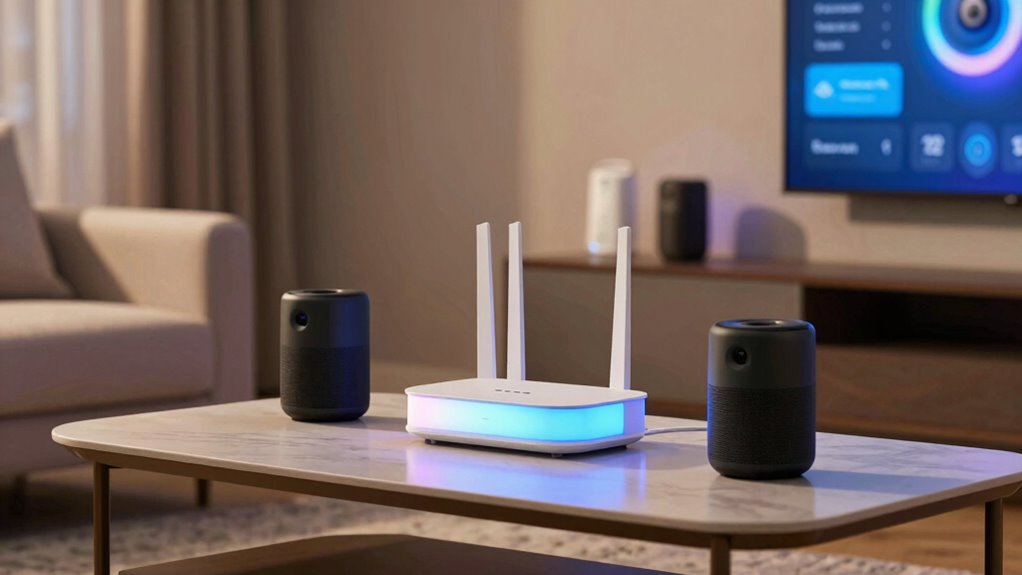
How does Wi-Fi fit into the smart home ecosystem? Wi-Fi’s fundamental for connecting your smart devices, offering high bandwidth for streaming and data transfer. Its compatibility with most devices means you won’t have to worry about whether your gadgets will connect. When setting up your Wi-Fi, make sure you have a strong range to cover your entire home, as weak signals can lead to high latency and frustrating delays. Wi-Fi security is another crucial aspect; using strong passwords and encryption helps protect your network from unauthorized access. Overall, a well-configured Wi-Fi setup empowers your smart home, allowing seamless communication between devices while guaranteeing robust performance and security.

Shelly Wave Door/Window White, Z-Wave Long Range Operated Sensor, Home Automation, Compatible with Alexa, Google Home, SmartThings & Home Assistant, Bulletproof Security, Lux & Tilt Angle Measurement
Shelly Wave Door/Window LR is Z-Wave Long Range (ZWLR) sensor that detects and reports opening or closing of…
As an affiliate, we earn on qualifying purchases.
As an affiliate, we earn on qualifying purchases.
Zigbee: Advantages for Effective Home Automation
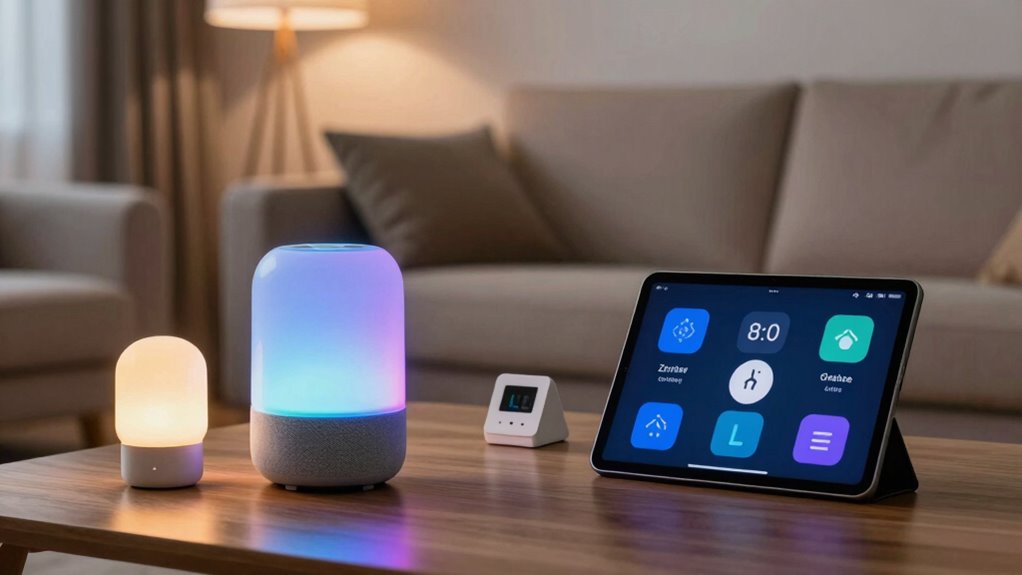
While Wi-Fi is essential for smart home connectivity, Zigbee offers unique advantages that enhance home automation. One of the major Zigbee benefits is its low power consumption, allowing your devices to run for years on a single battery. This makes it ideal for various Zigbee applications, like sensors and smart lighting, which need to be energy-efficient. Zigbee also supports a mesh networking topology, enabling devices to communicate with each other directly. This enhances network reliability and expands the range of your smart home setup. Plus, with a wide range of compatible devices, you can easily integrate Zigbee into your existing system. Additionally, Zigbee’s smart programming principles ensure that your automation routines are efficient and scalable, making your smart home more effective. Overall, Zigbee provides a robust solution for effective home automation that you’ll appreciate.
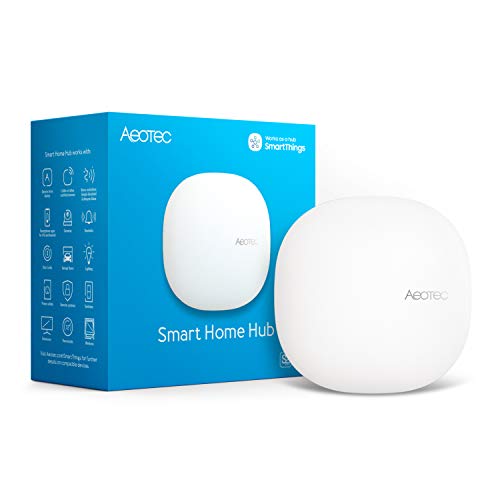
Aeotec Smart Home Hub, Works as a SmartThings Hub, Z-Wave, Zigbee, Matter Gateway, Compatible with Alexa, Google Assistant, WiFi
Connect & control your smart home — Easily link thousands of compatible devices from leading brands to create…
As an affiliate, we earn on qualifying purchases.
As an affiliate, we earn on qualifying purchases.
Key Advantages of Using Z-Wave for Home Automation
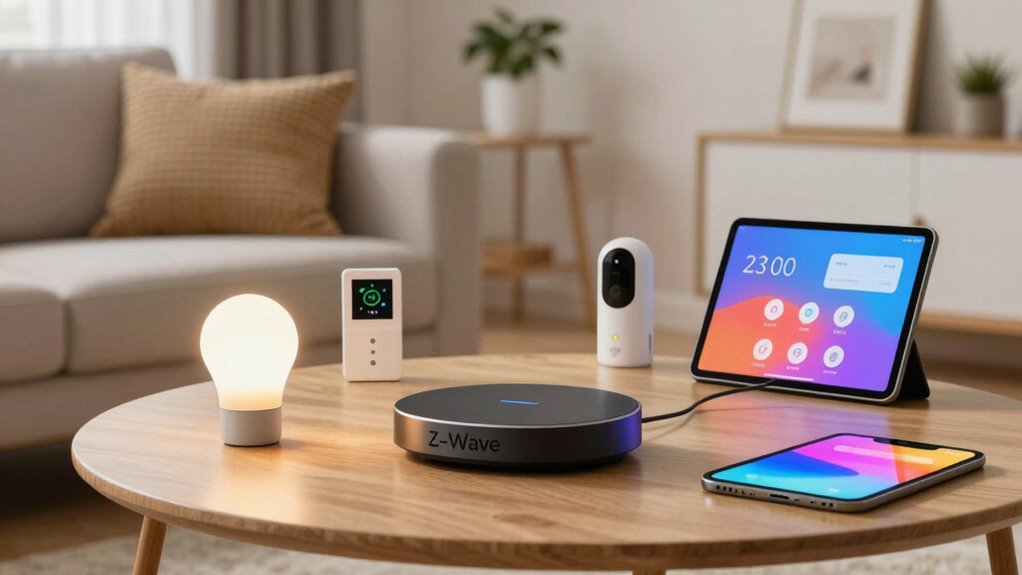
When you consider home automation, Z-Wave offers some standout benefits. Its low power consumption guarantees your devices run efficiently, while robust mesh networking enhances reliability throughout your home. Plus, Z-Wave’s interoperability means you can easily connect a wide range of devices seamlessly. Additionally, understanding battery capacity helps optimize your device performance and longevity.
Low Power Consumption
One of the standout benefits of using Z-Wave for home automation is its low power consumption. This protocol prioritizes energy efficiency, ensuring your devices use less power while maintaining performance. By leveraging Z-Wave, you’ll see a noticeable improvement in battery longevity for your smart home devices, meaning they can last longer between charges or battery replacements. This is particularly important for devices like sensors and locks that often rely on batteries. Plus, lower energy consumption translates to cost savings on your electricity bill over time. When you choose Z-Wave, you’re not just enhancing your home automation experience; you’re also making a smart choice for the environment and your wallet. Enjoy the benefits of a sustainable home with Z-Wave’s efficient technology.
Robust Mesh Networking
Z-Wave’s robust mesh networking capability guarantees that your smart home devices communicate effectively, even at longer distances. This means that each device acts as a relay, extending the range and ensuring constant connectivity. One of the key mesh network advantages is that if one device fails, others can still maintain communication, boosting network reliability. You won’t have to worry about dead spots or inconsistent signals, allowing your devices to work seamlessly together. Plus, with every new device you add, the network becomes stronger, creating a self-healing system that adapts to your home’s layout. Proper device placement is essential for maximizing the benefits of mesh networks and maintaining optimal coverage. This flexibility and resilience make Z-Wave a solid choice for anyone looking to enhance their home automation experience.
Interoperability With Devices
While many smart home protocols struggle with compatibility, Z-Wave stands out for its exceptional interoperability with a wide range of devices. You’ll appreciate how easily Z-Wave integrates into your home automation system, enhancing device compatibility and enabling seamless cross-protocol integration. Here are some advantages you can expect:
- Wide Device Range: Connect everything from lights to locks.
- Vendor Diversity: Choose from numerous manufacturers for your devices.
- Easy Setup: Add devices with minimal hassle.
- Future-Ready: Stay updated with new devices as they emerge.
Additionally, Z-Wave’s wireless mesh network helps extend coverage throughout your home, ensuring reliable connectivity even in larger spaces.
With Z-Wave, you won’t have to worry about compatibility issues. Instead, you’ll enjoy a cohesive smart home experience, making everyday tasks simpler and more efficient.
Comparing Range and Speed of Smart Home Protocols
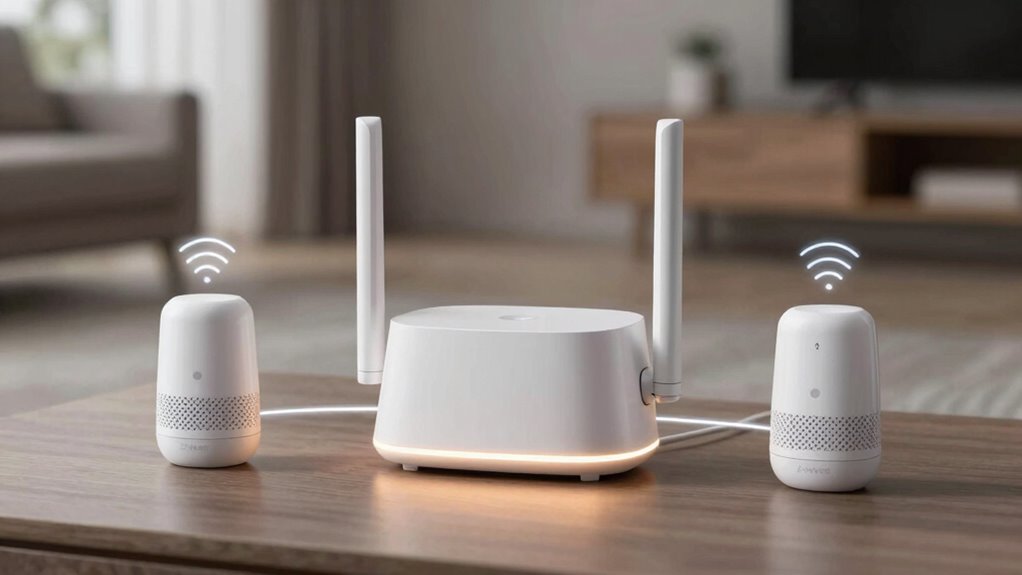
How do the range and speed of different smart home protocols stack up against each other? In a range comparison, Zigbee and Z-Wave typically outperform Wi-Fi due to their mesh networking capabilities. Zigbee offers a range of about 100 meters indoors, while Z-Wave can reach up to 30 meters. Wi-Fi, on the other hand, generally covers larger areas but may suffer from interference and reduced speed with multiple devices connected. When it comes to speed analysis, Wi-Fi leads with higher data transfer rates, making it ideal for streaming and heavy usage. However, for simple device communication, Zigbee and Z-Wave provide sufficient speed while maintaining lower power consumption. Ultimately, your choice depends on your specific needs and layout.
How Security Features Impact Your Choice of Smart Home Protocol
As you explore smart home protocols, you’ll quickly realize that security features play an essential role in your decision-making process. Different protocols have varying levels of protection against security vulnerabilities, which can impact your home’s safety. Here are key aspects to take into account:
- Encryption Standards – Look for protocols that use strong encryption methods to safeguard your data.
- Authentication – Verify devices confirm each other’s identities to prevent unauthorized access.
- Regular Updates – Choose protocols that receive frequent updates to fix any potential security flaws.
- Network Segmentation – Opt for systems that can isolate smart devices from your main network for added security.
- Security Protocol Compliance – Ensure the protocol adheres to established security standards to provide a baseline of protection.
Making informed choices here can greatly enhance your smart home’s protection.
How to Pick the Best Protocol for Your Smart Home?
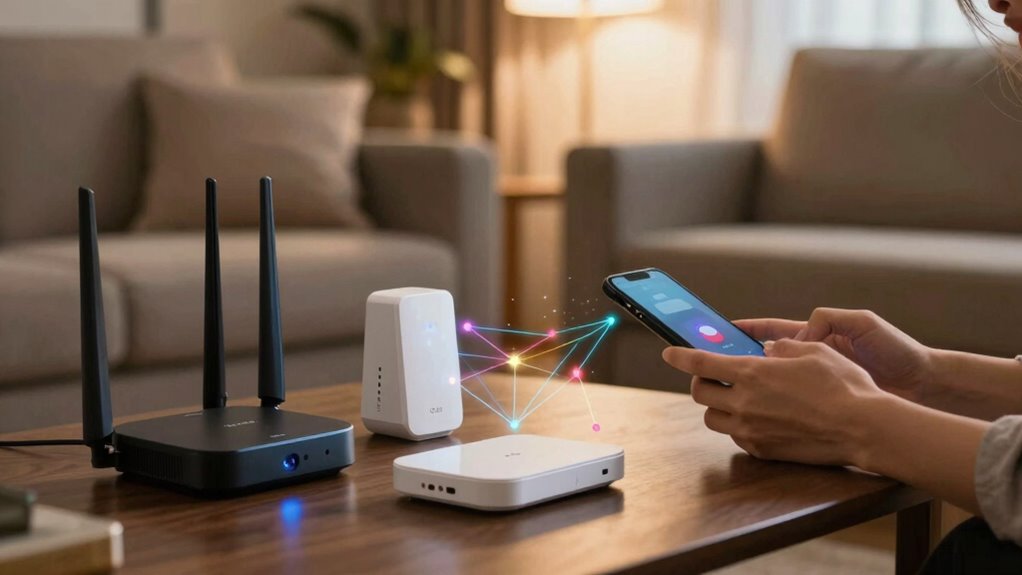
Which smart home protocol is right for you? Start by evaluating your user experience needs. If you value simplicity and quick setup, Wi-Fi might suit you best, though it may affect cost efficiency. Zigbee and Z-Wave offer greater device compatibility and system scalability, perfect for larger setups. Consider installation complexity; Zigbee requires a hub, while Z-Wave devices are often easier to integrate. Think about your budget too; while Zigbee tends to be more cost-efficient, Z-Wave devices can be pricier but may offer better range. Finally, reflect on your user preferences—if you prioritize low power consumption and robust connectivity, Zigbee is a good choice. Choose a protocol that aligns with your lifestyle and smart home aspirations, especially considering the home‑care techniques that improve your daily comfort.
Future Trends in Smart Home Communication Protocols

With the rapid evolution of smart home technology, staying informed about future trends in communication protocols is essential for making informed choices. Here are some key trends to watch for:
- Integration of Emerging Technologies: Look for protocols that incorporate AI and machine learning for smarter automation.
- Interoperability: Expect more devices to support multiple protocols, ensuring seamless communication across platforms.
- Enhanced Security: As smart homes grow, industry standards will prioritize robust security measures to protect user data.
- Low-Power Solutions: Future protocols will focus on energy efficiency, allowing devices to operate longer on minimal battery power.
- Adaptive Protocols: The development of adaptive protocols that can dynamically optimize performance and energy use based on environmental conditions is also on the horizon.
Frequently Asked Questions
Can I Mix Different Smart Home Protocols in One System?
You can mix different smart home protocols in one system, but you’ll face protocol integration challenges. Not all devices communicate seamlessly, leading to device interoperability concerns. It’s essential to check compatibility before purchasing, as some hubs can bridge different protocols. However, you might experience limitations in functionality or performance. To guarantee a smooth experience, consider sticking to compatible devices or investing in a smart hub designed for diverse protocols.
How Do Smart Home Protocols Affect Energy Consumption?
Have you ever considered how a tiny device can impact your energy bill? Smart home protocols play an essential role in energy efficiency. Different protocols manage device communication in unique ways, which can either optimize or drain energy usage. For instance, Zigbee and Z-Wave are designed for low power consumption, letting devices communicate effectively without hogging energy. By choosing the right protocol, you can enhance your home’s energy efficiency and reduce costs.
Are There Compatibility Issues With Older Devices?
Yes, there can be compatibility issues with older devices. When you’re trying to integrate legacy devices into your smart home system, you might face protocol upgrade challenges. Many older devices use outdated technology that doesn’t easily sync with newer protocols. This can limit functionality or require additional adapters. To guarantee a smoother experience, it’s essential to check compatibility before purchasing new devices or upgrading your existing setup.
What Devices Primarily Use Zigbee or Z-Wave?
You might be surprised to learn that Zigbee devices are often found in smart bulbs, sensors, and smart plugs, creating a seamless home experience. On the other hand, Z-Wave devices typically include smart locks, thermostats, and security systems, enhancing your home’s safety and efficiency. With both protocols, you’re opening up a world of possibilities for automation and control, but which one will you choose to elevate your smart home? The choice is yours!
How Often Do Smart Home Protocols Receive Updates?
Smart home protocols usually receive updates every few months to a couple of years, depending on the specific technology and manufacturer. You’ll notice that update frequency varies, with some protocols seeing more regular improvements than others. These updates often include security enhancements and feature additions that improve overall performance. Staying informed about these protocol improvements helps you guarantee your smart home devices operate effectively and securely over time.
Conclusion
In the world of smart home protocols, choosing the right one is like picking the perfect key for a lock; it can make or break your experience. Wi-Fi, Zigbee, and Z-Wave each have their unique strengths and weaknesses. By considering factors like range, speed, and security, you can find the best fit for your home. As technology continues to evolve, staying informed will help you create a seamless and efficient smart home that meets your needs.