Smart TVs offer fantastic features, but they also raise privacy concerns. They collect data on your viewing habits, often sharing it with advertisers. It is crucial to check your TV’s privacy settings to limit data tracking and disable voice recognition features. Hackers can exploit these devices too, making security a priority. Regularly updating your firmware and managing third-party app permissions helps protect your privacy. To understand more about safeguarding your Smart TV, you might want to explore further.
Key Takeaways
- Smart TVs often track viewing habits for personalized recommendations, raising concerns about data privacy and security.
- Users should regularly check and adjust privacy settings to limit data collection and disable features like voice recognition.
- Data collected may include personal information such as location, viewing preferences, and account details, often granted through terms acceptance.
- It’s essential to keep firmware updated and enable data encryption to protect against unauthorized access and potential hacking.
- Regularly review app permissions and conduct malware scans to safeguard personal data and ensure secure device operation.
Smart TV privacy settings remote
As an affiliate, we earn on qualifying purchases.
As an affiliate, we earn on qualifying purchases.
What Are Smart TVs and How Do They Work?
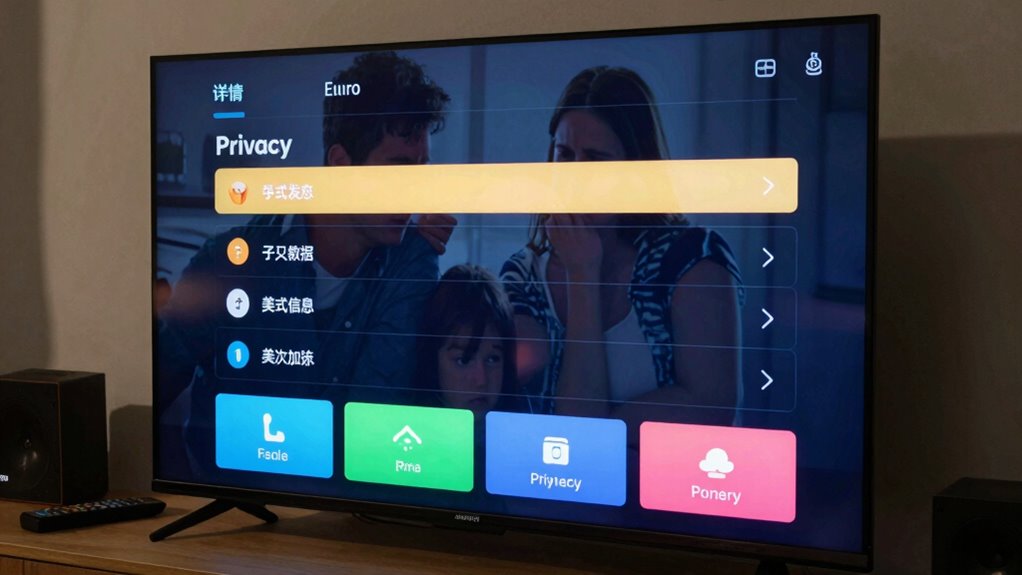
Smart TVs are more than just traditional television sets; they connect to the internet, allowing you to stream content, browse the web, and access apps. With smart TV features like voice control, built-in streaming services, and personalized recommendations, you’re in control of your viewing experience. You can easily switch between platforms like Netflix, Hulu, or YouTube with just a few clicks. Their streaming capabilities let you watch your favorite shows and movies in high definition, enhancing your entertainment options. Plus, many smart TVs support screen mirroring, so you can share content from your smartphone or tablet directly on the big screen. Overall, smart TVs offer a versatile and connected way to enjoy media at home.
Smart TV firmware update device
As an affiliate, we earn on qualifying purchases.
As an affiliate, we earn on qualifying purchases.
Getting to Know Your Smart TV’s Privacy Settings

With the convenience of streaming and internet connectivity comes the need to understand your TV’s privacy settings. Many smart TV features are designed to enhance your viewing experience, but they can also raise privacy concerns. Start by checking your TV’s settings menu; look for options related to data collection and personalized ads. You might encounter privacy myths suggesting that turning off certain features completely protects your data. In reality, some data collection may still occur, even when you think you’ve opted out. Familiarize yourself with these settings to better control what information your smart TV shares. Understanding your device’s privacy options can help you make informed decisions about your data sharing. By understanding your device’s privacy options, you can enjoy its features while keeping your information secure. Stay informed and take charge of your smart TV experience!
Smart TV app permission manager
As an affiliate, we earn on qualifying purchases.
As an affiliate, we earn on qualifying purchases.
What Data Do Smart TVs Collect?

Smart TVs often track your viewing habits to personalize recommendations and ads. They might also collect personal information, like your location and account details, which raises privacy concerns. Understanding what data your smart TV gathers is essential for protecting your privacy.
Viewing Habits Tracking
As you enjoy your favorite shows, your smart TV might be quietly collecting data about your viewing habits. This information helps manufacturers understand your viewing patterns and improve content recommendations. Here’s a quick look at the types of data your smart TV might gather:
| Data Type | Purpose | Impact on You |
|---|---|---|
| Viewing Duration | Analyzing engagement levels | Personalized ads |
| Channel Preferences | Tailoring content suggestions | Enhanced user experience |
| Genre Interests | Understanding trends | Improved recommendations |
| Time of Viewing | Tracking peak usage times | Targeted promotions |
Through data analytics, companies can refine their offerings, but it’s essential to reflect on how this tracking impacts your privacy. Responsible use and privacy are important considerations when dealing with data collection from smart TVs.
Personal Information Collection
Your smart TV doesn’t just track what you watch; it often collects a range of personal information that can raise privacy concerns. This includes data like your IP address, location, and even voice commands. Many smart TVs also gather information about your preferences and usage patterns to improve user experience. However, this data sharing raises questions about user consent. You might not realize that by agreeing to the terms and conditions, you’re often giving permission for your data to be collected and shared. It’s essential to read the privacy policies and adjust your settings accordingly. Take control of your privacy by regularly reviewing what data your smart TV collects and how it’s used.
Smart TV malware scan tool
As an affiliate, we earn on qualifying purchases.
As an affiliate, we earn on qualifying purchases.
Common Privacy Risks With Smart TVs
While enjoying the latest shows on your smart TV, you might not realize the privacy risks lurking behind the screen. It’s essential to understand the smart TV vulnerabilities that could compromise your data. Here are three common privacy risks you should be aware of:
- Data Tracking: Smart TVs often track your viewing habits, collecting data that can be sold to advertisers without your consent.
- Insecure Connections: Many smart TVs connect to the internet without proper security, making them easy targets for hackers.
- Voice Recognition: If your TV has voice control, it may be listening even when you think it’s off, leading to potential breaches of privacy.
- Understanding privacy settings on your smart TV can significantly reduce these risks and give you more control over your personal information.
Being informed can help enhance your consumer awareness and protect your personal information.
How to Adjust Your Smart TV Privacy Settings
To protect your privacy, you’ll want to start by accessing the privacy settings menu on your smart TV. From there, you can disable data collection features and manage app permissions to limit what information is shared. Let’s explore these steps to guarantee your viewing experience is secure and private.
Accessing Privacy Settings Menu
How can you guarantee your Smart TV respects your privacy? Start by accessing the privacy settings menu. Here’s a quick guide to help you through the privacy interface navigation:
- Open the Settings: Look for the gear icon on your remote or TV screen.
- Select Privacy Options: Scroll through the settings menu until you find options related to privacy.
- Adjust Customization Settings: Explore the settings customization options to tailor your privacy preferences.
Taking these steps guarantees you have control over what data your Smart TV collects. Regularly review these settings to stay informed about any changes or updates that might affect your privacy. Keep your viewing experience enjoyable and secure!
Disabling Data Collection Features
If you want to enhance your privacy, disabling data collection features on your Smart TV is essential. Start by maneuvering to the privacy settings menu. Look for options related to data collection, such as voice recognition and viewing habits. You’ll often find toggles that allow you to opt-out of these features. Make sure that any data encryption settings are enabled to protect your information from unauthorized access. Remember, you should only share data if you’ve given explicit user consent. Review any third-party apps connected to your TV, as they may also collect data without your knowledge. By taking these steps, you can considerably reduce the amount of personal information your Smart TV shares.
Managing App Permissions Effectively
While enjoying your Smart TV’s features, it is crucial to manage app permissions effectively to safeguard your privacy. Ignoring these settings can lead to unwanted data sharing and privacy implications. Here’s how to take control:
- Review Installed Apps: Regularly check which apps you’ve installed and their permissions. Remove any that you don’t use or trust.
- Adjust Settings: Navigate to your Smart TV’s privacy settings to customize app permissions. Limit access to your microphone, camera, and location if not needed.
- Stay Updated: Keep your Smart TV and apps updated. Developers often release patches that enhance security and privacy features.
- Understand Privacy Features: Familiarize yourself with home products designed to enhance comfort and safety, which can also help you recognize potential privacy risks.
Do Third-Party Apps Compromise My Privacy?
Are you aware that third-party apps on your Smart TV can pose significant privacy risks? These apps often require extensive app permissions that can lead to unwanted data sharing. When you install an app, you might unknowingly give it access to your viewing habits, personal information, and even your location. This data can be sold to advertisers, compromising your privacy further.
Many users overlook the implications of these permissions, assuming they’re necessary for the app’s functionality. However, it’s essential to scrutinize what you’re allowing. Always check the app permissions before installation and consider whether the benefits outweigh the potential risks. By being vigilant, you can better protect your privacy while enjoying the features your Smart TV offers.
Best Practices for Protecting Your Privacy With Smart TVs
To safeguard your privacy while using a Smart TV, start by adjusting the privacy settings right after installation. Here are some best practices to help you stay secure:
- Disable Voice and Video Features: Turn off any voice recognition and camera features unless you’re actively using them. This helps protect against unauthorized access.
- Enable Data Encryption: Check if your Smart TV supports data encryption and enable it. This secures your personal information from potential breaches.
- Regularly Update Software: Keep your Smart TV’s firmware up to date to guarantee it has the latest security patches, enhancing your smart home security.
What to Do If You Suspect Your Smart TV Is Compromised?
If you suspect your Smart TV has been compromised, it’s crucial to act quickly to protect your privacy and security. Start by running malware detection software specifically designed for smart devices. This can help identify any malicious software that may be lurking. If you find anything suspicious, remove it immediately.
Next, consider performing a factory reset on your TV. This will erase all personal data and settings, returning the device to its original state. Remember to back up any important information before you reset, as this process is irreversible. Finally, check your network settings to verify your Wi-Fi is secure, and regularly update the TV’s firmware to guard against future vulnerabilities. Taking these steps can help restore your peace of mind.
Frequently Asked Questions
Can My Smart TV Be Hacked Remotely?
Yes, your smart TV can be hacked remotely if it has security vulnerabilities. Cybercriminals can exploit weaknesses in your TV’s software or network connection to gain remote access. To protect yourself, always update your TV’s firmware, use strong passwords, and consider disabling features you don’t need, like remote voice control. Being proactive about your device’s security will help minimize risks and keep your personal information safe from potential threats.
Are Smart TVS Safe for Children to Use?
Imagine a castle filled with magical wonders, yet fraught with hidden dangers. Smart TVs can be safe for your children, but you must guard the gates. By using parental controls, you can create a protective barrier, ensuring that your child only accesses age-appropriate content. Stay vigilant and regularly check settings, so your little ones can explore their digital domain safely, free from unwelcome surprises lurking in the shadows of the screen.
Do All Smart TVS Have the Same Privacy Settings?
No, not all smart TVs have the same privacy settings. Different brands and models offer various smart TV features and privacy options. While some may allow you to customize tracking settings or opt-out of data collection, others might not give you much control. It’s essential to review the privacy settings on your specific smart TV to understand what data it collects and how you can manage those settings effectively.
How Often Should I Update My Smart TV Software?
You should update your smart TV software at least once every few months to guarantee peak smart TV security. Manufacturers often release updates to fix bugs and improve performance, so don’t wait too long. Check your TV’s settings regularly for available updates and enable automatic updates if possible. Keeping your software current helps protect your device from vulnerabilities and enhances your viewing experience with the latest features. Stay informed, and you’ll enjoy a safer smart TV experience!
Can I Completely Disconnect My Smart TV From the Internet?
If you’re concerned about smart TVs’ security, you can completely disconnect your device from the internet. Just unplug it from the Wi-Fi network or disable its network settings. By doing this, you’ll guarantee your TV won’t access any online services or track your viewing habits. Remember, though, without internet access, you might miss out on updates and streaming features. So, weigh your options carefully before making that switch!
Conclusion
In a world where convenience meets vulnerability, understanding your smart TV’s privacy settings is essential. While these devices offer seamless access to entertainment, they also collect data that can compromise your privacy. By adjusting settings and being mindful of third-party apps, you can strike a balance between enjoying smart technology and protecting your personal information. Don’t let the allure of connectivity blind you; take control of your privacy and make certain your viewing experience remains secure.