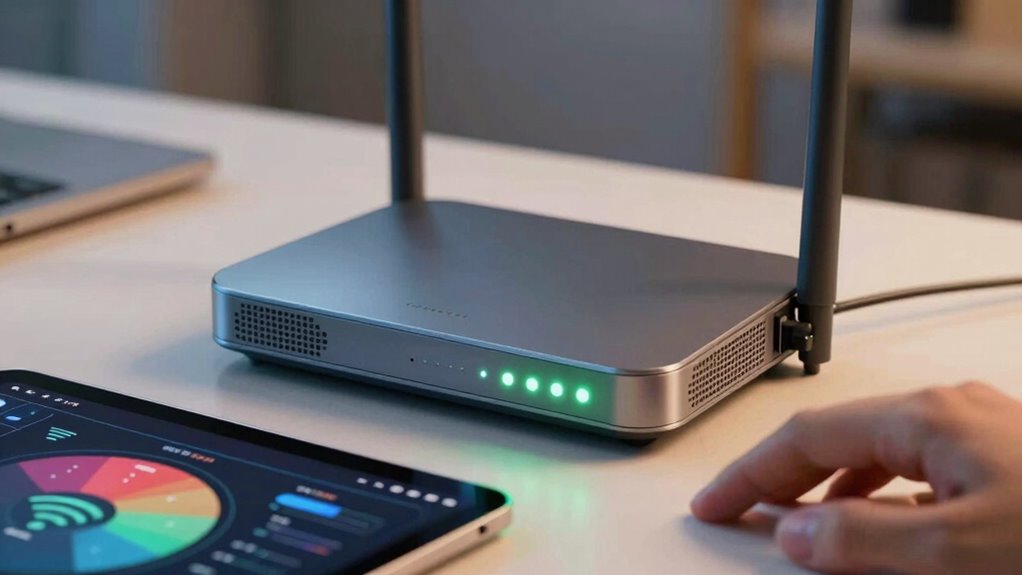

Wi-Fi standards use numbers like 802.11ac, 802.11ax, and names like Wi-Fi 6E to show how new they are and what they offer. Higher numbers and newer names usually mean faster speeds, better security, and improved device compatibility. For example, Wi-Fi 6E adds support for less crowded 6 GHz bands. To understand what works best for you and what’s coming next, you’ll want to explore what each standard really means.
Key Takeaways
- Wi-Fi standards are labeled with numbers like 802.11ac or 802.11ax, indicating different generations of technology.
- Higher numbers generally mean newer, faster, and more efficient Wi-Fi standards with improved security features.
- Standards like Wi-Fi 6E extend Wi-Fi 6 into the 6 GHz band for less interference and higher performance.
- The numbers represent technological advancements that impact speed, range, and device compatibility.
- Understanding these numbers helps in choosing devices and planning network upgrades for better performance.

TP-Link AX1800 WiFi 6 Router (Archer AX21) – Dual Band Wireless Internet, Gigabit, Easy Mesh, Works with Alexa – A Certified for Humans Device, Free Expert Support
DUAL-BAND WIFI 6 ROUTER: Wi-Fi 6(802.11ax) technology achieves faster speeds, greater capacity and reduced network congestion compared to…
As an affiliate, we earn on qualifying purchases.
As an affiliate, we earn on qualifying purchases.
What Are Wi-Fi Standards and Why Do They Matter?
Have you ever wondered how your devices connect to Wi-Fi networks and why some connections are faster or more reliable than others? Wi-Fi standards are vital because they determine the wireless security features and device compatibility. Different standards support varying levels of security, helping protect your data from hackers, which is essential for safe browsing and transactions. Additionally, device compatibility ensures your gadgets can connect seamlessly without issues. As new standards emerge, they often improve speed, range, and security, making your network more efficient. Choosing the right Wi-Fi standard ensures your devices work smoothly together, and your connection remains secure and dependable. Understanding these standards helps you make informed decisions when upgrading your home or office network. Understanding Wi-Fi security is crucial for safeguarding your personal information in today’s connected world.

Arris Surfboard Wi-Fi 6E Access Point | W6U | Dedicated 6 GHz Band for Compatible Devices | 2.5 Gbps Port | Works with Any Wi-Fi Device | Upgrade Your Network to Wi-Fi 6E
Adapt with the future of Home Networking: The ARRIS SURFboard mAX Wi-Fi 6E Access Point allows customers to…
As an affiliate, we earn on qualifying purchases.
As an affiliate, we earn on qualifying purchases.
Understanding Wi-Fi Standard Names: What Do 802.11ac, 802.11ax, and Wi-Fi 6E Mean?
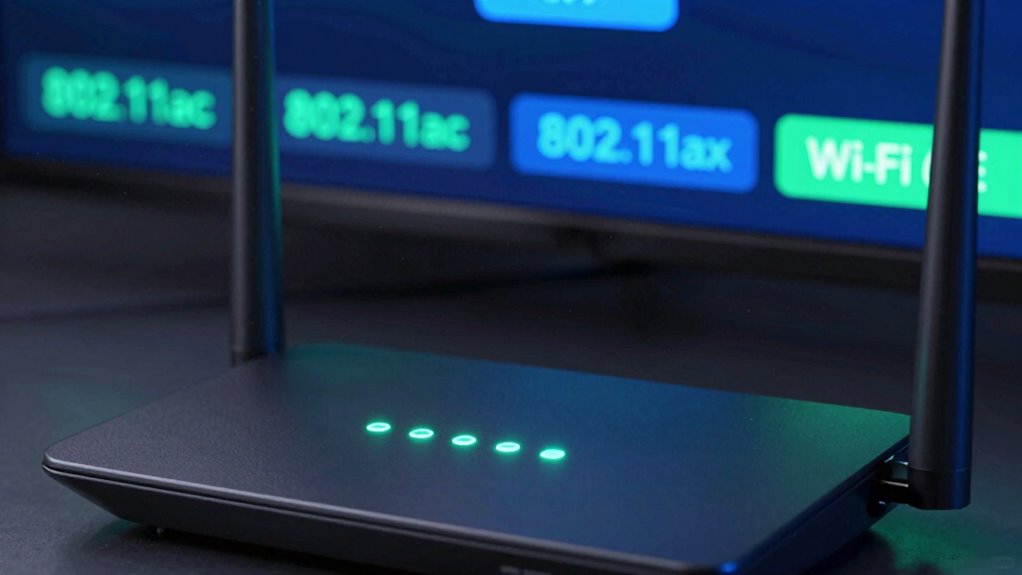
Understanding Wi-Fi standard names can seem confusing at first, but recognizing what these labels mean helps you better grasp your device’s capabilities. For example, 802.11ac, 802.11ax, and Wi-Fi 6E refer to different Wi-Fi standards that improve speed, security enhancements, and network efficiency. The numbers indicate generations of technology, with higher numbers generally offering better performance. Wi-Fi 6E extends Wi-Fi 6 into the 6 GHz frequency band, providing less interference and faster speeds. These standards also include security enhancements to protect your network. Knowing what these names mean helps you choose the right device for your needs and understand the improvements in speed, reliability, and security provided by each standard. Additionally, exploring content formats can help you stay informed about the latest developments in digital technology.
TP-Link AX1800 WiFi 6 Router (Archer AX21) – Dual Band Wireless Internet, Gigabit, Easy Mesh, Works with Alexa – A Certified for Humans Device, Free Expert Support
DUAL-BAND WIFI 6 ROUTER: Wi-Fi 6(802.11ax) technology achieves faster speeds, greater capacity and reduced network congestion compared to…
As an affiliate, we earn on qualifying purchases.
As an affiliate, we earn on qualifying purchases.
How Wi-Fi Standards Have Evolved Over Time

Ever wonder how Wi-Fi standards have progressed to meet our growing demands for faster and more reliable wireless connections? The wireless evolution has been driven by key technology milestones, each improving speed, coverage, and efficiency. Starting with 802.11b in the late 1990s, Wi-Fi quickly advanced through standards like 802.11g and 802.11n, which increased data rates and range. The introduction of 802.11ac marked a major leap with wider channels and higher throughput, followed by 802.11ax (Wi-Fi 6), which further optimized performance in crowded environments. Each standard builds on previous milestones, pushing wireless technology closer to seamless, high-speed connectivity. This evolution reflects ongoing technological advancements aimed at meeting the increasing demands of our connected lives.

2026 Upgraded 2K Security Cameras Wireless Outdoor, Free Cloud Storage, 1-6 Months Battery Life, Waterproof, 2-Way Talk, AI Motion Detection Spotlight Siren Alarm Cameras for Home Security
🏆 【Improved Features for 2026】 2K UHD video & full-color night vision, free cloud storage, support for 2.4G…
As an affiliate, we earn on qualifying purchases.
As an affiliate, we earn on qualifying purchases.
How to Choose the Best Wi-Fi Standard for Your Devices and Needs
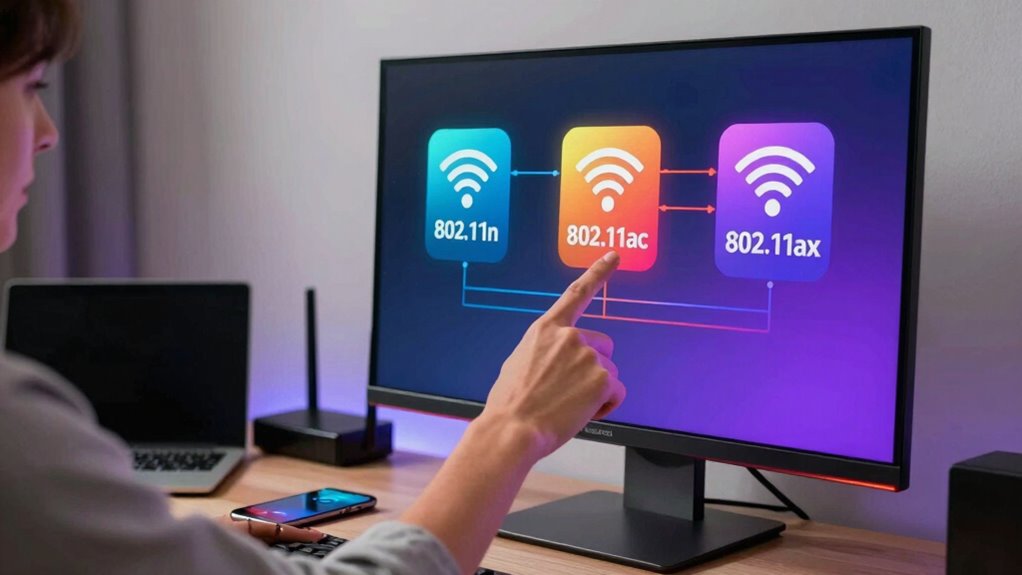
Choosing the right Wi-Fi standard depends on your devices and how you use the internet. Start by checking device compatibility— newer devices often support the latest standards like Wi-Fi 6 or 6E, offering better speed and efficiency. If you stream videos, play online games, or work from home, prioritize standards that provide higher speed and improved range, such as Wi-Fi 5 or 6. For basic browsing or connecting a few devices, earlier standards may suffice. Consider your network’s size and your internet plan’s speed to guarantee your Wi-Fi can handle your needs without bottlenecks. Upgrading to a compatible standard can improve overall performance and future-proof your setup, but make sure your router and devices support the same standard for ideal results. Understanding network fundamentals can help you make better choices for your setup.
What’s Next for Wi-Fi? Future Standards and Trends to Watch?
As technology advances, Wi-Fi standards continue to evolve to meet the growing demands for faster, more reliable wireless connectivity. Future trends include the expansion of mesh networks, which improve coverage and stability in large or complex spaces. These networks use multiple nodes to create a seamless Wi-Fi experience, reducing dead zones. Wi-Fi 7, with its potential to deliver even higher speeds and lower latency, is expected to revolutionize wireless connectivity. It promises better performance for streaming, gaming, and smart home devices. You can anticipate more devices supporting Wi-Fi 7, along with smarter network management. Overall, these innovations aim to make your wireless experience faster, more reliable, and more integrated into everyday life.
Frequently Asked Questions
How Do Wi-Fi Standards Impact Device Battery Life?
Wi-Fi standards directly impact your device’s battery life by affecting power efficiency. Newer standards like Wi-Fi 6 are designed to reduce battery consumption through features like target wake time, which allows your device to stay inactive longer. This means your device uses less power during data transmission, extending battery life. So, choosing devices with updated Wi-Fi standards helps you enjoy better connectivity without draining your battery quickly.
Are Older Wi-Fi Standards Still Compatible With Newer Devices?
Yes, older Wi-Fi standards are generally still compatible with newer devices thanks to legacy compatibility and backward support. Your modern device can usually connect to Wi-Fi networks using older standards like 802.11n or 802.11g. This backward support ensures seamless connectivity across devices, even if they use different Wi-Fi standards. However, keep in mind that using older standards may limit your network’s speed and overall performance.
What Security Features Are Associated With Different Wi-Fi Standards?
You might think all Wi-Fi standards offer the same security, but that’s not true. Newer standards like WPA3 use stronger encryption protocols and advanced authentication methods, making your connection much more secure. Older standards such as WPA2 still provide decent protection but lack some of these latest features. Upgrading your devices guarantees you benefit from robust encryption and safer authentication, keeping your data protected from potential threats.
How Do Wi-Fi Standards Affect Streaming and Gaming Performance?
Wi-Fi standards directly impact your streaming and gaming by enhancing bandwidth optimization and reducing latency. Newer standards like Wi-Fi 6 and Wi-Fi 6E offer faster speeds and more reliable connections, so your videos buffer less and your game responses are quicker. They handle multiple devices better, decreasing lag and ensuring a smoother experience. Upgrading to the latest standards helps you enjoy high-quality streaming and responsive gaming with minimal interruptions.
Can Wi-Fi Standards Influence the Cost of Networking Equipment?
Did you know that upgrading to newer Wi-Fi standards can actually increase the cost of networking equipment? You might pay more due to higher manufacturing costs for advanced components, which are necessary for faster speeds and better coverage. While these standards improve performance, they also influence the overall cost implications for devices. So, as technology advances, expect to see a rise in prices tied to the complexity of manufacturing newer Wi-Fi gear.
Conclusion
Staying updated with Wi-Fi standards is like holding the secret key to lightning-fast internet; it can transform your online experience from sluggish to supercharged in seconds. By understanding what those confusing numbers mean, you unlock the power to choose the perfect Wi-Fi for your needs, future-proof your setup, and stay ahead of the digital curve. Don’t settle for slow, outdated connections—embrace the latest standards and unleash the true potential of your network!