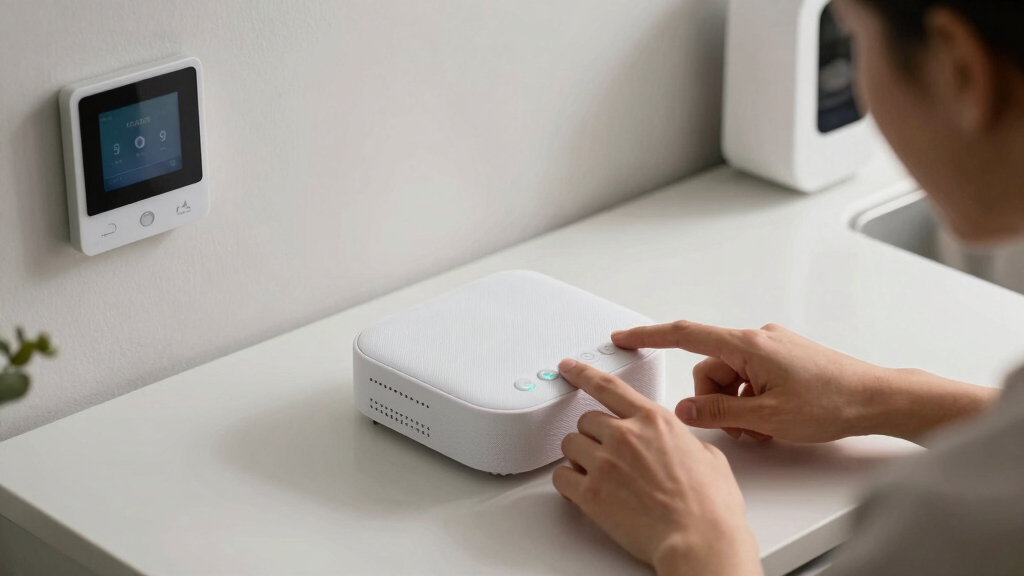

Choosing the best smart home hub Matter depends heavily on your existing setup and automation needs. The Aqara Smart Home Hub M3 stands out as the overall top pick for its advanced features and broad compatibility, including Thread, Zigbee, and Wi-Fi. For those prioritizing local control and privacy, the Hubitat Elevation C-8 Pro offers robust automation without relying on cloud services. Meanwhile, the Home Assistant Green appeals to DIY enthusiasts who want deep customization. As you evaluate options, consider tradeoffs like connectivity support, ecosystem compatibility, and ease of use. Keep reading for a detailed breakdown to find your ideal hub.
Key Takeaways
- The top hubs combine multiple protocols like Thread, Zigbee, and Z-Wave, ensuring broader device compatibility.
- Local control-focused hubs like Hubitat and Home Assistant often prioritize privacy and reduce latency but may require more setup effort.
- Premium options tend to support advanced automation features and integrations, justifying higher prices for power users.
- Compatibility with popular ecosystems (Apple HomeKit, Alexa, Google) varies, so matching your existing devices is crucial.
- Connectivity options like PoE and Bluetooth add flexibility but may complicate installation or increase cost.




More Details on Our Top Picks
Aqara Smart Home Hub M3 for Advanced Automation, Matter Controller, Thread Border Router, Features Zigbee, Bluetooth, Wi-Fi, PoE, IR, Supports Apple HomeKit, Alexa, SmartThings, Home Assistant, IFTTT
This hub stands out for its support of Aqara Zigbee and Thread devices, acting as a robust Matter bridge that integrates multiple ecosystems including Apple HomeKit, Alexa, and SmartThings. It offers advanced local automation with a focus on privacy thanks to encrypted local storage and PoE plus USB-C for connectivity stability. Compared to the Aqara Smart Hub M100, the M3 supports more protocols, more devices, and offers wired connectivity options, but it comes at a higher price and requires careful placement for optimal connection. Its multi-protocol support and local automation capabilities make it ideal for tech-savvy users seeking a comprehensive, future-proof smart home setup. However, it only supports Aqara Zigbee devices natively, limiting third-party Zigbee device integration. This pick makes the most sense for homeowners wanting a flexible, secure, and expandable hub that can handle advanced automations with minimal cloud dependency.
Pros:- Supports multiple protocols including Zigbee, Thread, Bluetooth, Wi-Fi, IR, PoE
- Excellent local automation and privacy features with encrypted storage
- Advanced Matter bridge enabling seamless ecosystem integration
Cons:- Higher cost compared to simpler hubs
- Limited native support for third-party Zigbee devices
Best for: Tech enthusiasts and smart home enthusiasts seeking a highly versatile, privacy-focused hub with broad ecosystem support.
Not ideal for: Casual users or those with small or simple smart setups who prefer plug-and-play solutions without complex configuration.
- Protocols Supported:Zigbee, Thread, Bluetooth, Wi-Fi, IR
- Device Capacity:127 Zigbee, 127 Thread
- Connectivity:Wired PoE, USB-C
- Security:End-to-end encrypted storage
- Platform Compatibility:Apple HomeKit, Alexa, SmartThings, Home Assistant
- Size:4.13″ x 4.13″ x 1.41″
Bottom line: Ideal for users wanting a flexible, secure, and expandable hub that integrates seamlessly across ecosystems and emphasizes local control.
THIRDREALITY Smart Bridge MZ1 -Zigbee to Matter Connectivity, Compatible with Google Home, Apple Home, SmartThings, Home Assistant etc.
This compact bridge excels at connecting Zigbee end devices to the Matter protocol, broadening their compatibility across major platforms like Apple HomeKit and Google Home. It is a straightforward, USB-C powered device that is easy to install and manage via the 3R-Installer app, making it ideal for users who want to upgrade existing Zigbee devices without replacing their entire hub. Unlike the Aqara hubs, it doesn’t handle device automations but acts solely as a protocol translator, making it a cost-effective option for those with a smaller or less complex setup. Its main tradeoff is the lack of local automation features and limited device capacity, which makes it less suitable for large or highly automated homes. This device suits users who already have Zigbee devices and want a simple, reliable way to add Matter support without investing in a new hub ecosystem.
Pros:- Affordable and easy to install
- Broad platform compatibility including Apple, Google, and SmartThings
- Compact, space-saving design with USB-C power
Cons:- Limited device capacity and no local automation
- Acts only as protocol translator, not a full hub
Best for: Homeowners with existing Zigbee devices looking for a budget-friendly, easy-to-install Matter bridge.
Not ideal for: Large or complex smart homes requiring extensive local automations or multi-protocol device management.
- Protocols Supported:Zigbee to Matter
- Platform Compatibility:Apple Home, Google Home, SmartThings, Home Assistant
- Power:USB-C
- Device Capacity:N/A (protocol translator)
- Size:Small, space-saving
- Connectivity Range:Dependent on Zigbee devices
Bottom line: Best suited for users who want a simple, cost-effective Zigbee-to-Matter bridge to expand device compatibility.
Aqara Smart Hub M100 for Home Automation, Matter Controller, Thread Border Router, Features Aqara Zigbee (Not Third-Party), Wi-Fi, Supports Apple HomeKit, Amazon Alexa, IFTTT, Home Assistant
The Aqara Smart Hub M100 is a compact, easy-to-set-up device that supports Aqara Zigbee and Thread, functioning well as a Matter controller and border router. It is ideal for small to medium homes, supporting up to 20 Zigbee and 20 Thread devices, and provides reliable local automation with minimal lag. Its straightforward installation process and strong ecosystem support make it perfect for users who want a reliable, easy-to-manage hub that integrates tightly with Apple HomeKit and other platforms. Compared to the Aqara M3, the M100 offers fewer protocols and a lower device limit but is more affordable and easier to place in smaller spaces. Its main limitation is that it only supports Aqara-specific Zigbee devices, which could be restrictive for users with third-party Zigbee devices. This hub is perfect for small households seeking simplicity and stability in their automation setup.
Pros:- Supports Zigbee and Thread for reliable local automation
- Compact size with simple setup
- Excellent ecosystem integration with Apple HomeKit and Alexa
Cons:- Limited to Aqara Zigbee devices
- Supports fewer protocols and devices than higher-end hubs
Best for: Small to medium households wanting a reliable, local-control hub optimized for Aqara devices and simple automations.
Not ideal for: Large homes or users with extensive third-party Zigbee or multi-protocol device ecosystems needing broad compatibility.
- Protocols Supported:Aqara Zigbee, Thread
- Device Limit:20 Zigbee, 20 Thread
- Connectivity:Wi-Fi
- Platform Compatibility:Apple HomeKit, Alexa, IFTTT, Home Assistant
- Size:Small
- Automation:Local
Bottom line: A great choice for small households seeking a straightforward, reliable hub with local automation and ecosystem support.
Hubitat Elevation C-8 Pro Smart Home Automation Hub – Matter 1.5, Z-Wave 800 LR, Zigbee 3.0 & Bluetooth – Works with Ring, Alexa, Apple HomeKit & Google Home – Local Control (No Cloud)
The Hubitat Elevation C-8 Pro is a powerful, locally-controlled hub supporting Matter 1.5, Zigbee 3.0, Z-Wave 800 LR, and Bluetooth, making it ideal for larger homes or users with complex automation needs. Its emphasis on local execution ensures fast response times and increased privacy, especially important during internet outages. It supports a wide range of devices across multiple protocols and works with major voice assistants, making it suitable for both beginners and advanced users. Compared to the Aqara hubs, the Hubitat C-8 Pro offers broader protocol support, more device capacity, and a focus on local automation, but it requires more technical setup and is less focused on seamless ecosystem integration out of the box. Its professional-grade performance and expandability make it a top choice for users with advanced automation requirements and larger homes.
Pros:- Supports Matter, Zigbee, Z-Wave 800 LR, Bluetooth
- Local execution of automations for reliability and privacy
- Supports a wide range of devices and platforms
Cons:- Requires more technical setup and configuration
- No cloud dependency limits some remote functions
Best for: Power users with larger homes needing extensive device support, local automations, and privacy.
Not ideal for: Casual or small home users who prefer simple, plug-and-play solutions with minimal setup.
- Protocols Supported:Zigbee 3.0, Z-Wave 800 LR, Bluetooth
- Automation:Local
- Device Compatibility:1000+ devices
- Connectivity:Wired Ethernet, Wi-Fi
- Size:Compact
- Supported Ecosystems:Ring, Alexa, Apple HomeKit, Google
Bottom line: Best for users who demand extensive device support, local automation, and privacy in a larger or complex smart home.
Aeotec Smart Home Hub2 – V4, Works as a SmartThings Hub, Zigbee, Matter Gateway, Compatible with Alexa, Google Assistant, WiFi (No Z-Wave)
The Aeotec Smart Home Hub2 V4 functions seamlessly as a SmartThings hub and Matter gateway, supporting Zigbee and Wi-Fi but notably excluding Z-Wave. It offers easy setup via Wi-Fi or Ethernet, making it suitable for apartment dwellers or those who prefer a straightforward, cloud-based ecosystem. Its compatibility with Alexa and Google Assistant allows voice control for routines and device management, while its focus on local automations ensures responsiveness even during internet outages. Compared with the Aqara M100, the Aeotec Hub provides broader platform support but lacks Z-Wave, which limits compatibility with many smart home devices. Its main tradeoff is the absence of Z-Wave support, which can be a dealbreaker for users with Z-Wave devices. This hub makes sense for users who prioritize ease of use, broad ecosystem support, and Z-Wave is not a requirement.
Pros:- Supports Matter, Zigbee, Wi-Fi
- Simple setup via Wi-Fi or Ethernet
- Works with Alexa and Google Assistant
Cons:- No Z-Wave support, limiting device compatibility
- Primarily cloud-dependent for automations
Best for: Users seeking a reliable, easy-to-install hub with broad ecosystem support but without Z-Wave devices.
Not ideal for: Homes with Z-Wave devices or advanced automations requiring Z-Wave support.
- Protocols Supported:Zigbee, Matter, Wi-Fi
- Voice Assistants:Alexa, Google
- Connectivity:Wi-Fi, Ethernet
- Device Support:Thousands across ecosystems
- Size:Compact
- Z-Wave Support:None
Bottom line: Ideal for users who want a straightforward, reliable hub with broad ecosystem support and no need for Z-Wave compatibility.
Home Assistant Green | Smart Home hub with Advanced Automation | Official Home Assistant Hardware
This official Home Assistant device stands out for its seamless local automation, making it a strong choice over the Zigbee-based Yoolax Zigbee Matter Smart Hub which relies more on third-party protocols. Its plug-and-play setup with pre-installed software simplifies initial use, especially for those prioritizing privacy and control without cloud dependency. Compared with cloud-dependent hubs, it offers faster responses and data kept within your home. However, its reliance on Ethernet limits flexibility in some setups, and the system requires a dedicated network for optimal performance. The Green’s robust hardware, including a quad-core processor, ensures reliable automations that scale with your needs. This hub is perfect for tech-savvy users who want a secure, customizable, and expandable local system, but less ideal for those seeking wireless or plug-and-play simplicity without technical setup. Pros: Fully local control, official support by Nabu Casa, expandable via USB, energy-efficient.
Cons: Requires Ethernet connection, not as portable as Wi-Fi hubs, initial setup may be complex for beginners.Pros:- Complete local control ensures faster automations.
- Supports extensive customization and expansion with USB ports.
- Built and supported by the developers of Home Assistant for reliability.
Cons:- Requires Ethernet connection, limiting placement flexibility.
- Setup can be complex for non-technical users.
- Lacks built-in Wi-Fi, which may inconvenience some setups.
Best for: Power users and privacy-conscious homeowners seeking customizable, local automation.
Not ideal for: Beginners or those preferring wireless, simple, plug-and-play solutions without network setup.
- RAM Memory Installed:4 GB
- Storage Capacity:32 GB
- Connectivity Technology:Ethernet, USB
- Processor:Quad-core ARM
- Size:4.41″ x 4.41″ x 1.26″
- Power:Power over Ethernet (PoE compatible)
Bottom line: Ideal for users who prioritize privacy, stability, and advanced automation customization over plug-and-play simplicity.
Linkind Matter Smart Plug, Smart Home Smart Outlet Timer, Work with Apple Home, Siri, Alexa, Google, SmartThings, 15A/1800W, APP Remote Control & Schedule, ETL & FCC Certified, 2.4G WiFi Only, 6 Pack
This six-pack is an economical choice for expanding your smart home via Matter, with broad platform support including Apple HomeKit, Alexa, and Google. Its straightforward setup eliminates the need for multiple app downloads, making it suitable for users who want quick integration with existing voice assistants. Compared with hubs like the Aqara Smart Hub M100, it offers direct Wi-Fi control, though it relies on your home Wi-Fi network and doesn’t support Zigbee or Thread natively. Some users may find that Wi-Fi-only operation could cause latency or connectivity issues in large homes. The timer and scheduling features enhance energy management, while its FCC and ETL certification add safety reassurance. Perfect for budget-conscious households that want reliable, cross-platform control, but less ideal for those seeking Zigbee or Thread native support. Pros: Cost-effective six-pack, broad platform support, Wi-Fi direct control, certified safety standards.
Cons: Wi-Fi-only connection may introduce latency, no native Zigbee/Thread support, requires stable Wi-Fi for best performance.Pros:- Economical six-pack for extensive device coverage.
- Compatible with major smart home platforms via Matter.
- Supports scheduling and remote control from anywhere.
Cons:- Wi-Fi-only operation can cause delays or connectivity issues.
- Lacks native Zigbee or Thread protocols for local mesh networks.
- Dependent on home Wi-Fi stability for optimal performance.
Best for: Budget-conscious homeowners wanting broad platform support and multiple outlets for automation.
Not ideal for: Users needing Zigbee or Thread protocols, or those with unstable Wi-Fi environments.
- Power Capacity:15A/1800W
- Connectivity:Wi-Fi 2.4GHz
- Number of Outlets:6
- Control:App, Voice
- Certifications:ETL, FCC
- Size:Standard compact
Bottom line: Best suited for users wanting affordable, cross-platform outlets without Zigbee or Thread, and with stable Wi-Fi coverage.
Yoolax Zigbee Matter Smart Hub, Gateway Smart Hub Compatible with Alexa and Google Home Assistant, App Remote Control, Voice Control(for Zigbee Motor)
This Yoolax Zigbee Hub excels at managing Zigbee motorized shades and other Zigbee devices, offering compatibility with Alexa and Google via a central gateway. Its ability to control up to 128 devices makes it suitable for medium-sized smart homes, especially when integrated with the Yoolax app for advanced scene setting. Unlike the Linkind Matter Smart Plug, which relies only on Wi-Fi, this hub uses Zigbee for more reliable mesh networking and lower latency in controlling connected devices. Its support for Matter enhances device interoperability, but it’s less suited for homes with primarily Wi-Fi or Thread devices. Setup is straightforward for those familiar with Zigbee, though beginners might need initial guidance. This product is ideal for users with Zigbee motorized shades or Zigbee-based smart devices, but not recommended if your home relies solely on Wi-Fi or Thread. Pros: Supports up to 128 devices, Zigbee mesh for stability, compatible with Alexa/Google, app control.
Cons: Limited to Zigbee and Thread devices, requires Zigbee hub setup, not suitable for Wi-Fi-only homes, needs power via Type-C port.Pros:- Supports up to 128 Zigbee devices for scalable control.
- Uses Zigbee mesh for stable, low-latency communication.
- Compatible with Alexa, Google, and Matter for interoperability.
Cons:- Limited to Zigbee and Thread devices, no Wi-Fi device support.
- Requires Zigbee hub setup and power via Type-C.
- Less effective in Wi-Fi-only environments.
Best for: Homeowners with Zigbee motorized shades or Zigbee devices seeking reliable mesh control.
Not ideal for: Homes with only Wi-Fi devices or no Zigbee network, or users unfamiliar with Zigbee setup.
- Max Devices:128
- Protocols:Zigbee, Thread
- Control Methods:App, Voice
- Connectivity:Type-C Power
- Compatibility:Alexa, Google, Matter
- Size:Compact
Bottom line: Best for users with Zigbee motorized shades or Zigbee devices seeking a reliable, integrated hub.
Matter Smart Wired Hub Gateway for Home Automation, Thread & Tuya Zigbee 3.0 Protocol, 2.4GHz WiFi Only, Matter Controller Supports Google, Alexa, Apple HomeKit
This Matter Gateway integrates Thread and Tuya Zigbee 3.0 protocols, supporting multiple platforms like Google, Alexa, and Apple HomeKit. Its wired connection via network cable ensures stable connectivity, making it ideal for homes with diverse protocols but limited Wi-Fi support. Compared to the wireless Yoolax Zigbee Hub, this wired gateway offers increased reliability and better wall penetration, especially in larger or multi-floor homes. It supports boundary routing for compatible Zigbee devices, but not all Zigbee devices will work unless they support Matter’s routing features. The device is straightforward to install for those familiar with wired setups, but less suited for wireless-only environments. It’s perfect for users seeking a multi-protocol hub that prioritizes stability and interoperability, but not ideal for Wi-Fi-only or wireless-averse setups. Pros: Supports Zigbee, Thread, and multiple platforms, wired stability, boundary routing support, broad compatibility.
Cons: Wired only, limited Wi-Fi support, not all Zigbee devices compatible, requires network cable connection.Pros:- Supports Zigbee, Thread, and multiple platforms via Matter.
- Provides wired, stable connectivity with better wall penetration.
- Supports boundary routing for compatible Zigbee devices.
Cons:- Wired connection limits flexibility in device placement.
- Limited Wi-Fi support, only 2.4GHz.
- Requires network cable installation, less portable.
Best for: Homeowners needing reliable multi-protocol support with wired stability and broad platform compatibility.
Not ideal for: Wireless-only households or users seeking a simple plug-and-play Wi-Fi hub.
- Protocols:Zigbee 3.0, Thread
- Connectivity:Wired Ethernet
- Wi-Fi:2.4GHz
- Platform Support:Google, Alexa, Apple HomeKit
- Support for Devices:Boundary Routing
- Size:Compact
Bottom line: Best for users who want a stable, multi-protocol hub with wired connectivity and broad platform support.
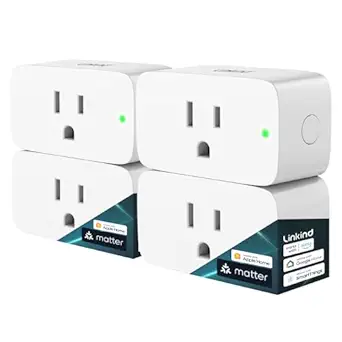
Linkind Matter Smart Plug, Work with Apple Home, Siri, Alexa, Google, SmartThings, Smart Home Smart Outlet Timer 15A/1800W, APP Remote Control & Schedule, 2.4G Wi-Fi Only, 4 Pack
This four-pack of Linkind Matter Smart Plugs offers a straightforward way to add control and scheduling to your home devices, supporting major platforms like Apple HomeKit, Alexa, and Google. Its simple setup and direct control over Wi-Fi make it suitable for users who want easy automation without complex hub requirements. Compared with the Linkind Matter Smart Outlet Timer, this pack is more flexible for multiple devices across rooms, though it relies on your Wi-Fi network rather than mesh protocols like Zigbee. Its 15A/1800W capacity covers most household needs, but it’s less suitable for homes that prefer Zigbee or Thread mesh networks. Ideal for users seeking quick, cross-platform device addition, but less for those needing mesh connectivity or local control without Wi-Fi. Pros: Easy setup, cross-platform support, multiple units, reliable Wi-Fi control, supports scheduling.
Cons: Wi-Fi-only, no Zigbee or Thread, dependent on Wi-Fi stability, limited to 2.4GHz networks.Pros:- Supports major platforms including Apple HomeKit, Alexa, Google.
- Multiple units for whole-room automation.
- Supports scheduling and remote control.
Cons:- Wi-Fi-only operation may cause latency or disconnections.
- No native Zigbee or Thread support.
- Limited to 2.4GHz Wi-Fi networks.
Best for: Homeowners wanting quick, easy, cross-platform outlets for multiple devices at a good price.
Not ideal for: Homes needing Zigbee or Thread protocols, or with unstable Wi-Fi connections.
- Power Capacity:15A/1800W
- Connectivity:Wi-Fi 2.4GHz
- Number of Plugs:4
- Control Methods:App, Voice
- Compatibility:Apple HomeKit, Alexa, Google
- Size:Standard
Bottom line: Best for users seeking easy, cross-platform smart outlets with multiple units and straightforward setup.
Matter Smart Home Hub M6, Matter & Zigbee Gateway with Antenna for Home Automation
This pick stands out for its versatility in integrating multiple ecosystems with a dual-protocol approach, supporting Matter (with a border router), Zigbee, Tuya, Google Home, and SmartThings. Unlike the Aqara M200, which excels as a controller and Thread border router, the M6 offers a straightforward setup process and broad compatibility, making it ideal for users who want a simple, reliable hub for large or multi-story homes. The absence of Alexa support is a notable limitation compared to other hubs like the Aqara M200, which supports Alexa and offers a more comprehensive device ecosystem. The M6’s support for over 125 devices and automatic OTA updates make it future-proof, but it does require a border router for Matter functionality, which adds a layer of setup complexity. This model is perfect for those prioritizing broad ecosystem compatibility and easy management over advanced local automation features.
Pros:- Supports over 125 smart devices for extensive home automation
- Dual-protocol support with Matter and Zigbee ensures future-proofing
- Simple, user-friendly setup process with automatic OTA updates
- Reliable long-range coverage suitable for large or multi-story homes
Cons:- Lacks native Alexa support, limiting voice ecosystem options
- Requires a border router for Matter, adding initial setup complexity
- Limited information on native app features and local automations
Best for: Homeowners seeking a flexible, easy-to-set-up hub that supports multiple ecosystems and large device counts.
Not ideal for: Users heavily invested in Alexa or requiring advanced local automation without a border router, as it lacks native Alexa support and some automation features.
- Frequency Band:Dual-Band
- Wireless Compatibility:802.11ac, 802.11ax
- Connectivity Protocols:Zigbee, Matter, USB
- Maximum Data Transfer Rate:4800 Megabits Per Second
- Coverage:Large or multi-story homes
- Color:White
Bottom line: Ideal for those who want a versatile, easy-to-manage hub supporting multiple standards but can accept some setup prerequisites.
Aqara Smart Hub M200, Matter Controller, Thread Border Router, Featuring Aqara Zigbee, Bluetooth, Wi-Fi, PoE, IR, Supports Amazon Alexa, Apple HomeKit, Home Assistant, SmartThings
The Aqara M200 elevates smart home control by combining multiple protocols, acting as a Matter Controller, Thread border router, and supporting third-party ecosystems like Apple HomeKit, Alexa, and Google Home. Compared with the Matter Hub M6, the M200 offers more advanced connectivity options, including PoE, Bluetooth, IR learning, and a built-in speaker for alarms and alerts. While the M6 emphasizes ease of setup and broad ecosystem support, the M200 caters to users who want a more integrated and feature-rich hub capable of local automation and device control via multiple standards. Its support for up to 40 Zigbee and 40 Thread devices makes it suitable for complex setups, but its higher price and more intricate configuration process may deter casual users. The IR learning feature adds versatility, especially for controlling traditional remote devices, but functionality may vary with ecosystems. This hub is best suited for tech-savvy users seeking a powerful, multi-protocol hub with extensive automation capabilities.
Pros:- Supports up to 40 Zigbee and 40 Thread devices for large networks
- Acts as a Matter Controller and Thread Border Router for seamless cross-ecosystem integration
- Includes PoE support and USB-C port for flexible, reliable power options
- Built-in IR blaster with learning and feedback features for controlling traditional remote devices
Cons:- Higher price point compared to simpler hubs like the M6
- More complex setup process requiring technical familiarity
- Some features, like IR, may have limited ecosystem support or functionality
Best for: Advanced smart home enthusiasts or professionals seeking a robust, multi-protocol hub with local automation and IR capabilities.
Not ideal for: Casual users or those new to smart home setups who prioritize simplicity over extensive features and complex configuration processes.
- Dimensions:3.94 x 3.94 x 1.22 inches
- Weight:4.6 ounces
- Connectivity:Wi-Fi, PoE, Bluetooth, IR
- Supported Devices:Up to 40 Zigbee and 40 Thread devices
- Compatibility:Apple HomeKit, Alexa, Google Home, Home Assistant
- Additional Features:IR learning, speaker for alerts
Bottom line: Perfect for users who need a high-performance, feature-rich hub capable of complex automations and multi-protocol control but are comfortable with a steeper learning curve.
How We Picked
Our evaluation focused on a combination of performance, ecosystem support, ease of setup, and future-proofing. We prioritized hubs that support multiple protocols like Thread, Zigbee, and Z-Wave to ensure broad device compatibility. Ease of use, including setup process and app interface, played a significant role, as did the ability to handle complex automation. We also considered build quality, connectivity options, and whether the hub supports local control versus cloud reliance. Hubs with versatile features and strong user reviews ranked higher, especially if they offered future-proof technology like Thread Border Routers and Matter support.Factors to Consider When Choosing Best Smart Home Hub Matter
When selecting a smart home hub Matter, it’s essential to weigh several factors to match your specific needs. The right hub can streamline automation, improve device interoperability, and enhance privacy. Consider your existing device ecosystem, technical comfort level, and desired automation complexity. Understanding these broader considerations can help you avoid common pitfalls and make a choice that remains valuable over time.Compatibility and Ecosystem Support
Ensure the hub supports the ecosystems and protocols you already use, such as Apple HomeKit, Alexa, Google Assistant, or SmartThings. Some hubs excel at bridging multiple protocols, while others focus on specific ecosystems. Choosing a hub compatible with your devices reduces the risk of needing additional controllers later and simplifies automation setups. Be aware that some hubs may require firmware updates or additional accessories to fully support your ecosystem, which can add to the overall cost and complexity.
Connectivity Protocols and Future-Proofing
Look for hubs supporting Zigbee, Z-Wave, Thread, and Wi-Fi to maximize device compatibility. Thread support, in particular, signals future-ready technology that enhances reliability and low latency. A hub with a built-in Thread Border Router can serve as a backbone for your smart home, facilitating seamless device communication. Keep in mind that hubs supporting only Wi-Fi or Zigbee may limit your options later, especially as new standards emerge or existing devices get updated.
Local Control Versus Cloud Dependence
Decide whether local control is a priority for you. Hubs like Hubitat and Home Assistant emphasize local automation, offering increased privacy and faster response times. Conversely, cloud-dependent hubs might offer easier setup and broader remote access but depend heavily on internet connectivity. Weigh the importance of privacy, latency, and reliability when choosing, especially if you plan complex automation that benefits from instant responses.
Ease of Setup and User Interface
A user-friendly setup process and intuitive app interface can make a significant difference, especially for beginners. Some hubs provide guided setup, clear documentation, and robust community support, which can reduce frustration. More advanced users might prefer hubs with customizable automation options but should be prepared for a steeper learning curve. Investing in a hub with good software support ensures your smart home remains manageable and expandable over time.
Price and Scalability
Consider your budget and how many devices you plan to connect. Higher-end hubs often come with more features, such as PoE power or multiple connectivity options, justifying the price if you need advanced automation. Cheaper options may suffice for small setups but could limit expansion or require additional controllers. Think about the long-term value—an investment in a more capable hub today can save costs and effort later as your smart home grows.
Frequently Asked Questions
Will a Matter-compatible hub work with my existing Zigbee or Z-Wave devices?
Many Matter hubs are designed to support multiple protocols like Zigbee and Z-Wave, but compatibility can vary based on the device and firmware. It’s important to verify that your existing devices are compatible with the hub’s supported protocols before purchasing. Some hubs, like the Aqara M3 and Hubitat Elevation, excel at bridging different protocols, making them great choices if you want to keep your current device ecosystem intact. Always check the manufacturer’s compatibility list to avoid surprises later.
Is local control as reliable as cloud-based automation?
Local control generally offers faster response times and increased privacy since automation runs directly on the hub without relying on internet connectivity. This makes local hubs more reliable during internet outages, providing continuous automation. However, they might require more setup and technical knowledge. Cloud-based hubs can offer easier setup and remote access but may experience delays or disruptions if the internet connection drops. Depending on your automation complexity and privacy concerns, choosing a local hub might be more suitable.
Do I need a hub if all my devices support Wi-Fi and I use a voice assistant?
If all your devices connect directly via Wi-Fi and your voice assistant supports direct device control, you might not need a dedicated hub. However, a hub can simplify device management, enable advanced automation, and support protocols like Zigbee or Z-Wave not available over Wi-Fi. For a small, simple setup, a hub might be unnecessary, but as your system grows or if you want more reliable and cohesive automation, investing in a hub adds significant value.
How important is future-proofing when choosing a smart home hub?
Future-proofing is key to avoiding frequent upgrades or compatibility issues down the line. A hub supporting emerging standards like Thread and Matter ensures your setup remains compatible with new devices and protocols. Investing in a hub with built-in Thread Border Router or multi-protocol support can extend the lifespan of your smart home. While these features might increase upfront costs, they can save money and effort over time by reducing the need for replacements or additional controllers.
Can I upgrade my existing smart home hub without losing my automation setups?
Upgrading your hub without losing automation setups depends on the platform and compatibility. Some ecosystems offer migration tools or backward compatibility that preserve your automations, while others may require reconfiguration. It’s advisable to choose a hub that supports standard protocols and open APIs to facilitate smoother migration. Planning for future upgrades by selecting hubs with good community support and documentation can also minimize disruption and make transitions easier.
Conclusion
For most users seeking a reliable, versatile, and future-ready setup, the Aqara Smart Home Hub M3 offers an excellent balance of features and compatibility, making it the best overall choice. Power users or those with complex automation needs might prefer the Hubitat Elevation C-8 Pro or Home Assistant Green for local control and deep customization. Beginners or those on a budget may find the Linkind Matter Smart Plugs or simpler hubs sufficient. Ultimately, your choice should align with your existing ecosystem, automation ambitions, and privacy preferences.