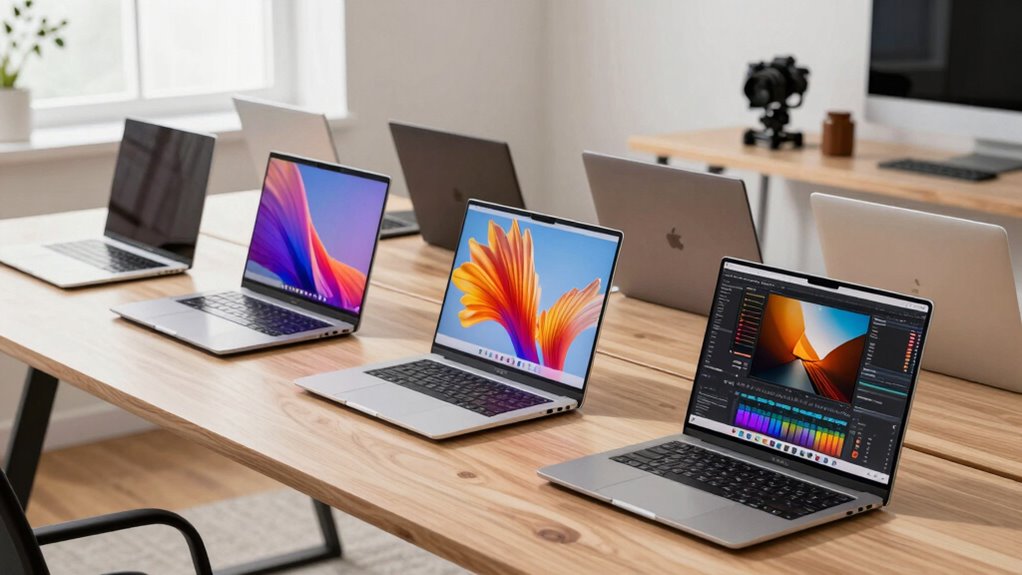

Searching for the best laptop for photo editing in 2026? The ideal machine balances powerful processing, accurate color reproduction, and portability. The Apple 2026 MacBook Air stands out for its sleek design and impressive M5 chip, making it a great choice for on-the-go editing. Meanwhile, the ASUS ProArt StudioBook 16 OLED offers a stunning display and high-end specs for professional workflows. The main challenge lies in balancing performance and price—more powerful laptops tend to be less portable and more expensive, while budget options may sacrifice color accuracy or processing speed. Continue reading for a detailed breakdown of these 14 options to find your best fit.

Get the little things that make your day delivered free with Prime
- Fast, free delivery on millions of items
- Prime Video, Amazon Music and more included
- Member-only deals all year
Key Takeaways
- High-end workstations like the Dell Precision 7780 and ASUS ProArt StudioBook excel in color accuracy and processing power, ideal for professional use.
- The MacBook Air with M5 Chip offers exceptional portability and battery life, best suited for editors who need mobility without heavy lifting.
- Budget-friendly options like the HP Pavilion provide decent performance for casual editing but may lack advanced color features.
- Display quality—specifically color accuracy and resolution—remains a decisive factor for serious photo editing, often outweighing raw specs.
- More RAM (16GB or higher) and fast SSDs are common threads among top-performing models, reducing lag during editing workflows.




| laptop for photo editing | Processor | Display | Storage | RAM |
|---|---|---|---|---|
| HP Pavilion 15.6" HD Touchscre | Intel Core i3-1115G4 (up to 4.1 GHz) | 15.6-inch HD Touchscreen, 1366 x 768 | 1TB SSD | 16GB |
| Dell Precision 7780 Mobile Wor | Intel Core i9-13950HX | 17.3" FHD | 1TB NVMe SSD | 128GB |
| Apple 2026 MacBook Air 13-inch | Apple M5 chip | 13.6-inch Liquid Retina | 512GB SSD | — |
| NIMO 15.6-inch AI Creator Lapt | AMD Ryzen 5 6600H | 15.6-inch FHD IPS | 512GB PCIe SSD | 16GB DDR5 |
| Lenovo IdeaPad Slim 3 16-inch | Intel Core i7-13620H | 16-inch FHD+ IPS, 1920×1200 | 1TB PCIe NVMe SSD | 16GB DDR5 |
| HP OmniBook 3 16-inch Laptop P | AMD Ryzen 3 30 | 16-inch 2K IPS Touchscreen (1920 x 1200) | 256 GB PCIe NVMe M.2 SSD | 8 GB LPDDR5 |
| Lenovo IdeaPad 2-in-1 Business | AMD Ryzen 7 8845HS | 16" FHD+ Touch | 1TB SSD | 16GB DDR5 |
| Acer Aspire 2026 Touchscreen L | Intel Ultra 7 258V | 14-inch touchscreen | 2TB PCIe SSD | 32GB LPDDR5X |
| HP 14-Inch Laptop with Intel P | Intel N150 Quad-Core | 14-inch HD (1366 x 768) | — | — |
| HP OmniBook 3 17.3 inch Laptop | AMD Ryzen 3 30 | 17.3 inch FHD IPS | 512 GB PCIe NVMe M.2 SSD | 8 GB LPDDR5 |
| Dell 16 Pro Plus Touchscreen L | Intel Core i7 150U, 10 cores, up to 5.4GHz | 16-inch FHD+ (1920×1200), anti-glare, 300 nits | 1TB PCIe NVMe SSD | 32GB DDR5 |
| Dell 14 Plus Laptop DB14250 | Intel Core Ultra 7 258V | 14-inch | — | 32GB |
| ASUS ProArt StudioBook 16 OLED | Intel Core i9-13980HX | 16-inch 3.2K OLED, 120Hz, stylus support | 1TB NVMe SSD | 16GB DDR5 |
| Apple 2026 MacBook Neo 13-inch | A18 Pro chip | 13-inch Liquid Retina | 256GB SSD | — |
More Details on Our Top Picks
HP Pavilion 15.6″ HD Touchscreen Anti-Glare Laptop, 16GB RAM, 1TB SSD, Intel Core i3, Windows 11, Silver
This HP Pavilion stands out for its affordability and large 15.6-inch HD touchscreen, making it a practical choice for casual photo editing tasks. Compared to the Apple MacBook Air, it offers a more accessible price point but sacrifices display sharpness with a 1366 x 768 resolution, which may impact detailed editing. Its 16GB RAM and 1TB SSD support multitasking and quick file access, yet the entry-level Core i3 processor may struggle with demanding edits or professional software. The limited screen resolution and lower processing power mean it’s better suited for hobbyists or beginners rather than serious professionals. The long battery life of up to 11 hours is a bonus for portability, but the HD display limits visual accuracy.
Pros:- Large 15.6-inch HD touchscreen display
- Fast 1TB SSD for storage and quick access
- High 16GB RAM supports multitasking
- Long battery life up to 11 hours
Cons:- HD resolution may hinder detailed photo editing
- Entry-level Core i3 processor limits performance for demanding tasks
Best for: Budget-conscious beginners or students doing light photo editing on the go
Not ideal for: Professional photographers or serious hobbyists needing high accuracy and color fidelity
- Processor:Intel Core i3-1115G4 (up to 4.1 GHz)
- Display:15.6-inch HD Touchscreen, 1366 x 768
- RAM:16GB
- Storage:1TB SSD
- Ports:USB Type-C, USB Type-A, HDMI, headphone/microphone combo
- Battery Life:Up to 11 hours
Our verdict“This laptop is best for casual users seeking affordability and basic editing capabilities without high-end display requirements.”
Dell Precision 7780 Mobile Workstation 17.3″ FHD Laptop with Intel Core i9-13950HX, 128GB RAM, 1TB SSD, NVIDIA RTX 3500 12GB, Windows 11 Pro
This Dell Precision 7780 is designed for professionals who demand top-tier power, with a massive 128GB RAM and an Intel Core i9 processor that can handle complex editing workflows effortlessly. When compared to the Apple MacBook Air, it offers far superior processing and graphics capabilities, but at the expense of portability, being quite heavy and large. Its NVIDIA RTX 3500 GPU provides excellent acceleration for rendering and GPU-intensive editing tasks, making it ideal for high-end photo editing and video work. The 17.3-inch FHD display ensures ample screen real estate, though it doesn’t match the 4K clarity some creative professionals prefer. Long-term warranty coverage and professional-grade specs make this a workstation for those who need maximum power, but it’s less practical for frequent travel.
Pros:- Powerful Intel Core i9 and 128GB RAM for demanding multitasking
- NVIDIA RTX 3500 GPU accelerates rendering and editing tasks
- Large 17.3-inch FHD display offers extensive workspace
- Long warranty coverage through March 2031
Cons:- High cost and premium specifications limit accessibility
- Heavy and less portable for frequent mobility
- High power consumption may reduce battery life
Best for: Professional photographers, videographers, or content creators needing serious processing power and GPU acceleration
Not ideal for: Travelers or those seeking a lightweight, portable editing device
- Processor:Intel Core i9-13950HX
- Display:17.3″ FHD
- RAM:128GB
- Storage:1TB NVMe SSD
- Graphics:NVIDIA RTX 3500 12GB VRAM
- Operating System:Windows 11 Pro
Our verdict“This workstation is ideal for professionals requiring maximum processing and graphics performance, with less concern for portability.”
Apple 2026 MacBook Air 13-inch Laptop with M5 Chip, 16GB RAM, 512GB SSD, Liquid Retina Display, Touch ID, Wi-Fi 7 – Midnight
This MacBook Air offers impressive power in a slim, lightweight design, making it an excellent choice for those who prioritize portability. Its M5 chip provides capable performance for photo editing, with the added benefit of long battery life—up to 18 hours—surpassing many Windows counterparts like the Lenovo IdeaPad Slim 3. The 13.6-inch Liquid Retina display delivers vivid colors, although it lacks dedicated GPU options, which can limit performance in GPU-heavy editing or rendering tasks. Compared to the Dell Precision, the MacBook sacrifices raw power for sleekness and ecosystem benefits, making it less suitable for very demanding professional workflows. Its premium price can be a barrier for some, but for mobile professionals who value a seamless experience, this is a compelling option.
Pros:- Powerful M5 chip with AI capabilities
- Long-lasting battery up to 18 hours
- Vivid Liquid Retina display with accurate colors
- Seamless integration within the Apple ecosystem
Cons:- No dedicated GPU limits high-end editing performance
- Premium price tag
- Limited to two external displays
Best for: Creative professionals and students needing a portable, stylish device with strong battery life
Not ideal for: Heavy-duty photo editing involving extensive GPU-accelerated tasks or high-resolution display calibration
- Display:13.6-inch Liquid Retina
- Processor:Apple M5 chip
- Memory:16GB Unified Memory
- Storage:512GB SSD
- Battery Life:Up to 18 hours
- Ports:Two Thunderbolt 4, MagSafe, headphone jack
Our verdict“This MacBook Air suits creators prioritizing portability, battery life, and ecosystem integration over raw GPU power.”
NIMO 15.6-inch AI Creator Laptop with AMD Ryzen 5 6600H, 16GB RAM, 512GB SSD, FHD IPS Display
The NIMO 15.6-inch AI Creator Laptop offers a balanced mix of performance and affordability, featuring a capable AMD Ryzen 5 6600H processor and 16GB DDR5 RAM. While it doesn’t match the high-end specs of the Dell Precision, it performs well for mid-level photo editing and content creation, especially considering its price point. The FHD IPS display provides decent color and viewing angles, though it isn’t calibrated for professional-grade color accuracy. Its extensive port selection and features like a backlit keyboard and fingerprint reader add convenience for remote work and multitasking. Compared with premium workstations, it’s less suited for highly complex or GPU-intensive tasks but provides solid value for hobbyists or semi-professional editors who need versatility without breaking the bank.
Pros:- Powerful AMD Ryzen 5 6600H processor with 6 cores
- Upgradeable RAM and SSD for future expansion
- Full range of ports for connectivity
- FHD IPS display with backlit keyboard
Cons:- Integrated graphics may limit GPU-heavy editing
- Battery life may be constrained during prolonged intensive tasks
- Design details are not specified, possibly bulky
Best for: Amateur photographers and content creators seeking a budget-friendly, all-around editing machine
Not ideal for: High-end professionals requiring precise color accuracy or GPU-accelerated workflows
- Processor:AMD Ryzen 5 6600H
- Display:15.6-inch FHD IPS
- RAM:16GB DDR5
- Storage:512GB PCIe SSD
- Graphics:AMD Radeon 660M integrated
- Ports:2 USB-C, HDMI 2.0, 3 USB-A, Micro SD
Our verdict“This laptop provides a reliable, budget-conscious choice for casual to semi-professional editing with decent features and expandability.”
Lenovo IdeaPad Slim 3 16-inch FHD+ Laptop with Intel Core i7-13620H, 16GB DDR5, 1TB SSD, Windows 11
The Lenovo IdeaPad Slim 3 offers a spacious 16-inch FHD+ IPS display with vivid visuals, making it a strong contender for on-the-go photo editing. Its Intel Core i7-13620H and 16GB DDR5 RAM deliver robust performance, comparable to higher-priced models like the Apple MacBook Air but with more flexible hardware options. The 1TB SSD ensures ample storage and fast load times, and its lightweight design at around 3.7 pounds enhances portability. However, its display refresh rate is limited to 60Hz, which isn’t ideal for fast-motion editing or color grading workflows requiring higher precision. While it lacks a dedicated GPU, its overall balance of power, portability, and affordability makes it suitable for professionals who need a dependable machine for daily editing tasks.
Pros:- Powerful Intel Core i7-13620H with 10 cores
- Fast 1TB PCIe NVMe SSD for storage
- Lightweight at 3.70 lbs for portability
- Vivid 16-inch FHD+ IPS display
Cons:- Display refresh rate limited to 60Hz
- No dedicated GPU for GPU-intensive editing
- Lacks backlit keyboard
Best for: Mobile professionals and students who need a high-performance, portable photo editing laptop
Not ideal for: High-end professionals requiring GPU acceleration or 4K display calibration
- Processor:Intel Core i7-13620H
- Display:16-inch FHD+ IPS, 1920×1200
- RAM:16GB DDR5
- Storage:1TB PCIe NVMe SSD
- Graphics:Integrated Intel UHD Graphics
- Wireless:Wi-Fi 6, Bluetooth 5.2
Our verdict“This model offers a compelling combination of power and portability for everyday photo editing, especially for users on the move.”
HP OmniBook 3 16-inch Laptop PC, 2K Touchscreen, AMD Ryzen 3, 8GB RAM, 256GB SSD, Windows 11 Home
The HP OmniBook 3 stands out for its vivid 2K touchscreen, which provides accurate color representation essential for photo editing. Compared to larger, more powerful options like the HP OmniBook 3 17.3-inch, this model’s smaller display may feel limiting for detailed work, but it compensates with portability and long battery life. Its AMD Ryzen 3 processor handles basic editing tasks well but struggles with intensive workflows, and integrated graphics are suitable only for light edits. This choice suits hobbyists or casual editors who prioritize a crisp display and portability over raw power. It’s less ideal for professionals working with large files or complex Photoshop projects. Pros: Vivid 2K display; Long battery life; Fast SSD storage; AI noise reduction. Cons: Limited processing power; No dedicated GPU; Small display size.
Verdict: Best for entry-level photo enthusiasts needing a portable device with decent display quality.- Display:16-inch 2K IPS Touchscreen (1920 x 1200)
- Processor:AMD Ryzen 3 30
- RAM:8 GB LPDDR5
- Storage:256 GB PCIe NVMe M.2 SSD
- Graphics:AMD Radeon 610M
- Battery Life:Up to 14 hours and 15 minutes
Lenovo IdeaPad 2-in-1 Business Laptop, 16″ FHD+ Touch Display, AMD Ryzen 7 8845HS, 16GB DDR5 RAM, 1TB SSD, Windows 11 Pro, Fingerprint Reader, Backlit Keyboard, Numeric Keypad, Luna Grey
The Lenovo IdeaPad 2-in-1 offers a high-resolution 16-inch FHD+ touch display that benefits detailed photo editing, especially when compared to smaller screens like the Acer Aspire 2026. Its AMD Ryzen 7 processor and 16GB DDR5 RAM make it capable of handling large files and multitasking efficiently. The 1TB SSD ensures quick access to extensive photo libraries, while features like a fingerprint reader and backlit keyboard add productivity value. However, its larger size reduces portability, making it less suitable for frequent travelers. This model is ideal for professional photographers or designers working primarily at a desk but needing a versatile device that doubles as a tablet. It’s less suited for casual users or those prioritizing lightweight design. Pros: High-resolution display; Powerful Ryzen 7 CPU; Large, fast SSD; Versatile 2-in-1 form factor. Cons: Reduced portability; Higher price point; Larger footprint.
Verdict: This is a strong choice for professionals demanding high performance and a flexible form factor for photo editing.- Display:16″ FHD+ Touch
- Processor:AMD Ryzen 7 8845HS
- RAM:16GB DDR5
- Storage:1TB SSD
- Graphics:AMD Radeon 780M
- Ports:USB-C x2, USB-A x2, HDMI, microSD
Our verdict“Best for Professionals Who Need Power and Versatility — a strong pick in this lineup.”
Acer Aspire 2026 Touchscreen Laptop with Intel Ultra 7 258V, 32GB RAM, 2TB SSD
The Acer Aspire 2026 provides an impressive 32GB RAM and 2TB SSD, making it suitable for editing large RAW files and running multiple editing apps simultaneously. Its 14-inch touchscreen with stylus support offers precision control, which can be a significant advantage over larger or less responsive screens like the HP OmniBook 3 16-inch. The Intel Ultra 7 processor ensures quick rendering, but its integrated graphics aren’t suitable for GPU-accelerated tasks or high-end gaming. Its portable design is a plus, but the small screen might challenge detailed editing. This device is best for on-the-go professionals who need serious power in a mobile package but may find the smaller display restrictive for detailed photo work. It’s less ideal for users who prefer larger screens or dedicated graphics. Pros: Massive RAM and storage; Portable design; Stylus support; AI-powered features. Cons: Small 14-inch display; No dedicated GPU; Premium price for specs.
Verdict: Ideal for mobile professionals managing large photo libraries needing high performance but comfortable with a smaller screen.- Display:14-inch touchscreen
- Processor:Intel Ultra 7 258V
- RAM:32GB LPDDR5X
- Storage:2TB PCIe SSD
- Graphics:Intel Arc 140V
- Weight:3.09 lbs
Our verdict“Best for Power Users with Heavy Files — a strong pick in this lineup.”
HP 14-Inch Laptop with Intel Processor and 500GB External Hard Drive
The HP 14-inch offers a compact, budget-friendly option with decent performance for casual photo editing. Its 14-inch HD display isn’t as sharp as Full HD screens like the HP OmniBook 3, but it’s sufficient for basic adjustments. The Intel N150 quad-core chip handles simple edits and browsing comfortably, and the included external 500GB hard drive adds storage capacity without inflating the initial cost. However, internal storage is limited at 128GB, and the HD display limits color accuracy and detail, making it less suitable for professional work. This model fits those starting in photography or who only occasionally edit images, but it falls short for serious or color-critical projects. Pros: Compact and affordable; External storage included; Reliable daily performance; Modern connectivity. Cons: Limited internal storage; Lower-resolution display; Basic graphics power.
Verdict: A practical choice for beginners or casual editors with modest needs and budget constraints.- Display:14-inch HD (1366 x 768)
- Processor:Intel N150 Quad-Core
- Internal Storage:128GB UFS
- External Storage:500GB portable hard drive
- Memory:4GB LPDDR5
- Connectivity:Wi-Fi 6, Bluetooth 5.4
Our verdict“Best Budget for Basic Photo Editing — a strong pick in this lineup.”
HP OmniBook 3 17.3 inch Laptop PC with FHD Display and AMD Ryzen 3
The HP OmniBook 3 17.3-inch provides a spacious FHD IPS display that enhances detail visibility and color accuracy, making it well-suited for precise photo editing compared to smaller screens like the Lenovo IdeaPad. Its AMD Ryzen 3 processor and 8GB RAM support multitasking, though they may limit performance with very large files or complex edits. The 512GB SSD offers ample space for large image files, but the absence of a dedicated GPU might restrict GPU-accelerated editing workflows. Its large, vibrant screen makes it ideal for those who prefer a desktop-like experience but are okay with added weight and bulk. This laptop suits hobbyists and semi-professionals who prioritize screen real estate over portability. It’s less appropriate for frequent travelers or those needing a lightweight device. Pros: Large, detailed FHD display; Long battery life; Fast SSD; Good for multitasking. Cons: Heavy and bulky; No dedicated high-end GPU; Processor may limit heavy-duty editing.
Verdict: Best for users who need a big, clear display and primarily work from a fixed location.- Display:17.3 inch FHD IPS
- Processor:AMD Ryzen 3 30
- RAM:8 GB LPDDR5
- Storage:512 GB PCIe NVMe M.2 SSD
- Graphics:AMD Radeon 610M
- Battery Life:Up to 14 hours 15 minutes
Our verdict“Best Large Screen for Photo Editing — a strong pick in this lineup.”
Dell 16 Pro Plus Touchscreen Laptop, Intel Core i7, 32GB DDR5, 1TB SSD
The Dell 16 Pro Plus stands out for its combination of a large, vibrant 16-inch touchscreen and a high-performance Intel Core i7 processor, making it ideal for detailed photo editing and multitasking. Compared with the ASUS ProArt StudioBook 16 OLED, it offers a more traditional Windows experience with extensive connectivity, though it doesn’t match the OLED display’s color accuracy. The 32GB DDR5 RAM ensures smooth handling of large files, but its lightweight build might raise questions about durability for rugged use. The integrated graphics are sufficient for editing, yet not suited for GPU-intensive tasks like 3D rendering. The 1TB SSD provides fast storage, but premium features come at a higher cost. This laptop is perfect for professionals seeking a powerful, all-around photo editing machine without sacrificing portability.
Pros:- Large, vibrant 16-inch touchscreen with anti-glare technology
- Powerful Intel Core i7 with 10 cores for multitasking
- Extensive connectivity including multiple USB ports and HDMI
Cons:- Relatively lightweight build may impact durability
- Premium features increase the price
- Integrated graphics limit heavy creative workloads
Best for: Photographers and designers who need a versatile, high-performance Windows laptop with a large display
Not ideal for: Heavy gamers or 3D artists requiring dedicated high-end GPU performance
- Processor:Intel Core i7 150U, 10 cores, up to 5.4GHz
- Display:16-inch FHD+ (1920×1200), anti-glare, 300 nits
- RAM:32GB DDR5
- Storage:1TB PCIe NVMe SSD
- Graphics:Integrated Intel graphics
- Weight:4.37 lbs
Our verdict“This is a well-rounded choice for professionals who want a powerful, portable Windows laptop for photo editing and general use.”
Dell 14 Plus Laptop DB14250, Intel Core Ultra 7 258V, 32GB RAM
The Dell 14 Plus features the latest Intel Core Ultra 7 258V processor and 32GB RAM, making it a strong choice for creators who need AI-enhanced workflows and portability. Unlike the Apple MacBook Neo 13-inch, it offers more RAM and a dedicated focus on AI tasks, though it lacks the Mac’s refined ecosystem. Its durable, military-grade testing assures reliability for on-the-go work, but the absence of detailed storage specs and battery life info could be a concern for prolonged use. Designed for content creators and professionals seeking a compact yet powerful machine, it excels in multitasking and AI-enhanced productivity but may come at a premium price without clear battery longevity data.
Pros:- Powerful Intel Core Ultra 7 processor optimized for AI tasks
- Large 32GB RAM enables seamless multitasking
- Durable, military-grade build for reliability on the move
Cons:- Limited details on storage capacity and battery life
- Potentially high cost for the specifications offered
- No detailed battery performance specs provided
Best for: Mobile professionals and AI-driven content creators needing a durable, high-performance laptop
Not ideal for: Users seeking extensive storage or long battery life without external power sources
- Processor:Intel Core Ultra 7 258V
- RAM:32GB
- Display:14-inch
- Service:6 Months Dell Migrate
Our verdict“This laptop suits professionals prioritizing AI performance and durability in a portable form factor, despite some missing details on storage and battery.”
ASUS ProArt StudioBook 16 OLED Laptop, 16” 3.2K Touch Display, Intel Core i9, Nvidia GeForce RTX 4060, 16GB RAM, 1TB SSD, Windows 11
The ASUS ProArt StudioBook 16 OLED truly caters to creative professionals with its 16-inch 3.2K OLED touch display, boasting exceptional color accuracy and fast response times. Compared to the Dell 16 Pro Plus, it offers superior display quality ideal for color-critical editing, though it sacrifices some connectivity options and has a higher price point. The Intel Core i9 and Nvidia RTX 4060 GPU deliver outstanding power for rendering and multitasking, but the 16GB RAM may limit performance when working with extremely large files or complex projects. The stylus support is sold separately, which could be an extra cost for digital artists. This device is best suited for demanding photo editors and digital artists who prioritize display quality and raw power, accepting the premium price and accessory considerations.
Pros:- High-resolution OLED touch display with excellent color fidelity
- Powerful Intel Core i9 processor and RTX 4060 GPU for demanding tasks
- Extensive connectivity including Thunderbolt 4 and HDMI 2.1
Cons:- Stylus support sold separately
- Higher price may be a barrier for some users
- Limited RAM (16GB) could restrict multitasking with large files
Best for: Professional photographers and digital artists needing color accuracy and high GPU performance
Not ideal for: Budget-conscious users or those requiring extensive RAM for heavy multitasking
- Display:16-inch 3.2K OLED, 120Hz, stylus support
- Processor:Intel Core i9-13980HX
- GPU:Nvidia GeForce RTX 4060, 8GB VRAM
- RAM:16GB DDR5
- Storage:1TB NVMe SSD
- Weight:5.29 lbs
Our verdict“This is a top choice for creative professionals who need a high-quality display and substantial processing power, accepting the premium cost.”
Apple 2026 MacBook Neo 13-inch Laptop with A18 Pro Chip, Liquid Retina Display, 8GB RAM, 256GB SSD, FaceTime HD Camera – Blush
The MacBook Neo 13-inch emphasizes portability with its sleek aluminum design and impressive 16-hour battery life, making it ideal for casual photo editing and Apple loyalists. Its Liquid Retina display offers vibrant visuals, but with only 8GB RAM, it may fall short for intensive multitasking or large file editing compared to the Dell 16 Pro Plus. The 256GB SSD limits storage, especially when working with RAW files, potentially necessitating external drives. The seamless Apple ecosystem integration and long battery life make it a good choice for light editing on the go, but power users requiring heavy multitasking or large storage should look elsewhere. This model balances portability and basic editing needs at a premium price.
Pros:- Ultra-lightweight, durable aluminum design
- Long battery life up to 16 hours
- Vivid Liquid Retina display with high color accuracy
Cons:- Limited to 8GB RAM, restricting heavy multitasking
- Only 256GB storage may require external drives
- Premium price for a less powerful machine
Best for: Apple users who prioritize portability and lightweight editing tasks
Not ideal for: Professional editors handling large files or multitasking heavily
- Display:13-inch Liquid Retina
- Processor:A18 Pro chip
- Memory:8GB Unified Memory
- Storage:256GB SSD
- Battery Life:Up to 16 hours
- Camera:1080p FaceTime HD
Our verdict“This laptop suits casual photo editors and Apple ecosystem enthusiasts prioritizing portability over raw multitasking power.”

How We Picked
To evaluate these laptops, I focused on key criteria that matter most for photo editing: display quality, processing power, memory, storage speed, and build quality. I prioritized models with high-resolution, color-accurate screens, such as OLED and 4K panels, since accurate colors are vital for photo work. Performance was gauged through CPU and GPU capabilities, with higher specs favored for complex editing tasks. Additionally, I considered user-friendly features like keyboard comfort and portability. Each model was ranked based on how well it balances these factors against price, ensuring options for a range of budgets and skill levels.Factors to Consider When Choosing Laptop For Photo Editing
Choosing the right laptop for photo editing involves more than just specs. It’s important to consider how the device’s display, processing power, and build quality align with your workflow. A balanced approach ensures you avoid overspending on features you don’t need or sacrificing crucial performance. In this guide, I highlight the key factors to evaluate before making your purchase, helping you find a machine that matches your specific editing needs and budget.Display Quality and Color Accuracy
The display is the most critical component for photo editing. Look for screens with high resolution (at least 1080p, preferably 4K or OLED) and wide color gamuts like AdobeRGB or DCI-P3, which ensure color precision. Avoid budget models with standard LCDs that may distort colors or lack contrast. Calibration options are also a plus, allowing you to fine-tune the display for accurate editing. Remember, a good display can save you from costly mistakes in color correction later on.
Performance and Processing Power
Photo editing software demands a capable CPU and GPU, especially when working with large RAW files or multiple layers. Look for recent Intel Core i7 or i9, AMD Ryzen 7 or 9, or Apple M-series chips, which offer smooth multitasking. Dedicated GPUs like NVIDIA RTX or AMD Radeon can accelerate rendering and effects. Cheaper processors might struggle with high-res images, leading to frustrating delays. Balance your budget with the need for a fast, responsive system to keep your workflow efficient.
Memory and Storage
At least 16GB of RAM is recommended for professional photo editing, with more being beneficial for heavy multitasking or large projects. SSD storage is essential for quick file access and smooth operation; aim for 512GB or higher, especially if working with large image libraries. Keep in mind that some budget models offer only modest storage or slower drives, which can bottleneck your workflow. External drives can supplement storage but add to your setup complexity.
Portability and Build Quality
If you often work on the go, prioritize lightweight, durable laptops with good battery life. Conversely, desktop replacements or larger models often provide better performance but are less portable. Build quality impacts longevity and reliability, especially if you travel frequently. Consider laptops with sturdy chassis and quality keyboards. Remember, a portable machine with a high-quality display is often the best compromise for mobile photographers and editors.
Connectivity and Compatibility
Many photo editing accessories—like external monitors, color calibrators, and peripherals—require reliable ports. Look for models with multiple USB-C, Thunderbolt, or HDMI outputs. Compatibility with software and hardware ecosystems (especially Apple vs. Windows) can influence your workflow. Also, check for features like Wi-Fi 6 or Bluetooth 5 for seamless wireless connections. A well-connected laptop minimizes bottlenecks and enhances your overall experience.
Frequently Asked Questions
Is a 4K display necessary for photo editing?
A 4K display offers sharper images and more precise detail, which benefits professional editing. However, the key is color accuracy rather than resolution alone. A high-quality Full HD or 2.5K display with wide color gamut and good calibration can suffice for most users. Budget models may not include 4K screens, but they can still deliver accurate colors suitable for hobbyists or casual editors. Consider your workflow needs and whether the extra detail justifies the cost.
Should I prioritize a dedicated GPU for photo editing?
While integrated graphics handle basic tasks well, a dedicated GPU can significantly speed up rendering, effects, and exporting in advanced editing software like Photoshop and Lightroom. For complex projects or video integration, a GPU becomes more valuable. However, for simple photo retouching, the GPU is less critical than display quality and CPU performance. Balance your budget accordingly—spending on CPU and display often yields more noticeable benefits for photo editing than a high-end GPU alone.
How much RAM do I need for professional photo editing?
16GB of RAM is generally the minimum for smooth editing of large files, especially in software like Photoshop or Lightroom. If you work with multi-layer compositions or large catalogs, 32GB or more can prevent lag and improve efficiency. Upgrading RAM is often more cost-effective than other components, and it directly influences your multitasking capacity. Check if the laptop allows easy RAM upgrades, in case you want to boost it later.
Is portability more important than performance?
This depends on your working style. If you frequently shoot and edit on location or at different sites, portability and battery life take precedence. Conversely, if your workflow is mostly stationary, you might prioritize raw performance and a larger display, accepting the extra weight. For hybrid workflows, look for a balanced machine that offers both decent portability and enough power for editing tasks. The right choice hinges on how mobile you need to be versus how much processing muscle your projects demand.
Should I buy a laptop with a touch screen for photo editing?
Touch screens can add convenience for certain workflows, like quick adjustments and annotations, especially on OLED or high-res displays. However, they often come at a premium and may have lower durability or less accurate color calibration than non-touch screens. For professional editing, color accuracy and stability are more important. Touch screens are a bonus for some users but are not essential unless you find them improving your efficiency or workflow.
Conclusion
For those seeking the best overall experience, the ASUS ProArt StudioBook 16 OLED combines stunning display quality with powerful specs, making it ideal for professional photo editors. Budget-conscious users or hobbyists might prefer the HP Pavilion for its affordability and decent performance, while frequent travelers will benefit from the MacBook Air with M5 Chip due to its portability and battery life. Beginners should consider models with easier interfaces and reliable color accuracy, whereas pros need high-end workstations like the Dell Precision or ASUS StudioBook. Ultimately, your choice depends on your specific workflow needs, budget, and whether you prioritize portability or raw power.
Halloween Picks
halloween
As an affiliate, we earn on qualifying purchases.