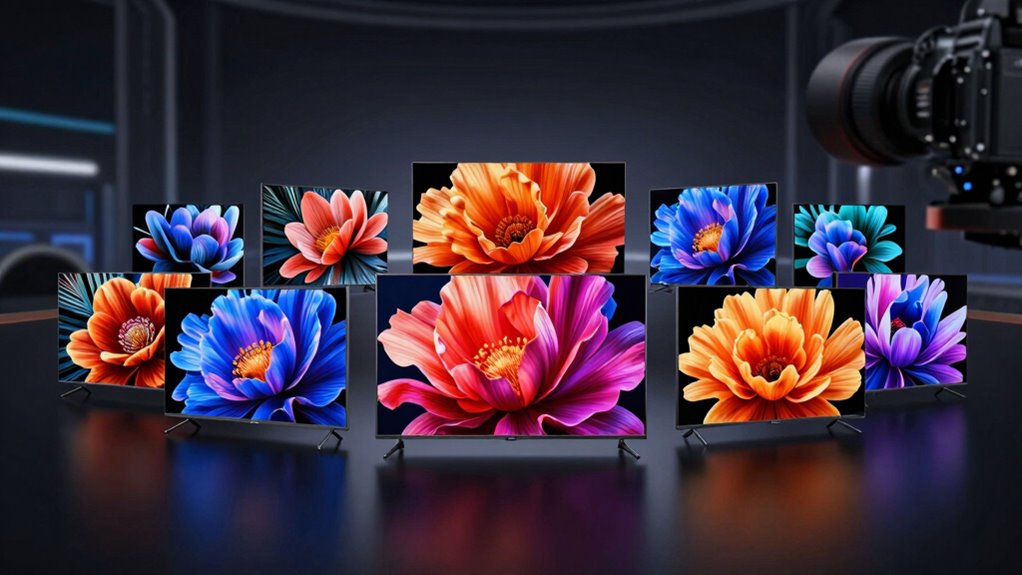

For a 75-inch Mini LED TV with strong all-around appeal, I’d start with the Hisense U7: its native 165Hz panel, variable refresh features, and anti-reflection treatment make it a standout for gaming and bright rooms. The TCL QM7L is another compelling pick for buyers prioritizing a higher-performance Mini LED picture, while the TCL QM6K suits shoppers who want a simpler value-focused option with Google TV. Across this lineup, the key tradeoffs are gaming performance, picture control, smart-TV usability, and how much room light the screen can handle. Keep reading for my full breakdown of how the 11 models differ and which one best matches your priorities.

Get the little things that make your day delivered free with Prime
- Fast, free delivery on millions of items
- Prime Video, Amazon Music and more included
- Member-only deals all year
Key Takeaways
- The Hisense U7 is the most clearly gaming-focused option: its listed native 165Hz panel and VRR 330 features set it apart from the lineup’s more general-purpose models.
- The TCL QM7L and QM6K fill different roles: the QM7L is the more performance-oriented choice, while the QM6K is a simpler alternative with Google TV and Onkyo audio.
- Hisense and TCL listings call out more specific picture and gaming capabilities than many of the Samsung and LG product names, so compare exact model specifications rather than assuming features carry across a brand’s range.
- LG offers several 2026 QNED Mini LED choices, but the QNED73B, QNED75B, and QNED84B should be compared by their exact specifications and pricing rather than their similar names.
- Smart platform is a real differentiator here: Google TV, Fire TV, and Roku are represented, while Samsung and LG bring their own TV interfaces; choose based on the apps and controls your household prefers.


| mini led tv 75 inch | Screen size | Resolution | Refresh rate | Display technology |
|---|---|---|---|---|
| LG 75-Inch QNED AI 4K Mini LED | 75 inches | 4K | 60 Hz | Mini LED |
| LG 75-Inch QNED AI QNED75B Ser | 75 inches | 4K | — | — |
| Hisense 75" U7 Mini-LED ULED 4 | 75 inches | 4K UHD | — | — |
| LG 75-Inch QNED evo AI QNED84B | 75 inches | 4K | 120 Hz, up to 144 Hz with Motion Booster 288 | Mini LED |
| Hisense 75" E7 Cinema Series H | 75 inches | 4K UHD | Native 144 Hz | — |
| Samsung 75" M70H Series Mini L | 75 inches | 4K Ultra HD | 120Hz (DLG) | — |
| TCL 75 Inch QM7L Series SQD-Mi | 75 inches | 4K | 144Hz | SQD-Mini-LED QLED |
| Samsung 75-Inch Class M80H Ser | 75 inches | 4K UHD | 144Hz | — |
| TCL 75-Inch QM6K Series Mini L | 75 inches | 4K UHD (3840 × 2160) | 144Hz native | Mini LED QLED |
| Samsung 75-Inch Neo QLED QN70F | 75 inches | 4K | Up to 144Hz for PC gaming | Neo QLED Mini LED |
| Roku 75-inch Class Plus Series | 75 inches | 4K Ultra HD (3840 x 2160) | 60Hz native; 120Hz motion enhancement listed | QLED Mini LED |
More Details on Our Top Picks
LG 75-Inch QNED AI 4K Mini LED Smart TV (QNED73B Series, 2026)
I’d shortlist the QNED73B for a 75-inch Mini LED setup that prioritizes straightforward streaming and flexible everyday gaming. Its a7 AI Processor 4K Gen9, Filmmaker Mode, and 100% Color Volume certification point to colorful, processed 4K viewing, while webOS adds LG Channels and familiar streaming access. Compared with the similarly sized LG QNED75B, this model’s listed appeal is its broad connectivity and explicit HDR10/HLG support, rather than a major performance distinction. The central tradeoff is its 60 Hz refresh rate: FreeSync Premium and ALLM can help compatible gaming feel more responsive, but they do not make it a high-refresh screen for fast PC play. I’d choose it for mixed household viewing, not for maximum motion performance.
Pros:- Mini LED display with certified 100% Color Volume for vivid color presentation.
- a7 AI Processor 4K Gen9 supports picture and sound processing.
- AMD FreeSync Premium, ALLM, and Game Optimizer provide useful gaming tools.
- webOS includes access to more than 400 LG Channels.
Cons:- 60 Hz refresh rate is less suited to high-frame-rate gaming than the Hisense U7’s native 165 Hz.
- Full smart features depend on internet access and some streaming services require subscriptions.
- Software updates are listed as limited to four years.
Best for: Households wanting a 75-inch Mini LED TV with webOS streaming, free LG Channels, and gaming tools for console play.
Not ideal for: PC gamers or sports viewers seeking a high-refresh display; its listed refresh rate is 60 Hz.
- Screen size:75 inches
- Display technology:Mini LED
- Resolution:4K
- Refresh rate:60 Hz
- HDR formats:HDR10, HLG
- Processor:a7 AI Processor 4K Gen9
- Smart platform:webOS
- HDMI ports:3
- VESA mount:300 x 300 mm
Our verdict“Choose the QNED73B if webOS convenience and versatile everyday viewing matter more than high-refresh gaming.”
LG 75-Inch QNED AI QNED75B Series Mini LED 4K Smart TV (2026 Model)
The QNED75B is a sensible fit for viewers who want a large Mini LED screen with a recognizable LG interface and little need to manage advanced picture settings. Its Filmmaker Mode offers a viewing preset aimed at preserving a more natural presentation, while the A7 AI Processor 4K Gen9 handles picture and sound processing. Like the QNED73B, it includes webOS, LG Channels, and FreeSync Premium; the provided specifications do not establish a meaningful performance gap between those two LG models. Against the LG QNED84B, though, the QNED75B is the less gaming-focused choice: no high-refresh rate is specified, while the QNED84B lists up to 144 Hz. This pick makes sense for streaming and films, but I would skip it if fast gaming is a major reason for buying a 75-inch TV.
Pros:- Mini LED 4K panel with certified 100% Color Volume.
- Filmmaker Mode offers a cinema-oriented picture preset.
- A7 AI Processor 4K Gen9 supports picture and sound processing.
- webOS includes LG Channels and Google Gemini.
Cons:- No refresh-rate figure is provided in the supplied specifications.
- The LG QNED84B is a clearer match for high-refresh gaming, with up to 144 Hz listed.
- The feature-rich smart and gaming menus may feel unnecessary to viewers seeking a basic interface.
Best for: Film and streaming viewers who want LG’s webOS, Filmmaker Mode, and a 75-inch Mini LED screen without prioritizing high-refresh gaming.
Not ideal for: Competitive gamers seeking a stated high refresh rate or buyers who want detailed published hardware specifications before choosing.
- Screen size:75 inches
- Panel type:Mini LED
- Resolution:4K
- Processor:A7 AI Processor 4K Gen9
- HDR support:HDR10 Pro
- Gaming features:AMD FreeSync Premium, ALLM, Game Dashboard
- Smart platform:webOS
- AI assistant:Google Gemini
- Model year:2026
Our verdict“Pick the QNED75B for LG streaming features and film-friendly viewing, but favor the QNED84B if gaming refresh rate matters.”
Hisense 75″ U7 Mini-LED ULED 4K UHD Smart Google TV (75U7SG)
The Hisense U7 is the most gaming-forward option in this group on the supplied specifications: its native 165 Hz panel and VRR up to 330 Hz are aimed at smooth, responsive motion, well beyond the 60 Hz LG QNED73B. The Mini LED system is listed with up to 3,000 local dimming zones and peak brightness up to 3,000 nits, giving this model a strong paper case for bright rooms and high-contrast scenes. It also brings Dolby Vision IQ, HDR10+, anti-reflection treatment, and a Devialet-tuned 2.1.2-channel audio system. Compared with the LG QNED84B, the U7 claims a higher native refresh rate and more detailed brightness and dimming figures. That specification-rich package may be overkill for casual streaming, and its Google TV interface may take more setup than a buyer wanting a simple TV menu expects.
Pros:- Native 165 Hz refresh rate and VRR up to 330 Hz target fluid motion.
- Up to 3,000 nits peak brightness and 3,000 local dimming zones are specified.
- HDR support includes HDR10+, Dolby Vision IQ, and IMAX Enhanced.
- 2.1.2-channel audio tuned by Devialet and anti-reflection treatment are built in.
Cons:- Google TV with Gemini AI may feel complex to viewers who prefer a simpler smart-TV interface.
- The 75-inch screen requires ample viewing and installation space.
- Its advanced gaming and picture features bring little benefit to viewers who mainly watch basic streaming.
Best for: Console and PC gamers, sports viewers, and bright-room households who want high refresh, VRR, strong listed brightness, and integrated multi-channel audio.
Not ideal for: Casual viewers who want a simple interface or buyers who do not need high-refresh gaming and advanced picture controls.
- Screen size:75 inches
- Panel type:Mini-LED ULED (Hi-QLED)
- Resolution:4K UHD
- Native refresh rate:165 Hz
- VRR:Up to 330 Hz
- Peak brightness:Up to 3,000 nits
- Local dimming zones:Up to 3,000
- HDR formats:HDR10+, Dolby Vision IQ, IMAX Enhanced
- Audio system:2.1.2-channel tuned by Devialet
Our verdict“Choose the U7 if high-refresh gaming and bright-room viewing are priorities; for ordinary streaming, its advanced feature set may be more than you need.”
LG 75-Inch QNED evo AI QNED84B Series Mini LED 4K Smart TV (2026 Model)
I’d steer LG buyers who play fast games toward the QNED84B. Its listed 120 Hz refresh rate, up to 144 Hz with Motion Booster 288, VRR, and AMD FreeSync Premium give it a clear motion advantage over the 60 Hz QNED73B and QNED75B. The α8 AI Processor 4K Gen3 and Mini LED backlighting position it as a more performance-oriented step within LG’s 75-inch lineup, while Filmmaker Mode remains available for movie viewing. Against the Hisense U7, the QNED84B has a lower stated maximum refresh rate than the Hisense’s native 165 Hz, but it keeps LG’s webOS platform and gaming tools. Its tradeoffs are practical: the high-refresh benefits depend on compatible source hardware, and its 47.6-pound weight calls for care when mounting. I’d pass if 60 Hz viewing already meets your needs.
Pros:- 120 Hz listed refresh rate with up to 144 Hz via Motion Booster 288.
- VRR, AMD FreeSync Premium, ALLM, and Game Dashboard support gaming use.
- Mini LED backlighting and α8 AI Processor 4K Gen3 support picture processing.
- Filmmaker Mode provides a cinema-oriented viewing option.
Cons:- The Hisense U7 lists a higher native refresh rate at 165 Hz.
- The 47.6-pound weight can make moving and wall mounting a two-person job.
- Full use of high-refresh gaming features requires compatible source hardware and internet access for online services.
Best for: LG webOS users who game on compatible consoles or PCs and want VRR with a refresh rate above 60 Hz.
Not ideal for: Buyers focused on the highest listed refresh rate or those who do not have compatible gaming hardware to use the extra motion capability.
- Screen size:75 inches
- Display technology:Mini LED
- Resolution:4K
- Refresh rate:120 Hz, up to 144 Hz with Motion Booster 288
- Processor:α8 AI Processor 4K Gen3
- HDR formats:HDR10, HLG
- Gaming features:VRR, AMD FreeSync Premium, ALLM, Game Dashboard
- Smart platform:webOS
- Weight:47.6 lbs
Our verdict“Choose the QNED84B for high-refresh gaming within LG’s webOS lineup, but compare the Hisense U7 if you want the highest stated refresh rate.”
Hisense 75″ E7 Cinema Series Hi-QLED Mini-LED 4K UHD Smart Fire TV (2026)
The Hisense E7 Cinema Series combines a native 144 Hz refresh rate with a broad HDR list and Fire TV, making it a balanced pick for households splitting time between sports, games, and films. Dolby Vision IQ and HDR10+ Adaptive give compatible content multiple HDR paths, while Dolby Atmos and AI picture features add to its living-room focus. Compared with the Hisense U7, the E7 lists a lower refresh rate—144 Hz versus 165 Hz native—but still offers high-refresh motion and a Fire TV interface rather than Google TV. The supplied details do not specify brightness or local-dimming zone counts, so I would not rank it ahead of the U7 for buyers choosing mainly by those measurements. AI Sports Mode, FilmMaker Mode, and the light sensor also mean some viewers may want to adjust defaults to suit their room and preferences.
Pros:- Native 144 Hz refresh rate supports smooth motion for gaming and sports.
- HDR support includes Dolby Vision IQ, HDR10+ Adaptive, HDR10, and HLG.
- Fire TV provides an integrated smart-TV platform.
- Dolby Atmos, FilmMaker Mode, AI Sports Mode, and an AI light sensor are included.
Cons:- The Hisense U7 specifies a higher native refresh rate at 165 Hz.
- Brightness and local-dimming-zone counts are not provided in the supplied specifications.
- AI picture modes and the light sensor may need adjustment to match personal viewing preferences.
Best for: Households already using Fire TV that want a 75-inch Mini LED screen for mixed sports, gaming, and HDR movie viewing.
Not ideal for: Buyers who want published peak-brightness and local-dimming-zone figures, or viewers who prefer Google TV over Fire TV.
- Screen size:75 inches
- Panel type:Hi-QLED Mini-LED
- Resolution:4K UHD
- Refresh rate:Native 144 Hz
- HDR formats:Dolby Vision IQ, HDR10+ Adaptive, HDR10, HLG
- Audio:Dolby Atmos
- Smart platform:Fire TV
- Model year:2026
- Key picture features:AI Picture, AI Sports Mode, FilmMaker Mode, MEMC, AI Light Sensor
Our verdict“Pick the E7 if you want Fire TV, broad HDR support, and 144 Hz motion, but choose the U7 if its higher refresh and stated brightness figures matter more.”
Samsung 75″ M70H Series Mini LED 4K Smart TV (2026)
The Samsung M70H is a sensible 75-inch Mini LED choice for viewers who want bright, high-contrast viewing plus plenty to watch without adding streaming subscriptions. Its Samsung TV Plus library and Soccer Mode make it more oriented toward casual channel surfing and sports than the gaming-heavy Samsung M80H, while the stated 120Hz DLG mode can help motion look smoother. That mode has a tradeoff: DLG may reduce image sharpness, and the product data describes the dimming as software-based rather than full-array hardware, which may limit control of bright highlights against dark scenes. Full smart functionality also depends on a Samsung account and internet connection. I’d choose it for free content and everyday viewing, not for the strongest gaming specification or most precise Mini LED dimming in this group.
Pros:- Mini LED picture aims for bright highlights and deep blacks.
- Samsung TV Plus provides more than 2,700 free streaming options.
- 120Hz DLG and Soccer Mode target smoother sports and gaming motion.
- Knox security is included.
Cons:- Software-based dimming may offer less precise contrast control than full-array hardware dimming.
- DLG 120Hz mode can reduce image sharpness.
- Full smart functionality requires a Samsung account and internet connection.
Best for: Households that watch sports and free ad-supported channels and want a 75-inch Mini LED TV without relying only on paid streaming apps.
Not ideal for: Picture-quality purists and competitive gamers who want stronger hardware-based local dimming or a sharper image at the highest motion setting.
- Screen size:75 inches
- Resolution:4K Ultra HD
- Panel type:Mini LED
- Refresh rate:120Hz (DLG)
- HDR:Mini LED HDR
- Smart features:Samsung TV Plus, Gaming Hub
- Color support:1 billion colors
- Security:Knox
Our verdict“Choose the M70H if free streaming and sports modes matter more than top-tier dimming precision or the M80H’s 144Hz gaming specification.”
TCL 75 Inch QM7L Series SQD-Mini-LED QLED Smart TV (2026 Model)
If your 75-inch TV needs to stay vivid in a bright room and handle fast gaming, the TCL QM7L brings the lineup’s most emphatic brightness and dimming figures: up to 3,000 nits and 2,100+ local dimming zones. That hardware gives it a stronger stated contrast-and-highlight proposition than the Samsung M70H, whose dimming is described as software-based. A native 144Hz refresh rate and AMD FreeSync Premium Pro also make the QM7L a more direct fit for high-frame-rate gaming than the 120Hz DLG M70H. It adds Bang & Olufsen audio with Dolby Atmos FlexConnect support, reducing the need to add speakers right away. The tradeoffs are less about picture performance and more about uncertainty: software update support duration is not specified, and its HDR-format listing names HDR10 rather than the broader format support listed for the TCL QM6K.
Pros:- Up to 3,000 nits peak brightness and more than 2,100 local dimming zones.
- Native 144Hz refresh rate with AMD FreeSync Premium Pro.
- Bang & Olufsen audio with Dolby Atmos FlexConnect support.
- AI processing is designed to optimize picture quality and color.
Cons:- Software update support duration is not specified.
- The listed HDR format is HDR10, while the TCL QM6K lists Dolby Vision, HDR10+, HDR10, and HLG.
- High refresh rate gaming benefits depend on compatible source hardware.
Best for: Gamers with a compatible high-frame-rate setup who watch in a bright living room and want strong Mini LED contrast alongside built-in premium audio.
Not ideal for: Buyers who prioritize a clearly stated long software-support window or broad HDR-format coverage over brightness and gaming performance.
- Screen size:75 inches
- Display technology:SQD-Mini-LED QLED
- Resolution:4K
- Refresh rate:144Hz
- Peak brightness:Up to 3,000 nits
- Local dimming zones:2,100+
- HDR format:HDR10
- Audio:Bang & Olufsen, Dolby Atmos FlexConnect support
- Processor:AIPQ Pro / TSR AI Processor
Our verdict“Pick the QM7L for a bright-room setup where high-output Mini LED performance and 144Hz gaming matter more than broader listed HDR support.”
Samsung 75-Inch Class M80H Series Mini LED 4K Smart TV (2026 Model)
The Samsung M80H is the Samsung pick here for buyers focused on gaming flexibility rather than the M70H’s free-content emphasis. Its 144Hz refresh rate and VRR target smoother play, while the NQ4 AI Gen2 processor, 4K upscaling, and Auto HDR Remastering aim to make lower-resolution or standard-dynamic-range sources look more polished. That processing can help a mixed-use living room, though results depend on the original content. Compared with the TCL QM7L, the M80H does not list peak brightness or local-dimming-zone counts, so the TCL makes the clearer case for intense bright-room contrast. There’s also a compatibility catch: the stated 144Hz performance requires a compatible PC and graphics card. Samsung account and internet access are needed for full smart features, making this less appealing to buyers who want a more self-contained setup.
Pros:- 144Hz refresh rate and VRR support smooth gaming with compatible equipment.
- NQ4 AI Gen2 processing supports 4K upscaling and Auto HDR Remastering.
- Mini LED panel is designed for improved contrast and brightness.
- AI Mode offers picture adjustment features.
Cons:- 144Hz performance requires a compatible PC and graphics card.
- AI upscaling results vary with source quality.
- Full smart features require a Samsung account and internet connection.
Best for: Samsung-oriented households that connect a compatible gaming PC and want 144Hz, VRR, and AI picture processing in a 75-inch Mini LED TV.
Not ideal for: Bright-room picture hunters who want published peak-brightness and dimming-zone figures, or viewers who do not use a compatible PC for high-refresh gaming.
- Screen size:75 inches
- Resolution:4K UHD
- Panel type:Mini LED
- Refresh rate:144Hz
- Processor:NQ4 AI Gen2
- Color technology:Pure Spectrum Color
- AI features:4K AI Upscaling, Auto HDR Remastering, AI Mode
- Model year:2026
Our verdict“Choose the M80H if you have compatible PC gaming hardware and value Samsung’s AI picture tools more than the TCL QM7L’s published brightness and zone figures.”
TCL 75-Inch QM6K Series Mini LED QLED 4K HDR Smart Google TV with Dolby Atmos and Onkyo Audio
The TCL QM6K is the most rounded choice here for buyers who want a 75-inch Mini LED TV with audio and HDR formats already well covered. Its Onkyo 2.1 speaker system with a built-in subwoofer gives it a stronger out-of-the-box sound proposition than the Samsung M80H, whose supplied data does not specify an audio system. The QM6K also lists Dolby Vision, HDR10+, HDR10, and HLG, a wider named HDR selection than the TCL QM7L’s listed HDR10 support. For gaming and sports, its native 144Hz refresh rate, VRR, and Auto Game Mode provide a flexible feature set. Its stated brightness reaches up to 1,000 nits, though the QM7L’s 3,000-nit figure points to a better fit for very bright rooms. This model’s size and roughly 52-pound weight with stand also call for a suitable stand and viewing distance.
Pros:- Onkyo 2.1 audio with built-in subwoofer, Dolby Atmos, and DTS:X.
- Lists Dolby Vision, HDR10+, HDR10, and HLG support.
- Native 144Hz refresh rate with VRR and Auto Game Mode.
- Google TV provides streaming apps and voice control.
Cons:- Up to 1,000 nits is below the TCL QM7L’s stated 3,000-nit peak.
- A 75-inch screen and 51.8-pound weight with stand require adequate space and support.
- The large cabinet dimensions may make placement challenging in smaller rooms.
Best for: Movie-and-sports households that want broad listed HDR format support, Google TV, and more capable built-in sound before adding a soundbar.
Not ideal for: People with a compact room or bright-room viewers who want the highest stated peak brightness in this group.
- Screen size:75 inches
- Resolution:4K UHD (3840 × 2160)
- Display technology:Mini LED QLED
- Refresh rate:144Hz native
- Peak brightness:Up to 1,000 nits
- HDR formats:Dolby Vision, HDR10+, HDR10, HLG
- Audio:Onkyo 2.1 system with built-in subwoofer, Dolby Atmos, DTS:X
- Smart platform:Google TV
- Weight with stand:51.8 pounds
Our verdict“Choose the QM6K for broad HDR support and stronger built-in audio, but favor the QM7L if high peak brightness is your priority.”
Samsung 75-Inch Neo QLED QN70F 4K Mini LED Smart TV (2025 Model)
The Samsung QN70F is the Samsung option for buyers who want built-in Alexa and a familiar smart TV platform, with Mini LED and AI processing for everyday 4K viewing. Its NQ4 AI Gen2 processor uses 20 neural networks for upscaling, which can help lower-resolution sources look more suited to a large screen, though results depend on source quality. The listed 144Hz support is specifically for PC gaming, so it is not a blanket promise for every console or video source. Compared with the newer Samsung M80H, the QN70F is a 2025 model and describes its high-refresh use as PC-focused; the M80H more clearly pairs 144Hz with VRR. The QN70F counters with built-in Alexa and access to thousands of free channels. Full smart features still require a Samsung account, and gaming at 144Hz needs compatible PC hardware.
Pros:- Neo QLED Mini LED display with AI-enhanced 4K upscaling.
- Supports up to 144Hz for compatible PC gaming.
- Built-in Alexa and access to thousands of free streaming channels.
- Knox security and 3D audio features are included.
Cons:- 144Hz operation is specified for compatible PC gaming, not all sources.
- Full smart features require a Samsung account login.
- AI upscaling results can vary with the quality of the source.
Best for: Samsung Smart TV users who want built-in Alexa, free streaming channels, and a Mini LED screen for mixed TV viewing and compatible PC gaming.
Not ideal for: Console-focused gamers seeking a clearly specified 144Hz-and-VRR feature set, or viewers who prefer not to sign in to a Samsung account.
- Screen size:75 inches
- Model year:2025
- Resolution:4K
- Display technology:Neo QLED Mini LED
- Refresh rate:Up to 144Hz for PC gaming
- Processor:NQ4 AI Gen2
- Smart platform:Samsung Smart TV with Alexa built-in
- AI features:Vision AI, upscaling via 20 neural networks
Our verdict“Choose the QN70F if Alexa and Samsung’s free channels matter most; the newer M80H is a clearer fit for buyers prioritizing stated 144Hz gaming with VRR.”
Roku 75-inch Class Plus Series 4K QLED Mini LED Smart TV
I’d choose the Roku Plus Series for its straightforward Roku OS and Mini LED picture features, rather than for its gaming claims. The 75-inch 4K QLED Mini LED screen supports Dolby Vision and HDR10+, giving compatible films and shows a broad HDR format selection. Roku’s familiar app-focused interface suits households that want streaming access without learning a more layered TV menu. Compared with the Hisense 75U7SG, whose listed native 165Hz panel and VRR features more clearly target high-frame-rate gaming, this Roku’s refresh-rate details are less reassuring: the description mentions 120Hz, but the specs list 60Hz native. That difference matters if you’re buying for demanding console play. The glossy finish can also reflect windows or lamps, so I’d favor it in a room where light is controlled. The included HDMI cable and 12-month CPS warranty add bundle convenience, but don’t change the panel’s stated limits.
Pros:- QLED Mini LED display combines vivid color with enhanced contrast
- Supports both Dolby Vision and HDR10+ HDR formats
- Roku OS provides an accessible streaming interface and broad app selection
- Bundle includes an HDMI cable and a 12-month CPS warranty
Cons:- Specifications list a 60Hz native refresh rate despite the 120Hz motion-enhancement claim
- Glossy screen finish can reflect light in bright rooms
- Gaming capabilities are less clearly specified than those of the Hisense 75U7SG
Best for: Streaming-focused households that want a 75-inch Mini LED TV with an easy-to-use Roku interface and support for Dolby Vision and HDR10+.
Not ideal for: Competitive gamers seeking a clearly specified native high-refresh panel, or viewers placing the TV opposite bright windows where its glossy screen may reflect light.
- Screen size:75 inches
- Resolution:4K Ultra HD (3840 x 2160)
- Display technology:QLED Mini LED
- HDR formats:Dolby Vision, HDR10+
- Refresh rate:60Hz native; 120Hz motion enhancement listed
- Connectivity:Wi-Fi, Bluetooth, 4x HDMI, 2x USB
- Operating system:Roku OS
- VESA mount:400 x 300 mm
- Warranty:12-month CPS warranty
Our verdict“Choose this Roku if simple streaming and broad HDR format support matter more than a clearly documented high-refresh gaming panel.”

How We Picked
I ranked these 75-inch Mini LED TVs by how well their stated features address common buyer priorities: picture performance in varied lighting, gaming support, smart-platform usability, sound features, and flexibility for everyday viewing. I gave more weight to clearly specified advantages—such as the Hisense U7’s listed native 165Hz panel and VRR features—than to broad series labels that do not, by themselves, establish a performance advantage. Because model-year naming and feature sets can vary, buyers should verify the exact specifications for the version sold in their region.
The order reflects how distinct and useful each option appears for its intended buyer, not a claim that one brand or display type always wins. Models with identifiable strengths and fewer obvious compromises rank ahead of options whose listing provides less detail. I also considered meaningful tradeoffs: a TV with gaming-focused features may be more than a casual streamer needs, and a familiar smart platform or included audio capability may matter more than chasing a specification that will go unused.
| mini led tv 75 inch | Display technology | HDR formats | Processor | Smart platform |
|---|---|---|---|---|
| LG 75-Inch QNED AI 4K Mini LED | Mini LED | HDR10, HLG | a7 AI Processor 4K Gen9 | webOS |
| LG 75-Inch QNED AI QNED75B Ser | — | — | A7 AI Processor 4K Gen9 | webOS |
| Hisense 75" U7 Mini-LED ULED 4 | — | HDR10+, Dolby Vision IQ, IMAX Enhanced | — | — |
| LG 75-Inch QNED evo AI QNED84B | Mini LED | HDR10, HLG | α8 AI Processor 4K Gen3 | webOS |
| Hisense 75" E7 Cinema Series H | — | Dolby Vision IQ, HDR10+ Adaptive, HDR10, HLG | — | Fire TV |
| Samsung 75" M70H Series Mini L | — | — | — | — |
| TCL 75 Inch QM7L Series SQD-Mi | SQD-Mini-LED QLED | — | AIPQ Pro / TSR AI Processor | — |
| Samsung 75-Inch Class M80H Ser | — | — | NQ4 AI Gen2 | — |
| TCL 75-Inch QM6K Series Mini L | Mini LED QLED | Dolby Vision, HDR10+, HDR10, HLG | — | Google TV |
| Samsung 75-Inch Neo QLED QN70F | Neo QLED Mini LED | — | NQ4 AI Gen2 | Samsung Smart TV with Alexa built-in |
| Roku 75-inch Class Plus Series | QLED Mini LED | Dolby Vision, HDR10+ | — | — |
Factors to Consider When Choosing Mini Led Tv 75 Inch
At 75 inches, a TV’s room fit and daily usability can matter as much as its display technology. I’d use these factors to narrow the field before choosing between similarly named Mini LED models.
Match Screen Size to Viewing Distance and Wall Space
A 75-inch screen can feel immersive from a suitable distance, but it can also dominate a small room or leave little space for speakers and furniture. Measure the wall and the full width of the TV, including its stand, before deciding that 75 inches is the right size. Check where the stand legs sit; some wide-legged designs need a larger furniture surface than the screen itself suggests. Think about viewing distance as well as diagonal size, since sitting very close can make lower-quality streams and broadcast artifacts more obvious. If your room layout makes the screen feel oversized, a smaller TV may be a better everyday fit even if the larger panel looks appealing on paper.
Choose Mini LED for Your Room, Not Just the Label
Mini LED uses many small backlights and local dimming to control bright and dark parts of an image, but the label alone does not tell you how effectively a particular TV handles contrast. Brightness, dimming behavior, screen reflections, and viewing conditions all shape the result. In a sunlit room, look for specific information about anti-reflection performance and usable brightness; the Hisense U7 is the clearest listing here to call out anti-reflection. In a darker room, pay closer attention to how a model handles subtitles and bright objects against black scenes, where haloing can be more visible. Do not assume that two TVs called Mini LED will deliver the same picture just because they share the backlight category.
Buy Gaming Features You Can Actually Use
For console and PC gaming, check refresh rate, variable refresh support, compatible HDMI inputs, and whether the stated gaming features work at the resolution you plan to use. A high listed refresh rate is most useful if your game system can output a matching signal; otherwise, it may not change your experience. The Hisense U7’s native 165Hz specification makes it a distinctive option for compatible gaming setups, while casual players may get more value from smooth everyday performance and an easy-to-use interface. Also confirm how many HDMI ports support your preferred gaming features if you connect several devices. Avoid paying extra for a specification that your console, PC, or gaming habits cannot take advantage of.
Pick a Smart Platform That Fits Your Household
The built-in platform affects daily use: app access, voice controls, profile handling, and how easily different household members can find what they want. This roundup includes Google TV, Fire TV, and Roku alongside Samsung and LG smart-TV platforms, so familiarity may be more useful than a minor feature difference. Check that the streaming apps you rely on are available in your region and that the remote makes switching among them straightforward. If you already use an external streaming device, built-in platform differences may matter less, though you will still use the TV’s menus for inputs and picture settings. A platform that everyone can operate comfortably can prevent more frustration than a spec bump that is rarely noticed.
Decide Whether Built-In Audio Is Enough
A large screen does not guarantee large, clear sound, and the thin cabinet of a TV limits what built-in speakers can do. Some listings call out enhanced sound features: the Hisense U7 specifies 2.1.2-channel audio and Dolby Atmos, while the TCL QM6K lists Onkyo audio and Dolby Atmos. Those labels can help identify intended capabilities, but they do not replace checking whether dialogue remains clear in your room or whether you want a separate soundbar. If you watch mostly speech-heavy shows, prioritize dialogue clarity and usable volume over a surround-sound badge. Plan for the space and connections a soundbar would need before installing a 75-inch screen.
Compare Exact Model Numbers and Connections
Several entries in this roundup have closely related names, especially LG’s QNED73B, QNED75B, and QNED84B models. A shared brand or series family does not guarantee the same panel, refresh rate, ports, or processing features. Read the full model number on the retailer listing and confirm the specifications for your region and model year. Count the inputs needed for game consoles, a receiver, and streaming devices, then check whether the required features are supported on the ports you plan to use. This step helps avoid buying a TV that looks like the right series but lacks a feature you expected from a different version.
Frequently Asked Questions
Is the Hisense U7 a better choice than the TCL QM7L for gaming?
The Hisense U7 has the more explicit gaming credentials in the provided listing, including a native 165Hz panel and VRR 330 features. That makes it the clearer fit if your PC or other compatible source can use those capabilities. The TCL QM7L remains worth comparing, but check its exact refresh-rate and variable-refresh specifications before choosing it for a gaming setup. Also verify supported HDMI features and how many ports can serve your devices. If you play mainly on a standard console and do not need the U7’s highest listed refresh capability, other factors such as room reflections and interface preference may matter more.
Should I choose one of the LG QNED models if the product names are so similar?
You can, but I would compare the full model numbers and specification sheets rather than choosing by the QNED name alone. This roundup includes the QNED73B, QNED75B, and QNED84B, and their listings do not provide enough shared detail to treat them as interchangeable. Check refresh rate, local-dimming and picture features, HDMI inputs, and the smart-TV functions that matter to your household. Confirm the exact model year and regional version, since product naming can hide meaningful differences. Choose the one whose verified features fit your use, not the one with the most impressive-sounding series label.
Which 75-inch Mini LED TV makes the most sense for a bright living room?
Start by checking for specific brightness and reflection information rather than relying on Mini LED branding. The Hisense U7 is the clearest model in this lineup to list anti-reflection treatment, which may help when windows or lamps create glare. Room placement still matters: a TV facing a window can be difficult to watch even if its screen reduces reflections. Consider whether you can reposition the TV or add curtains before paying more for a screen feature. If you watch mostly at night, gaming support or smart-platform ease may be more relevant than daylight handling.
Do I need an external soundbar with a 75-inch Mini LED TV?
Not everyone does, but built-in TV speakers may have limited impact and bass compared with a separate sound system. The Hisense U7 lists 2.1.2-channel audio, and the TCL QM6K calls out Onkyo audio, giving them more explicit built-in audio features than some listings here. Those specifications do not tell you whether dialogue will sound clear at your preferred volume or whether the sound will suit your room. If you watch films often or want stronger bass, budget space and connections for a soundbar or receiver. For news and casual streaming, built-in audio may be adequate if it is clear enough for your listening habits.
Should I pick Google TV, Fire TV, Roku, or a Samsung or LG smart platform?
Choose the interface your household can use easily and that supports the streaming apps you watch. Google TV appears on the Hisense U7 and TCL QM6K listings, Fire TV is listed on the Hisense E7, and Roku is built into the Roku Plus Series; Samsung and LG use their own platforms. If you already own a streaming device, the TV’s built-in interface may be less important, though it still controls picture settings and connected inputs. Check voice-control preferences, app availability, and how quickly you can reach the services you use most. A familiar platform is often a better daily fit than an unfamiliar one with a feature you may seldom use.
Conclusion
My best overall pick is the Hisense U7 for its unusually clear mix of gaming-focused features, anti-reflection treatment, and specified audio capabilities. For a best value direction, compare the TCL QM6K against the features you truly need; its Google TV platform and listed Onkyo audio make it a practical option without requiring a gaming-first feature set. The TCL QM7L is my performance-oriented alternative for buyers seeking a stronger Mini LED and gaming focus, while the Hisense U7 is the most obvious choice for serious compatible gaming. For beginners, I’d start with the platform they already know—Roku, Google TV, Fire TV, or the Samsung and LG interfaces—then confirm the exact model specifications. If you want an LG or Samsung specifically, compare the full model number and port details before choosing; the brand name alone does not settle which 75-inch set fits your room and devices.
Halloween Picks
halloween
As an affiliate, we earn on qualifying purchases.