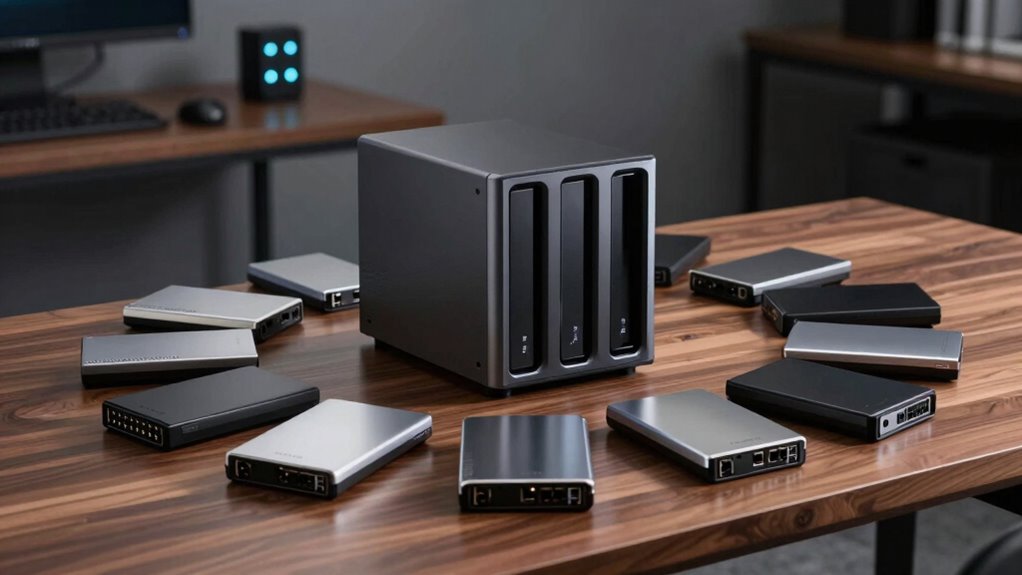

When searching for a NAS hard drive bundle, the key considerations include capacity, reliability, and compatibility. The Western Digital 8TB WD Red Plus stands out as the best overall pick, offering a balanced mix of performance and durability. For those needing larger storage, the Western Digital 12TB WD Red Plus provides ample space with high-speed operation. Budget-conscious buyers will appreciate the Seagate IronWolf 4TB options, which deliver solid performance at a lower price point. However, tradeoffs in speed, cache, or noise levels are common, making it important to weigh your specific needs. Continue reading for a detailed breakdown of each option and what makes them suitable for different users.

Get the little things that make your day delivered free — and shop member deals
- Fast, free delivery on millions of items
- Access to Prime Big Deal Days deals on October 6–7
- Prime Video, Amazon Music and more included
Key Takeaways
- The Western Digital WD Red Plus 8TB offers a strong balance of capacity, reliability, and performance, making it the best overall choice.
- Capacity varies significantly, with 12TB models suited for extensive storage needs, while 4TB drives are better for smaller NAS setups.
- Cache size and RPM influence speed; higher cache and RPM generally improve data transfer rates but may cost more or generate more noise.
- Compatibility and NAS-specific features like CMR (conventional magnetic recording) are vital for long-term reliability and performance.
- Price differences often reflect build quality, cache size, and intended NAS usage, so matching the drive to your workload is essential.


| nas hard drive bundle | Form Factor | Capacity | RPM | Interface |
|---|---|---|---|---|
| Western Digital 12TB WD Red Pl | 3.5" | 12TB | 7200 | SATA 6 Gb/s |
| Western Digital 8TB WD Red Plu | 3.5" | 8TB | 5640 | SATA 6 Gb/s |
| Seagate IronWolf 4TB NAS Inter | 3.5" | 4TB | 5400 | SATA 6 Gb/s |
| Seagate IronWolf 4TB NAS Inter | 3.5" | 4TB | 5900 | SATA 6 Gb/s |
| Seagate 8TB IronWolf Internal | 3.5 inches | — | — | — |
More Details on Our Top Picks
Western Digital 12TB WD Red Plus NAS Internal Hard Drive HDD – 7200 RPM, SATA 6 Gb/s, CMR, 512 MB Cache, 3.5″
This WD Red Plus 12TB model stands out for its high capacity combined with a 7200 RPM speed, making it ideal for demanding NAS environments. Compared to the 8TB WD Red Plus, it offers more storage and slightly better performance, but at a higher price and power consumption. Its 512 MB cache enhances data flow, benefiting small to medium businesses with intensive workloads. While designed specifically for NAS, this drive is less suitable for desktop use due to its focus on 24/7 operation and workload support. The 3-year warranty adds reassurance for business deployments. This model balances capacity, speed, and reliability, making it a top choice for expanding NAS arrays.
Pros:- Supports high workload rates suitable for business use
- Large 12TB capacity for extensive storage needs
- 7200 RPM speed improves data access times
- Reliable with a 3-year warranty
Cons:- Higher power consumption compared to lower RPM drives
- Designed primarily for NAS, less versatile for desktop use
Best for: Small to medium businesses needing high-capacity, reliable NAS storage with robust performance.
Not ideal for: Home users or desktop-only setups, since it’s optimized for NAS and may be overkill for casual use.
- Capacity:12TB
- RPM:7200
- Interface:SATA 6 Gb/s
- Cache:512 MB
- Form Factor:3.5″
- Workload Rate:180 TB/year
Our verdict“This drive makes the most sense for organizations seeking large, fast, and dependable NAS storage with room to grow.”
Western Digital 8TB WD Red Plus NAS Internal Hard Drive HDD – 5640 RPM, SATA 6 Gb/s, CMR, 256 MB Cache, 3.5″
This 8TB WD Red Plus is tailored for small to medium NAS setups supporting up to 8 bays, with a workload rate of 180 TB/year. Its 5640 RPM speed is optimized for energy efficiency and reliability, contrasting with the higher RPM of the 12TB model. This makes it a solid choice for smaller NAS environments where lower power consumption is valued. The 256 MB cache offers decent data throughput but lags behind larger caches found in premium models, which could affect performance under heavy loads. Its design focuses on long-term reliability in 24/7 operation, though it’s less suitable for desktop or gaming purposes. This drive balances capacity and efficiency for typical NAS use cases with moderate performance demands.
Pros:- Optimized for NAS with support for up to 8 bays
- Energy-efficient 5640 RPM operation
- Reliable 3-year warranty for consistent use
- Supports up to 180 TB/year workload
Cons:- Lower RPM may impact performance compared to desktop drives
- Smaller cache size limits peak data throughput
Best for: Small business NAS systems with up to 8 bays requiring reliable, energy-efficient storage.
Not ideal for: High-performance desktop applications or gaming setups where faster RPM and cache are preferred.
- Capacity:8TB
- RPM:5640
- Interface:SATA 6 Gb/s
- Cache:256 MB
- Form Factor:3.5″
- Workload Rate:180 TB/year
Our verdict“This drive is well-suited for small NAS systems where energy efficiency and reliability take priority over raw speed.”
Seagate IronWolf 4TB NAS Internal Hard Drive
The Seagate IronWolf 4TB offers a dependable solution for smaller NAS environments, especially when compared to the larger-capacity drives like the 12TB WD Red Plus. Its 5400 RPM speed favors quieter operation and lower power use, making it suitable for home or small office NAS setups. The 64MB cache is modest, which may limit performance during intensive data transfers, but the inclusion of health monitoring and a 3-year warranty boosts confidence in its longevity. This drive is less suited for high-traffic enterprise NAS or tasks requiring fast data access. It provides a balanced, cost-effective entry point for users prioritizing reliability over raw performance.
Pros:- Reliable performance with health monitoring
- Low noise and vibration for quiet operation
- Affordable for entry-level NAS use
- Includes 3-year warranty
Cons:- Limited cache impacts data throughput
- Relatively slow RPM at 5400 for intensive tasks
Best for: Home users or small office setups seeking reliable, low-noise NAS storage at an affordable price.
Not ideal for: Heavy-duty NAS environments or those needing high-speed data access for large files.
- Capacity:4TB
- RPM:5400
- Interface:SATA 6 Gb/s
- Cache:64 MB
- Form Factor:3.5″
- Warranty:3 years
Our verdict“This drive is ideal for light-duty NAS applications where quiet operation and dependability matter most.”
Seagate IronWolf 4TB NAS Internal Hard Drive HDD – 3.5 Inch SATA 6Gb/s 5900 RPM 64MB Cache
This Seagate IronWolf 4TB offers a middle ground between efficiency and performance, with a 5900 RPM speed that reduces noise and power draw compared to higher RPM drives like the 7200 RPM WD Red Plus. Its 64MB cache is comparable to the other 4TB IronWolf, supporting stable operation in multi-user NAS setups. The five-year warranty and health monitoring system are strong points, especially when compared with the three-year coverage of the 8TB WD Red. However, the lower RPM may hinder performance in data-heavy scenarios. This drive makes sense for users who prioritize quiet, reliable NAS operation over maximum speed. It’s perfect for multi-user NAS environments where noise levels and durability are key concerns.
Pros:- Quiet operation with low vibration
- Reliable performance with 5-year warranty
- Designed specifically for NAS environments
- Long MTBF and health monitoring features
Cons:- Relatively lower RPM may limit peak performance
- Limited cache size compared to higher-tier drives
Best for: NAS users requiring quiet, long-lasting drives for multi-user environments with moderate performance needs.
Not ideal for: Power users or those needing fast data transfer rates for large files or intensive workloads.
- Capacity:4TB
- RPM:5900
- Interface:SATA 6 Gb/s
- Cache:64 MB
- Form Factor:3.5″
- Warranty:5 years
Our verdict“This drive suits NAS setups where quiet operation and durability are more important than raw speed.”
Seagate 8TB IronWolf Internal NAS Hard Drive | SATA 6 Gb/s (ST8000VNZ04)
The Seagate IronWolf 8TB stands out for its substantial storage capacity, making it ideal for busy NAS setups that demand reliable, long-term storage. Compared with the WD Red Plus 8TB, this drive offers a higher rotational speed of 7200 rpm, which translates into faster read speeds—up to 210 MB/s—beneficial for multi-user environments. Its NAS-optimized design includes vibration mitigation and noise reduction, ensuring smooth operation even under continuous use. The inclusion of health monitoring tools and a robust MTBF of 1 million hours provides peace of mind for critical data storage. However, at 1.6 pounds, it’s heavier than some alternatives, and its design primarily targets NAS rather than general-purpose use, limiting versatility. This pick makes the most sense for small businesses or power users needing dependable, high-capacity NAS drives with quick access times.
Pros:- High-capacity 8TB storage suitable for demanding NAS setups
- 7200 rpm rotational speed delivers faster data access
- NAS-optimized with vibration and noise mitigation
- Includes health monitoring tools for proactive drive management
Cons:- Designed primarily for NAS, less suitable for general desktop use
- Relatively heavy at 1.6 pounds, which may impact installation in some enclosures
Best for: Small to medium-sized businesses or advanced home NAS users needing reliable 8TB storage with fast performance.
Not ideal for: Casual users or those seeking drives for non-NAS applications, due to its optimized design for NAS environments and weight.
- Digital Storage Capacity:8 TB
- Hard Disk Interface:SATA 6 Gb/s
- Form Factor:3.5 inches
- Rotational Speed:7200 rpm
- Read Speed:210 MB/s
- Cache Memory:256 MB
- Item Weight:1.6 pounds
- Item Dimensions:5.79″L x 4.01″W x 1.03″Th
Our verdict“This drive is best suited for users who prioritize large, reliable NAS storage with fast access speeds and are willing to accept its NAS-centric design and weight.”

How We Picked
We evaluated each NAS hard drive bundle based on key factors such as capacity, drive speed (RPM), cache size, and compatibility with common NAS systems. Reliability and durability, especially for 24/7 operation, were prioritized, alongside value for money. We also considered user reviews and industry reputation for quality. Drives with NAS-optimized features like CMR recording were favored over SMR drives, which can cause issues in multi-drive setups. The ranking reflects a combination of performance, longevity, and overall value, ensuring each pick suits different types of NAS users.Factors to Consider When Choosing Nas Hard Drive Bundle
Choosing the right NAS hard drive bundle involves understanding several critical factors. Capacity should match your storage needs, whether for personal backups or business data. Drive speed and cache significantly influence performance, especially during multitasking or large transfers. Compatibility with your NAS device is essential; not all drives work equally well with every system. Reliability features like CMR recording extend the drive’s lifespan and stability. Budget considerations also come into play, as higher capacity and faster drives generally cost more. Avoiding drives with SMR recording unless specifically recommended for your NAS can prevent data issues down the line.Capacity and Scalability
Assess your current storage needs and future growth when selecting a NAS drive bundle. Larger capacities like 12TB or more offer room for extensive data, but they come at a higher cost. Smaller drives, such as 4TB options, are more affordable and suitable for light or home use. Consider whether your NAS supports expansion, as adding drives later might be easier if you plan for scalability now. Always choose drives with enough headroom to avoid frequent upgrades, and verify your NAS’s maximum supported drive capacity.
Performance Factors
Drive speed, measured in RPM, influences how quickly data is read or written. Higher RPM drives (7200 RPM) tend to perform better under heavy loads, reducing bottlenecks. Cache size also plays a role; larger caches (256MB or more) help with faster data access and smoother multitasking. For most home or small business NAS setups, a balance of speed and efficiency is sufficient, but demanding users should prioritize higher RPM drives with larger caches. Keep in mind that faster drives may generate more noise and consume more power.
Reliability and Compatibility
Long-term reliability depends heavily on the drive’s recording technology; CMR drives are more suitable for NAS environments than SMR, which can cause data integrity issues in RAID configurations. Compatibility with your NAS device is non-negotiable—check your system’s specifications and supported drive list. Look for NAS-optimized features like vibration resistance and firmware designed for 24/7 operation. Investing in well-reviewed brands with a proven track record can prevent costly failures and data loss down the line.
Value and Budget
Cost varies based on capacity, speed, and brand reputation. While higher-capacity and faster drives tend to cost more, they often provide better overall performance and longevity. Avoid sacrificing reliability for lower price points unless your setup is temporary or non-critical. Sometimes, bundles that include multiple drives can offer better value, especially if you plan to set up RAID configurations. Remember that investing in quality drives can save money over time through fewer replacements and less downtime.
Additional Considerations
Pay attention to warranty periods and manufacturer support—these are indicators of the drive’s expected lifespan and quality assurance. Noise levels and power consumption might matter if your NAS is located in a living space. Also, consider whether the drives are pre-formatted and ready for NAS use or if additional setup is required. Lastly, always verify the drives’ firmware updates and compatibility with your existing hardware before making a purchase.
Frequently Asked Questions
Can I mix different brands of drives in my NAS?
While mixing brands is technically possible, it is generally not recommended for optimal performance and reliability. Different drives may have varying firmware, vibration levels, and performance characteristics, which can lead to compatibility issues or reduced lifespan in RAID setups. For best results, sticking with the same brand and model across all drives in a bundle minimizes potential compatibility problems and simplifies management. If you do mix brands, ensure they have similar specifications and are NAS-optimized to reduce risks.
How do I choose the right capacity for my NAS?
Estimating your storage needs involves considering current data volume and future growth. If your data footprint is small, a 4TB or 8TB drive might suffice. For larger media libraries or business use, 12TB or higher is advisable. Always leave some headroom to avoid frequent upgrades, especially if you plan to expand. Check your NAS device’s maximum supported drive size and number of bays to ensure the chosen bundle fits comfortably. Planning ahead helps prevent bottlenecks and ensures smooth scalability.
Are higher RPM drives always better for NAS?
Higher RPM drives, such as 7200 RPM, typically offer faster data transfer speeds, beneficial for demanding file access or multiple users. However, they tend to generate more noise and consume more power, which could be a concern in quiet environments. For most home or small office setups, a 5400 or 5900 RPM drive may suffice, providing a quieter operation while still delivering reliable performance. Consider your priority—speed versus noise and energy—when selecting RPM for your NAS drives.
What is the significance of cache size in NAS drives?
Cache acts as a high-speed buffer that temporarily stores data to speed up read/write operations. Larger caches (256MB or more) can significantly improve performance, especially during large file transfers or multitasking. Drives with smaller caches might save cost but could slow down data access under heavy loads. For intensive applications or multi-user environments, prioritizing larger cache sizes helps maintain smooth operation and reduces bottlenecks. Always match cache size with your performance expectations and workload demands.
Should I choose drives with CMR or SMR technology?
CMR (Conventional Magnetic Recording) drives are generally more reliable for NAS setups, especially in RAID configurations, because they handle repeated write cycles better. SMR (Shingled Magnetic Recording) drives are typically cheaper and offer higher capacity but can cause performance issues in multi-drive environments due to their recording method. For most NAS users, especially those using RAID or frequent writes, CMR drives are the safer choice. Always check the drive specifications to confirm the recording technology before purchasing.
Conclusion
For a balanced, all-around setup, the Western Digital 8TB WD Red Plus emerges as the best overall choice, ideal for most home and small business users. If maximum storage capacity is your priority, the Western Digital 12TB WD Red Plus offers ample space with reliable performance. Budget-conscious buyers should consider the Seagate IronWolf 4TB options, which deliver good value without sacrificing essential features. Those seeking a premium, high-speed experience might look toward drives with larger caches and RPMs, but be prepared for higher costs. Ultimately, selecting a NAS hard drive bundle depends on your storage needs, performance expectations, and budget constraints—use this guide to match your specific use case.
NFL season / tailgating Picks
team gear
As an affiliate, we earn on qualifying purchases.