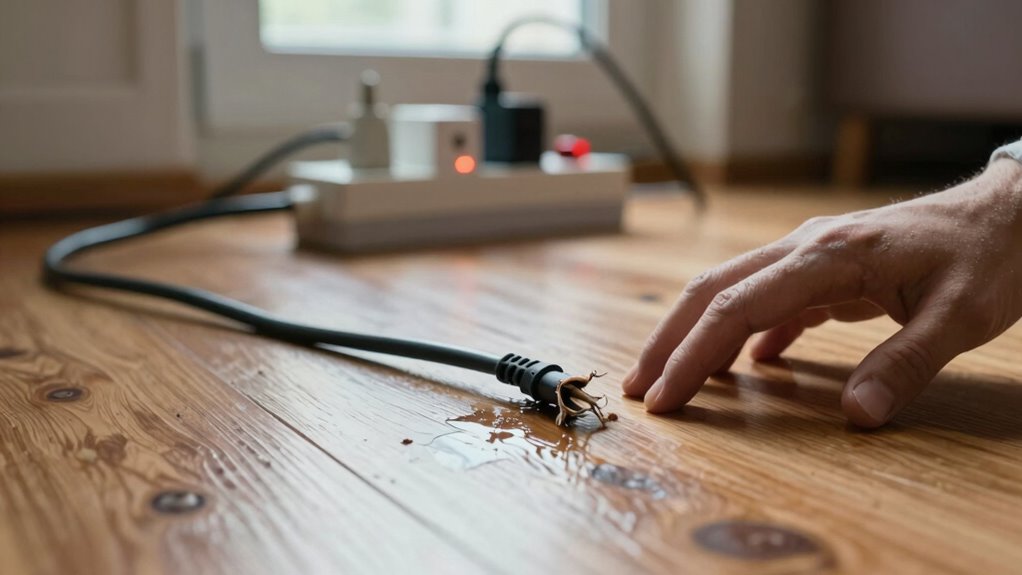

When it comes to extension cord safety, never overload cords or daisy chain them together. Avoid using indoor cords outdoors, as this increases electric shock and fire risks. Don’t hide cords under rugs or furniture; heat can build up and lead to fires. Always check for frayed or damaged cords, and keep them away from water. By staying informed and aware of these risks, you can guarantee safe usage in your home. More essential tips await you!
Key Takeaways
- Never overload extension cords; check ratings to avoid overheating and potential fires.
- Avoid using indoor cords outdoors, as they can lead to electrical shock and fire hazards.
- Do not run cords through doorways or under carpets, which can cause heat buildup and fire risks.
- Refrain from daisy chaining multiple cords; use a single, appropriately-rated extension cord instead.
- Never ignore frayed or damaged cords; replace them immediately to maintain safety.

COP Extension Cord with Earth Cord for Diagnostic Coil-on-Plug Lead (HT308)
- Wide Compatibility: Suitable for any oscilloscope with ignition waveform display
- HT Measurement Aid: Facilitates secondary ignition circuit diagnostics
- Easy Installation: Connects between ignition coil and spark plug easily
As an affiliate, we earn on qualifying purchases.
As an affiliate, we earn on qualifying purchases.
Key Safety Tips for Extension Cords
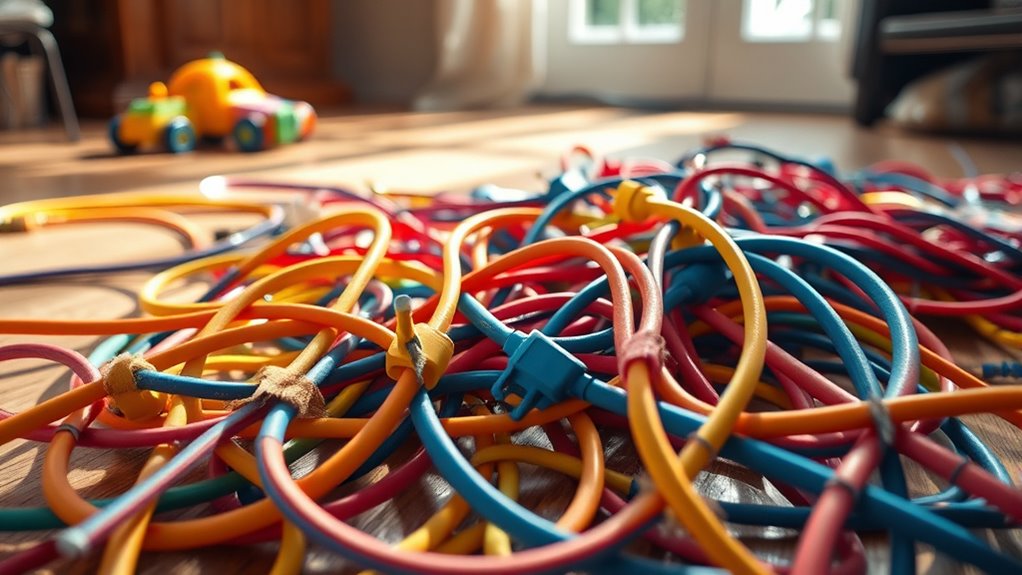
When using extension cords, it’s crucial to prioritize safety to prevent accidents and injuries. Start by inspecting your cords regularly to verify they’re in good condition—check for frays, cuts, or exposed wires. Practice proper storage by winding cords neatly and avoiding knots, which can cause damage over time. When you’re not using them, store your extension cords in a dry, cool place to prevent wear and tear. Avoid running cords through doorways or under carpets, as this can cause overheating. Always unplug cords when not in use, and never overload them with too many devices. By focusing on extension cord maintenance and proper storage, you can greatly reduce the risk of hazards in your home or workspace.

POWGRN 50 ft 12/3 Outdoor Extension Cord Waterproof Heavy Duty with Lighted Indicator End 12 Gauge 3 Prong, Flexible Cold-Resistant Long Power Cord Outside, 15Amp 1875W SJTW Yellow ETL Listed
- High Power Capacity: Up to 1875W for heavy-duty use
- Lighted Power Indicator: LED lights show when powered
- Bright, Visible Jacket: Yellow PVC for easy visibility
As an affiliate, we earn on qualifying purchases.
As an affiliate, we earn on qualifying purchases.
Understanding the Risks of Overloading Extension Cords
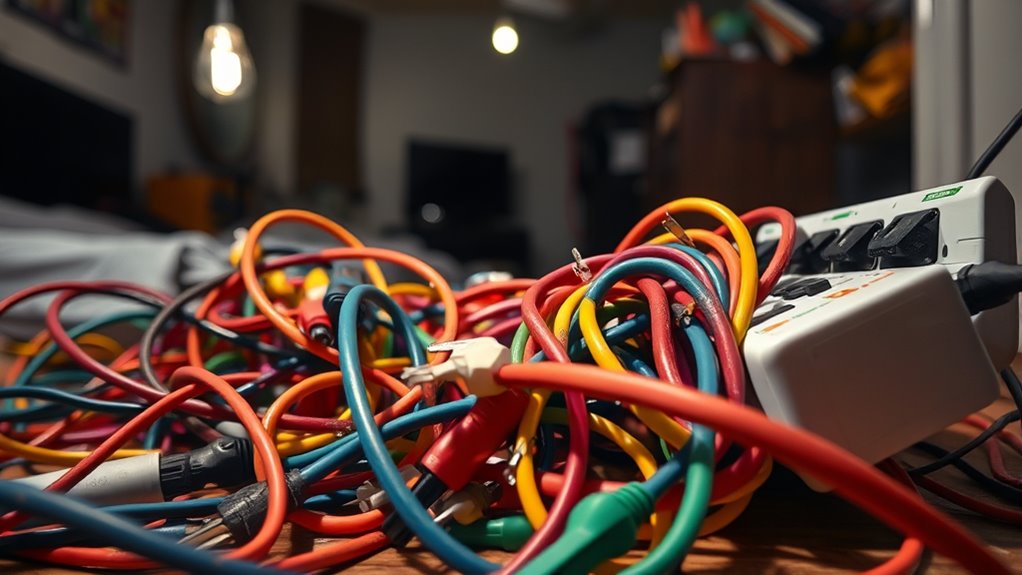
Overloading extension cords can lead to serious hazards, even if you’ve been diligent about their maintenance and storage. When you plug in too many devices, you risk overheating the cord, which can cause electrical fires. Always check extension cord ratings to guarantee they can handle the devices you’re using. Pay attention to overloading signs, like discoloration, heat, or unusual smells. These indicators suggest that you’re exceeding the cord’s capacity. If you notice any of these signs, unplug everything immediately and reassess your setup. Remember, it’s better to be safe and use multiple cords or outlets than to push your luck with overloading. Prioritize safety to protect your home and loved ones from potential electrical dangers.

ALESTOR 6 Ft Surge Protector Power Strip with 12 Outlets and 4 USB Ports
- Multi-Function Power Strip: 12 AC outlets and 4 USB ports
- Heavy Duty Extension Cord: 6-foot long power cord for flexibility
- High Surge Protection: 2700 Joules surge protection with overload safety
As an affiliate, we earn on qualifying purchases.
As an affiliate, we earn on qualifying purchases.
Why You Should Avoid Daisy Chaining Extension Cords
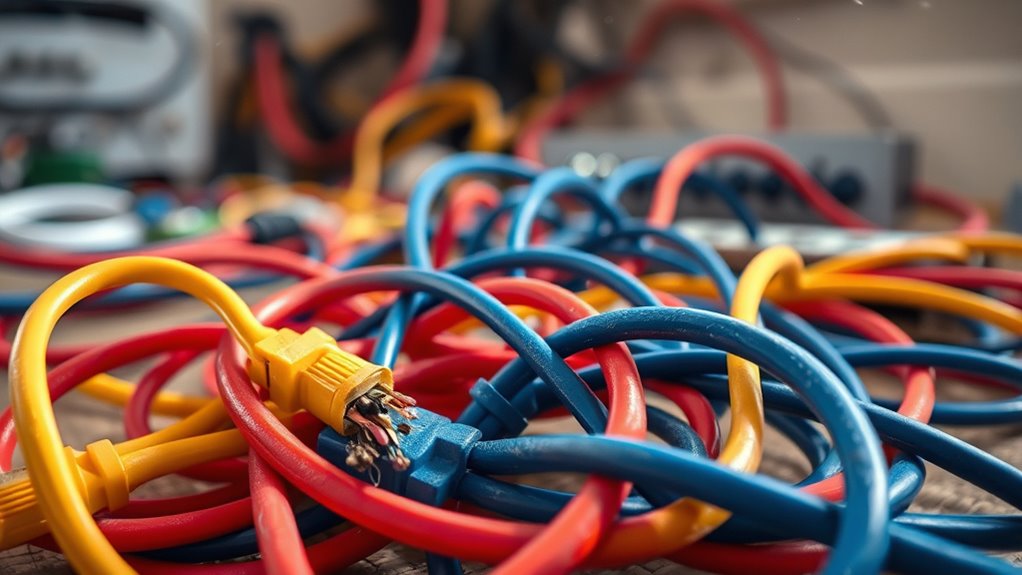
Although it might seem convenient, daisy chaining extension cords can create significant safety risks. When you connect multiple cords together, you increase the potential for overheating and electrical fires. These daisy chaining dangers can lead to serious accidents, especially if you’re using high-wattage devices.
Instead, practice safe cord practices by using a single, appropriately-rated extension cord for your needs. Make sure it’s in good condition, and don’t exceed its wattage limit. If you need more outlets, consider using a power strip with built-in surge protection, designed for multiple devices. By avoiding daisy chaining, you’re not only protecting your home but also ensuring a safer environment for everyone around you. Prioritize safety and keep your electrical systems reliable.
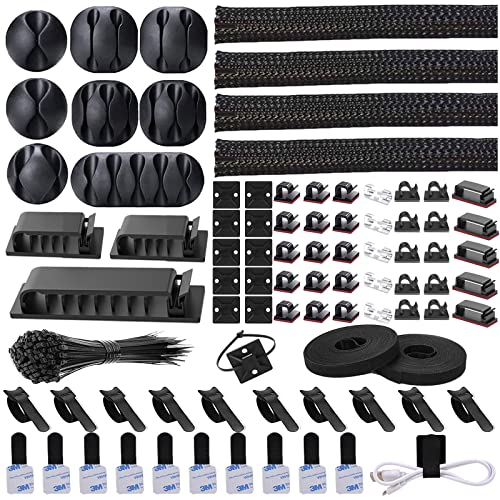
N NOROCME 192 PCS Cable Management Kit 4 Wire Organizer Sleeve
- Complete Cable Management Kit: Includes sleeves, ties, clips, and mounts
- Variety of Cable Clips: Six types, eco-friendly, strong, multi-surface use
- Durable Materials: Sturdy, high-quality components for long-lasting organization
As an affiliate, we earn on qualifying purchases.
As an affiliate, we earn on qualifying purchases.
The Dangers of Using Indoor Cords Outdoors
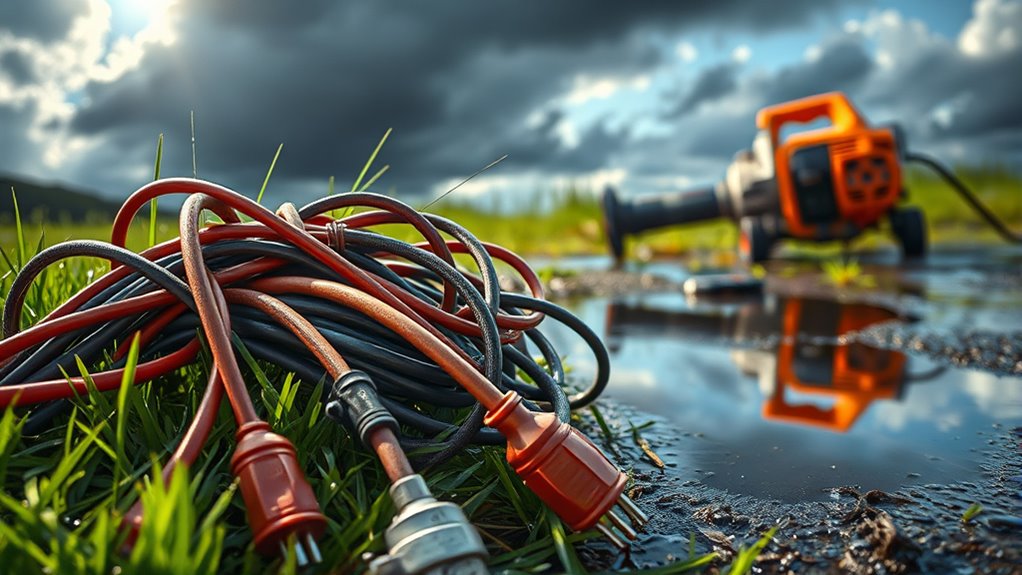
Using indoor extension cords outdoors can put you at serious risk of electric shock and increase the chances of a fire. These cords aren’t designed to withstand the elements, which can lead to insulation damage and exposed wires. It’s essential to stick to outdoor-rated cords to keep yourself and your property safe.
Risk of Electric Shock
When you take indoor extension cords outside, you greatly increase the risk of electric shock. Indoor cords aren’t designed to withstand outdoor conditions like moisture and temperature changes. This lack of durability can lead to frayed wires or exposed conductors, putting you at serious risk. Practicing electric shock prevention is essential for your safety. Always use outdoor-rated cords instead, which are built for harsh environments. Enhancing your electrical safety awareness can save lives.
| Tips for Electric Shock Prevention | Importance |
|---|---|
| Use outdoor-rated extension cords | Reduces risk of shock |
| Keep cords dry and off the ground | Minimizes contact with water |
| Inspect cords for damage regularly | Guarantees safe usage |
Increased Fire Hazard
Many people underestimate the fire hazards associated with using indoor extension cords outdoors. These cords aren’t designed to withstand moisture, UV rays, or extreme temperatures. This misuse can lead to dangerous situations, including electrical fires. Prioritizing fire prevention is essential, and here are some key points to keep in mind:
- Indoor cords lack weatherproofing, increasing risk of short circuits.
- Damaged cords can spark and ignite nearby flammable materials.
- Overloading cords can cause overheating, leading to fires.
- Poor cord maintenance can result in exposed wires and unsafe conditions.
- Regularly inspecting your home electrical systems ensures your cords and outlets are safe for outdoor use.
Always use outdoor-rated extension cords for outdoor activities to guarantee safety. By understanding these risks and properly maintaining your cords, you can greatly reduce the chances of a fire hazard.
Understanding Amp Ratings for Extension Cord Safety
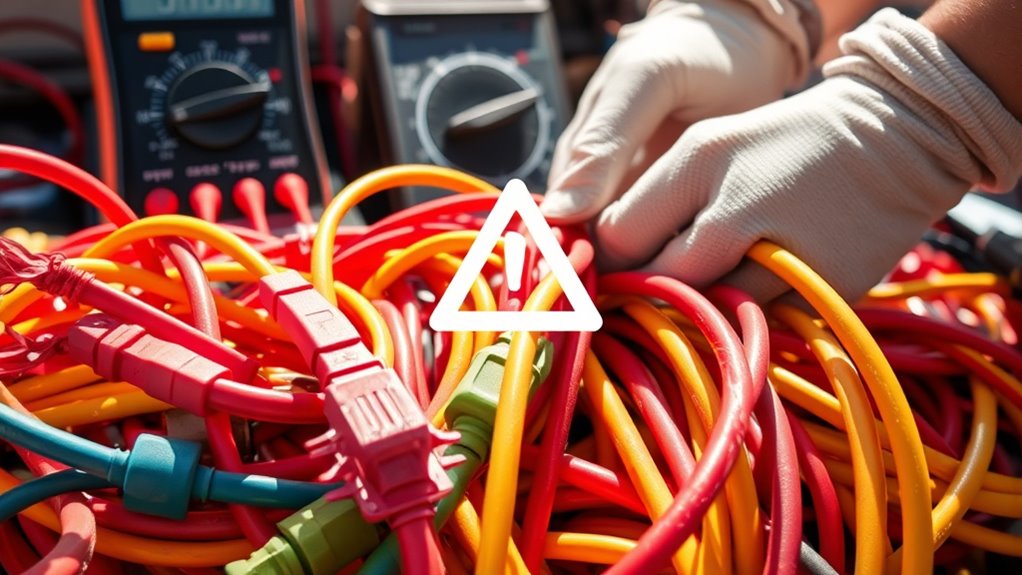
Understanding amp ratings is vital for guaranteeing safe use of extension cords, especially since the wrong choice can lead to overheating or even fires. When you select an extension cord, always check its amp rating, which indicates how much electrical current it can safely handle. If you connect devices that exceed this rating, you risk damaging the cord and creating a fire hazard. For proper usage, match the amp rating of the cord to the devices you plan to power. It’s also important to take into account the length of the cord, as longer cords can reduce the amount of power delivered. By being mindful of amp ratings, you can prevent accidents and ensure your extension cords operate safely.
How to Identify and Avoid Damaged Cords

Identifying and avoiding damaged cords is essential for maintaining safety in your home or workspace. Regular visual inspections can help you catch issues before they become dangerous. Here are some key things to look for:
- Frayed or exposed wires
- Burn marks or discoloration on the cord
- Loose or broken prongs
- Unusual heat when in use
If you notice any of these signs, don’t risk it. Always perform cord testing with a multimeter if you’re unsure about its condition. If a cord looks damaged or isn’t functioning properly, replace it immediately to prevent electrical hazards. Your safety is worth it, so stay vigilant and keep your extension cords in top shape!
The Risks of Leaving Cords Under Rugs or Furniture
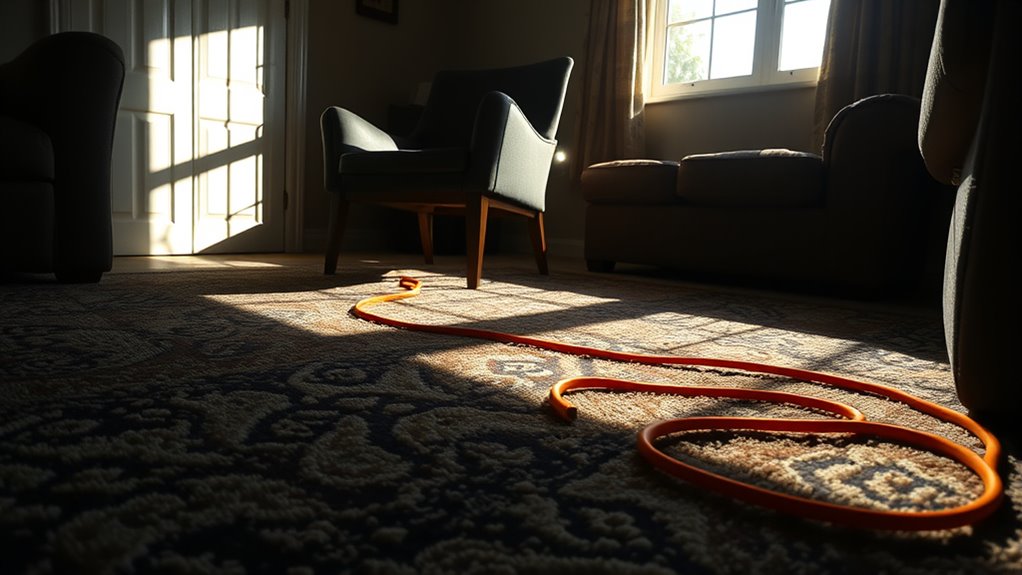
Leaving cords under rugs or furniture can create serious fire hazards and overheating issues. When cords are hidden, they can get damaged without you even noticing, leading to greater risks. It’s crucial to keep them visible and properly managed to guarantee your safety.
Fire Hazard Risks
While you might think tucking extension cords under rugs or furniture is a practical solution to keep them out of sight, it actually poses significant fire hazards. When cords are concealed, heat builds up, increasing the risk of ignition. To guarantee your home remains safe, consider these fire prevention measures:
- Regularly inspect cords for frays or damage.
- Avoid overloading extension cords beyond their capacity.
- Use only cords rated for your appliances.
- Keep cords away from heat sources and moisture.
- Ensure cords are properly rated for safety to prevent electrical overloads and reduce fire risks. Additionally, choosing cords with fire-resistant insulation can further enhance safety.
Overheating Issues
When extension cords are tucked beneath rugs or furniture, they can quickly become a source of overheating. The insulation gets compressed, preventing proper heat dissipation and increasing the risk of fire. Regular extension cord maintenance is essential; inspect cords for any signs of wear or damage, and avoid placing them under heavy items. Additionally, proper cord placement** can help prevent heat buildup and reduce hazards. If you need to run a cord across a room, use cord covers instead. For overheating prevention, guarantee cords are not overloaded by plugging in only devices they can handle. Always keep cords visible and easily accessible to minimize heat buildup. Proper cord management practices can significantly reduce the risk of overheating and fire hazards. To further ensure safety, understanding home‑care techniques can help identify potential risks before they become serious. Regularly testing your smoke alarms and fire extinguishers is also a key fire prevention measure. Remember, a few simple precautions can protect your home and guarantee your safety. Don’t underestimate the importance of proper cord placement! Proper maintenance practices** are vital for ensuring your smart home remains secure and safe from potential hazards.
Cord Damage Concerns
As you navigate your home, it’s easy to overlook the potential hazards of extension cords lying beneath rugs or furniture. However, this practice poses serious risks, including damage to the cord itself and increased fire hazards. Proper cord maintenance and storage can help mitigate these dangers.
- Cords can overheat when pinched or crushed, leading to insulation damage.
- Dust and debris can accumulate on hidden cords, increasing fire risks.
- Tripping hazards can arise, causing accidents and injuries.
- Cords may fray or break over time, resulting in electrical shock risks.
- Regular inspections and cord safety awareness are essential to prevent accidents and ensure safe usage. Additionally, understanding how correct cord placement can reduce these risks is crucial for maintaining a safe home environment.
- Using proper extension cord management techniques can further minimize the likelihood of damage and hazards associated with hidden cords.
To guarantee safety, keep cords visible and well-maintained. Store them properly, avoiding tight bends or placements under heavy objects. Your vigilance can prevent potential disasters!
Keep Cords Away From Water: Essential Precautions
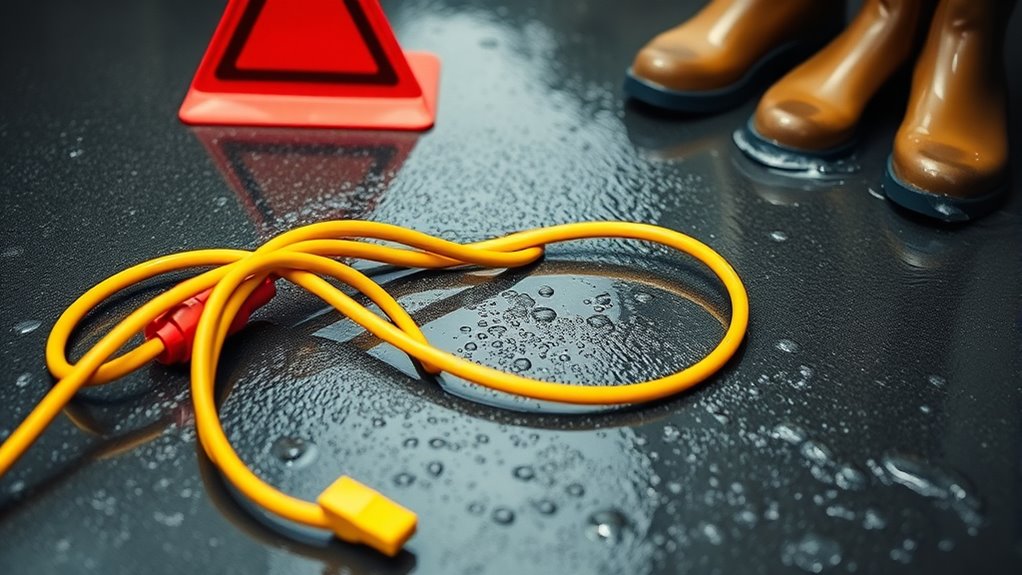
Why should you keep extension cords away from water? Water exposure poses a serious risk of electrical shock or fire hazards. When cords come into contact with moisture, they can short circuit, leading to potentially dangerous situations. To guarantee your safety, always position extension cords in dry areas, especially outdoors or in damp spaces like basements. Regular cord maintenance is vital; inspect your cords for any signs of wear or damage. If you notice fraying or cracks, replace them immediately. Additionally, consider using weather-resistant cords for outdoor use. By taking these essential precautions, you can greatly reduce the risks associated with extension cords and keep yourself and your surroundings safe. Stay aware, and prioritize safety at all times!
Frequently Asked Questions
Can I Use an Extension Cord With a Power Strip?
You shouldn’t use an extension cord with a power strip. This combination can lead to extension cord compatibility issues and increase the risk of overheating or electrical fires. Power strips are designed to handle a specific load, and adding an extension cord can exceed that limit. Always plug your devices directly into a power strip for safety and avoid overloading it to guarantee your home stays safe and your devices function properly.
How Long Can I Safely Use an Extension Cord?
You can safely use an extension cord as long as it meets the proper ratings for your devices, but don’t let convenience overshadow safety. If you’re running high-wattage appliances, limit usage to a few hours to prevent overheating. Always check the cord’s rating; it should match or exceed the power needs of your equipment. Remember, a little caution goes a long way in ensuring safe usage and preventing hazardous situations.
What Should I Do if My Extension Cord Gets Wet?
If your extension cord gets wet, unplug it immediately to guarantee electrical safety. Don’t attempt to use it until it’s completely dry. Inspect the cord for damage, like frays or exposed wires, and if you find any, replace it. Allow the cord to air dry in a safe area, away from direct heat sources. Remember, never use a wet extension cord; it poses a serious risk of electric shock or fire.
Are There Specific Extension Cords for Outdoor Use?
Absolutely, there are specific extension cords designed for outdoor use! Think of them as your trusty shield against the elements. When choosing, check the cord ratings; look for those labeled as suitable for outdoor safety. These cords typically have thicker insulation and are built to withstand moisture and temperature changes. So, whether you’re lighting up your backyard or powering up tools, make sure you’ve got the right cord to keep things safe and sound!
How Often Should I Replace My Extension Cords?
You should replace your extension cords every 3 to 5 years, depending on usage. Pay attention to signs of replacement, like fraying, exposed wires, or a burning smell. If your cord’s lifespan seems shorter due to heavy use or harsh conditions, consider replacing it sooner. Regularly inspect your cords to guarantee they’re safe and functioning properly. Staying proactive about this can prevent accidents and keep your devices protected.
Conclusion
To keep your home safe, remember to use extension cords wisely. Avoid overloading them, steer clear of daisy chaining, and never use indoor cords outdoors. Check for damage regularly, keep cords out from under rugs, and always keep them away from water. By following these guidelines, you protect not just your devices, but also your loved ones and your property. Stay informed, stay cautious, and stay safe—your vigilance makes all the difference.