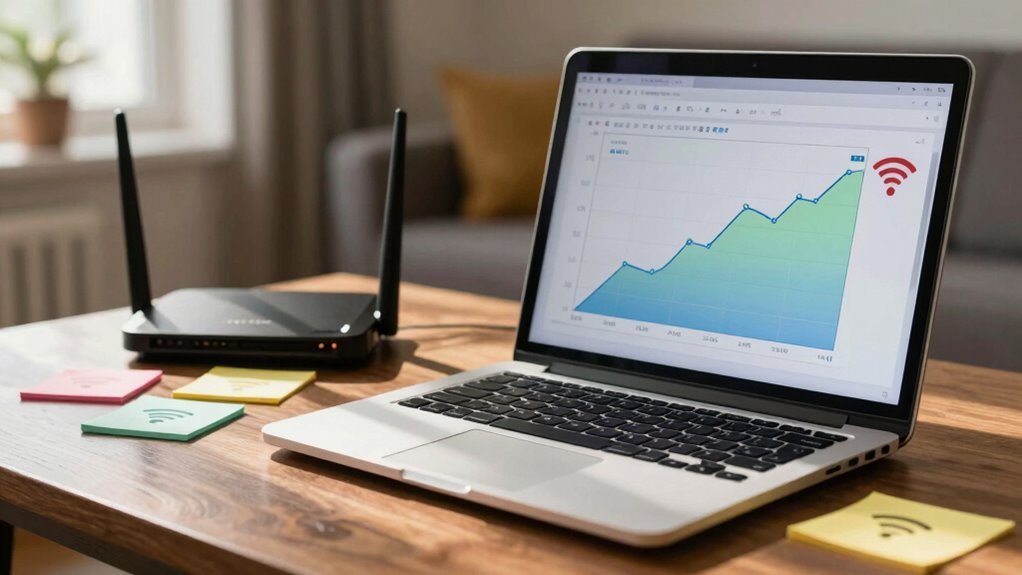

To choose a Wi-Fi channel with less interference, start by using a Wi-Fi analyzer tool to identify the busiest channels around you. For the 2.4 GHz band, stick to channels 1, 6, or 11, as they don’t overlap. If using the 5 GHz band, explore its wider options for better performance. After selecting a less crowded channel in your router settings, monitor performance regularly. There’s more to optimizing your Wi-Fi channel for even better results!
Key Takeaways
- Use Wi-Fi analyzer tools to identify the least congested channels and visualize nearby network activity for optimal selection.
- Focus on non-overlapping channels 1, 6, and 11 in the 2.4 GHz band to minimize interference.
- Explore the 5 GHz band for more channel options, which can help reduce interference due to its wider availability.
- Regularly monitor channel performance and adjust settings as needed, especially if congestion is detected.
- Ensure your router firmware is updated and reposition the router for improved signal strength and connectivity.

NetAlly LinkSprinter 300 – Pocket Copper Ethernet Network Tester for 10-Second Connectivity Checks (PoE, Link, DHCP, Gateway, Internet) with Link-Live Reporting
Rapid Network Testing: One-button, 10-second pass/fail test verifies PoE, Link, DHCP, Gateway, and Internet connectivity
As an affiliate, we earn on qualifying purchases.
As an affiliate, we earn on qualifying purchases.
How to Optimize Your Wi-Fi Channel for Better Performance
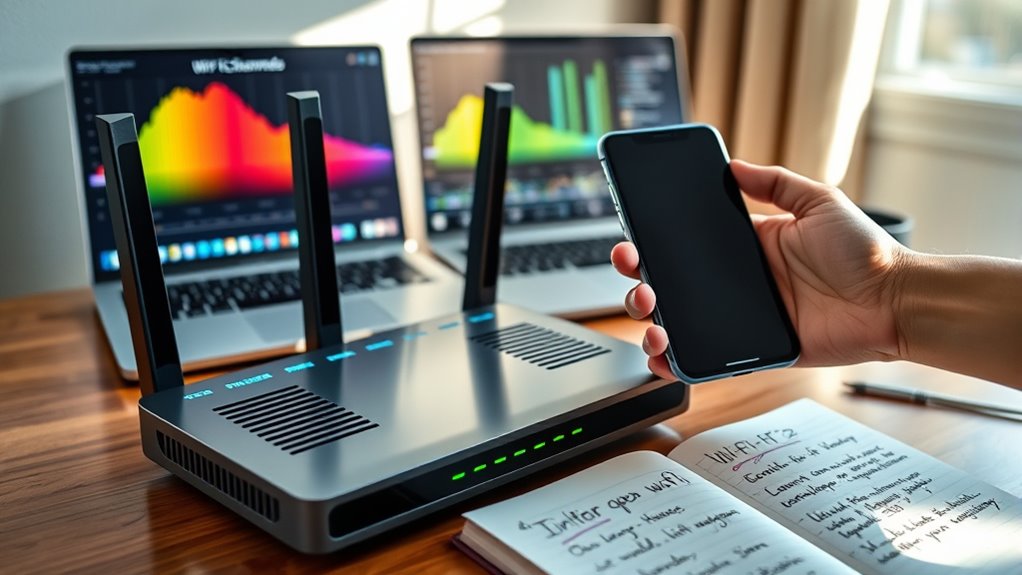
When you want to boost your Wi-Fi performance, optimizing your channel is an essential step. Start by evaluating Wi-Fi interference and channel congestion around you. Position your router strategically to enhance signal strength, ensuring it’s away from walls and obstructions. Check device compatibility, as some devices perform better on specific frequencies. Select the right frequency, either 2.4 GHz or 5 GHz, based on your needs. You might also consider channel bonding to increase bandwidth allocation. Conduct performance testing regularly to identify the best channel for your network. Adjusting these factors can greatly improve your network performance, allowing for smoother streaming, faster downloads, and a more reliable online experience. Prioritize these steps to enjoy an optimized Wi-Fi environment.

Uniden BCD536HP HomePatrol Series Digital Phase 2 Base/Mobile Scanner with HPDB and Wi-Fi. Simple Programming, TrunkTracker V, S.A.M.E. Emergency/Weather Alert. Covers USA and Canada.
TrunkTracker V – Receives all unencrypted, non-proprietary radio systems including, APCO-25 Phase I and Phase II digital, Motorolla,…
As an affiliate, we earn on qualifying purchases.
As an affiliate, we earn on qualifying purchases.
Identifying Your Wi-Fi Channel
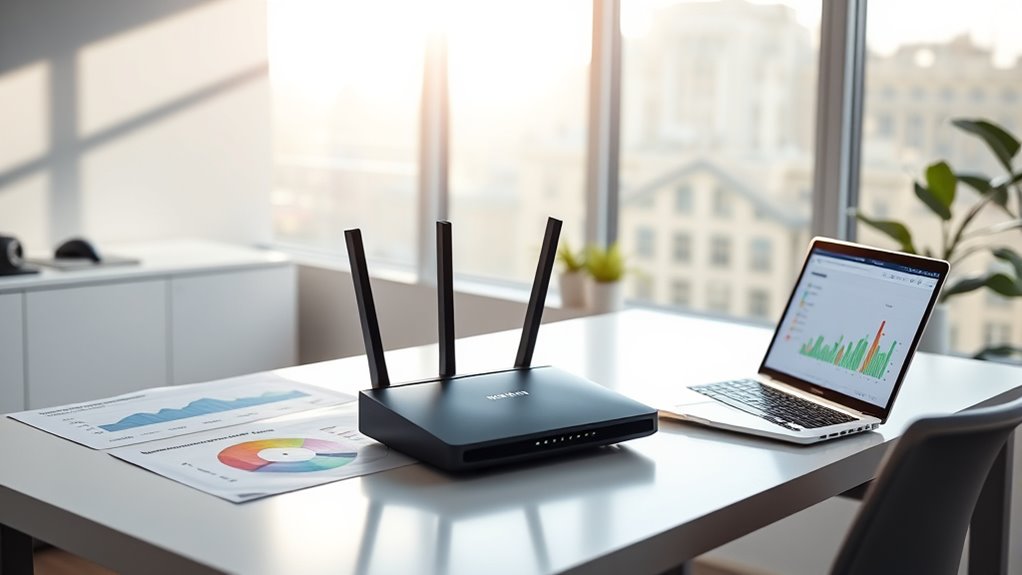
To identify your Wi-Fi channel, you first need to analyze any sources of network interference around you. Using Wi-Fi analyzer tools can help you see which channels are crowded and which ones might work better for you. It’s also a good idea to check what channels your neighbors are using to avoid overlap and boost your connection.
Analyze Network Interference Sources
While identifying your Wi-Fi channel, it’s crucial to analyze potential sources of network interference that can disrupt your connection. Signal interference often comes from environmental factors and physical barriers like walls. You should also consider device congestion from multiple electronic devices and network congestion from neighboring networks. Additionally, understanding how wireless signal propagation can affect your network helps in selecting the optimal channel.
Use Wi-Fi Analyzer Tools
Using Wi-Fi analyzer tools can greatly simplify the process of identifying the best channel for your network. These tools help you visualize your Wi-Fi environment by generating Wi-Fi heatmaps, which show the coverage and signal strength throughout your space. By analyzing the heatmap, you can pinpoint areas with weak signals and adjust your router’s placement if necessary. Additionally, these tools provide real-time data on signal strength, allowing you to compare different channels effectively. You’ll see which channels are crowded and which offer better performance. With this information, you can select a channel that minimizes interference and optimizes your Wi-Fi connection, ensuring a smoother online experience for all your devices.
Check Neighboring Channels
After identifying the best channel for your Wi-Fi network with analyzer tools, it’s important to check neighboring channels to verify you’re not competing with nearby networks. Start by scanning the channels around your selected one. If you notice that multiple neighboring networks are using the same or overlapping channels, it’s wise to reconsider your channel selection. Ideally, you want to pick a channel that’s less crowded, which can greatly improve your connection quality. Channels 1, 6, and 11 are often recommended for 2.4 GHz networks due to their non-overlapping nature. By being aware of neighboring networks and their channels, you can make sure your Wi-Fi remains strong and interference-free, leading to a better online experience.
router heatmap analyzer
As an affiliate, we earn on qualifying purchases.
As an affiliate, we earn on qualifying purchases.
Understanding the Different Wi-Fi Bands: 2.4 GHz vs. 5 GHz
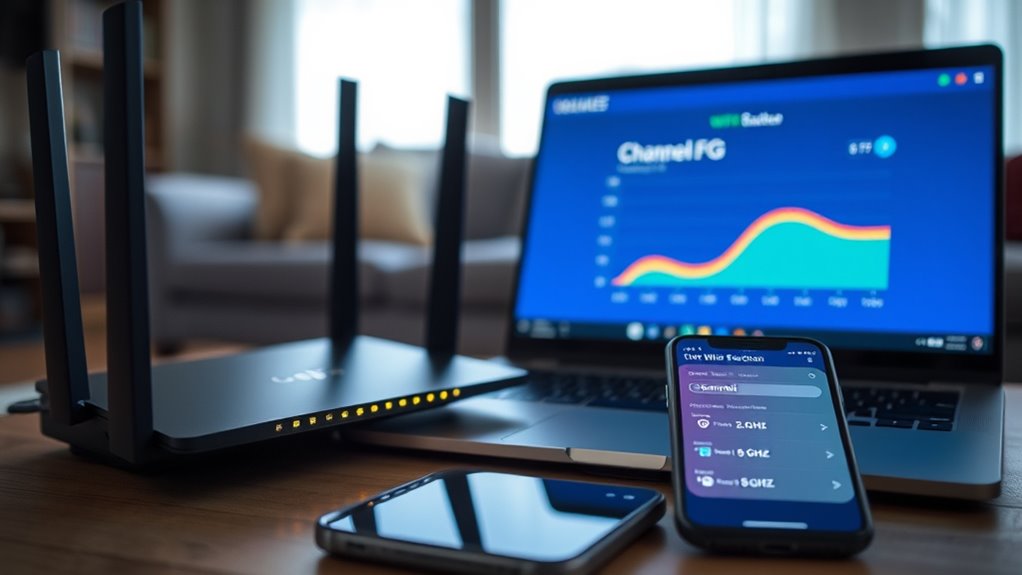
When it comes to choosing a Wi-Fi channel, understanding the differences between the 2.4 GHz and 5 GHz bands is essential for optimizing your network’s performance. The 2.4 GHz band offers a broader coverage range, making it ideal for larger spaces and devices that require better signal strength. However, it’s often crowded due to interference factors like microwaves and Bluetooth devices, leading to network congestion. In contrast, the 5 GHz band provides faster speeds and less interference, but with a shorter range, which may limit device compatibility. Knowing these band characteristics helps you select a Wi-Fi frequency that balances speed differences and coverage for your needs, ensuring a smoother online experience without unnecessary interruptions.

ERICKHILL 3 in 1 EMF Detector, Electromagnetic Field Radiation Detector for EF, RF, MF, WiFi,5G Signal,Triple Alarm Modes, Type-C Charging, EMF Meter for Home, Office, and Paranormal Investigation
All-in-One Detection: RT-100S 3-in-1 EMF Reader measures Electric (EF), Magnetic (MF), and Radio Frequency (RF) fields to monitor…
As an affiliate, we earn on qualifying purchases.
As an affiliate, we earn on qualifying purchases.
Understanding Channel Overlap in Wi-Fi
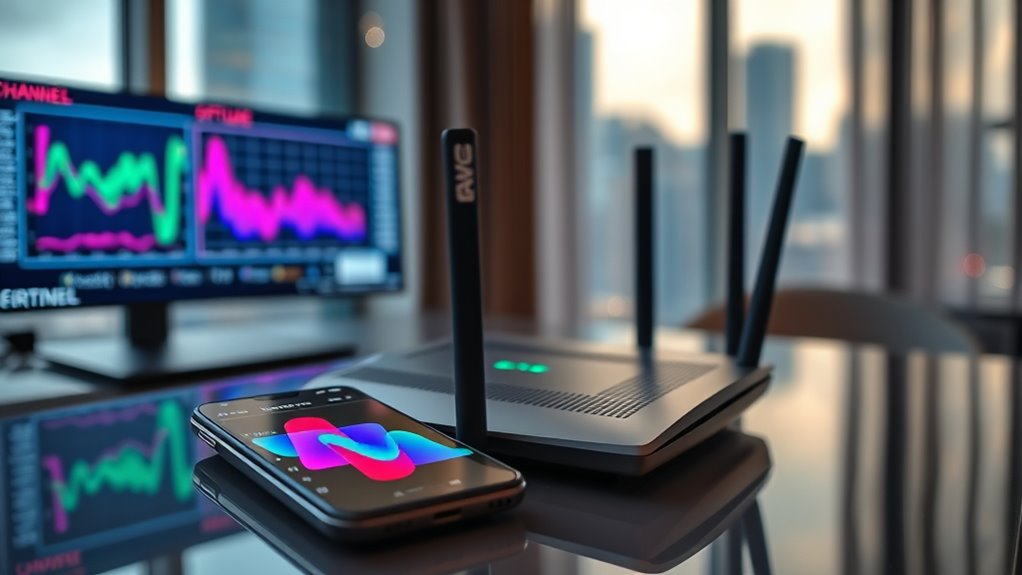
When you’re choosing a Wi-Fi channel, understanding channel overlap is essential. The 2.4 GHz band, for instance, has limited non-overlapping channels, which can lead to interference and reduced performance. Knowing how channel width affects this overlap helps you optimize your network for better connectivity.
Wi-Fi Frequency Bands
Understanding Wi-Fi frequency bands is essential for optimizing your network’s performance, especially since overlapping channels can lead to interference and slow speeds. Wi-Fi operates mainly on the 2.4 GHz and 5 GHz bands, each adhering to different Wi-Fi standards. The 2.4 GHz band offers wider coverage but is more prone to frequency interference due to crowded channels. On the other hand, the 5 GHz band provides faster speeds and less interference, but its range is shorter. To minimize issues, you should choose channels with minimal overlap. Knowing your environment and the devices connected can help you select the best frequency band, ensuring a smoother online experience and improving your network’s overall efficiency.
Channel Width Explained
Channel width plays an important role in determining your Wi-Fi network’s performance and efficiency. Wider channels can transmit more data, but they can also lead to increased interference. Here’s what you should know about channel width:
- 20 MHz: This is the default setting for most routers, balancing stability and speed. It’s less prone to interference.
- 40 MHz: This doubles the channel width, improving speed, but can cause overlap with neighboring channels, leading to potential issues.
- 80 MHz: Ideal for high-bandwidth activities, this width maximizes performance but greatly increases the risk of interference.
Choosing the right channel width is crucial for optimizing your network performance, ensuring you enjoy a faster, more reliable connection without unnecessary disruptions.
Overlapping Channels Impact
Although you might not notice it at first, overlapping channels can considerably impact your Wi-Fi performance. When multiple networks use the same or adjacent channels, you’ll experience channel interference, leading to slower speeds and dropped connections. In the 2.4 GHz band, channels 1, 6, and 11 are the only non-overlapping options, so using any others can create frequency overlap and degrade your signal quality. To minimize interference, it’s essential to scan your environment and select a channel that’s less crowded. Tools and apps are available to help identify which channels are most in use. By optimizing your channel selection, you can enhance your Wi-Fi experience, ensuring faster and more reliable connectivity throughout your home or office.
Finding Tools for Analyzing Wi-Fi Channels

When you’re ready to optimize your Wi-Fi network, finding the right tools to analyze channels becomes essential. Here are three types of tools you should consider:
- Wi-Fi Heatmap Analysis Tools: These help you visualize your Wi-Fi coverage and identify dead spots, ensuring you know where signal strength is weak.
- Spectrum Analysis Tools: These tools can show you which channels are congested and help you avoid interference from neighboring networks or devices.
- Network Analyzer Apps: They provide valuable insights into your current channel’s performance, including signal strength, noise levels, and connected devices.
Using these tools, you can effectively analyze your Wi-Fi channels, leading to better performance and less interference. Optimize your network and enjoy seamless connectivity!
Top Strategies for Selecting the Optimal Wi-Fi Channel
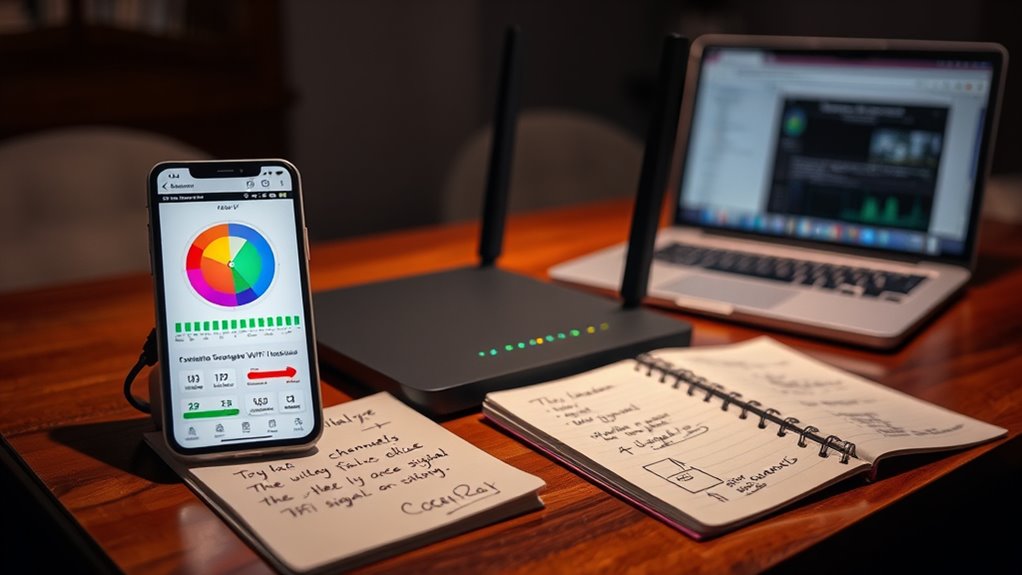
To guarantee your Wi-Fi network runs smoothly, selecting the best channel is essential. Start by using channel selection techniques like Wi-Fi analyzers to identify the least crowded channels in your area. These tools help you visualize the channel usage of nearby networks, allowing you to avoid interference. Pay attention to the 2.4 GHz band, as it has only three non-overlapping channels: 1, 6, and 11. If you’re using the 5 GHz band, you have more options, but not all devices support it. Implement interference mitigation strategies by regularly monitoring your channel performance and adjusting as needed. Finally, consider scheduling regular checks to guarantee your network remains optimized as new networks pop up around you.
Changing Your Wi-Fi Channel on Various Routers
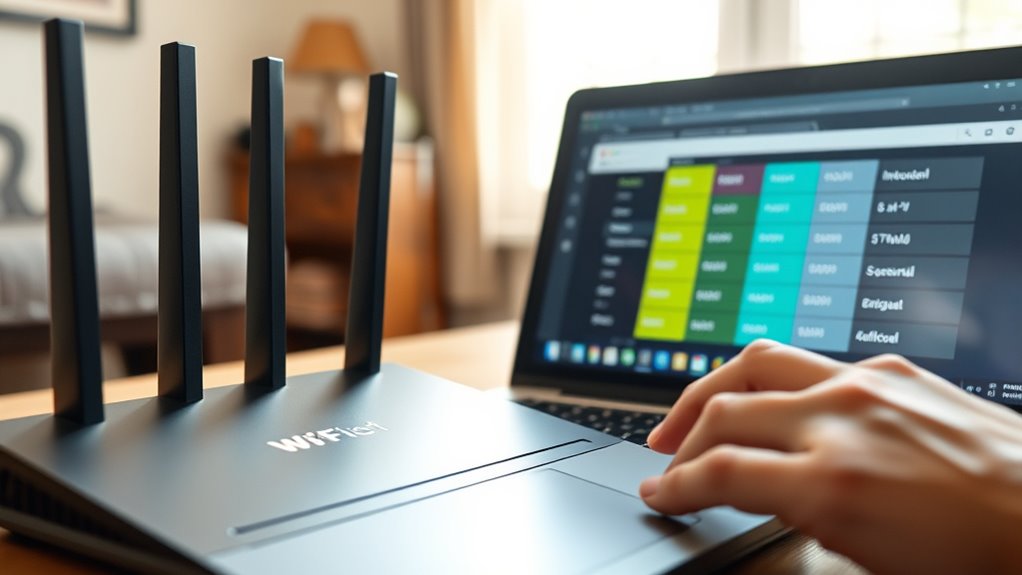
After identifying the best channel for your Wi-Fi network, it’s time to change the settings on your router. Follow these steps for effective channel selection:
After finding the optimal Wi-Fi channel, update your router settings to enhance performance and minimize interference.
- Access Router Settings: Open your web browser and enter the router’s IP address. Log in with your credentials.
- Find Wireless Settings: Navigate to the wireless settings section, often labeled as “Wireless” or “Wi-Fi.”
- Select Your Channel: Look for the channel selection dropdown and choose the ideal channel you’ve identified.
Once you’ve made your selection, save the changes and restart your router if necessary. This process can help improve your Wi-Fi performance and reduce interference, ensuring a smoother online experience.
How to Resolve Common Wi-Fi Channel Problems
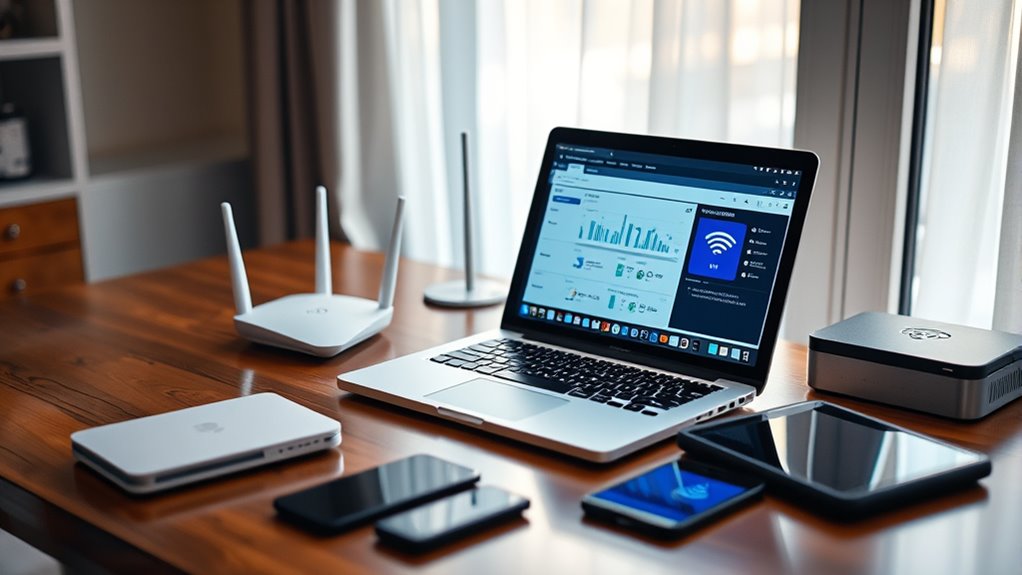
Even if you’ve selected the ideal Wi-Fi channel, you might still encounter issues like slow speeds or connectivity drops. These problems often stem from Wi-Fi congestion, especially in areas with many networks. Start by checking your router’s settings to guarantee it’s operating on the right channel according to the channel selection criteria. You might also consider using Wi-Fi congestion solutions, like changing the channel to a less crowded one or switching to the 5 GHz band, which typically has less interference. Additionally, verify your router firmware is up to date and consider repositioning your router to improve signal strength. These steps can help you mitigate common Wi-Fi channel problems and enhance your overall network performance.
Tips for Maintaining Optimal Wi-Fi Performance Over Time
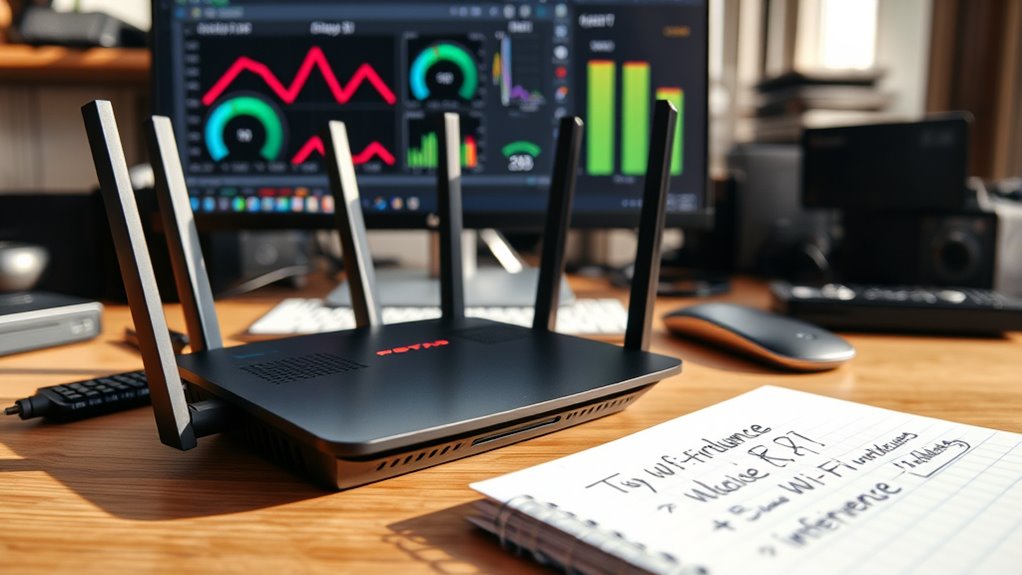
Maintaining ideal Wi-Fi performance over time requires consistent attention and proactive measures. Here are three tips to help you optimize your network:
- Optimize Device Placement: Position your router centrally and elevate it to improve signal strength. Avoid barriers like walls and appliances that can cause interference.
- Perform Regular Firmware Updates: Keep your router’s firmware up to date to enhance network security and performance. This helps in managing connected devices and bandwidth allocation effectively.
- Implement Traffic Management: Use parental controls and prioritize bandwidth allocation for important devices. Consider adding range extenders if your Wi-Fi coverage is lacking, ensuring smooth connections and reducing interference.
Frequently Asked Questions
How Often Should I Change My Wi-Fi Channel?
You should change your Wi-Fi channel as needed, ideally every few months or when you notice slow speeds or interference. Regularly check for congestion in your area and consider Wi-Fi optimization tips to enhance performance. Use channel selection strategies to identify the least crowded options. If you experience significant changes in your network, it’s a good idea to reassess your channel choice to guarantee you’re always getting the best connection possible.
Can Wi-Fi Interference Affect My Internet Speed?
Wi-Fi interference can turn your blazing-fast internet into a snail’s crawl. When signal degradation kicks in, you’ll feel like you’re stuck in the Stone Age. Network congestion from neighboring networks can bog you down, making streaming a nightmare and downloads excruciatingly slow. You’ll notice the difference immediately if you’re sharing the airwaves with too many other devices. So, keep an eye on interference; it can seriously impact your internet speed!
What Devices Can Interfere With Wi-Fi Channels?
Microwave ovens, cordless phones, Bluetooth devices, baby monitors, and wireless cameras can all interfere with your Wi-Fi channels. When these devices operate on similar frequencies, they can disrupt your connection and slow down your internet speed. It’s crucial to be aware of their presence in your home or office. You might want to keep them away from your router or switch to a less congested Wi-Fi channel to minimize interference and improve performance.
Is a Higher Frequency Always Better for Wi-Fi?
A higher frequency isn’t always better for Wi-Fi, just like a fast car isn’t always the safest. While higher frequencies offer frequency advantages like faster speeds and better signal quality, they struggle with distance and obstacles. If you’re in a large home or have thick walls, lower frequencies might work better for you. Balancing speed and coverage is key to ensuring you get the best Wi-Fi experience for your needs.
How Do Physical Obstacles Impact Wi-Fi Signal Strength?
Physical obstacles can greatly impact your Wi-Fi signal strength. When you encounter dense obstacles like walls or furniture, the signal penetration diminishes, leading to weaker connections. The more obstacles between your router and devices, the higher the obstacle density, which can cause interference and reduced speed. You’ll notice that moving closer to your router or minimizing these barriers often results in a stronger, more reliable connection.
Conclusion
By choosing the right Wi-Fi channel, you can transform your internet experience from a frustrating maze of buffering to a smooth highway of seamless streaming and browsing. Picture your devices gliding effortlessly through the digital landscape, free from interruptions. Regularly check your channel settings and stay vigilant against interference, ensuring your connection remains as strong as a summer breeze. With these strategies, you’ll not only enhance your Wi-Fi performance but also enjoy a more connected and enjoyable online life.