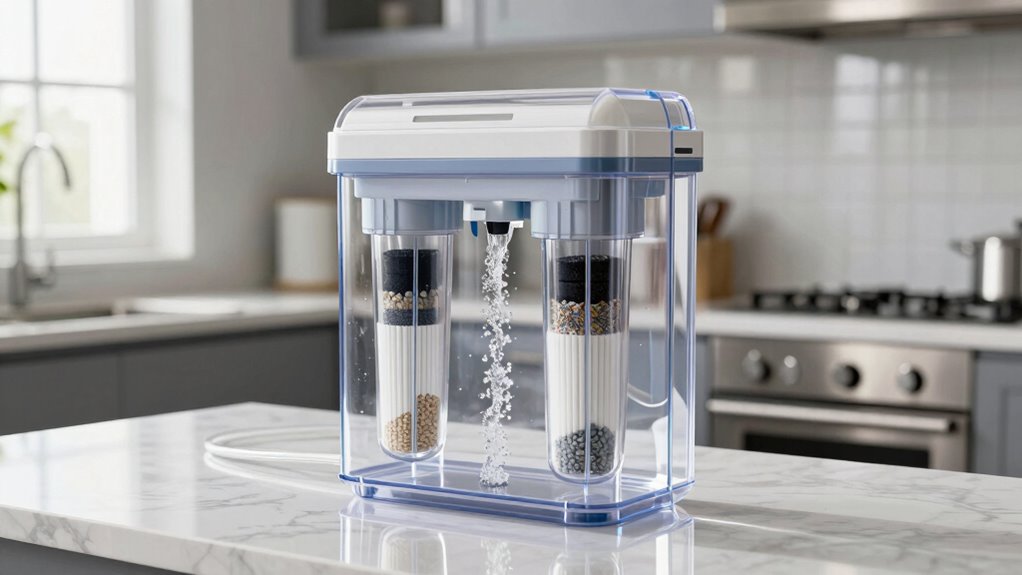

A whole house water filtration system guarantees that every drop of water in your home is free from contaminants like chlorine, sediments, and harmful chemicals. It improves water taste, protects your plumbing, and reduces exposure to pollutants, making your water safer and healthier for drinking, cooking, and bathing. By filtering water at the source, you’ll enjoy cleaner, better-tasting water everywhere. To discover how it works and which system is best for you, keep exploring the details.

Get the little things that make your day delivered free — and shop member deals
- Fast, free delivery on millions of items
- Access to Prime Big Deal Days deals on October 6–7
- Prime Video, Amazon Music and more included
Key Takeaways
- Removes contaminants like chlorine, sediments, and chemicals for improved water quality throughout your home.
- Enhances taste and clarity by reducing metallic, bitter flavors, and organic compounds.
- Protects plumbing and appliances from mineral buildup and corrosion.
- Provides consistent, safe, great-tasting water from every faucet and appliance.
- Requires regular maintenance to ensure effective filtration and long-term performance.
whole house water filtration system
As an affiliate, we earn on qualifying purchases.
As an affiliate, we earn on qualifying purchases.
Why Do You Need a Whole House Water Filtration System?
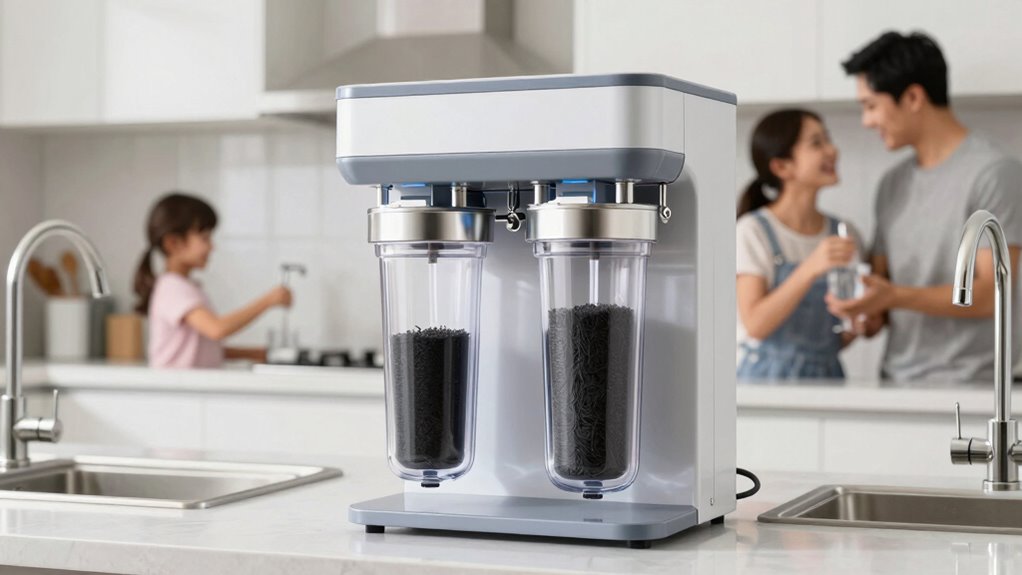
You need a whole house water filtration system because tap water can contain contaminants that affect your health and damage your plumbing. These impurities often cause unwanted water mineralization, leaving deposits that clog pipes and appliances. Additionally, mineral buildup can alter the aesthetic taste of your water, making it less revitalizing and more metallic or bitter. A filtration system removes these contaminants, ensuring cleaner, better-tasting water throughout your entire home. It also helps prevent mineral deposits that can lead to costly repairs and maintenance issues. By investing in a whole house system, you enjoy improved water quality from every faucet, shower, and appliance, promoting better health and extending the lifespan of your plumbing infrastructure. Proper monitoring and debugging of your water system can help maintain optimal performance and early detection of potential issues.
As an affiliate, we earn on qualifying purchases.
What Does Whole House Water Filtration Do, and How Does It Work?
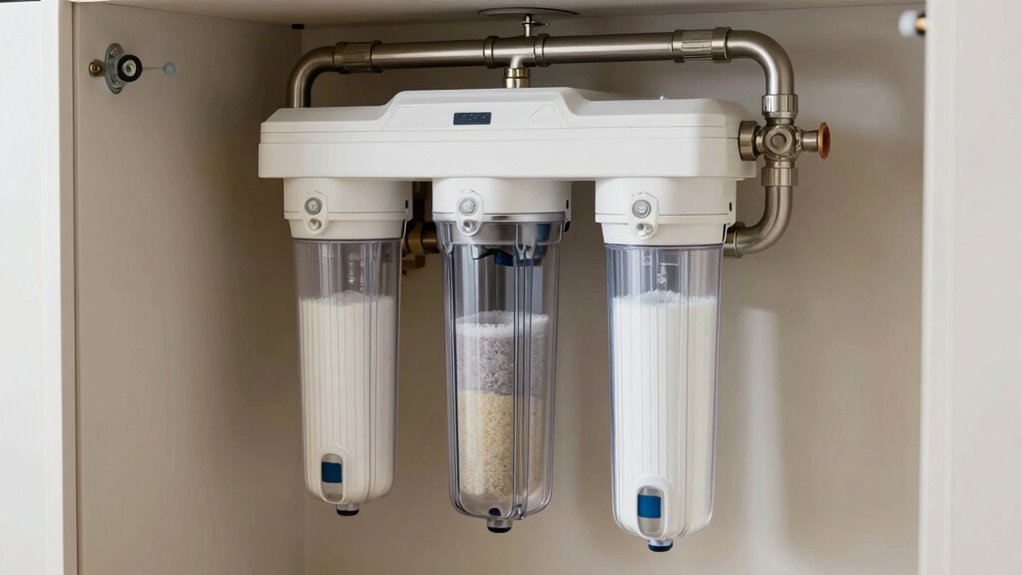
A whole house water filtration system works by passing your water through filters that eliminate contaminants before it reaches your taps. It targets various pollutants like chlorine, sediments, and certain chemicals, improving water quality throughout your home. Regular maintenance ensures your system stays effective and continues to provide clean, safe water. Additionally, understanding ownership essentials can help you select and maintain the right system for your needs.
Filtration Process Overview
Have you ever wondered how whole house water filtration systems clean and improve your water supply? The filtration process involves several key steps.
- Water enters the system, where it encounters filter media designed for filtration chemistry, capturing impurities through chemical reactions.
- Contaminant detection sensors monitor water quality, ensuring the system activates when needed.
- As water passes through, pollutants like sediments, chlorine, or organic compounds are trapped, leaving cleaner water for your entire home.
- Regular maintenance, such as cleaning and replacing filters, is essential to keep the system functioning effectively and ensure optimal water quality maintenance practices.
This process efficiently removes contaminants, using a combination of physical and chemical filtration methods. The system’s design guarantees continuous operation, providing safe, great-tasting water. Understanding how these steps work together helps you appreciate the technology behind your whole house filtration system.
Types of Contaminants Removed
Whole house water filtration systems effectively remove a wide range of contaminants to guarantee safe, clean water throughout your home. They target common pollutants like pesticide residues, which can come from agricultural runoff and pose health risks over time. Heavy metals such as lead, mercury, and arsenic are also filtered out, preventing neurological and health issues. These systems typically use activated carbon, reverse osmosis, or other advanced filters to trap or neutralize harmful substances. By removing pesticides, heavy metals, chlorine, sediment, and other impurities, your filtration system ensures that every tap delivers water that’s safer for drinking, cooking, and bathing. This extensive approach helps protect your family from potential long-term health problems caused by contaminated water sources.
System Maintenance Needs
Understanding how your whole house water filtration system works is essential for maintaining its effectiveness. To keep it running smoothly, regular system maintenance is key. First, monitor the filter lifespan; most filters need replacement every 3 to 6 months depending on water quality and usage. Second, schedule routine inspections to check for leaks, clogs, or damage that could impair performance. Third, consider system upgrades when your water needs change or if you notice decreased flow or filtration issues. Upgrading filters or adding stages can improve water quality and extend system life. Proper maintenance guarantees your filtration system continues to protect your home and prolongs its lifespan, saving you money and ensuring safe, clean water every day. Understanding how your system works is also vital for diagnosing issues early and optimizing performance.
whole house sediment and chlorine filter
As an affiliate, we earn on qualifying purchases.
As an affiliate, we earn on qualifying purchases.
Which Types of Whole House Water Filters Are Available?
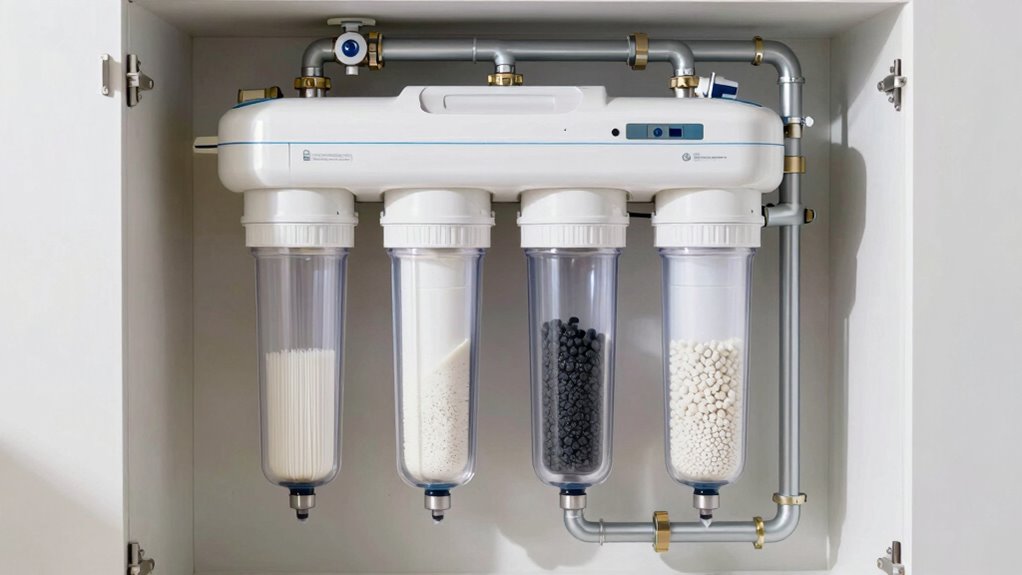
There are several types of whole house water filters available, each designed to target specific contaminants and meet different household needs. Activated carbon filters are common, effective at removing chlorine, bad odors, and some organic compounds, with a typical filter lifespan of 6 to 12 months. Reverse osmosis units provide all-encompassing filtration, including heavy metals and impurities, but tend to have higher installation costs and require space. Sediment filters are straightforward and excellent for removing dirt, sand, and rust, with filter lifespan depending on water quality. UV purifiers disinfect water by killing bacteria and viruses, usually adding minimal installation costs but needing electricity. Water quality plays a crucial role in determining the most suitable filtration system for your home. Choosing the right type depends on your water quality, budget, and specific filtration goals.
water purification system for house
As an affiliate, we earn on qualifying purchases.
As an affiliate, we earn on qualifying purchases.
How Do Filters Remove Contaminants From Your Water?

Filters remove contaminants through various mechanisms like trapping, absorbing, or chemical reactions. Different filters target specific pollutants such as sediments, chlorine, or bacteria, improving water quality. The effectiveness varies depending on the filter type and the contaminants you want to remove. Understanding air fryer accessories and how they enhance cooking can be similar to selecting the right water filter for your needs.
Filtration Process Mechanisms
Filtration process mechanisms work by physically or chemically capturing contaminants as water passes through the filter media. You’ll see this in action through different methods. First, mechanical filtration traps particles like dirt and sediment using porous materials. Second, adsorption mechanisms attract and hold contaminants like chlorine or pesticides onto the surface of activated carbon. Third, chemical filtration involves reactions that neutralize or remove specific pollutants, often using media treated with special chemicals. These mechanisms work together to guarantee your water is cleaner and safer. Additionally, the effectiveness of a filter depends on its design and materials, which determine how well it can target and remove various impurities. By understanding these processes, you can better appreciate how your whole house filter keeps impurities at bay and improves your water quality.
Types of Contaminants Removed
Understanding how contaminants are removed from your water helps you appreciate the importance of your whole house filtration system. These systems target a variety of pollutants, including pesticides and heavy metals, ensuring safer drinking water. Pesticides reduction is achieved through activated carbon filters, which adsorb organic compounds, preventing them from passing through. Heavy metals like lead, mercury, and arsenic are filtered out using specialized media such as ion exchange resins and sediment filters. These processes capture and hold onto harmful particles, stopping them from reaching your taps. Filtration media also plays a crucial role in removing other contaminants like chloramine and certain microorganisms, enhancing overall water safety. By removing such contaminants, your filtration system not only improves water taste and clarity but also protects your health. Knowing what your filter can remove helps you better understand its role in maintaining clean, safe water throughout your home.
Effectiveness of Different Filters
Different types of water filters remove contaminants through specific physical or chemical processes, making them effective against various pollutants. Understanding filter effectiveness helps you choose the right system for your needs. Here are three common methods:
- Mechanical filtration uses a porous medium to trap particles like sediment and dirt, effectively removing physical contaminants.
- Activated carbon filters attract and adsorb chemicals, chlorine, and organic compounds, improving taste and odor.
- Reverse osmosis systems force water through a semi-permeable membrane, eliminating a broad range of contaminants, including heavy metals and bacteria.
- Regional water flavors can also influence the choice of filtration, as certain filters may better address specific local contaminants or taste profiles.
Each filter type excels at contaminant removal in different ways, ensuring your water is cleaner and safer. Knowing how each works can help you maximize filter effectiveness for your household.
What Are the Benefits of Installing a Whole House Water Filter?
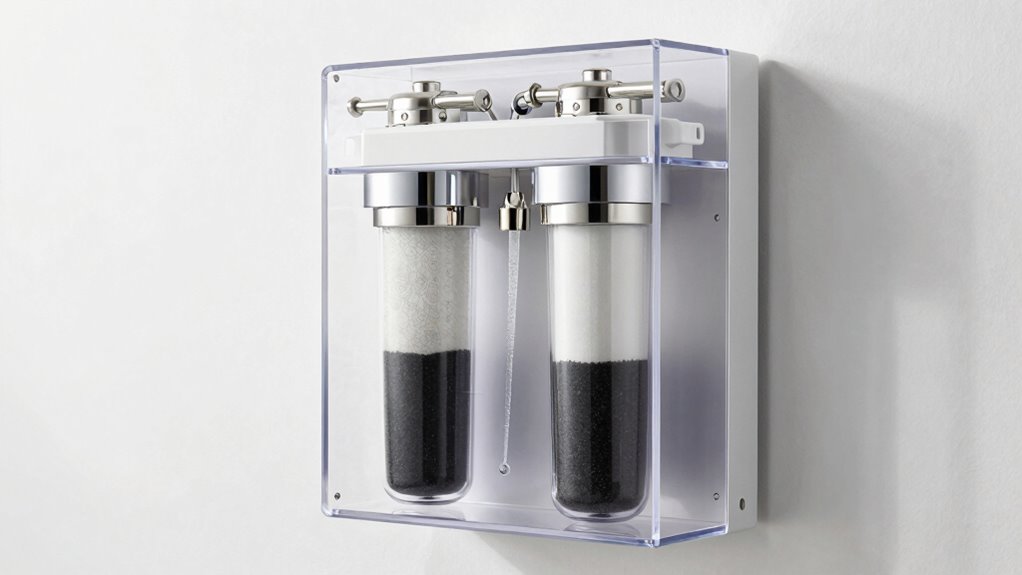
Installing a whole house water filter offers numerous benefits that can improve your daily life. One key advantage is the noticeable improvement in water taste, making drinking and cooking more enjoyable. It also reduces contaminants like chlorine, sediment, and heavy metals, leading to cleaner, healthier water for your entire home. Beyond personal health, a whole house filter minimizes the environmental impact by decreasing reliance on bottled water and reducing plastic waste. You’ll also notice fewer stains on fixtures and laundry, and your appliances may last longer due to cleaner water flow. Additionally, implementing water filtration systems can contribute to better indoor air quality by reducing airborne pollutants from contaminated water sources. Overall, investing in a whole house filtration system guarantees consistent, high-quality water from every tap, making daily tasks simpler and more satisfying while supporting eco-friendly choices.
How to Choose the Right Whole House Filtration System for Your Home

To choose the right whole house filtration system, you need to consider your water quality needs first. Think about the specific contaminants or issues you want to address and whether your system will be compatible with your home’s plumbing. Evaluating these factors guarantees you select a solution that effectively meets your family’s water safety and taste preferences.
Water Quality Needs
How do you determine which whole house filtration system best suits your home’s water quality? First, consider your water’s mineralization levels to decide if you need removal or addition of minerals. Second, check the pH balance—whether your water is too acidic or alkaline—and choose a system that can correct it. Third, identify other specific needs, like reducing contaminants or adjusting water hardness. Your ideal system should support proper water mineralization and pH balancing to protect appliances and improve taste. Knowing these details helps ensure your system addresses your water’s unique chemistry, providing safe, balanced water for your entire home. This approach guarantees you select a filtration setup tailored to your water quality needs.
System Compatibility Factors
Choosing the right whole house filtration system depends on your home’s specific water conditions and your household needs. To guarantee proper function, consider installation considerations such as space, accessibility, and plumbing compatibility. Some systems require more complex installation, so evaluate if your home’s infrastructure supports it. Additionally, check system compatibility with your existing water setup—whether it’s city water or well water—and verify if the filters and media are suitable for the contaminants you’re targeting. Compatibility also involves flow rate capacity; ensure the system can handle your household’s water demand without reducing pressure. By evaluating these factors beforehand, you’ll select a filtration system that fits seamlessly into your home, performs reliably, and provides the clean water you need.
Maintenance Tips to Keep Your Whole House Filter Working Properly

Regular maintenance is essential to keep your whole house water filter functioning effectively. Proper upkeep ensures the filter’s lifespan is maximized and replacement schedules are on track. To maintain peak performance, consider these tips:
- Regularly check and clean the filter housing to prevent buildup and clogs.
- Follow the manufacturer’s recommended replacement schedules to ensure the filter media isn’t overdue for replacement.
- Monitor water pressure and flow rates; a decrease may indicate it’s time for maintenance or replacement.
Common Problems With Whole House Water Filters and How to Fix Them
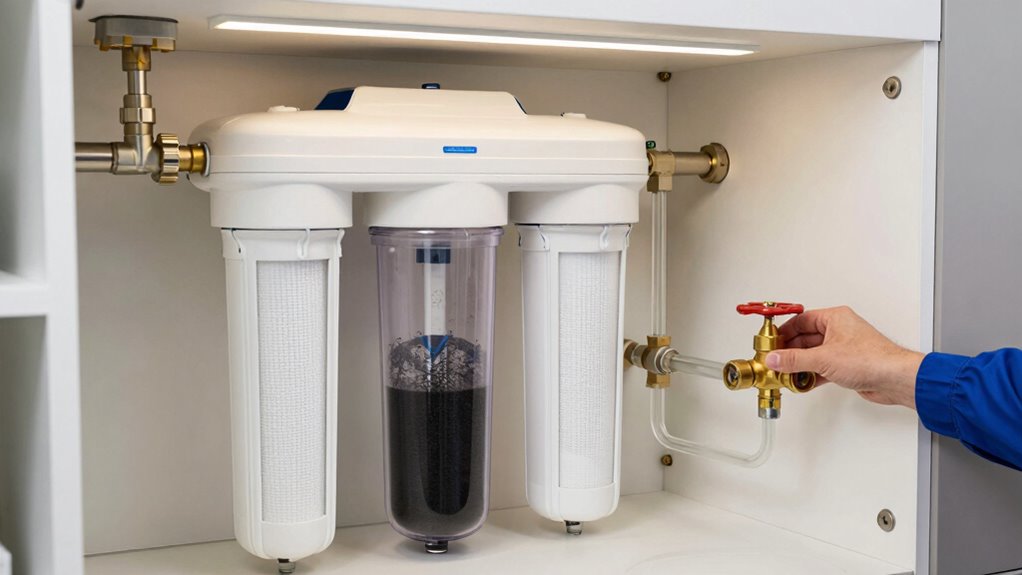
Even with proper maintenance, your whole house water filter can encounter common issues that affect its performance. One frequent problem is a persistent chlorine taste, which may indicate the filter isn’t effectively removing chlorinated compounds. To fix this, check if the filter media needs replacing or if the filtration system requires a thorough cleaning. Sediment buildup is another common issue, especially if your water source contains high levels of particles. Regularly inspect and replace sediment filters as recommended, and flush the system to remove trapped debris. If buildup persists, consider upgrading to a higher-capacity filter. Addressing these issues promptly helps ensure your water stays clean and tastes fresh, preventing small problems from turning into more significant, costly repairs.
How Whole House Filtration Improves Water Quality and Family Safety
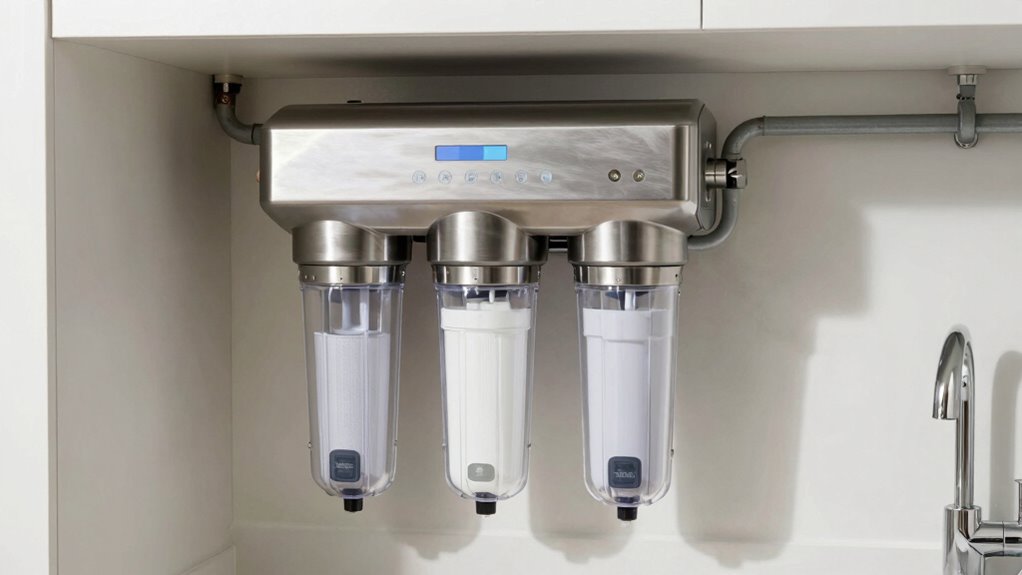
A whole house filtration system considerably enhances your water quality by removing contaminants before they reach your taps, ensuring your family drinks clean and safe water every day. By filtering out harmful substances like chlorine, sediments, and heavy metals, it protects your family from potential health risks. Imagine:
- Drinking water free from unpleasant tastes and odors
- Reducing exposure to harmful chemicals and bacteria
- Protecting your plumbing and appliances from mineral buildup
These improvements not only boost water quality but also promote family safety by minimizing health hazards. With a whole house filter, you gain confidence that every drop your family uses is pure and safe, providing peace of mind and supporting a healthier home environment.
Is a Whole House Water Filter the Right Choice for Your Home?

Deciding whether a whole house water filter suits your home depends on your specific water quality concerns and household needs. If your water contains high levels of minerals, hard water, or contaminants that don’t meet municipal regulations, a whole house system can be a smart choice. Water softening can be integrated to reduce mineral buildup and extend the lifespan of plumbing and appliances. Consider your local regulations and water testing results to determine if a filtration system is necessary. If you experience issues like chlorine taste, bad odors, or sediment in your water, a whole house filter can improve your water quality across your entire home. Ultimately, evaluating your water source and household requirements will help you decide if it’s the right solution.
Frequently Asked Questions
How Often Should I Replace My Whole House Water Filter?
You should replace your whole house water filter based on its maintenance schedule and filter lifespan, which typically ranges from three to six months. Check your manufacturer’s recommendations, as water quality and usage can affect this. Regular replacement guarantees your filtration system works efficiently, providing clean water throughout your home. Don’t wait too long—delaying replacement can reduce filtration effectiveness and impact water quality.
Can a Whole House Filter Remove Specific Contaminants Like Pesticides?
Yes, a whole house filter can remove specific contaminants like pesticides if it’s equipped with the right media, such as activated carbon. Its effectiveness depends on the filter’s design and the contaminant’s properties. To guarantee ideal contaminant removal, check the filter’s specifications and replace it regularly. This way, you maximize filter effectiveness and keep your water safe from pesticides and other unwanted substances.
How Much Does a Whole House Water Filtration System Typically Cost?
A whole house water filtration system typically costs between $1,000 and $5,000, depending on the size and features. You should consider your budget and the pricing options available, such as basic models versus advanced systems with multiple stages. Keep in mind that installation and maintenance costs also impact your overall expenses. By evaluating your needs, you can choose a system that fits your budget while providing clean, filtered water throughout your home.
Will a Whole House Filter Affect Water Pressure in My Home?
About 90% of homeowners notice a slight change in water pressure after installing a whole house filter. Usually, it won’t noticeably impact your Water pressure if your system is properly sized and maintained. Keep in mind, a filter’s lifespan varies—typically 6 to 12 months—so regular replacement keeps water flow steady. If you experience a drop, it might be time to check your filter and system setup.
Is Professional Installation Necessary for a Whole House Water Filter?
You don’t necessarily need a professional for installation, but it’s highly recommended. Installation requirements can vary, and DIY installation might seem manageable, but it often involves dealing with plumbing and water pressure concerns. Hiring a professional guarantees proper setup, avoids leaks, and guarantees your filter functions correctly. Plus, professionals are familiar with local codes, which can save you time and prevent costly mistakes down the line.
Conclusion
A whole house water filter acts as your home’s loyal gatekeeper, blocking impurities before they reach your faucets. By investing in one, you’re shielding your family from harmful contaminants and ensuring every drop that flows through your pipes is pure as mountain spring water. Think of it as a shield that transforms your tap water into a clear, invigorating stream—so you can enjoy healthier, safer water every day, like a revitalizing oasis right at home.
NFL season / tailgating Picks
team gear
As an affiliate, we earn on qualifying purchases.