Reverse osmosis is a simple process that uses pressure to push tap water through a special filter called a membrane. This membrane has tiny holes that block impurities, like minerals, bacteria, and chemicals, from passing through. The result is cleaner, safer water you can drink, free from harmful substances. It’s an effective way to improve water quality at home. Keep exploring to understand how this system works and how to keep it running smoothly.

Get the little things that make your day delivered free — and shop member deals
- Fast, free delivery on millions of items
- Access to Prime Big Deal Days deals on October 6–7
- Prime Video, Amazon Music and more included
Key Takeaways
- Reverse osmosis pushes water through a tiny filter to remove dirt, chemicals, and germs, making it safe to drink.
- It mimics natural osmosis but uses pressure to clean water instead of letting it naturally balance.
- The system includes filters and membranes that catch impurities and bacteria, then flush them away.
- Regular maintenance and filter changes keep the system working well and ensure water stays pure.
- It helps remove harmful substances like lead, arsenic, and salts, providing healthier, better-tasting water.
reverse osmosis water filter system
As an affiliate, we earn on qualifying purchases.
As an affiliate, we earn on qualifying purchases.
What Is Reverse Osmosis, and How Does It Work?
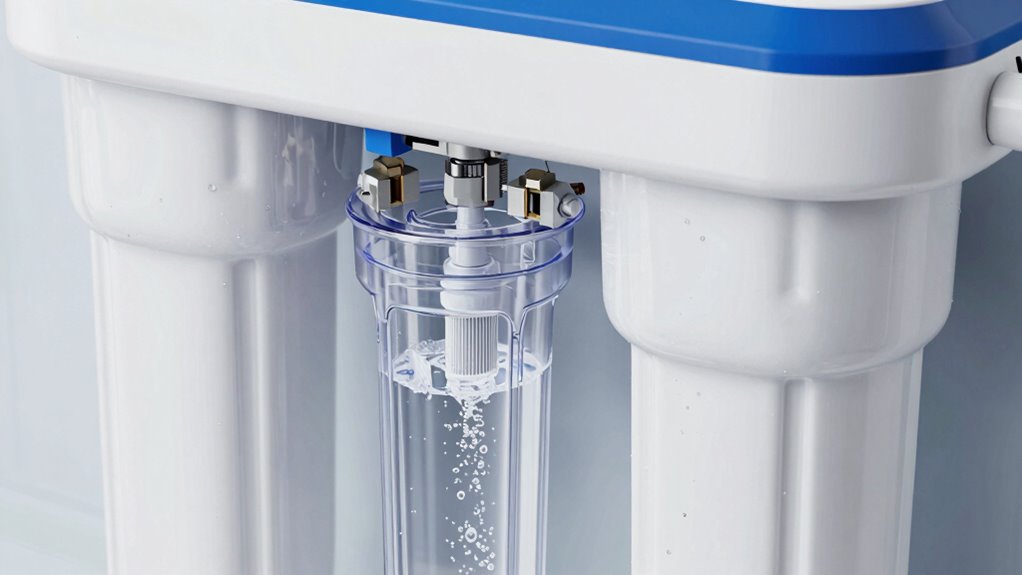
Have you ever wondered how clean, purified water is produced from contaminated sources? The answer lies in the osmosis process, which is the core of water purification through reverse osmosis. Unlike natural osmosis, where water moves from a less concentrated to a more concentrated solution, reverse osmosis uses pressure to push water through a semi-permeable membrane. This membrane filters out impurities, contaminants, bacteria, and viruses, leaving you with fresh, safe drinking water. The process effectively separates unwanted substances from water, making it ideal for producing potable water from polluted sources. By applying pressure, reverse osmosis systems reverse the natural flow of osmosis, providing an efficient method for water purification that you can rely on for clean, healthy water. Additionally, the contrast ratio of the system impacts how well it can distinguish between different levels of impurities, ensuring the purity of the output water.
under sink reverse osmosis purifier
As an affiliate, we earn on qualifying purchases.
As an affiliate, we earn on qualifying purchases.
Why Is Reverse Osmosis Necessary for Safe Drinking Water?
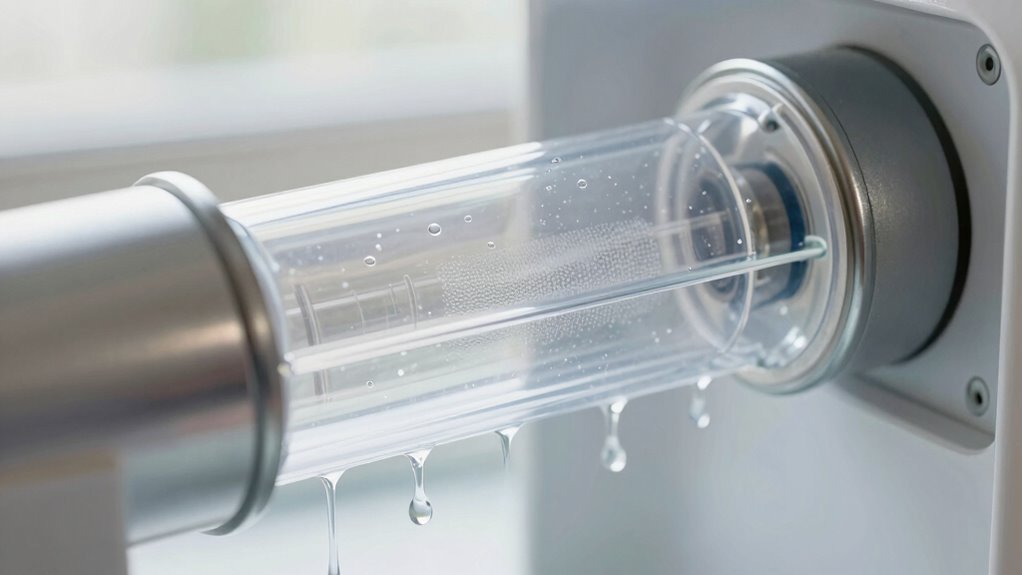
Clean water isn’t always guaranteed, especially in areas with polluted sources or aging infrastructure. Without proper treatment, your water may contain harmful contaminants that threaten water purity. Reverse osmosis becomes necessary because it effectively removes toxins, bacteria, viruses, and chemicals, ensuring your water is safe to drink. This process improves water purity, reducing health risks and providing peace of mind. Drinking contaminated water can lead to illnesses and long-term health issues, so using reverse osmosis adds a crucial layer of protection. The health benefits are clear: cleaner water supports better immune function, digestion, and overall wellness. Additionally, ensuring water quality through treatment methods like reverse osmosis helps prevent the buildup of harmful substances in your household plumbing. In areas where water quality is questionable, reverse osmosis is a reliable solution to deliver safe, pure drinking water for you and your family.
RO water filter replacement filters
As an affiliate, we earn on qualifying purchases.
As an affiliate, we earn on qualifying purchases.
How Does Water Travel Through a Reverse Osmosis System?
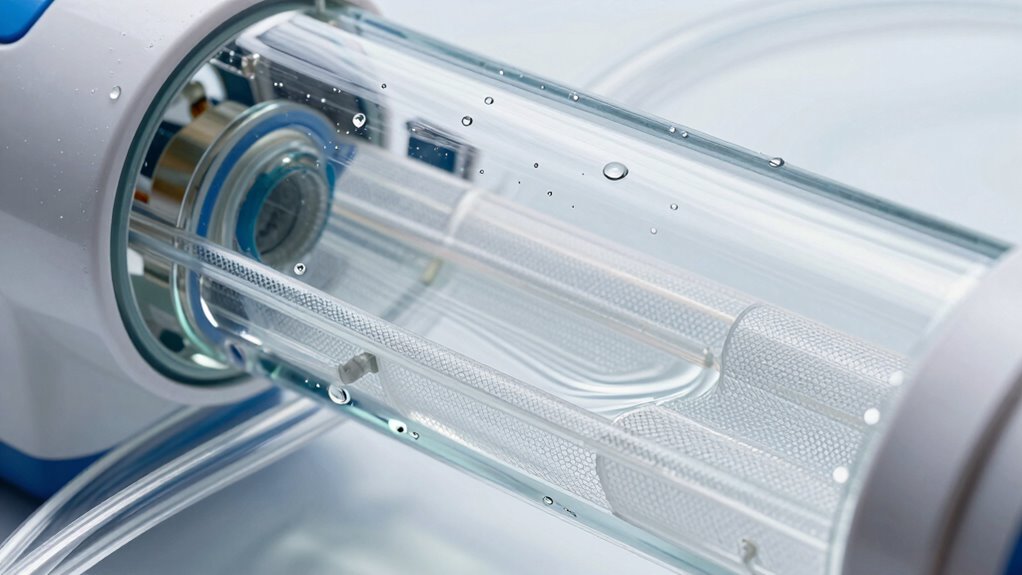
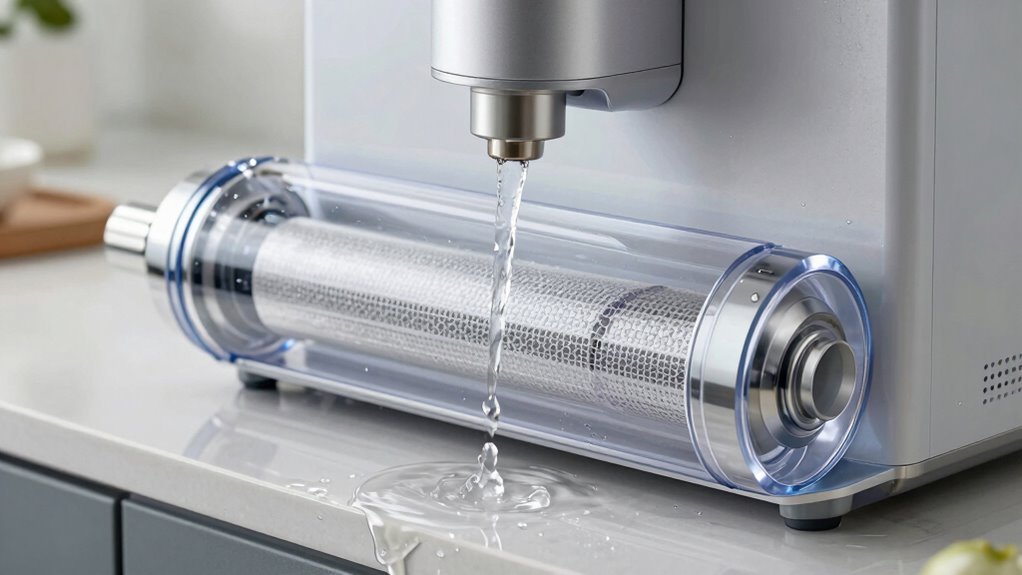
Water enters the reverse osmosis system through a dedicated inlet, guided by a pressure pump that pushes it through the various filtration stages. The system design directs water to flow through a series of filters and membranes, where contaminants are removed. As water moves, impurities are separated and flushed away, leaving clean water behind. The flow rate depends on pressure and membrane type, ensuring efficient purification. Additionally, understanding microplastics in dust can help in assessing the overall quality of indoor water sources.
As an affiliate, we earn on qualifying purchases.
What Are the Main Components of a Reverse Osmosis System?
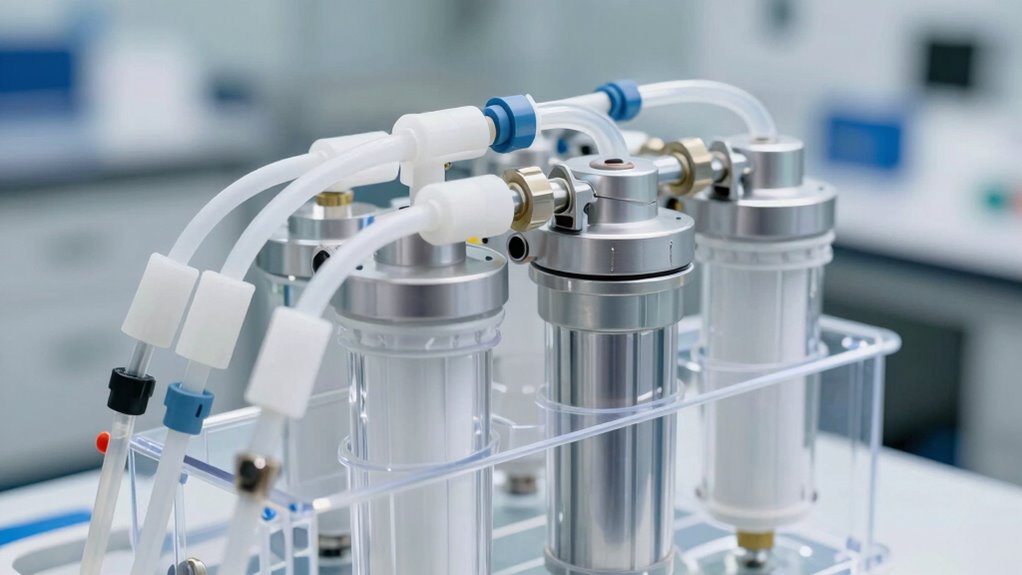
A reverse osmosis system relies on key components like filtration membranes, which remove contaminants from your water. You’ll also find pre-filters that catch large particles before water reaches the membrane, and post-filters that improve taste after the process. Understanding these parts helps you see how each plays an essential role in delivering clean, pure water. Additionally, the adaptable structure of these systems allows for customization based on specific water quality needs.
Filtration Membranes Role
Filtration membranes are the heart of a reverse osmosis system, responsible for removing impurities from water. Their membrane structure is specially designed with tiny pores that allow water molecules to pass through while blocking larger particles, contaminants, and dissolved salts. During the filtration process, water is pushed against the membrane under pressure, forcing clean water to go through while impurities are left behind. Because of their precise pore size, these membranes effectively reduce contaminants like bacteria, viruses, and chemicals. The membrane’s material and design are crucial for optimal performance and durability. Regular maintenance and calibration are essential to ensure the membranes function properly and extend their lifespan. Without a well-functioning membrane, the entire system can’t produce safe, clean water. That’s why understanding how these membranes work helps you appreciate their vital role in making water safe and pure.
Pre and Post Filters
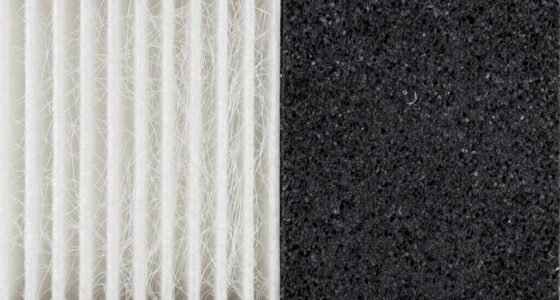
Pre and post filters are vital components that work alongside the filtration membranes to guarantee the water’s quality throughout the reverse osmosis process. The pre-filter removes larger particles like sediment and chlorine, which can damage the membrane and affect water pH. This step helps preserve the mineral content that you want to keep, such as calcium and magnesium. The post-filter, usually a carbon filter, polishes the water after it passes through the membrane, improving taste and removing any remaining odors or chemicals. It also helps stabilize the water pH, making certain it’s not too acidic or alkaline. Together, these filters guarantee your drinking water remains clean, balanced in mineral content, and safe for consumption, making the entire reverse osmosis system more effective and reliable. Incorporating bedding for comfort can also enhance your overall sleep quality alongside clean drinking water.
Which Contaminants Does Reverse Osmosis Remove From Water?
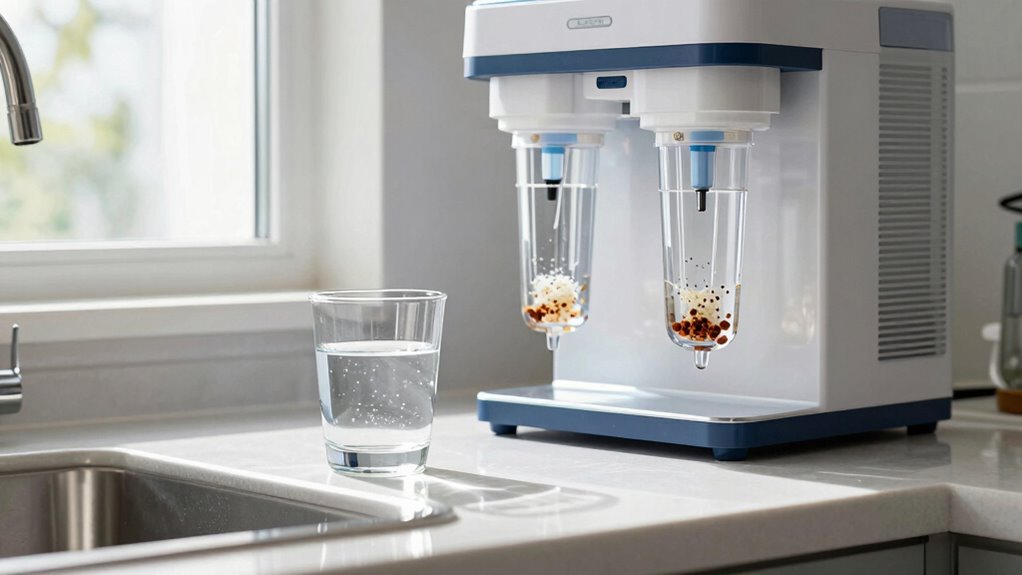
Reverse osmosis effectively removes a wide range of contaminants from water, making it a popular choice for ensuring clean drinking water. Its high removal efficiency targets various contaminant types, providing peace of mind. Here are some common contaminants it removes:
- Heavy metals like lead and arsenic
- Dissolved salts and minerals causing hardness
- Organic compounds, including pesticides and herbicides
- Microorganisms such as bacteria and viruses
The membrane’s ability to filter tiny particles ensures these contaminants are markedly reduced or eliminated. This makes reverse osmosis a reliable method for improving water quality, especially where contamination levels are high. Its effectiveness varies depending on the contaminant type, but overall, it offers excellent removal efficiency for most impurities that compromise water safety and taste. Additionally, high-pressure systems enable the filtration of even the smallest particles, ensuring thorough purification.
Is Reverse Osmosis Safe to Drink, and How Clean Is the Water?
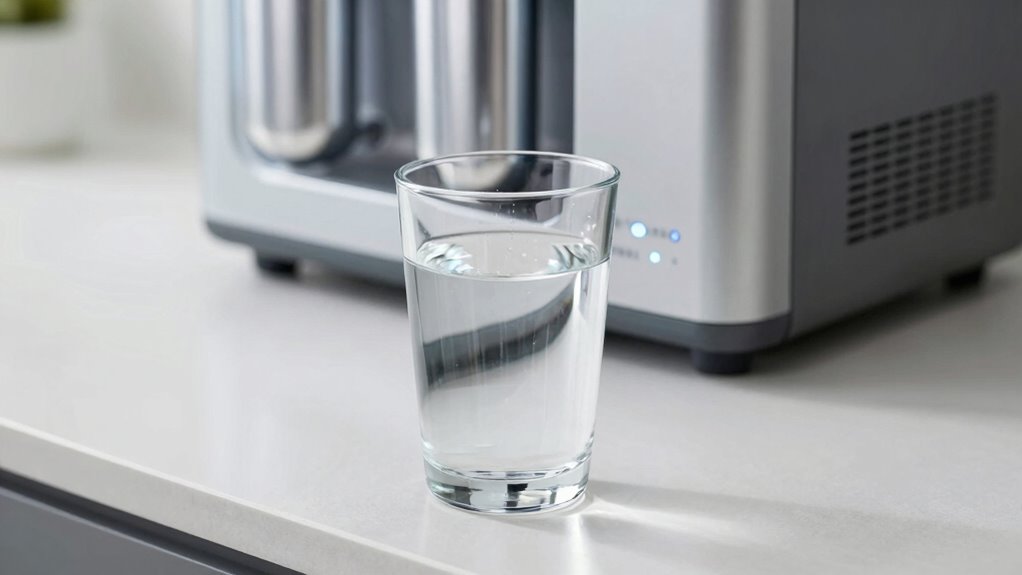
Because reverse osmosis removes a wide range of contaminants, many people wonder if the water it produces is safe to drink and how clean it really is. Rest assured, RO water is safe because it effectively reduces harmful substances, making tap water safer overall. To assess water quality, you can check indicators like pH, total dissolved solids, and contaminant levels. Here’s a quick overview:
| Water Quality Indicator | What It Tells You |
|---|---|
| pH | Acidity or alkalinity |
| Total Dissolved Solids | Overall impurity level |
| Contaminant Levels | Presence of specific pollutants |
RO systems improve tap water safety, providing clean, safe drinking water for your home. Additionally, monitoring filter performance can help ensure the system continues to operate effectively.
What Are the Benefits and Limitations of Using Reverse Osmosis at Home?
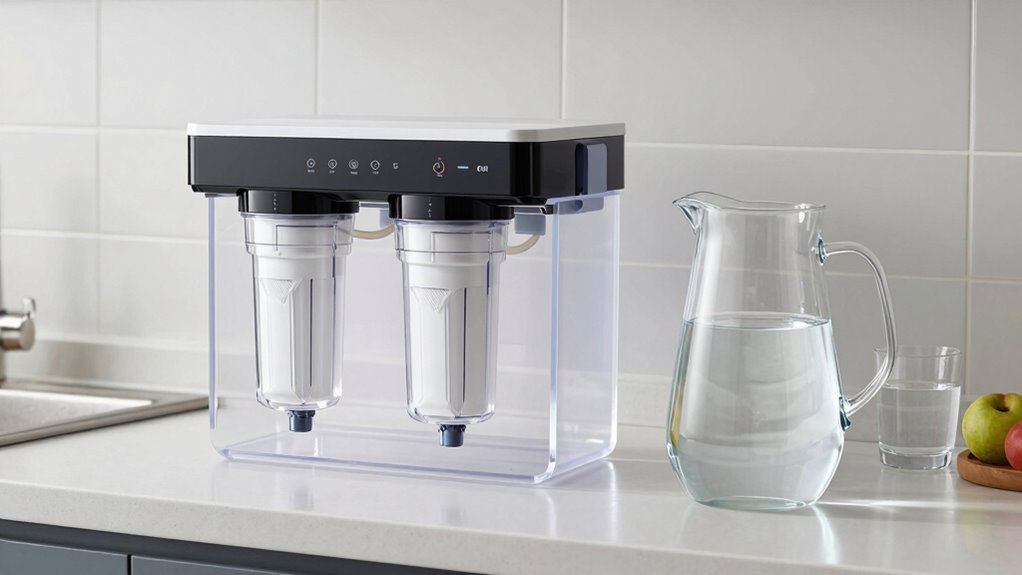
Using a home reverse osmosis system offers several clear benefits, primarily providing you with high-quality, clean drinking water that reduces common contaminants. It improves water taste by removing chlorine, lead, and other impurities, making your water more enjoyable. However, there are some limitations to contemplate:
Home reverse osmosis provides cleaner, better-tasting water by removing contaminants, but consider its installation and maintenance needs.
- Installation costs can be upfront but vary depending on system complexity.
- The system may waste some water during filtration, affecting efficiency.
- It requires regular filter replacements to maintain performance.
- Some minerals essential for health might be removed, so supplementation might be necessary.
- Proper maintenance and understanding of household guides can help optimize system performance and longevity.
While reverse osmosis offers cleaner, better-tasting water, understanding these benefits and limitations helps you decide if it’s right for your home.
How Can You Maintain and Troubleshoot Your Reverse Osmosis System?
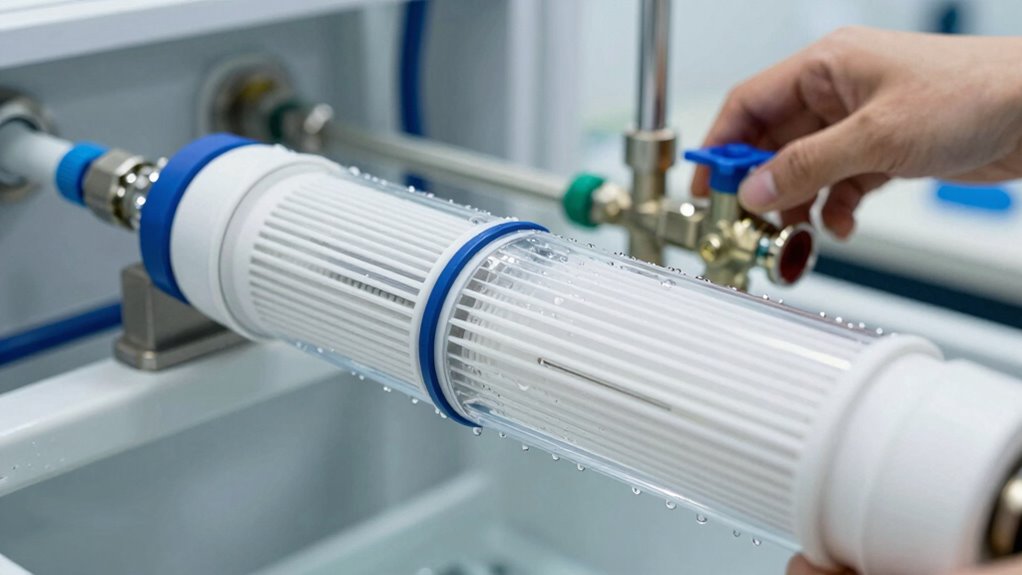
Maintaining and troubleshooting your reverse osmosis system guarantees it continues to deliver high-quality water and operates efficiently. Regular maintenance is essential to keep water quality high and prevent issues. Start by replacing filters and the membrane according to the manufacturer’s recommended schedule—usually every 6 to 12 months. Check for leaks or reduced water flow, which can signal clogged filters or worn parts. Keep an eye on the pressure gauge; low pressure may indicate a need for filter replacement. To troubleshoot, clean the system’s components periodically and ensure the storage tank isn’t contaminated. Follow maintenance tips like sanitizing the system annually and inspecting tubing for cracks. Proper upkeep ensures your system functions at its best, providing clean, safe water day after day. Additionally, understanding filtration/suction basics can help you better diagnose and resolve common issues.
Frequently Asked Questions
How Much Does a Reverse Osmosis System Typically Cost?
A reverse osmosis system typically costs between $200 and $600, depending on the model and features. Affordability factors include the system’s capacity, brand reputation, and additional filters or accessories. You should consider these factors to find a system that fits your budget and water quality needs. Investing in a quality unit can save you money in the long run by reducing maintenance and replacement costs.
How Long Does a Reverse Osmosis Filter Last?
Think of your reverse osmosis filter as a diligent gardener, pruning and renewing to keep water pure. Typically, it lasts about 6 to 12 months before needing a filter replacement. Follow your system’s maintenance schedule closely; neglecting this can turn your once pristine water into a trickle of impurities. Regular check-ins ensure your system performs at its best, safeguarding your water quality with each refresh.
Can Reverse Osmosis Remove Beneficial Minerals From Water?
Yes, reverse osmosis can remove beneficial minerals from water, affecting mineral retention. While it effectively eliminates contaminants, it also strips away minerals like calcium and magnesium, which are important for your health. This reduction can have health implications if your diet doesn’t compensate for these lost minerals. To maintain mineral balance, consider adding mineral drops or using remineralization filters after the reverse osmosis process.
Is Installation of a Reverse Osmosis System Complicated?
Think of installing a reverse osmosis system like assembling a simple puzzle; it’s straightforward. The system complexity is low, and the installation steps are clear. You’ll connect it to your faucet, install filters, and attach tubes, usually in less than an hour. With basic tools and some patience, you can do it yourself or hire a professional. Overall, it’s accessible and hassle-free, making clean water easy to enjoy.
How Much Water Is Wasted During the Filtration Process?
You’ll find that water waste during filtration varies, but typically, a reverse osmosis system wastes about 3 to 4 gallons for every gallon of purified water. This water waste impacts filtration efficiency because some water is diverted to drain while the system cleans itself. To minimize waste, look for systems with higher filtration efficiency, and consider installing a permeate pump, which can reduce water waste and improve overall performance.
Conclusion
Imagine installing a reverse osmosis system and enjoying crystal-clear water every day. For instance, Sarah, a homeowner, noticed her tap water taste better and felt safer knowing contaminants were removed. With proper maintenance, you can experience similar benefits—cleaner, safer water right from your tap. While it’s simple to use, stay vigilant with regular checks. Ultimately, reverse osmosis makes safe drinking water accessible and hassle-free, giving you peace of mind in your daily life.
Fall Picks
fall essentials
As an affiliate, we earn on qualifying purchases.