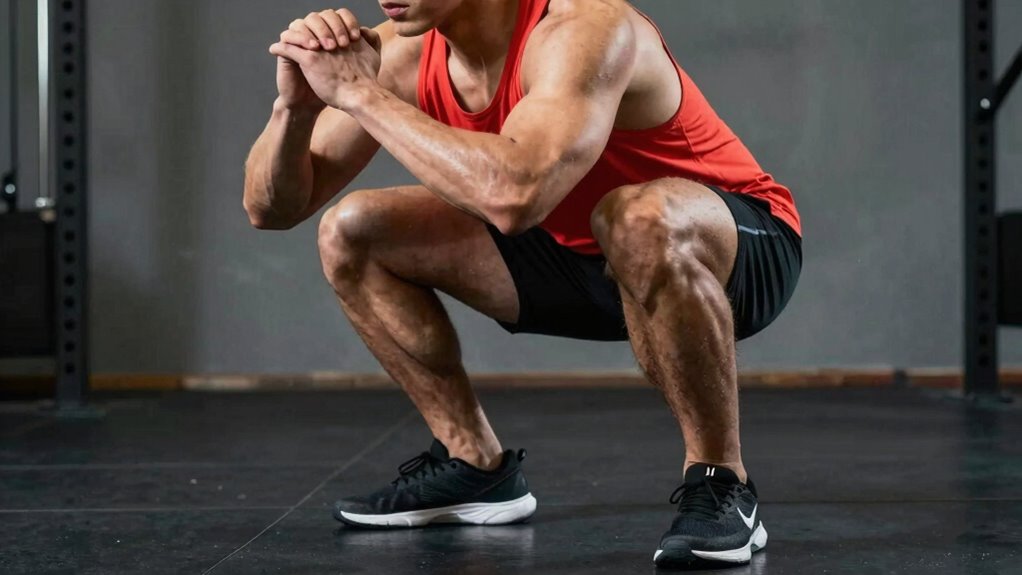
Knee pain during squats often stems from common form mistakes. If your knees collapse inward or extend too far forward, you’re likely straining your joints. Poor foot positioning and improper depth can also contribute to discomfort. Keep your feet shoulder-width apart, and guarantee your knees track over your toes to maintain proper alignment. By focusing on your technique, you can alleviate pain and enhance your squat form. Learn how to strengthen your knees and prevent issues moving forward.
Key Takeaways
- Improper knee alignment, such as knees collapsing inward, increases stress on the joints during squats.
- Failing to maintain knees tracking over toes can lead to discomfort and potential injury.
- Poor foot positioning, either too wide or too narrow, can cause strain on the knees.
- Deep squats may not be suitable for everyone; prioritize form over depth to avoid pain.
- Gradually increasing squat depth while monitoring knee sensations helps prevent undue stress and injury.
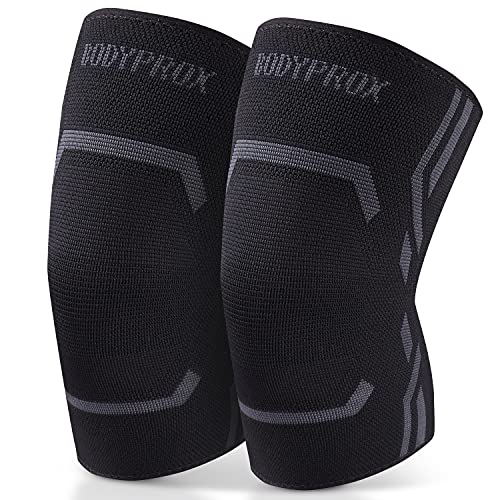
Bodyprox Knee Compression Sleeve for Men and Women (2 Pack), Knee Support Brace for Running and Work out (Medium)
Take action and prevent knee pain before it occurs! Optimize joint and muscle performance while preventing injuries. The…
As an affiliate, we earn on qualifying purchases.
As an affiliate, we earn on qualifying purchases.
Why Do Squats Cause Knee Pain?
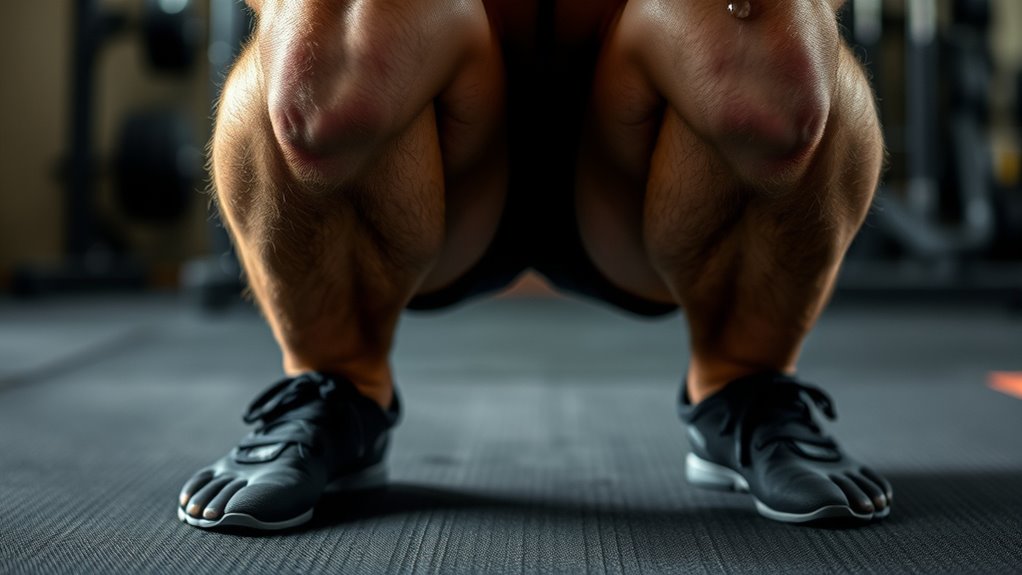
When you perform squats, several factors can contribute to knee pain, particularly if your form isn’t quite right. Understanding your knee anatomy is vital, as improper alignment during squat variations can stress your joints. If your knees collapse inward or extend too far forward, it can lead to discomfort and potential injury. You might also find that certain squat variations, like front squats or overhead squats, place different demands on your knees. It’s important to focus on your stance and depth, ensuring your knees track over your toes. Paying attention to proper movement mechanics can help you reduce stress on your knees and enjoy a more effective workout while minimizing pain and risk of injury.

Modvel Compression Knee Brace for Women & Men, 2-Pack Knee Brace for Running Knee Pain, Knee Support Compression Sleeve, Workout Sports Knee Braces for Meniscus Tear, ACL & Arthritis Pain Relief
No Pill & Injection Relief: Avert pain, inflammation, and sports injury with our knee braces for knee pain….
As an affiliate, we earn on qualifying purchases.
As an affiliate, we earn on qualifying purchases.
Common Squat Mistakes Leading to Knee Pain
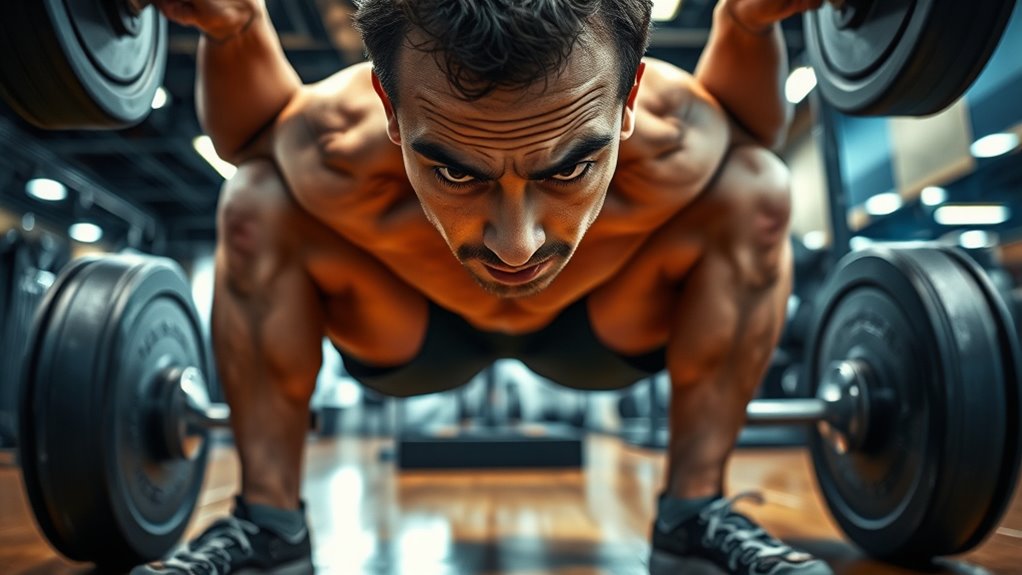
Improper squat techniques can lead to knee pain, so it’s important to be aware of common mistakes that might be affecting your form. One major error is poor knee alignment; your knees should track over your toes, not cave inward. When they shift outside this alignment, it places unnecessary stress on your joints. Additionally, using inappropriate squat variations can exacerbate the problem. For instance, deep squats may not suit everyone, especially if you lack flexibility or strength. Always prioritize form over depth; it’s better to perform a shallower squat correctly than to push through pain. By focusing on maintaining proper knee alignment and choosing suitable squat variations, you can greatly reduce your risk of injury and enjoy a more effective workout.

Squat Mat with Foot Position, Guided Training Pad for Proper Form, Home Gym Equipment for Leg Workouts, Compact Exercise Mat for Squats and Core Training
Guided Foot Positioning: Squat mat with foot position features clear markers to help maintain proper form during squats…
As an affiliate, we earn on qualifying purchases.
As an affiliate, we earn on qualifying purchases.
The Impact of Foot Positioning on Knee Discomfort
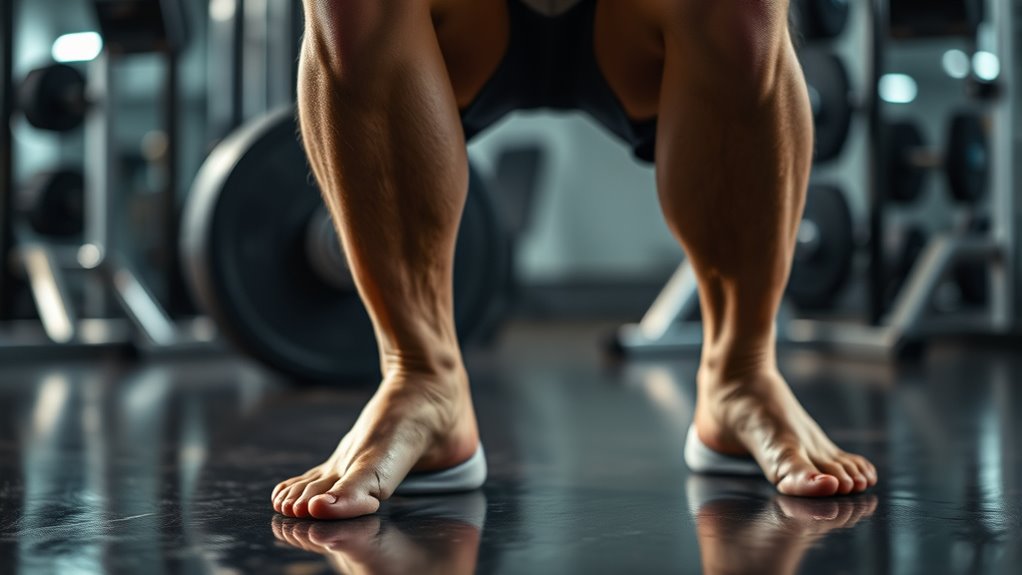
Foot positioning plays an essential role in how your knees feel during squats. Proper foot alignment can greatly influence your weight distribution, affecting your knee joints. When your feet are too far apart or too close together, it can place unnecessary strain on your knees, leading to discomfort. You should aim for a shoulder-width stance with your toes slightly pointed out, allowing for a natural movement pattern. This setup promotes even weight distribution across your feet, reducing the risk of injury. Additionally, always pay attention to how your knees track over your toes; they should align and not cave inward. By adjusting your foot positioning, you can help alleviate knee pain and perform squats more effectively.

JupiterForce Adjustable Squat Rack Stands Pair of Sturdy Steel Bench Press Rack, Barbell Rack, 40''-66'' 550lbs Max Load Portable Weight Lifting Dumbbell Racks Stands for Home Gym, Black
Sturdy and Durable: The squat rack is made of heavy-duty 50*50*1.5mm steel tubing to ensure its strength and…
As an affiliate, we earn on qualifying purchases.
As an affiliate, we earn on qualifying purchases.
Safely Adjusting Squat Depth
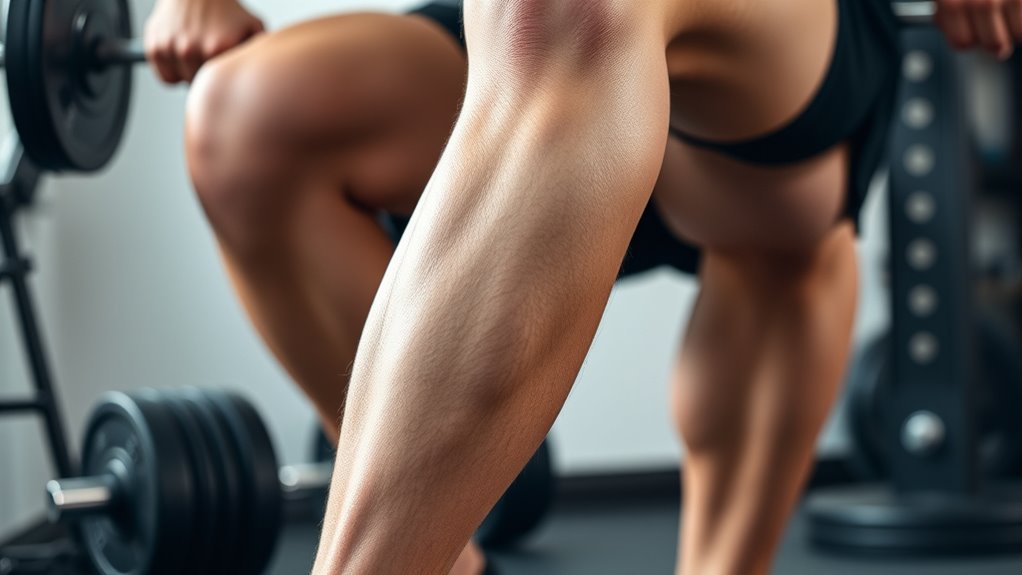
Adjusting your squat depth is essential for both performance and injury prevention, especially if you’re experiencing knee pain. By implementing depth modification, you can find a safe squatting position that works for you. Here are some tips to help you adjust your squat depth effectively:
- Start with a shallow squat and gradually increase depth.
- Focus on maintaining proper form throughout the movement.
- Pay attention to how your knees feel as you squat deeper.
- Use a box or bench to gauge your depth safely.
- Don’t hesitate to seek advice from a trainer if needed.
Strengthening Exercises for Knee Pain Prevention in Squats
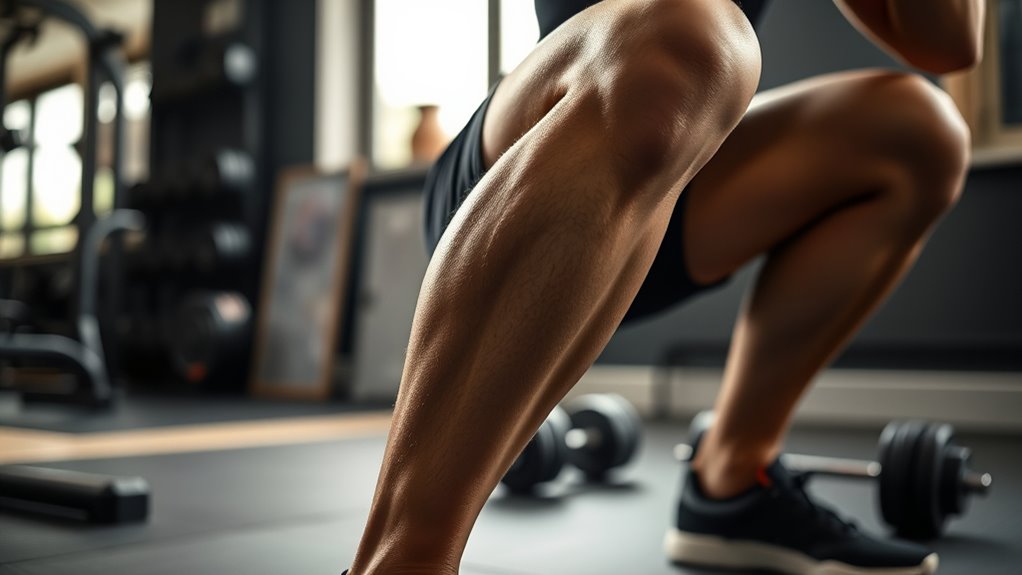
To prevent knee pain during squats, incorporating strengthening exercises into your routine can make a significant difference. Focus on exercises that enhance knee stability and promote muscle activation in your legs and hips. Start with bodyweight squats to build a solid foundation, then progress to lunges and step-ups. These movements engage your quadriceps, hamstrings, and glutes, ensuring balanced strength around your knees. Additionally, consider adding resistance bands to your routine for lateral walks, which target the hip abductors, further stabilizing your knees. Don’t forget to include calf raises, as strong calves support overall leg strength. By building these muscle groups, you’ll improve your squat form and reduce the risk of knee pain effectively. Incorporating proper training techniques can also help ensure safe and effective workouts, reducing the likelihood of injury. Paying attention to muscle engagement during exercises is essential for optimal results and injury prevention. Incorporating correct form during exercises is crucial to prevent undue stress on your knees and other joints.
Frequently Asked Questions
Can Tight Hip Flexors Contribute to Knee Pain During Squats?
Yes, tight hip flexors can definitely contribute to knee pain during squats. When your hip mobility‘s limited, it affects your squat alignment, forcing your knees to compensate in ways that can cause discomfort. You might find your knees tracking improperly, leading to strain. To improve your squat and reduce knee pain, focus on stretching those tight hip flexors and enhancing your overall hip mobility for better alignment and movement patterns.
How Can I Warm up Effectively Before Squatting?
To warm up effectively before squatting, start with dynamic stretching and mobility drills. Focus on your hips, quads, and hamstrings by doing leg swings, walking lunges, and hip circles. These movements increase blood flow and improve flexibility. You can also incorporate foam rolling to release tension in your muscles. Aim for at least 10-15 minutes of this warm-up routine to prepare your body for squats, reducing the risk of injury and enhancing performance.
Are There Any Specific Stretches to Alleviate Knee Pain?
You might think ignoring knee pain will make it disappear, but that’s like hoping a flat tire will fix itself! Instead, try quad stretches to loosen those tight muscles in the front of your thighs. Incorporating hamstring flexibility exercises can also help balance your leg strength. These stretches ease tension and support your knees, making squats more comfortable. So, don’t skip your stretching routine; your knees will thank you later!
Should I Use Knee Sleeves for Extra Support While Squatting?
Yes, you should consider using knee sleeves for extra support while squatting. Knee sleeve benefits include improved joint stability, increased warmth, and reduced pain during your workouts. They can help you feel more confident in your squats, allowing you to focus on your form and weight. Just remember, while they offer support, they shouldn’t replace proper technique or strength training. Prioritize good form to prevent injuries and maximize your gains.
How Often Should I Rest Between Squat Sessions to Prevent Pain?
You should aim for at least 48 hours of rest between squat sessions to allow your muscles and joints to recover properly. During this time, incorporate recovery techniques like gentle stretching and foam rolling to alleviate any tension. If you feel persistent pain, consider extending your rest duration or consulting a professional. Prioritizing recovery can help you maintain progress while keeping your knees healthy and pain-free.
Conclusion
Incorporating proper form and adjustments in your squats is like tuning a musical instrument—just a slight tweak can turn a painful noise into a harmonious sound. When you pay attention to your foot positioning and squat depth, you’ll find relief from knee pain and improve your performance. Remember, even professional athletes focus on the fundamentals to avoid injury. So, take the time to refine your technique, and your knees will thank you for it!