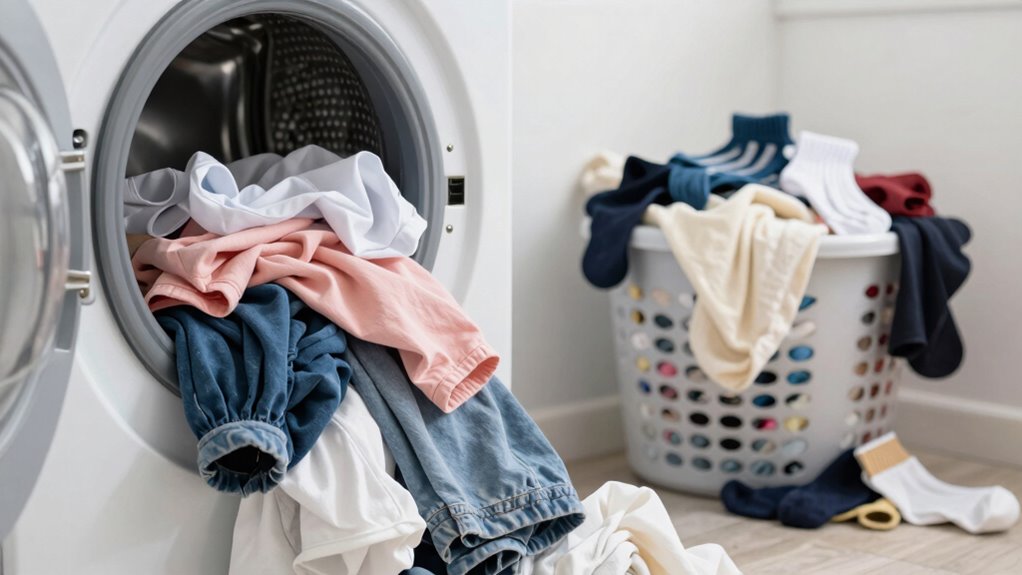

Many people often choose the wrong water temperature, risking damage or inadequate cleaning. Using hot water for delicate fabrics can cause shrinkage and fading, while cold water may not remove oils or stains effectively on heavily soiled clothes. Matching water temperature to fabric type and stain level is key to preserving your clothes’ look and longevity. If you want to avoid common laundry mistakes and keep your clothes in top shape, there’s more to discover here.

Get the little things that make your day delivered free with Prime
- Fast, free delivery on millions of items
- Prime Video, Amazon Music and more included
- Member-only deals all year
Key Takeaways
- Many people use hot water for all loads, risking damage to delicate fabrics and unnecessary energy use.
- Cold water settings are often underestimated, leading to insufficient cleaning of oils and stains.
- Misreading fabric care labels can cause incorrect water temperature choices, harming clothes.
- People frequently ignore the importance of matching water temperature to fabric type for optimal results.
- The most common mistake is using the default or maximum temperature without considering the specific laundry needs.
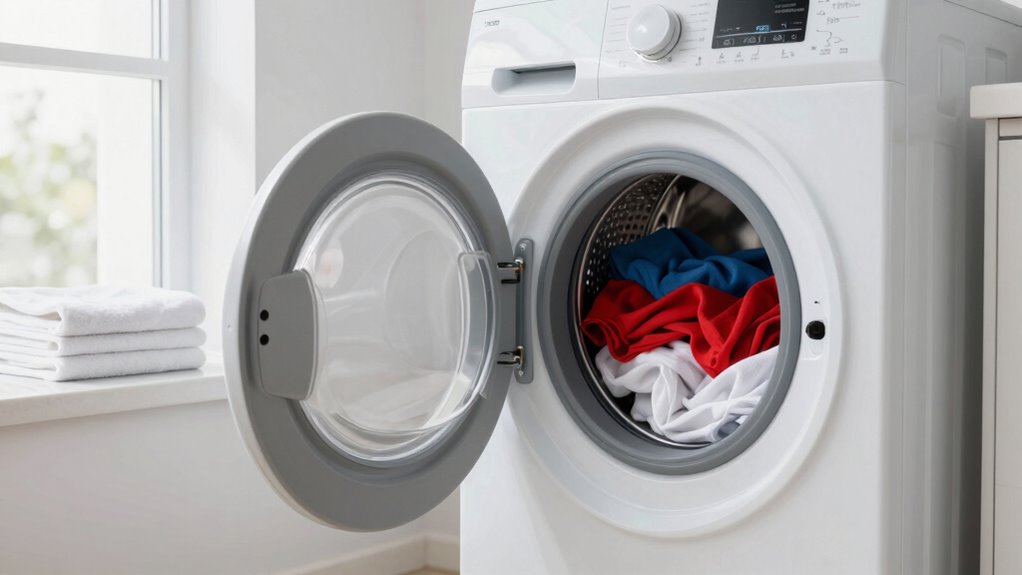
When you wash your clothes in hot water, you’re likely aiming for a deep clean, especially for heavily soiled items like towels or bedding. However, hot water can also strip away the dyes and weaken fibers over time, making clothes look faded and worn faster. Conversely, cold water is gentler and helps preserve colors, but it may not be as effective at removing oils, bacteria, or stubborn stains. To optimize your laundry results, you need to match the water temperature to your laundry load’s needs. For bright whites or heavily stained items, warm or hot water might be necessary, but for everyday clothing, cold water often suffices.
Another aspect *to think about* is fabric softeners, which many people use to keep clothes feeling fresh and soft. The effectiveness of fabric softeners can depend on water temperature. Some softeners work better in warm water because heat can help the softening agents penetrate fibers more effectively. Using fabric softeners with hot water might enhance softness, but it can also deposit residues on certain fabrics, leading to buildup or reduced breathability. On the other hand, softeners designed for cold water are formulated to disperse evenly at lower temperatures, helping you avoid residue and maintain fabric integrity. Additionally, understanding the impact of water temperature on fabric softeners can help you choose the right settings to optimize softness and fabric care.
If you consistently use the wrong water temperature, you risk damaging your clothes or reducing their lifespan. For example, washing delicate fabrics in hot water can cause shrinking or stretching, while washing sturdy fabrics in cold water might not clean them thoroughly. The key is to read garment labels carefully and adjust the water temperature accordingly. This not only protects your clothes but also ensures that your laundry routine is as effective and efficient as possible. Proper understanding of fabric care labels can help you choose the correct settings, reducing waste and prolonging the life of your wardrobe. Being aware of how water temperature interacts with different fabric types can guide you toward better laundry practices.
Additionally, understanding the impact of water temperature on biodiversity and the environment can encourage more eco-friendly laundry habits, such as washing in cold water whenever appropriate. In the end, understanding how water temperature interacts with fabric softeners and your clothing types can make a noticeable difference. It’s a simple adjustment that can extend the life of your wardrobe and improve your laundry results. The next time you load your washer, take a moment to think about temperature—it’s the setting most people get wrong but can easily get right with a little awareness.
As an affiliate, we earn on qualifying purchases.
Frequently Asked Questions
How Do I Identify the Most Common Laundry Setting Mistakes?
To identify common laundry setting mistakes, pay attention to your detergent selection and stain treatment. You might use too much or too little detergent, which can affect cleaning. Also, check if you’re treating stains properly before washing; skipping this step lets stains set. Adjust your machine settings based on fabric type and soil level. Observing how your clothes respond can help you spot errors and improve your laundry routine.
Are There Specific Fabrics That Require Special Laundry Settings?
Did you know over 60% of fabric care mishaps happen because people ignore laundry labels? Some fabrics, like silk and wool, demand delicate settings or even hand washing. Always check your laundry labels for specific instructions, as they guide you on the right settings. Using the correct laundry setting preserves fabric quality, prevents damage, and extends the lifespan of your clothes, especially for delicate materials that need gentle handling.
Can Using the Wrong Setting Damage My Clothes Permanently?
Using the wrong laundry setting can damage your clothes permanently by stressing delicate fabrics or causing shrinking. It also affects fabric care, leading to quicker wear and tear. Additionally, incorrect settings waste energy, reducing efficiency and increasing costs. Always select the right setting for your fabric type to safeguard your clothes, prolong their lifespan, and guarantee energy-efficient laundry routines that save you money and preserve fabric quality.
How Often Should I Check Laundry Settings During a Cycle?
You should check your laundry settings at least once mid-cycle, especially if you’re using delicate detergent types or water temperature options. Imagine your clothes as tiny, fragile snowflakes—you wouldn’t want them melting or shrinking, right? Monitoring guarantees you’re not accidentally washing whites in hot water or using a strong detergent on your silk. A quick peek keeps your laundry’s fashion statement flawless and saves you from costly surprises.
Do Laundry Settings Differ Between Washing Machines and Dryers?
Yes, laundry settings differ between washing machines and dryers. Washing machines focus on water temperature, cycle duration, and agitation, affecting how detergent measurement works and how thoroughly your clothes get cleaned. Dryers mainly manage heat and time, influencing drying duration. You should adjust these settings based on fabric type to optimize laundry cycle duration, ensuring your clothes aren’t over- or under-dried, which helps preserve quality and efficiency.
delicate fabric laundry detergent
As an affiliate, we earn on qualifying purchases.
As an affiliate, we earn on qualifying purchases.
Conclusion
Next time you do laundry, double-check that setting—you might be surprised how many people choose the wrong one. Using the correct setting can extend your clothes’ life and save you money. Did you know that roughly 60% of laundry mistakes stem from selecting the wrong cycle? Paying attention to those labels and settings isn’t just about cleanliness; it’s about caring for your wardrobe and your wallet. So, make a quick switch and do it right every time.
energy-efficient washing machine
As an affiliate, we earn on qualifying purchases.
As an affiliate, we earn on qualifying purchases.
As an affiliate, we earn on qualifying purchases.
NFL season / tailgating Picks
team gear
As an affiliate, we earn on qualifying purchases.