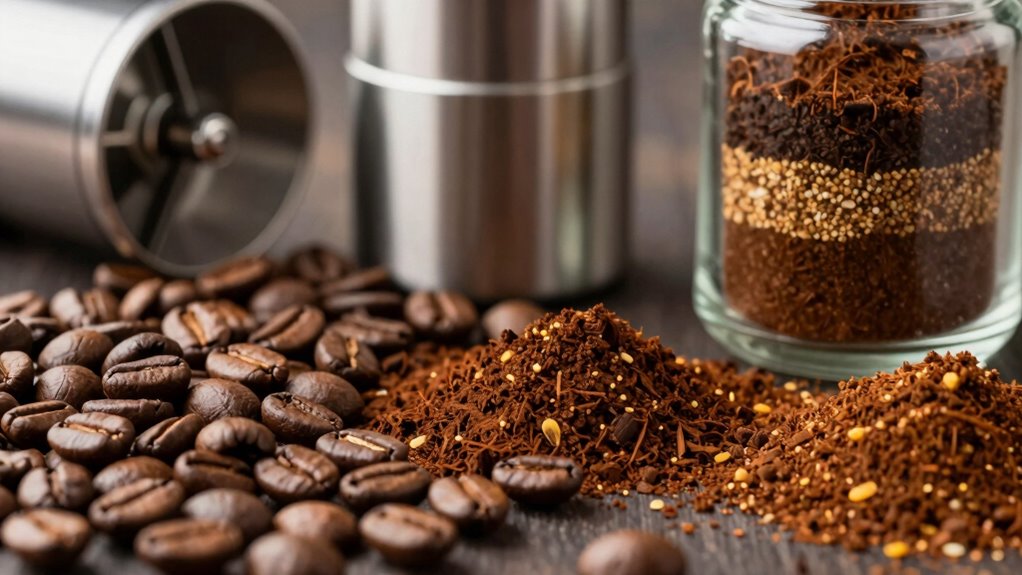

Understanding grind size is vital for brewing great coffee. Each grind size serves a specific brewing method. Coarse grinds are perfect for French press and cold brew, while medium works for drip coffee. Fine grinds suit espresso, and extra fine is essential for Turkish coffee. Adjusting grind sizes affects extraction time and flavor balance, so experimentation is key. If you want to learn the best tips for perfecting your grind size, there’s plenty more to explore!
Key Takeaways
- Grind size directly influences brewing methods, with coarse grinds suited for French press and fine grinds ideal for espresso.
- A grind size chart categorizes grinds into coarse, medium, fine, and extra fine, each tailored for specific brewing techniques.
- Finer grinds enhance quick extraction, while coarser grinds promote sweeter flavor notes through slower extraction.
- Consistent grind size is crucial for balanced flavor; use a burr grinder for uniformity over blade grinders.
- Adjusting grind size based on roast level and desired extraction time can significantly improve your coffee’s taste profile.

Cuisinart Electric Burr Coffee Grinder, 18-Position Selector, 4-18 Cups
- 18-Position Grind Selector: Adjusts from ultra-fine to extra-coarse
- Removable Bean Hopper: Easy to clean and refill
- Removable Grind Chamber: Holds 4 to 18 cups of coffee
As an affiliate, we earn on qualifying purchases.
As an affiliate, we earn on qualifying purchases.
How to Choose the Right Coffee Grind Size
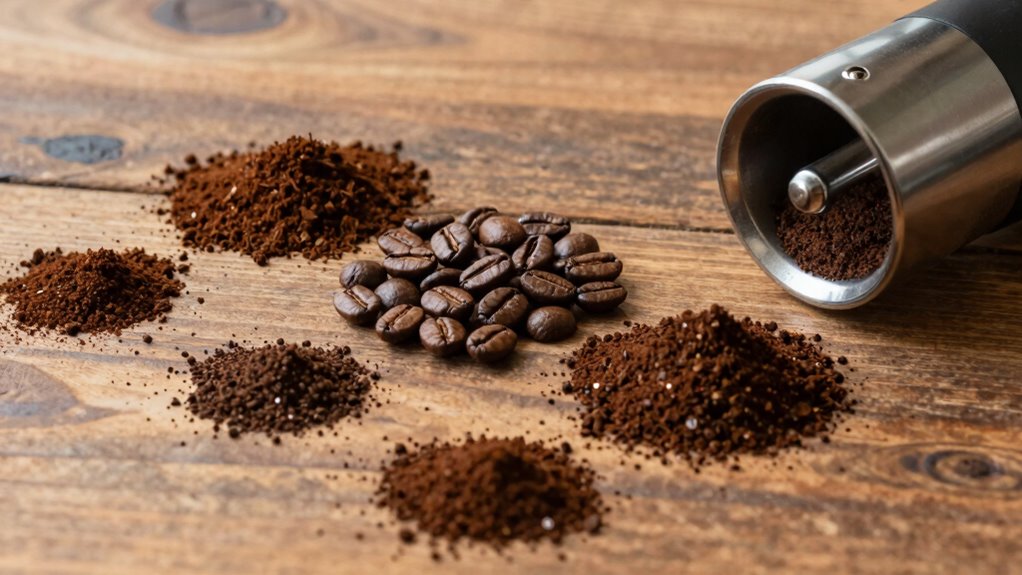
Choosing the right coffee grind size can greatly impact your brewing experience, as it affects extraction and flavor. Different coffee types require specific grind sizes to achieve the best results. For example, if you’re brewing espresso, a fine grind is essential for excellent extraction. On the other hand, a coarser grind works best for French press, allowing water to flow through the coffee grounds without over-extraction. For drip coffee, a medium grind strikes the perfect balance. Pay attention to your brewing method and experiment with grind sizes to find what suits your taste. Understanding these nuances will enhance your coffee enjoyment and help you brew the perfect cup every time. So, get grinding and discover your ideal coffee experience. Additionally, knowing the appropriate grind size for each method can prevent common issues like under-extraction or over-extraction, ensuring a consistently satisfying brew.
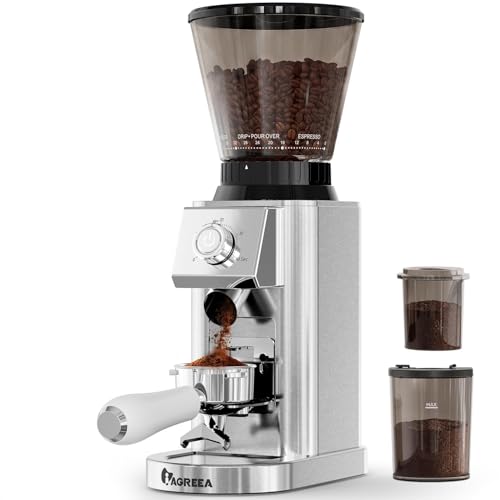
IAGREEA Coffee Grinder for Home Use, Conical Burr Espresso Grinder 48 Grind
- Precise Grind Control: 48 grind settings for any brew
- Flavor Preservation: Low-speed motor maintains coffee oils
- Professional-Grade Construction: Stainless steel burr for consistent results
As an affiliate, we earn on qualifying purchases.
As an affiliate, we earn on qualifying purchases.
Impact of Grind Size on Flavor Extraction
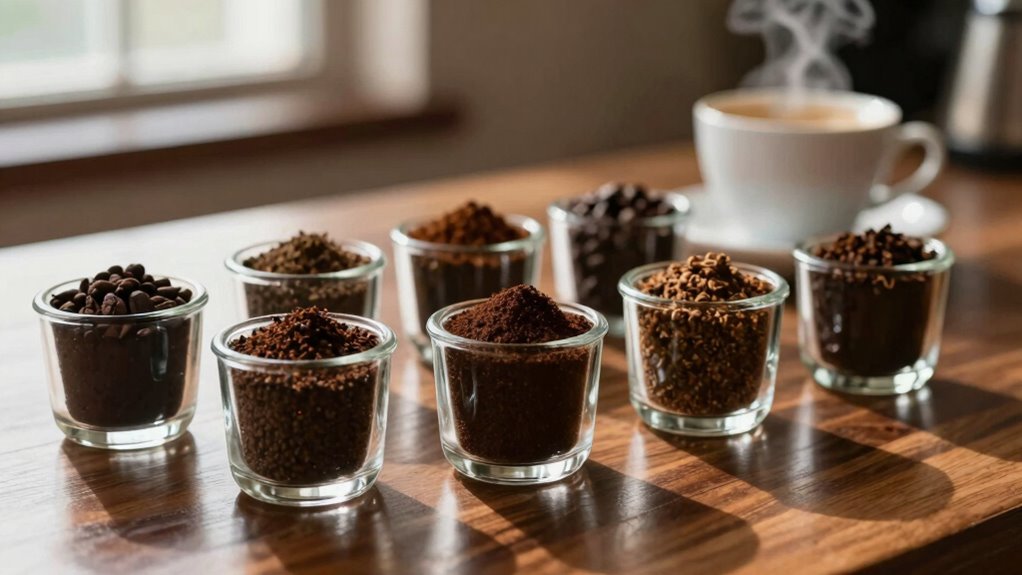
When you grind coffee, the size of the particles plays a crucial role in how flavors are extracted during brewing. Finer grinds increase the surface area, leading to quicker extraction times. This can enhance flavors but may also overpower the balance, resulting in bitterness. On the other hand, coarser grinds slow down extraction, which can bring out sweeter notes, but risk under-extraction, leaving your brew tasting flat. The key is finding the right grind size that maintains flavor balance while allowing for ideal extraction time. Experimenting with different grinds helps you discover your preferred taste profile, ensuring each cup of coffee delivers the complexity and richness you desire. So, adjust your grind size and enjoy the flavorful rewards!

Veken French Press Coffee Maker, No Plastic Touching Cafe,34oz 1 L Cafetera
- Plastic-Free Brewing Surfaces: Made with stainless steel and silicone
- High Borosilicate Glass Carafe: Resists thermal shock up to 360°F
- Versatile for Hot and Cold Drinks: Suitable for coffee, cold brew, and tea
As an affiliate, we earn on qualifying purchases.
As an affiliate, we earn on qualifying purchases.
The Coffee Grind Size Chart: Your Guide to Brewing
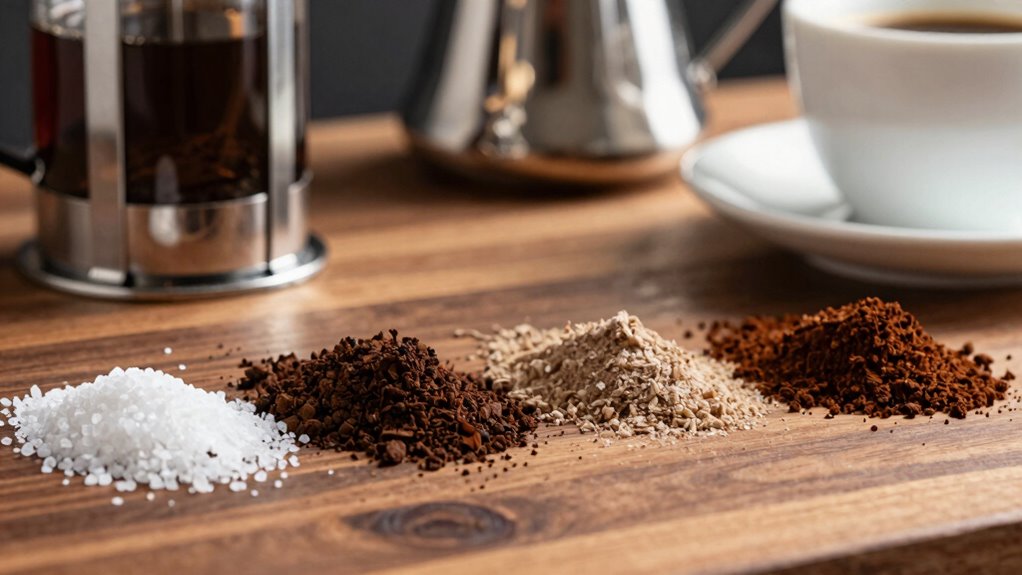
Understanding grind size is essential for achieving the perfect brew. The right coffee grind can enhance your brewing techniques and elevate your coffee experience. Here’s a quick guide to help you choose the right grind size:
- Coarse: Best for French press and cold brew.
- Medium-Coarse: Ideal for pour-over and siphon methods.
- Medium: Works well with drip coffee makers.
- Fine: Perfect for espresso machines and AeroPress.
- Extra Fine: Suitable for Turkish coffee.

Professional Coffee Grind Size Chart 304 Stainless Steel Laser-Engraved Reference Card for 8 Brewing Methods 16-Level Comparison Guide (Silver, 10cm*10cm)
- Comprehensive brewing method guide: Covers 8 brewing styles with micron details
- 16-level grind comparison: Visual guide from 200μm to 1600μm
- Durable stainless steel construction: Laser-engraved for longevity and clarity
As an affiliate, we earn on qualifying purchases.
As an affiliate, we earn on qualifying purchases.
When to Use Coarse Grind
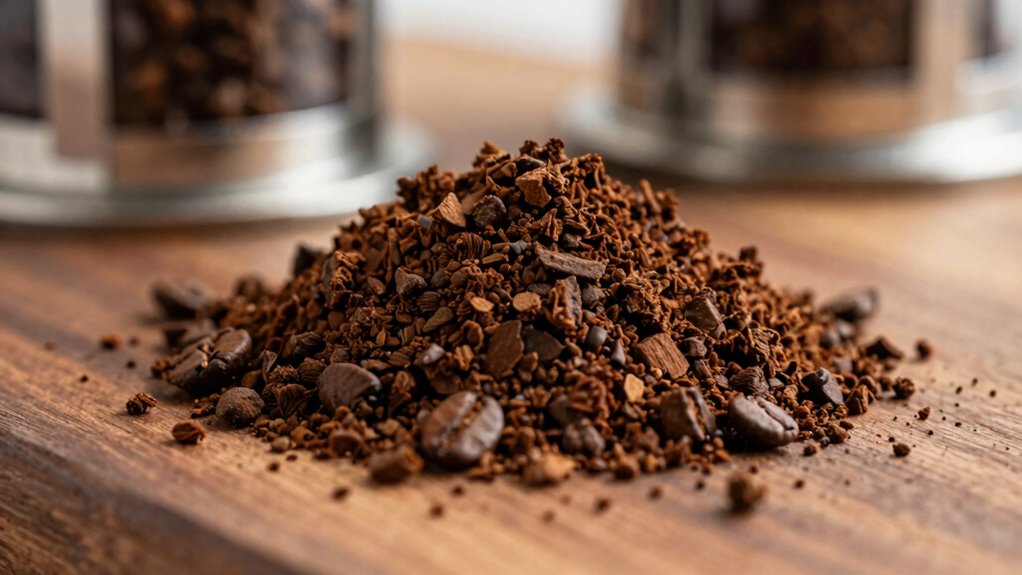
Coarse grind is your go-to choice for brewing methods that require longer steeping times, like French press and cold brew. Using a coarse grind enhances extraction, allowing you to savor the full flavor of your coffee without bitterness. Let’s look at some coarse grind methods and their benefits:
| Method | Steeping Time | Coarse Grind Benefits |
|---|---|---|
| French Press | 4 minutes | Rich flavor, less bitterness |
| Cold Brew | 12-24 hours | Smooth, mellow taste |
| Percolator | 5-10 minutes | Balanced extraction |
| Nitro Coffee | 12-24 hours | Creamy texture, enhanced aroma |
When you choose coarse grind methods, you’re set for a delightful coffee experience! Extraction process plays a key role in achieving the perfect flavor profile.
Medium Grind Size: The Versatile Choice for Brewing
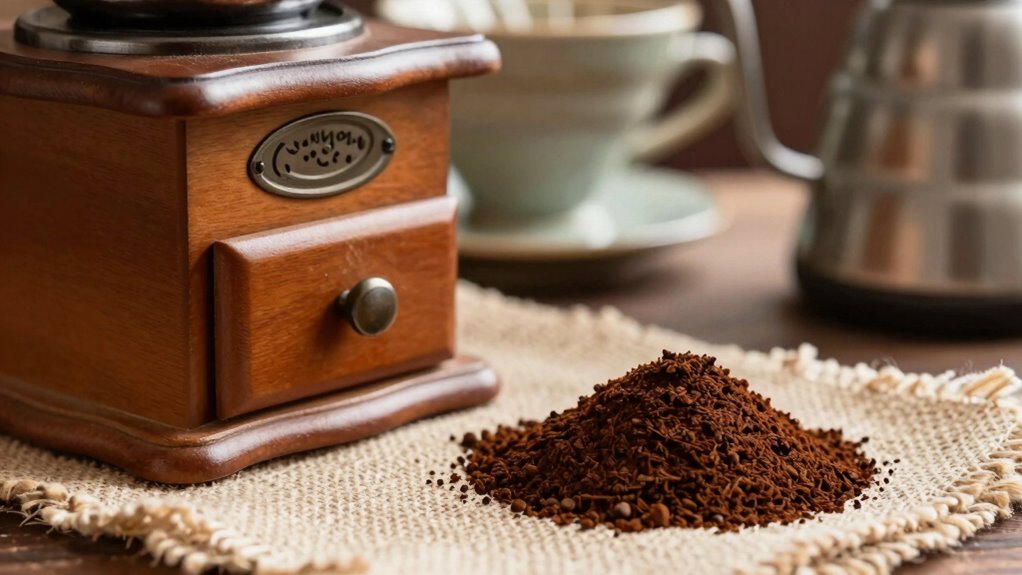
After enjoying the rich flavors from coarse grind methods, it’s time to explore the medium grind size, which offers a versatile option for various brewing techniques. Its medium grind versatility makes it a favorite among coffee lovers, allowing you to experiment with different brewing styles. Here are some common medium grind applications:
- Drip coffee makers: Perfect for extracting balanced flavors.
- Pour-over: Provides ideal extraction for a clean cup.
- Aeropress: Delivers a smooth and rich brew.
- French press: Ideal for a lighter body without bitterness.
- Siphon brewers: Enhances aromatic qualities and complexity.
Using a medium grind, you can enjoy the best of both worlds—rich taste and adaptability for multiple brewing methods. Immerse yourself in the world of medium grind coffee! Understanding grind size is crucial for achieving consistent results across different brewing techniques.
Fine Grind Size: Ideal for Espresso and Moka Pots
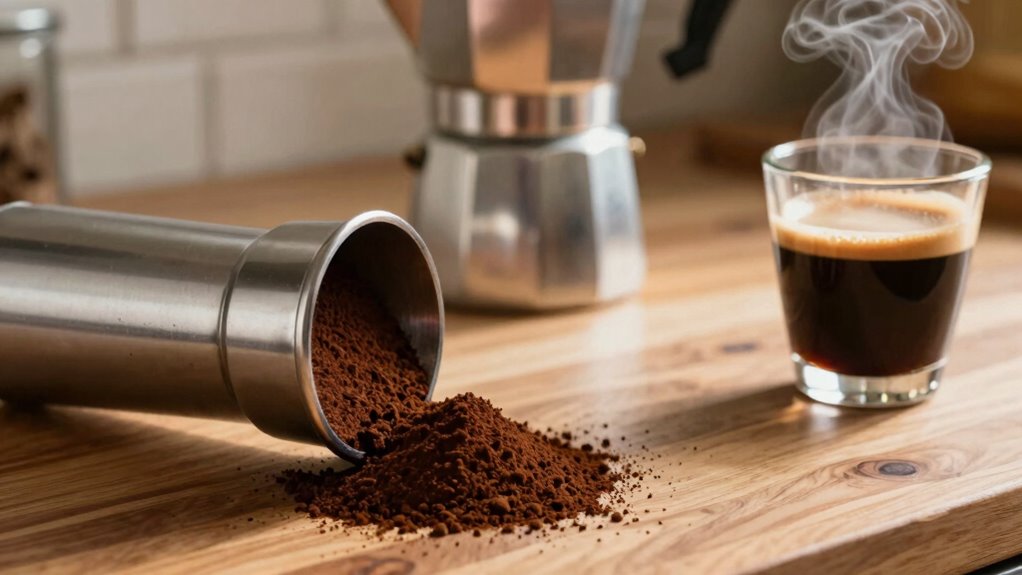
When you’re looking to brew a bold and intense cup of coffee, a fine grind size is your best bet, especially for espresso and Moka pots. This grind size maximizes the surface area of the coffee grounds, allowing for peak espresso extraction. With a fine grind, water passes through the coffee more efficiently, resulting in a concentrated and rich flavor profile. You’ll enjoy the fine grind benefits, such as enhanced aroma and a thicker crema, which are essential for a quality espresso shot. For Moka pots, the fine grind guarantees that the water extracts all the flavors quickly, giving you that robust taste you crave. So, when aiming for intensity, fine grind is the way to go!
Mastering Turkish Coffee With Extra Fine Grind Size
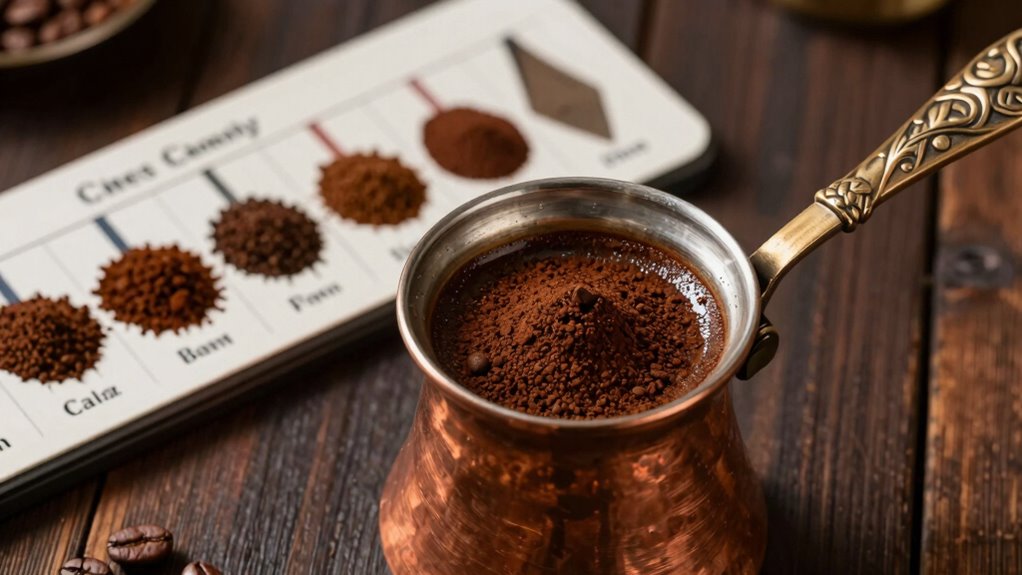
To truly master the art of Turkish coffee, you’ll need to embrace an extra fine grind size that sets this unique brewing method apart. This grind size is essential for achieving the rich, bold flavors characteristic of traditional Turkish techniques. Here’s what you should keep in mind:
- Use a high-quality coffee bean for the best flavor extraction.
- Employ a burr grinder for a consistent extra fine grind.
- Make sure the coffee grounds resemble powdered sugar for ideal results.
- Pay attention to the water temperature; it should be just below boiling.
- Experiment with the brewing time to perfect your cup.
Essential Tips for Perfectly Grinding Coffee at Home
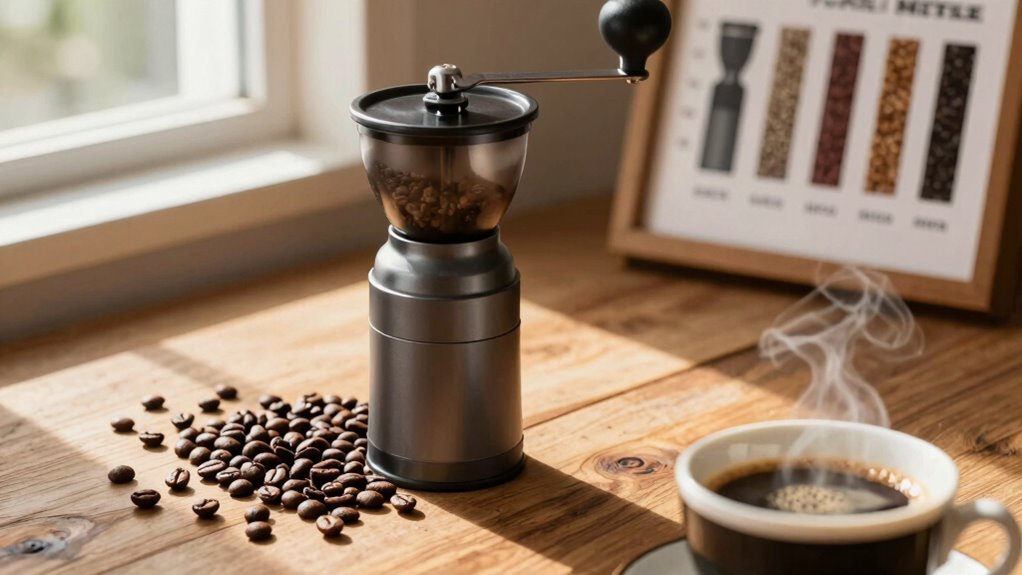
Although grinding coffee at home might seem straightforward, achieving the perfect grind size requires attention to detail and a few essential techniques. Start by selecting the right grinder; burr grinders usually offer better grind consistency than blade grinders. Aim for a uniform texture to guarantee even extraction and enhance flavor. Adjust your grind size based on your brewing techniques—finer for espresso and coarser for French press. Always measure your coffee beans to maintain consistency in your brews. Experiment with grind times, as they can affect the results. Regular grinder maintenance is crucial for consistent performance and flavor. Finally, clean your grinder regularly to avoid old coffee residue affecting the taste. With these tips, you’ll be well on your way to brewing exceptional coffee right at home!
How to Experiment With Grind Size for Personalized Flavor
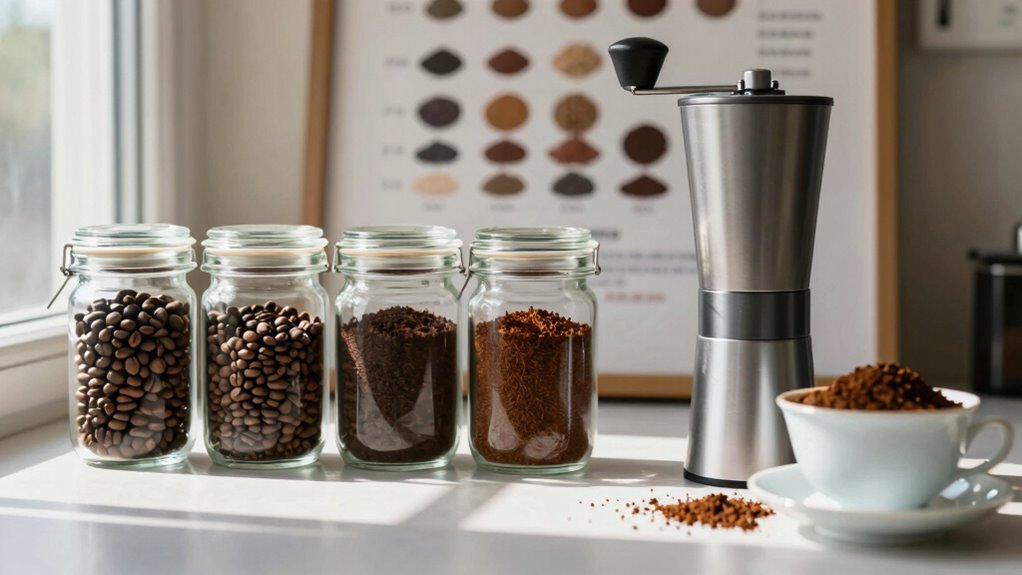
As you immerse yourself in the world of coffee brewing, experimenting with grind size can reveal a new level of flavor tailored to your taste. To get started with your grind experimentation, consider the following tips:
- Start Small: Adjust your grind size slightly to see how it affects flavor profiles.
- Take Notes: Document each change and its impact on taste for future reference.
- Brew Multiple Methods: Try different brewing techniques to explore various flavor nuances.
- Taste With Friends: Share your brews and gather feedback; it’s a fun way to learn!
- Be Patient: Finding your perfect grind size may take time, so enjoy the journey.
- Understand Extraction: Recognizing how extraction and grind size influence flavor can help you fine-tune your brewing process.
Common Mistakes to Avoid With Grind Size?
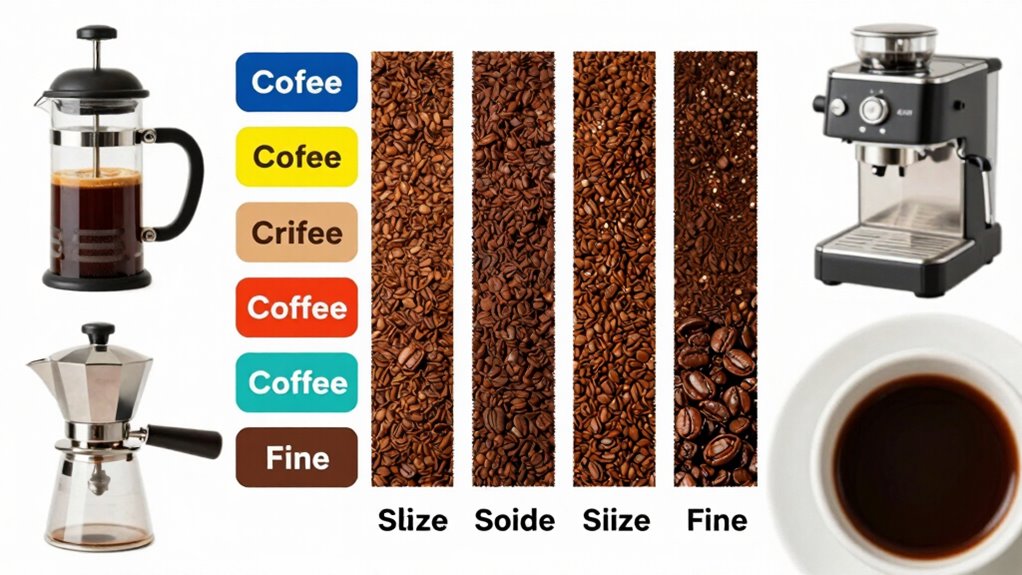
When adjusting your grind size, it’s easy to overlook key factors that can affect your brew. You might ignore the type of coffee you’re using, create an inconsistent grind, or not consider your brewing method. Avoiding these common mistakes will help you get the best flavor from your coffee.
Ignoring Coffee Type
Ignoring the type of coffee you’re using can lead to significant mistakes in grind size, which ultimately affects the flavor of your brew. Each coffee type demands a specific grind consistency to guarantee the best flavor profile. Here are some common pitfalls to avoid:
- Using the same grind for all coffee types
- Overlooking brewing methods that require different grinds
- Neglecting how roast level influences grind size
- Not adjusting grind size based on extraction time
- Forgetting that fresh beans may require different grind settings
Inconsistent Grind Size
Inconsistent grind size can drastically affect your coffee’s flavor and extraction. When you don’t achieve grind consistency, you end up with a mix of coarse and fine particles. This unevenness can lead to over-extraction of the fine particles and under-extraction of the coarse ones, resulting in a muddled taste. To avoid this, focus on creating a uniform particle size. Invest in a quality grinder that allows you to control grind settings and guarantees a consistent result. If you notice clumps or inconsistent sizes after grinding, adjust your technique or grinder. Remember, achieving the right grind consistency is vital for a balanced cup, so take the time to perfect your grind before brewing. Your flavor will thank you!
Overlooking Brew Method
Many coffee enthusiasts make the mistake of overlooking the brew method when fine-tuning their grind size. Each method requires specific grind adjustments to achieve the best flavor extraction. Here are some common brew methods and their ideal grind sizes:
- Espresso: Fine grind for quick extraction.
- Pour-over: Medium-fine grind for balanced flavor.
- French Press: Coarse grind to prevent over-extraction.
- AeroPress: Medium grind for versatility.
- Cold Brew: Extra coarse grind for a smooth taste.
Frequently Asked Questions
Can Grind Size Affect Caffeine Content in Coffee?
Yes, grind size can affect caffeine content in coffee. When you use a finer grind, you increase the surface area, leading to more efficient caffeine extraction during brewing. However, grind uniformity is essential; inconsistent sizes can result in uneven extraction, affecting flavor and caffeine levels. If you aim for a balanced cup, focus on achieving a consistent grind size that matches your brewing method to optimize caffeine content and overall taste.
How Does Humidity Impact Coffee Grind Size?
Humidity’s like a sneaky thief, stealing your grind consistency. When the air’s moist, coffee beans absorb that moisture, causing them to clump together. This clumping makes it harder to achieve a uniform grind size. You’ll notice your brew may taste off or lack depth due to uneven extraction. To combat this, you can adjust your grind size or store your beans in a cool, dry place, preserving that perfect flavor you crave.
What Equipment Is Best for Achieving Precise Grind Sizes?
To achieve precise grind sizes, you should use burr grinders. They provide consistent particle size and allow for fine adjustments, making them ideal for various brewing methods. Blade grinders, while more affordable, tend to produce uneven grinds, which can affect your coffee’s flavor. If you’re serious about your coffee, investing in a quality burr grinder will elevate your brewing experience. You’ll notice the difference in taste and aroma right away!
How Often Should I Clean My Grinder for Optimal Performance?
You should clean your grinder every few weeks for peak performance. Regular grinder maintenance helps prevent oil and residue buildup, ensuring consistent grind sizes. If you use it daily, a bi-weekly cleaning’s ideal. For those who grind less often, monthly cleaning works well. Just remember to check for any clogs or buildup after heavy use. Keeping your grinder clean not only enhances flavor but also extends its lifespan. Stay on top of it!
Can I Use a Blender to Grind Coffee Beans?
Yes, you can use a blender to grind coffee beans, but it may not be the best choice for consistent results. While a blender offers some efficiency, it often produces uneven coffee texture, which can affect your brew. If you’re after a specific grind size for ideal flavor, consider investing in a dedicated coffee grinder. However, in a pinch, a blender can suffice for a quick, coarse grind. Just keep an eye on it!
Conclusion
Now that you’ve got a handle on grind sizes, remember that “the proof of the pudding is in the eating.” Experimenting with different grinds can lead you to that perfect cup of coffee tailored to your taste. Don’t hesitate to try coarser or finer textures based on your brewing method. With a bit of practice and the right grind, you’ll reveal rich flavors and aromas that elevate your coffee experience. Enjoy the journey!