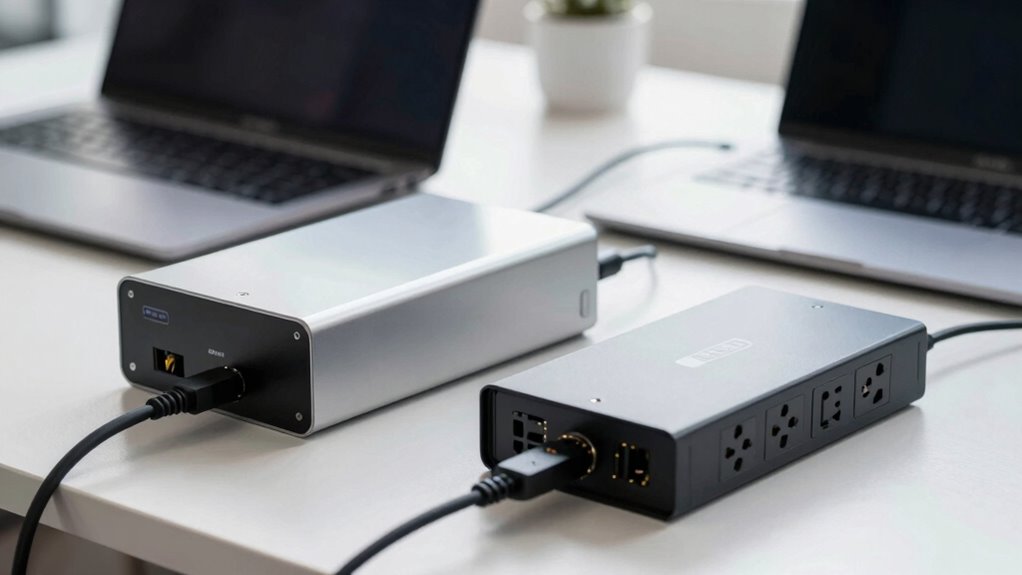

When choosing between a UPS and a surge protector, it’s important to understand their main differences. A UPS provides backup power during outages to keep your devices running, while a surge protector shields against voltage spikes but won’t keep devices powered on during blackouts. Knowing your equipment needs and how long they require power can help you decide. Stay tuned to learn more about the benefits and maintenance tips for each protection device.

Get the little things that make your day delivered free with Prime
- Fast, free delivery on millions of items
- Prime Video, Amazon Music and more included
- Member-only deals all year
Key Takeaways
- UPS provides backup power during outages, while surge protectors protect against voltage spikes without offering any power backup.
- Surge protectors feature mechanisms that prevent voltage surges but do not maintain device operation during power loss.
- Selecting the right device depends on the specific power needs and sensitivity of your electronic devices to interruptions.
- Regular maintenance, including battery tests for UPS and inspecting cords for wear, is crucial for optimal performance and safety.
- Understanding the distinct roles of UPS and surge protectors aids in making informed decisions for device protection.
Uninterruptible Power Supply UPS
As an affiliate, we earn on qualifying purchases.
As an affiliate, we earn on qualifying purchases.
Understanding UPS and Surge Protectors: Core Definitions
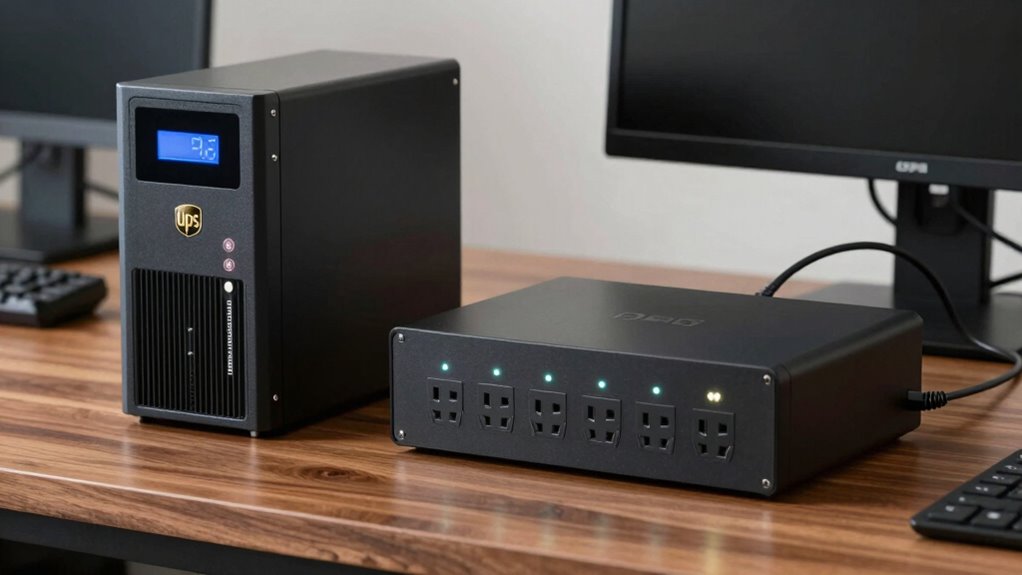
When it comes to protecting your electronic devices, understanding the difference between a UPS (Uninterruptible Power Supply) and a surge protector is essential. A UPS provides backup power during outages, allowing you to save your work and safely shut down devices. This system enhances power management by ensuring your devices remain operational even when the main power source fails. In contrast, a surge protector shields your electronics from voltage spikes, preventing damage from surges caused by lightning or other electrical issues. While both devices contribute to energy efficiency, they serve different purposes. A UPS offers critical support in emergencies, whereas a surge protector focuses on safeguarding against electrical disturbances. Choosing the right one depends on your specific needs for device protection.
As an affiliate, we earn on qualifying purchases.
What Sets UPS and Surge Protectors Apart?
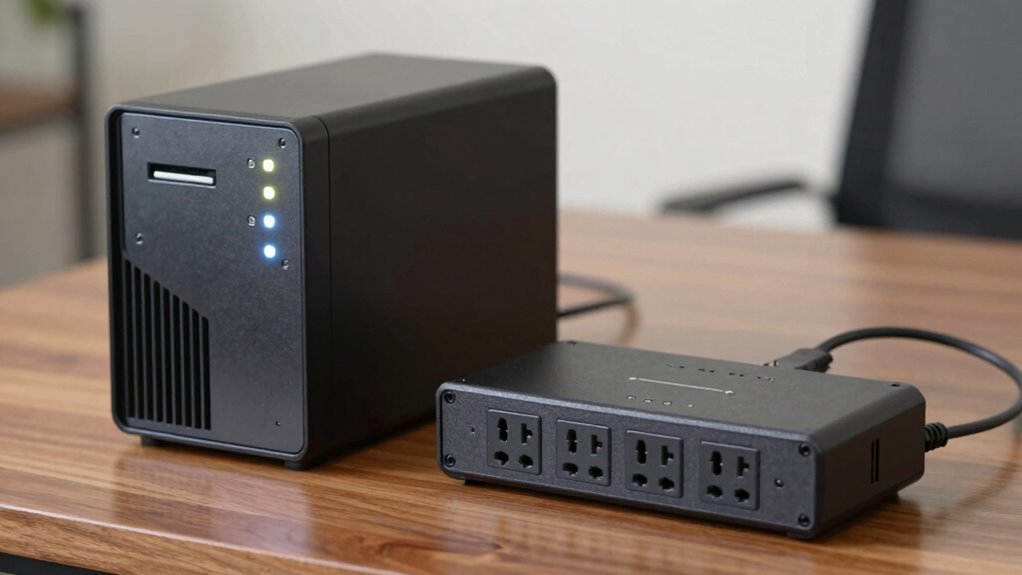
While both UPS systems and surge protectors aim to safeguard your electronics, they differ fundamentally in functionality and design. UPS features provide battery backup during power outages, ensuring your devices continue running smoothly. This is essential for systems requiring uninterrupted power. In contrast, surge protectors primarily defend against voltage spikes, protecting your devices from damage but offering no backup power. When you look at surge protector comparisons, you’ll notice they often have multiple outlets and may include additional features like indicator lights. However, they can’t replace the power supply when it fails. Ultimately, if you’re looking for extensive protection that includes battery backup, a UPS is your best bet; if you just need surge protection, a surge protector will suffice.
battery backup UPS for computers
As an affiliate, we earn on qualifying purchases.
As an affiliate, we earn on qualifying purchases.
How Surge Protectors Safeguard Your Devices
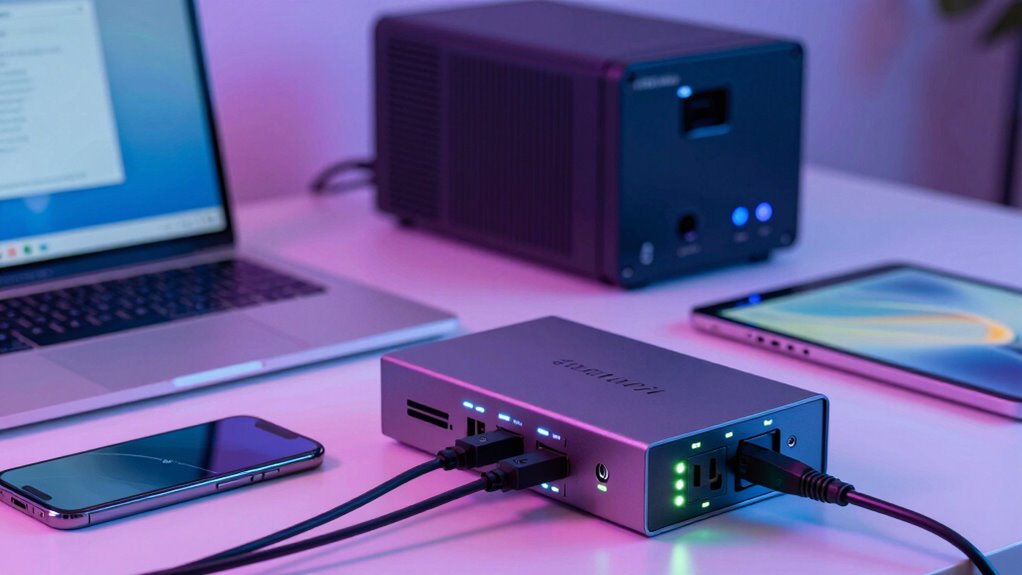
Surge protectors play an essential role in keeping your devices safe from unexpected voltage spikes. By absorbing excess energy, they not only extend your equipment’s lifespan but also help prevent potential fire hazards. Understanding how these protective devices work can save you from costly repairs and replacements.
Voltage Spike Protection
Because electrical surges can strike unexpectedly, having a surge protector is essential for safeguarding your devices. These devices provide vital voltage regulation and surge suppression, ensuring your electronics remain safe from damaging spikes. Here’s how they work:
- Voltage Clamping: Surge protectors limit excessive voltage, redirecting harmful surges away from your equipment.
- Energy Absorption: They absorb excess energy during a spike, preventing it from reaching your valuable devices. Protective components are crucial for the effectiveness of this process.
- Indicator Lights: Many surge protectors feature LED indicators, showing when they’re functioning properly or if they’ve reached their maximum capacity.
- Durable Construction: High-quality surge protectors are built to withstand repeated surges and prolong their protective lifespan, especially important when protecting sensitive electronic components.
Equipment Longevity Assurance
Protecting your devices from voltage spikes is just the beginning; surge protectors also play an important role in ensuring the longevity of your electronics. By absorbing excess voltage, these devices prevent wear and tear that can shorten your equipment’s lifespan. Regular equipment maintenance is essential, and using a surge protector is a smart move to keep your devices running smoothly. Additionally, choosing the right home cleaning tech can help minimize dust and debris that may otherwise impact your electronics’ performance. Properly maintaining your environment can also reduce the accumulation of microplastics in dust, which may affect sensitive electronic components. For optimal equipment longevity, consider these tips: avoid overloading your power strips, unplug devices during storms, and keep your surge protector in a cool, dry place. Durability of security systems is also enhanced when devices are properly maintained and protected. Implementing preventive measures for electrical safety can further safeguard your equipment from unexpected power surges. These simple steps, paired with a reliable surge protector, can greatly enhance the durability of your electronics, ensuring they serve you well for years to come.
Fire Hazard Prevention
While many people focus on the performance benefits of surge protectors, they also play an essential role in fire hazard prevention. By managing electrical hazards, surge protectors help safeguard your home and devices. Here’s how they contribute to fire safety:
- Voltage Regulation: They limit voltage spikes, reducing the risk of overheating wires and devices, which can lead to fires.
- Overload Protection: Surge protectors can detect excessive current flow, automatically shutting down to prevent potential ignition sources.
- Device Isolation: By keeping sensitive electronics separate from direct electrical lines, they minimize the chance of short circuits that could trigger a fire.
Incorporating surge protectors in your setup isn’t just smart; it’s an important step toward ensuring fire safety and protecting your valuable devices.
surge protector with multiple outlets
As an affiliate, we earn on qualifying purchases.
As an affiliate, we earn on qualifying purchases.
When to Use a UPS: Key Benefits
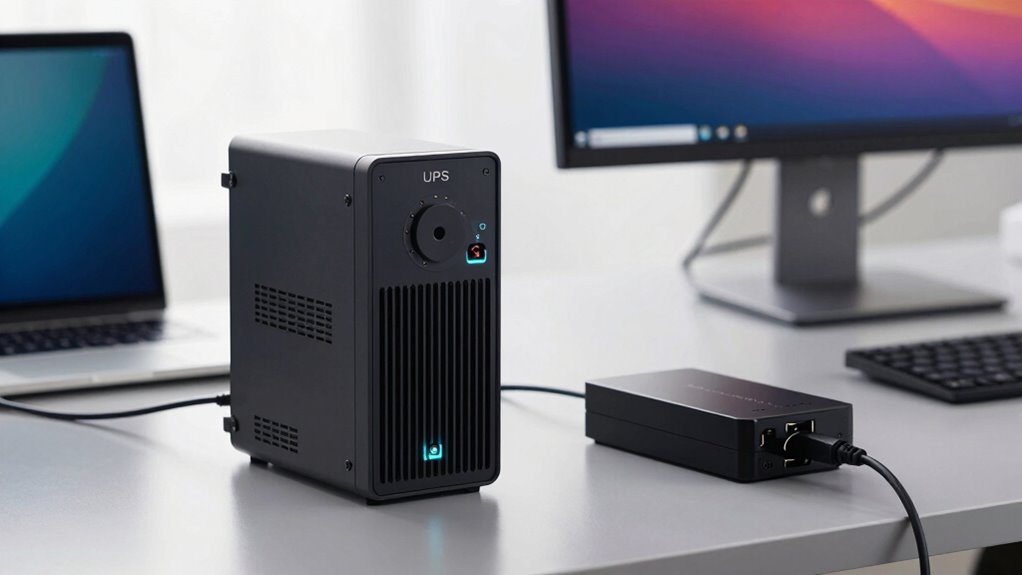
When unexpected power outages or surges threaten your devices, having a UPS (Uninterruptible Power Supply) can be a game changer. This device not only provides backup power but also protects against voltage fluctuations. If you’re working on important tasks, a UPS guarantees you won’t face sudden interruptions, helping you avoid data loss. Imagine being in the middle of a project when the lights go out—without a UPS, all your hard work could vanish in an instant. Additionally, a UPS can give you enough time to save your work and safely shut down your devices. Investing in a UPS is a smart choice, especially if you rely on your electronics for essential activities or sensitive data storage. Being aware of tax planning strategies can also help you optimize your investments in technology and security devices like UPS systems. Moreover, understanding home automation can further enhance your device protection by integrating your backup power solutions with other smart home safety features. Proper power management not only prolongs your equipment’s lifespan but also ensures consistent performance during power fluctuations.
How to Choose Between a UPS and Surge Protector
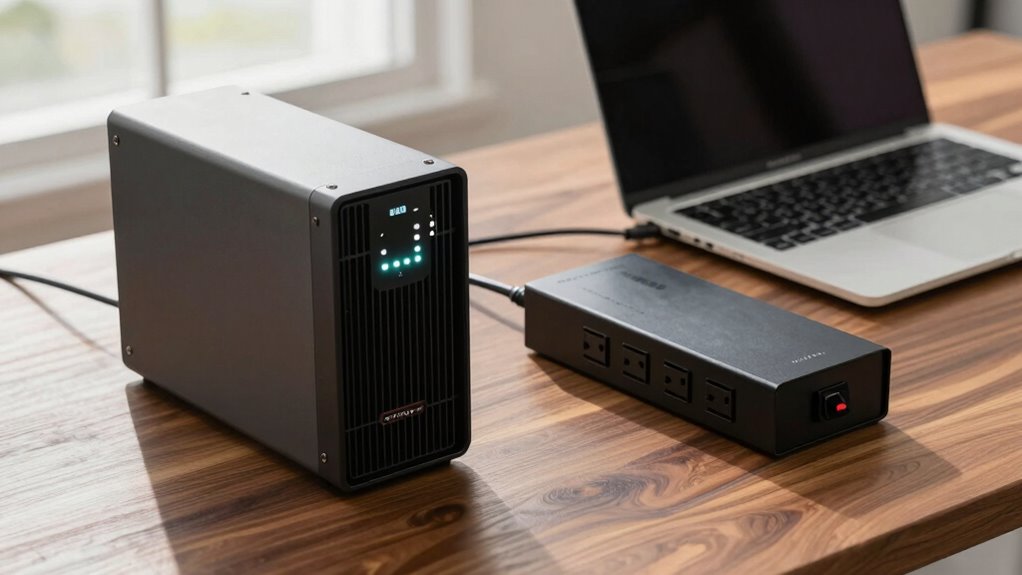
When choosing between a UPS and a surge protector, start by evaluating your power needs. Consider the level of equipment protection you require, as each option serves a different purpose. Understanding these factors will help you make the right decision for your devices. Additionally, look into weatherproof tool storage if you need to protect your equipment from environmental hazards.
Power Needs Assessment
How do you determine whether a UPS or a surge protector is right for your needs? Start by evaluating your power consumption and device compatibility. Here are three key considerations:
- Identify Critical Devices: List the devices you want to protect. If they’re sensitive to power interruptions, a UPS is a better option.
- Evaluate Power Needs: Calculate the total wattage required by your devices. A UPS provides backup power during outages, while a surge protector only shields against voltage spikes.
- Consider Usage Duration: How long do you need your devices to run during a power outage? If you need extended runtime, a UPS is essential.
Equipment Protection Levels
After evaluating your power needs, the next step is understanding the level of protection your equipment requires. Consider the durability of your devices and the potential risks they face. If your equipment is sensitive and expensive, opting for a UPS might be wise, as it provides power during outages and protects against voltage fluctuations. On the other hand, if you’re mainly concerned about surges from lightning or electrical faults, a surge protector could suffice. Always check the protection standards of each device; higher ratings indicate better protection. Ultimately, choosing between a UPS and a surge protector hinges on your equipment’s vulnerability and the environment it operates in. Make an informed decision to safeguard your investment effectively.
Debunking Myths: What You Should Know About UPS and Surge Protectors
While many people believe that uninterruptible power supplies (UPS) and surge protectors serve the same purpose, understanding their distinct functions is essential for effective power management. Myth debunking is vital in clearing up common device misconceptions. Here’s what you should know:
- Power Backup: A UPS provides battery backup during outages, while a surge protector only shields devices from voltage spikes.
- Runtime: UPS systems typically offer limited runtime, allowing you to save your work, whereas surge protectors offer no power during outages.
- Protection Level: Surge protectors defend against surges, but they won’t safeguard your devices from a complete power loss.
Knowing these differences helps you choose the right device for your needs, ensuring your equipment stays safe and operational.
Maintenance Tips for Your Power Protection Devices

To keep your UPS and surge protectors functioning at their best, regular maintenance is key. Start by checking your devices every three to six months, depending on your maintenance frequency. Inspect the power cords for any signs of wear and guarantee all connections are secure. Test the functionality of your UPS by running a battery test to confirm it’s holding a charge. Also, verify device compatibility; confirm your equipment is suitable for the protection offered. Replace batteries in your UPS as needed, usually every three to five years. Dust off your devices regularly to prevent overheating. Pay attention to air purifier maintenance dos and don’ts to ensure your environment remains safe and clean. Regularly review appliance power consumption details to identify energy-saving opportunities and prevent overloads. Additionally, consider refrigerant types when assessing your HVAC system’s efficiency and environmental impact. Properly maintaining your power backup devices and understanding backup generator safety protocols can significantly enhance your overall safety and reliability. Performing periodic power quality checks can help identify potential issues before they cause system failures. By following these tips, you’ll extend the lifespan of your power protection devices and safeguard your electronics more effectively.
Frequently Asked Questions
Can Surge Protectors Be Used With All Electronic Devices?
Surge protectors can be used with most electronic devices, but you need to take into account surge protection compatibility and device sensitivity. While general appliances usually work well, sensitive electronics like computers or audio equipment may require higher-grade surge protectors. Always check the specifications of both your device and the surge protector to verify they’re a good match. This way, you can protect your valuable electronics without any risk of damage.
How Long Do UPS Batteries Typically Last?
UPS batteries typically last between 3 to 5 years, which is just long enough for you to forget about them until they’re dead. To avoid that unfortunate surprise, you should follow some maintenance tips. Regularly check the battery’s charge and perform tests to make certain it’s functioning well. Keeping the UPS in a cool, dry place also helps extend its battery lifespan. After all, you wouldn’t want your backup to back out on you, right?
Do Surge Protectors Provide Battery Backup?
No, surge protectors don’t provide battery backup. Their primary function is to protect your devices from voltage spikes and surges. While they’re essential for safeguarding your electronics, they won’t keep them running during a power outage. If battery backup’s important for you, consider investing in an uninterruptible power supply (UPS), which offers both surge protection and the ability to keep your devices powered when the lights go out.
Can I Connect Multiple Devices to One UPS?
Sure, you can connect multiple devices to one UPS—if you enjoy playing power management Tetris. Just make sure your devices are compatible. Overloading it might turn your UPS into a glorified paperweight. So, while you juggle your tech gadgets, remember to check the total wattage; otherwise, you might find yourself in a dark room with all your devices sulking. Power wisely, and keep your tech happy!
Are There Specific Brands Recommended for UPS and Surge Protectors?
Yes, there are specific brands you should consider for UPS and surge protectors. For UPS, brands like APC and CyberPower often top consumer reviews due to their reliability and performance. When it comes to surge protectors, Tripp Lite and Belkin frequently receive high marks in brand comparisons. Always check the latest consumer reviews to guarantee you’re getting the best protection for your devices. Your equipment deserves trustworthy brands!
Conclusion
To summarize, whether you choose a UPS or a surge protector, your devices deserve the best protection. Some might think surge protectors are good enough, but without a UPS, you miss out on critical backup power during outages. A UPS not only guards against surges but also keeps your systems running when the lights go out. Investing in the right device guarantees your tech stays safe and operational, giving you peace of mind in any situation.
Fall Picks
fall essentials
As an affiliate, we earn on qualifying purchases.