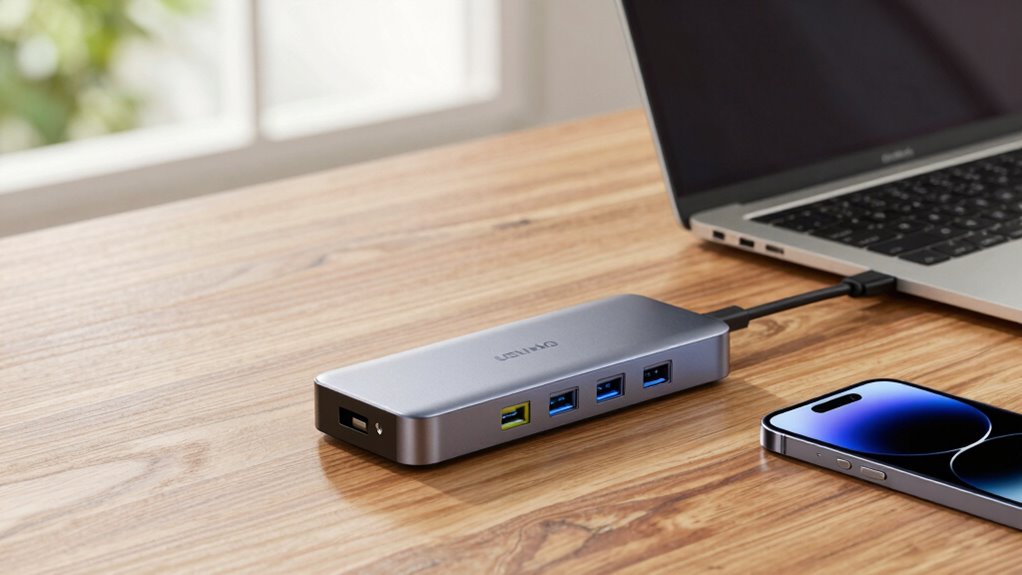

Choosing the right USB-C docking station can simplify your workspace and boost your productivity. It’s crucial to understand USB-C technology, assess your connectivity needs, and recognize key features like power delivery and compatibility. Don’t fall for common myths; not all docks support video output or are interchangeable. Consider whether a multi-port or single-port station fits your setup and budget. Stick around, and you’ll discover even more tips to make an informed choice!
Key Takeaways
- Assess your current and future device connectivity needs to ensure compatibility with the docking station you choose.
- Understand that not all USB-C ports support video output; verify compatibility before purchasing a dock.
- Multi-port docking stations offer greater flexibility, while single-port options may suit minimalistic setups.
- Evaluate the build quality and warranty of the docking station to ensure durability and support over time.
- Compare features and prices to find a docking station that meets your needs without overspending.

Anker Laptop Docking Station Dual Monitor, 8-in-1 USB C Hub with 4K HDMI
- Anker Brand Advantage: Trusted by over 50 million users
- Comprehensive Connectivity: USB C PD-IN, USB-A, HDMI, Ethernet, SD card reader
- Dual 4K HDMI Support: Stream or mirror in 4K@60Hz or 30Hz
As an affiliate, we earn on qualifying purchases.
As an affiliate, we earn on qualifying purchases.
Why You Need a USB-C Docking Station

In today’s tech-driven world, a USB-C docking station is a must-have for anyone looking to streamline their workspace. The USB C advantages are numerous, offering faster data transfer and universal compatibility that makes connecting devices a breeze. With just one cable, you can connect multiple peripherals, reducing clutter and simplifying your setup.
Docking station benefits extend beyond convenience; they also enhance productivity. You can easily switch between different devices, like laptops and tablets, without constantly plugging and unplugging cables. Plus, many docking stations support dual monitors, allowing for a more efficient multitasking experience. By investing in a USB-C docking station, you’ll transform your workspace into a more organized and functional environment, ultimately boosting your overall efficiency.
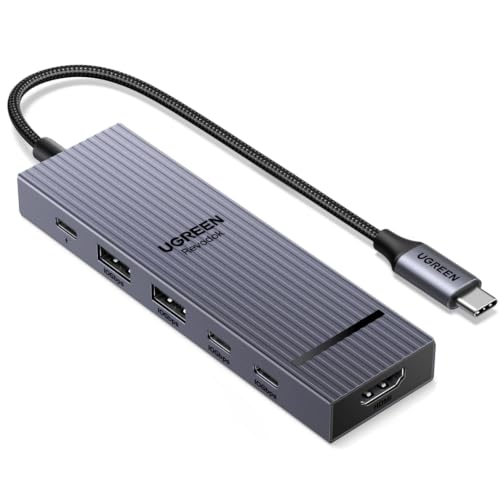
UGREEN Revodok Pro USB-C Hub 6 in 1 10Gbps 4K 60Hz HDMI
- Number of Ports: 6-in-1 USB-C Hub
- Data Transfer Speed: 10Gbps USB-C and USB-A ports
- Video Output: 4K 60Hz HDMI
As an affiliate, we earn on qualifying purchases.
As an affiliate, we earn on qualifying purchases.
Understanding USB-C Technology: Key Concepts Explained
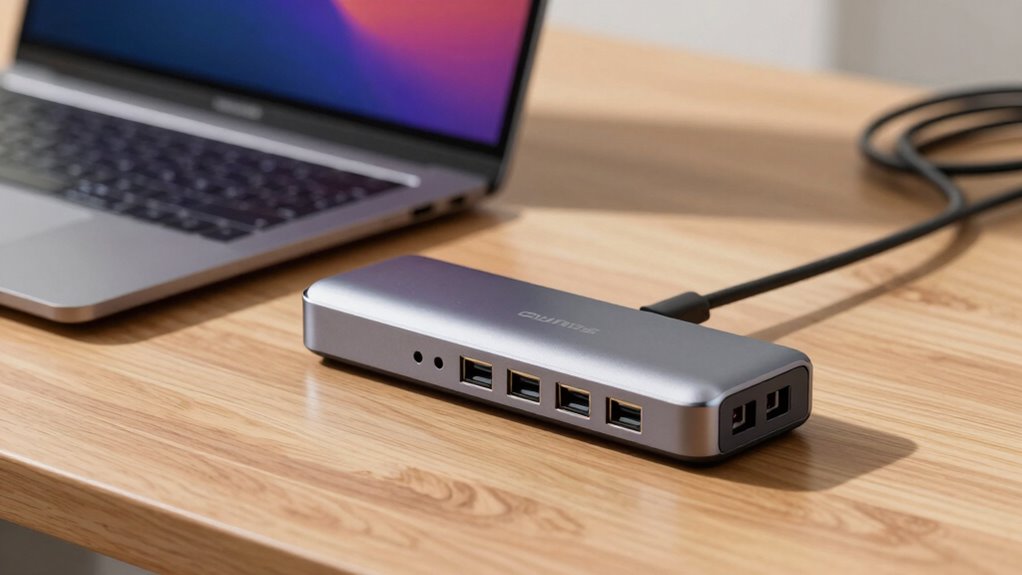
USB-C technology is at the heart of modern connectivity, and understanding its key concepts can help you maximize the benefits of your docking station. First, get familiar with the USB C standards overview, which includes data transfer rates, power delivery, and video output capabilities. This knowledge guarantees you choose a docking station that meets your needs. Next, consider USB C cable types, as they vary in regard to functionality. Some cables support higher data speeds or power delivery while others may not. By recognizing these differences, you’ll avoid compatibility issues and guarantee peak performance. Knowing the ins and outs of USB-C technology empowers you to make informed decisions about your docking station setup and enhances your overall user experience.

MOKiN MacBook Pro Docking Station Dual Monitor MacBook Pro/Air HDMI Adapter
- Designed for MacBook Pro/Air: Expands into 9 ports for daily use
- Dual 4K HDMI Support: Mirror or extend mode, up to 4K@60Hz
- Multiple USB Ports: Includes USB 3.0, USB 2.0, and SD card reader
As an affiliate, we earn on qualifying purchases.
As an affiliate, we earn on qualifying purchases.
Assessing Your USB-C Docking Station Connectivity Needs
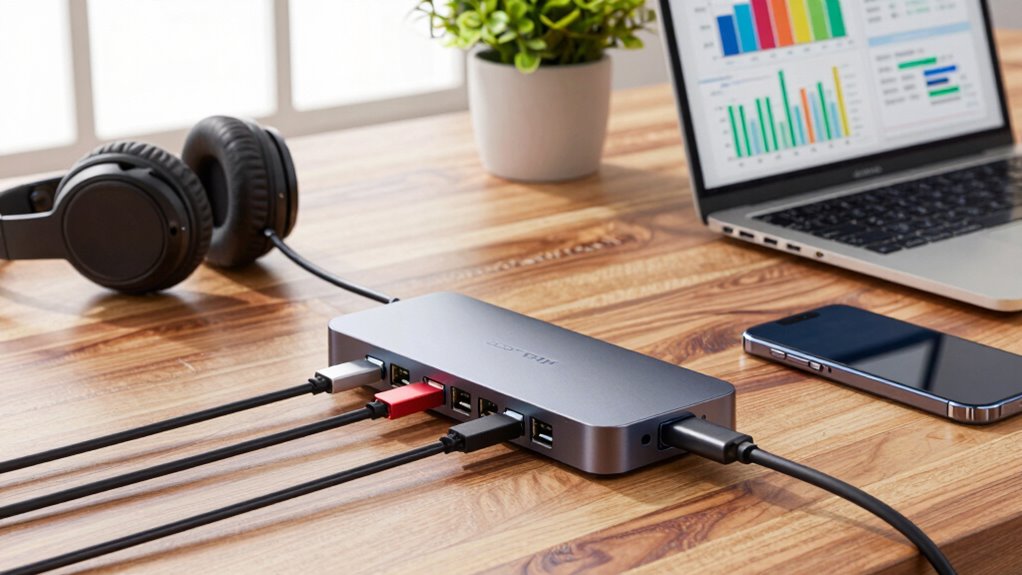
How do you determine the right connectivity options for your USB-C docking station? Start by evaluating your current and future needs. Think about the devices you’ll connect, like monitors, keyboards, and external storage. Dock performance factors, such as bandwidth and power delivery, play a vital role in ensuring peak functionality. Consider your work environment; will you need multiple displays or high-speed data transfer? Additionally, understanding studio gear compatibility can help optimize your setup for music and live audio applications. Future proofing docks is essential, too. Look for models that support upcoming standards, ensuring compatibility as technology evolves. Incorporating features like connection standards compatibility and modular expandability can further enhance your setup. By examining your specific connectivity requirements and prioritizing versatility, you’ll choose a USB-C docking station that not only meets your present needs but also adapts to your future tech landscape.
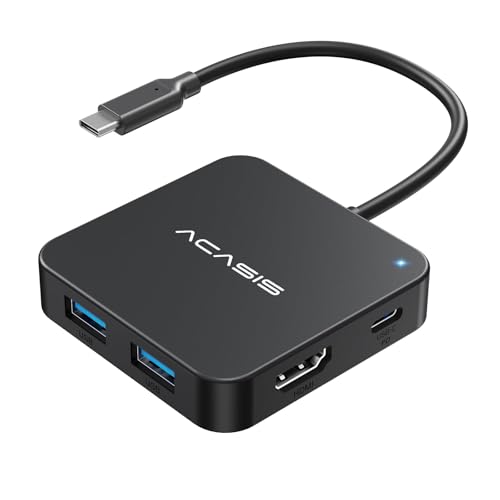
ACASIS USB C Hub 10Gbps, USB C to 4K 60Hz HDMI Adapter for Laptop/MacBook
- 6-in-1 USB C Hub: Includes HDMI, USB A, USB C, and PD ports
- 4K 60Hz HDMI Output: Supports high-resolution display expansion
- Fast Data Transfer: 10Gbps transfer speed for quick file sharing
As an affiliate, we earn on qualifying purchases.
As an affiliate, we earn on qualifying purchases.
What Features Should You Look For in a USB-C Dock?
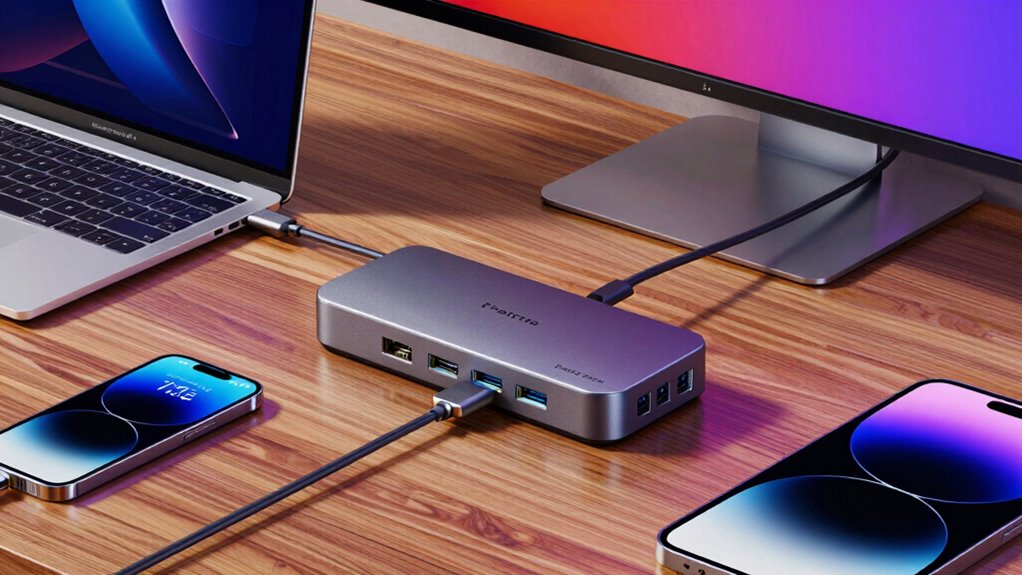
What key features should you prioritize when selecting a USB-C dock? First, consider the dock design—compact and sleek options are often more portable. Next, think about port variety; having multiple USB-A, HDMI, and Ethernet ports guarantees you’re covered for various devices. Check for compatibility with your laptop or tablet as well.
Here’s a quick comparison to help you decide:
| Feature | Importance |
|---|---|
| Dock Design | Affects portability |
| Port Variety | Enables flexibility |
| Power Delivery | Essential for charging |
| Build Quality | Assures durability |
| Compatibility | Supports your devices |
Why Power Delivery Matters in Your Docking Station
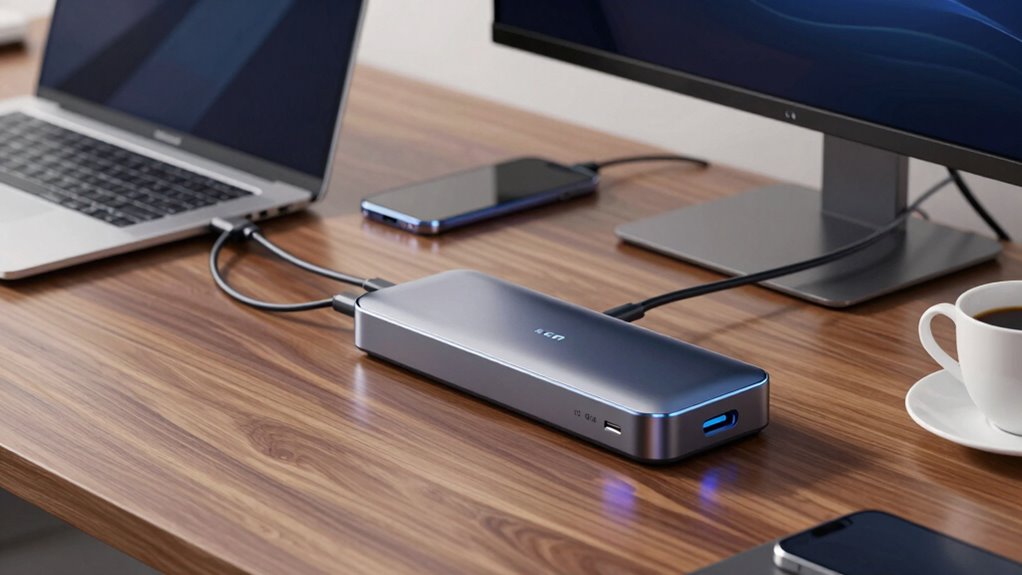
While you might prioritize port variety and sleek design in a USB-C docking station, power delivery (PD) is equally important. It guarantees your devices charge quickly and efficiently, which saves you time and keeps your workflow smooth. High charging speed is vital, especially if you’re using power-hungry devices like laptops. With the right PD setup, you can enjoy greater power efficiency, minimizing energy waste. Furthermore, strong device compatibility means you won’t be limited to specific brands or models; a good docking station works with various gadgets. Finally, don’t underestimate cable quality. Using a high-quality cable enhances PD performance, guaranteeing reliable connections and peak charging. Incorporating smart power management features can further optimize energy use and device safety. So, when choosing your docking station, prioritize power delivery to maximize your setup.
Essential Ports and Outputs for Your Dock
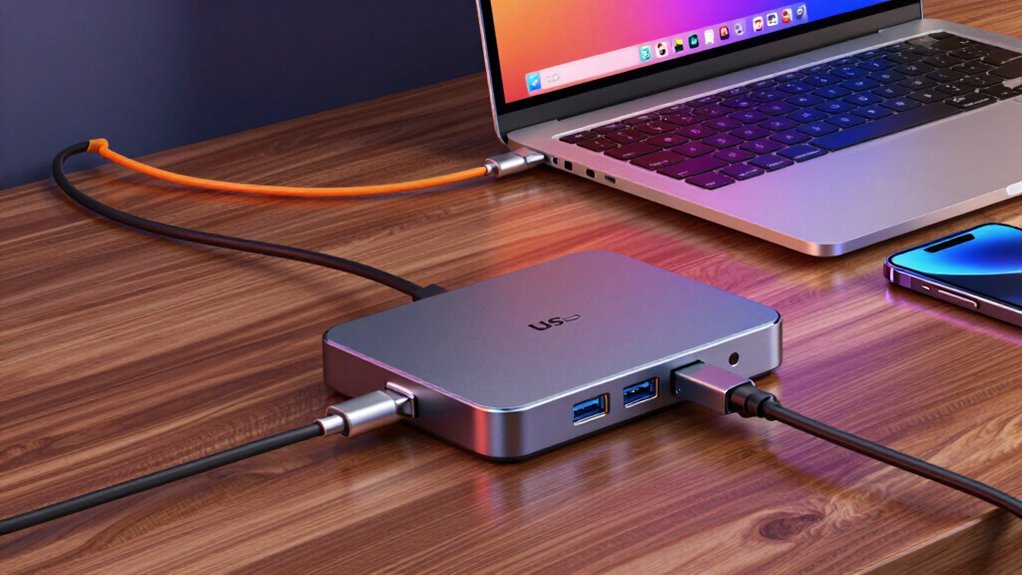
When selecting a USB-C docking station, which ports and outputs do you really need? Understanding the essential port types and output specifications can help you make an informed choice. Here’s a quick overview of key ports to look for:
| Port Type | Output Specification |
|---|---|
| HDMI | 4K at 60Hz |
| USB-A | 5Gbps data transfer |
| USB-C | Power Delivery up to 100W |
| Ethernet | Gigabit (1000 Mbps) |
| SD Card Reader | UHS-II for fast transfers |
These ports guarantee you can connect monitors, peripherals, and network devices without hassle. Evaluate your needs, and choose a dock that includes the right combination for your workflow.
Ensuring Compatibility With Your USB-C Dock
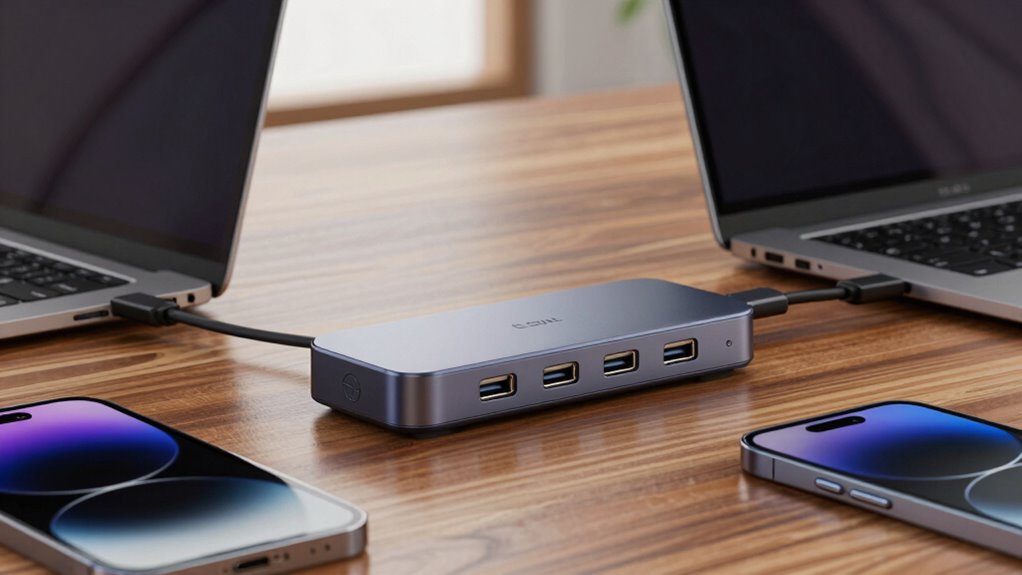
To guarantee your USB-C docking station works seamlessly with your devices, you’ll need to take into account compatibility across several factors. First, check your devices for USB C compatibility; not all USB-C ports support the same functionalities. For example, some may only handle power delivery, while others support video output and data transfer. Next, evaluate the dock features you need—consider how many displays you want to connect or which peripherals you’ll use. Different docks offer various ports, such as HDMI, Ethernet, and USB-A. Finally, verify your operating system is compatible with the dock; some features may only work on specific platforms. By confirming these aspects, you’ll enjoy a hassle-free experience with your USB-C dock.
Debunking the Top 5 Myths About USB-C Docking Stations
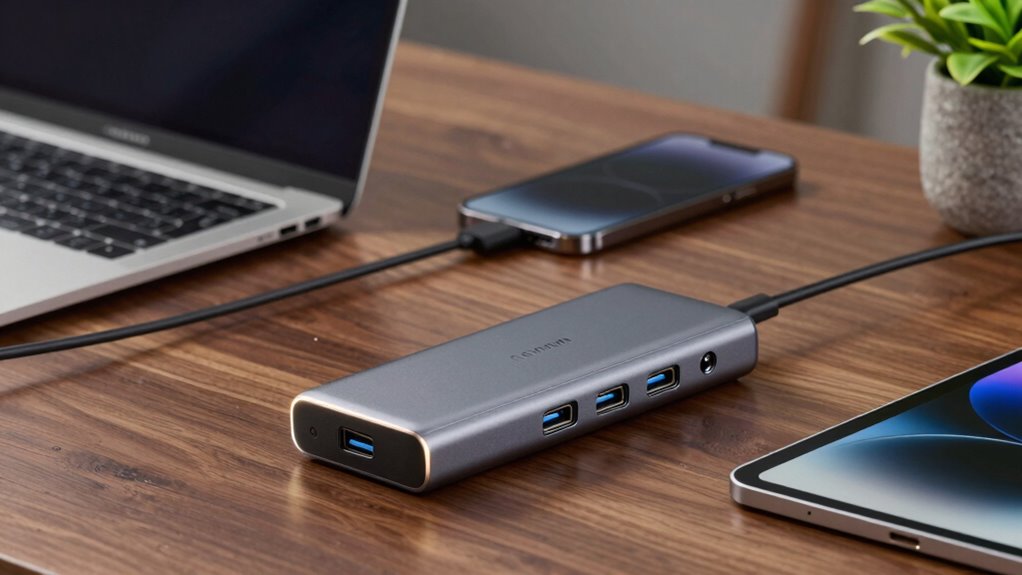
Understanding compatibility is just the beginning of your journey with USB-C docking stations. It’s time for some myth busting around common docking misconceptions. First, many believe all USB-C ports support video output, but that’s not true. Only some ports do. Second, there’s a notion that docking stations are only for laptops; in reality, they work with various devices. Third, some think using a docking station decreases performance, when, in fact, they can enhance productivity. Another misconception is that all docks are interchangeable, but compatibility varies considerably. Finally, people often assume prices directly reflect quality, but you can find affordable options that perform exceptionally well. Clear these myths, and you’ll make a more informed choice!
Multi-Port vs. Single-Port Docking Stations: Which One Is Right for You?
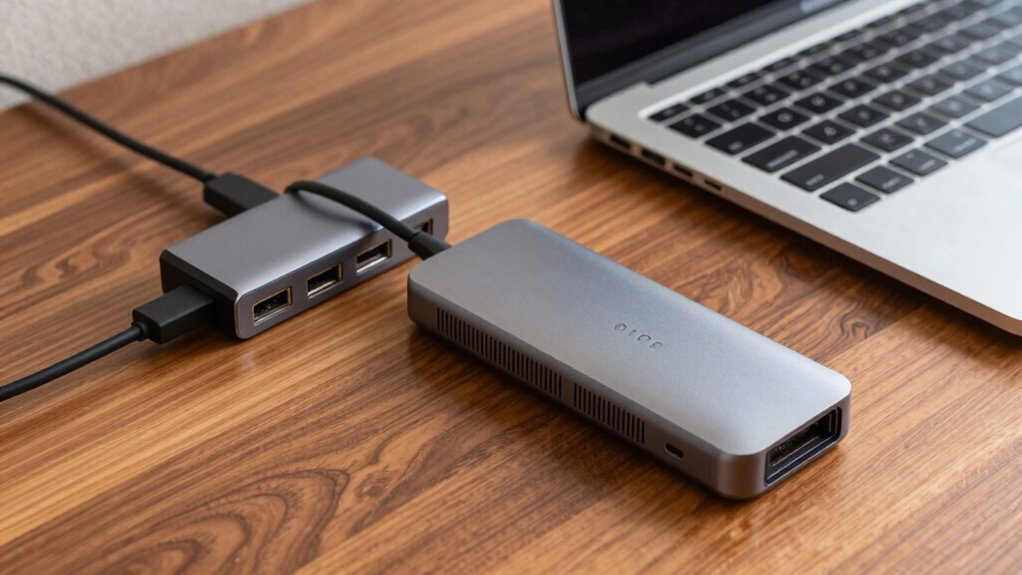
How do you decide between a multi-port and a single-port docking station? It really comes down to your specific needs and usage.
Consider these points:
- Multi-port benefits: Great for connecting multiple devices like monitors, keyboards, and external drives.
- Single port simplicity: Perfect if you need just one connection for streamlined use.
- Space and portability: Multi-port docks can be bulkier; a single-port option is often more compact.
- Adaptability: Multi-port docks can accommodate future tech upgrades, while single-port docks are often fixed in capability.
Evaluate how you work and what devices you typically use. By weighing the multi-port benefits against single-port simplicity, you can choose the docking station that fits your lifestyle best.
Setting Your Budget for a USB-C Docking Station

When setting your budget for a USB-C docking station, start by identifying the essential features you need. Next, compare price ranges to find options that fit your financial plan. Finally, assess the value for money to guarantee you’re making a smart investment.
Determine Essential Features
A USB-C docking station can be a game-changer for your setup, but determining essential features is crucial for setting a realistic budget. Consider what you’ll really need to maximize your workspace efficiency. Here are some key features to think about:
- Multiple Ports: Confirm you have enough USB, HDMI, and Ethernet options.
- Wireless Connectivity: Look for models that support Wi-Fi and Bluetooth for added convenience.
- Power Delivery: Choose a dock that can charge your devices while you work.
- Ergonomic Design: Opt for a design that minimizes clutter and enhances your workspace comfort.
- Additionally, exploring smart home gear options can help you integrate your workspace seamlessly with your overall smart environment, creating a more organized and efficient setup. Incorporating home automation features can further enhance your productivity and comfort by syncing your workspace with your smart devices.
Compare Price Ranges
Setting a budget for a USB-C docking station involves understanding the different price ranges available. You’ll find affordable options starting around $30, which usually offer basic connectivity. These are perfect if you need simple functions without breaking the bank. As you move up, expect to pay between $60 and $150 for devices that provide additional ports and improved build quality. If you’re looking for premium features, such as high-speed data transfer, 4K video output, and robust power delivery, be prepared to invest over $150. Ultimately, it’s essential to balance your needs with your budget, ensuring you get a docking station that meets your requirements without overspending.
Assess Value for Money
To assess value for money when choosing a USB-C docking station, it’s essential to weigh the features against your specific needs. Conducting a thorough cost analysis will help you make informed decisions. Consider these factors during your value comparison:
- Compatibility: Confirm it works with your devices.
- Ports and Connectivity: Check the variety and quantity of ports you need.
- Build Quality: Look for durability and design that fits your workspace.
- Warranty and Support: Evaluate the manufacturer’s support and return policy.
- Additionally, understanding the value proposition of a docking station can help you determine whether it offers the features you need at a reasonable price. Recognizing the financial implications of your purchase can ensure you stay within your budget while getting the best value. Evaluating the home technology needs can further optimize your investment in a docking station suited for your environment.
Frequently Asked Questions
Can I Use a USB-C Dock With a Thunderbolt Device?
Yes, you can use a USB-C dock with a Thunderbolt device, but you won’t get the full Thunderbolt speeds. USB-C offers advantages like versatility and power delivery, making it a great choice for most peripherals. Just keep in mind that while Thunderbolt devices will work with a USB-C dock, their performance may be limited to USB-C speeds. Always check compatibility to guarantee you’re making the most of your setup.
How Do I Update the Firmware of My USB-C Docking Station?
To update the firmware of your USB-C docking station, start by visiting the manufacturer’s website. You’ll usually find a support section with firmware updates listed. Download the latest version compatible with your dock. Then, connect the dock to your computer and follow the provided instructions, which often involve running an update tool. Confirm your device’s docking compatibility is verified before starting the update, as this helps prevent any issues during the process.
Are USB-C Docking Stations Hot-Swappable?
Yes, USB-C docking stations are typically hot-swappable, allowing you to connect and disconnect devices without powering down. This offers significant hot swapping benefits, as it saves time and enhances your workflow. However, verify your docking station’s compatibility with your devices, as it can vary. Always check the specifications to avoid any issues. Enjoy the convenience of easily connecting peripherals while keeping your work seamless and efficient!
Will a USB-C Dock Work With Older USB Devices?
Using a USB-C dock with older USB devices is like trying to fit a square peg in a round hole; it can be tricky. While many docks support backward compatibility, you’ll often face compatibility issues. Older devices might need adapter requirements to connect properly. So, check if your dock supports the specific USB version of your device to guarantee a smooth connection. With the right adapter, you can bridge the gap effectively!
Can I Daisy-Chain Multiple USB-C Docking Stations?
You can’t typically daisy-chain multiple USB-C docking stations due to daisy chaining limitations. Most docking stations aren’t designed for this, which can lead to compatibility issues. If you try to connect more than one, you might experience reduced performance or even device recognition problems. Always check the specifications of your docking station for compatibility and make sure it supports the setup you intend to create. It’s usually best to stick with one dock per connection.
Conclusion
To summarize, investing in a USB-C docking station can greatly enhance your productivity and streamline your workspace. Did you know that 79% of users report increased efficiency when utilizing a docking station? By understanding your connectivity needs and the essential features, you can choose the perfect dock that keeps all your devices connected and charged. Don’t let compatibility myths hold you back—embrace the convenience and power of USB-C technology to boost your daily workflow!