
To finally understand power rack dimensions, you need to know key measurements like height, width, and depth. Standard racks are around 7 feet tall and 4 feet wide, but you’ll want to measure your space for a perfect fit. Consider clearance for pull-ups and guarantee the rack’s depth suits your area. Don’t forget adjustable features and stability when choosing. Keep exploring to discover more insights that can optimize your home gym setup!

Get the little things that make your day delivered free — and shop member deals
- Fast, free delivery on millions of items
- Access to Prime Big Deal Days deals on October 6–7
- Prime Video, Amazon Music and more included
Key Takeaways
- Standard power racks typically measure around 7 feet tall and 4 feet wide, accommodating various exercises like squats and bench presses.
- Compact power racks are designed for smaller spaces, maximizing workout area without sacrificing functionality.
- Measure your workout space’s height, width, and depth to ensure adequate clearance and safe lifting.
- Consider the depth of the rack to fit in tighter spaces while maintaining safe lifting conditions.
- Specialty power racks may offer unique features tailored to specific training needs, enhancing workout versatility.
As an affiliate, we earn on qualifying purchases.
How to Choose the Right Power Rack for Your Home Gym?
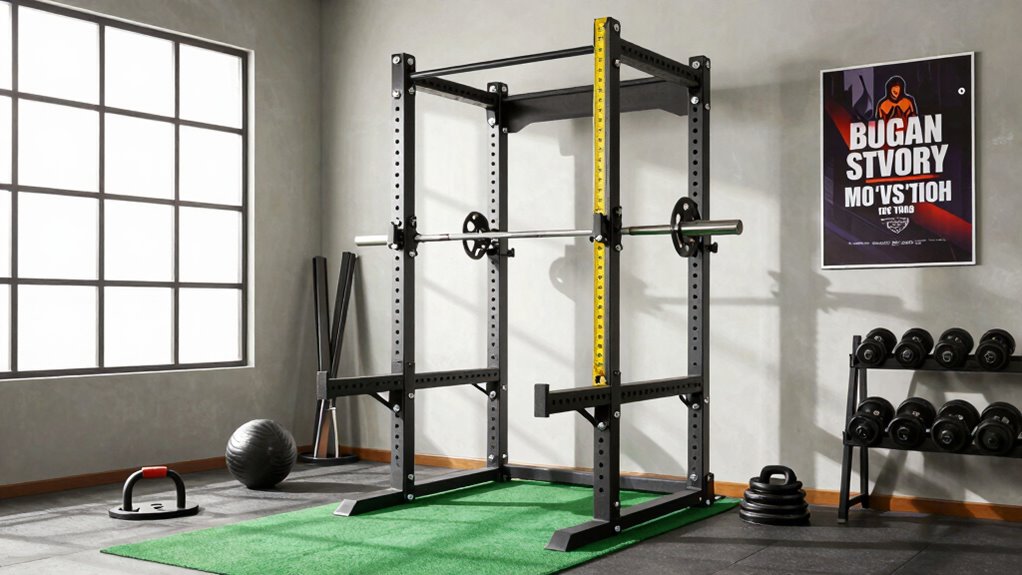
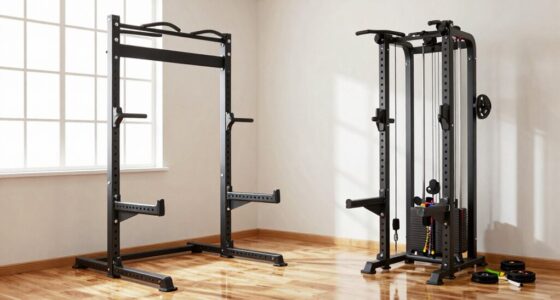
When choosing the right power rack for your home gym, what features should you prioritize? First, consider the power rack styles available. You’ll find options like squat racks, full racks, and half racks, each serving different needs. Think about your workout space—make certain you have enough room for the rack and any additional equipment. Also, pay attention to the weight capacity and stability; you want a rack that can handle your heaviest lifts safely. Don’t forget about adjustable features like pull-up bars and safety catches, which enhance versatility. Finally, look for sturdy construction materials to guarantee longevity. By focusing on these aspects, you’ll find a power rack that fits your fitness goals and your home gym setup perfectly.
adjustable power rack with pull-up bar
As an affiliate, we earn on qualifying purchases.
As an affiliate, we earn on qualifying purchases.
Understanding Power Rack Dimensions: Height, Width, and Depth
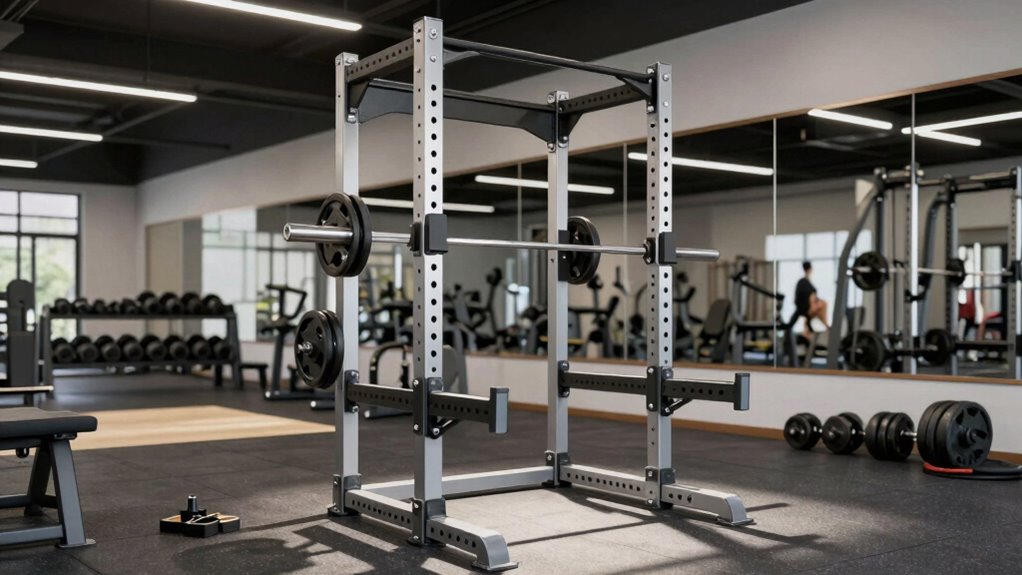
How do you guarantee your power rack fits perfectly in your workout space? Start by measuring the height, width, and depth of the area where you plan to set it up. Ascertain you leave enough overhead clearance for exercises like pull-ups, as this contributes to rack stability. Your power rack should also have a width that allows for safe lifting while maintaining space efficiency. Consider the depth; a compact rack can fit snugly in tighter spaces without sacrificing safety or functionality. By taking these dimensions into account, you’ll create a workout environment that’s both practical and effective, allowing you to focus on your training without any worries about space or stability.
compact power rack for small spaces
As an affiliate, we earn on qualifying purchases.
As an affiliate, we earn on qualifying purchases.
Power Rack Types and Their Dimensions

When choosing a power rack, it’s essential to evaluate the different types available. Standard power racks offer robust dimensions for serious lifters, while compact options are perfect for smaller spaces. Specialty variants cater to unique training needs, making it easier for you to find the right fit for your workout routine.
Standard Power Rack Sizes
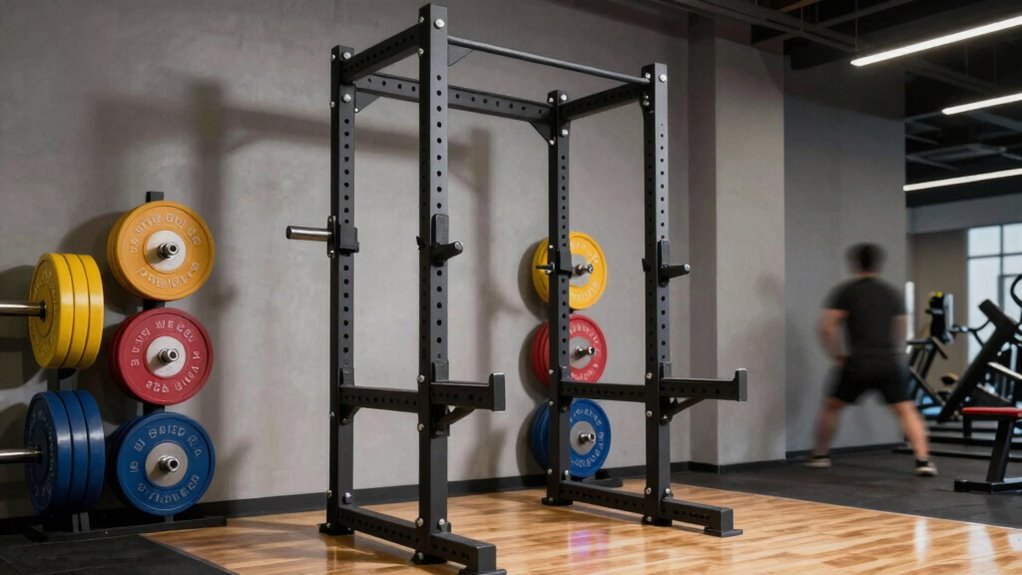
Understanding standard power rack sizes is vital for choosing the right equipment for your workout space. Typically, power racks come in various standard measurements, most commonly around 7 feet tall and 4 feet wide. These dimensions allow for various rack configurations, accommodating different exercises like squats, bench presses, and pull-ups. Most racks also feature adjustable J-hooks and safety bars to fit your needs. It’s important to reflect on the height of your ceiling and available floor space when selecting a rack. Additionally, some racks may include attachments like dip bars or landmine attachments, which can enhance your workout versatility. By knowing these standard power rack sizes, you can make an informed decision that best suits your fitness goals.
Compact Power Rack Options
For those with limited space, compact power rack options offer an effective solution without compromising on functionality. These racks typically feature a compact design, allowing you to maximize your workout area while still having access to essential exercises. With a variety of heights and widths, many compact models fit snugly into corners or small home gyms, ensuring space efficiency without sacrificing stability or safety.
When choosing a compact power rack, consider adjustable features that enhance versatility. Many options include pull-up bars or integrated weight storage, making them multifunctional. By selecting a compact power rack, you can create a powerful workout environment in even the tightest spaces, allowing you to stay committed to your fitness goals.
Specialty Power Rack Variants
While compact power racks are ideal for limited spaces, specialty power rack variants cater to specific training needs and preferences, offering unique features that enhance your workout experience. These racks come with unique designs and accessories to target different muscle groups and improve your lifting routine. Here are some popular specialty variants:
- Multi-Grip Power Rack – Offers various grip options for more versatile workouts.
- Half Rack – Provides a smaller footprint while maintaining stability for heavy lifts.
- Squat Rack with Specialty Attachments – Includes options like dip bars and landmine attachments.
- Smith Machine Rack – Combines a power rack with a guided barbell system for safer lifts.
Explore these options to find the perfect fit for your training style!
As an affiliate, we earn on qualifying purchases.
Must-Have Features for Your Power Rack
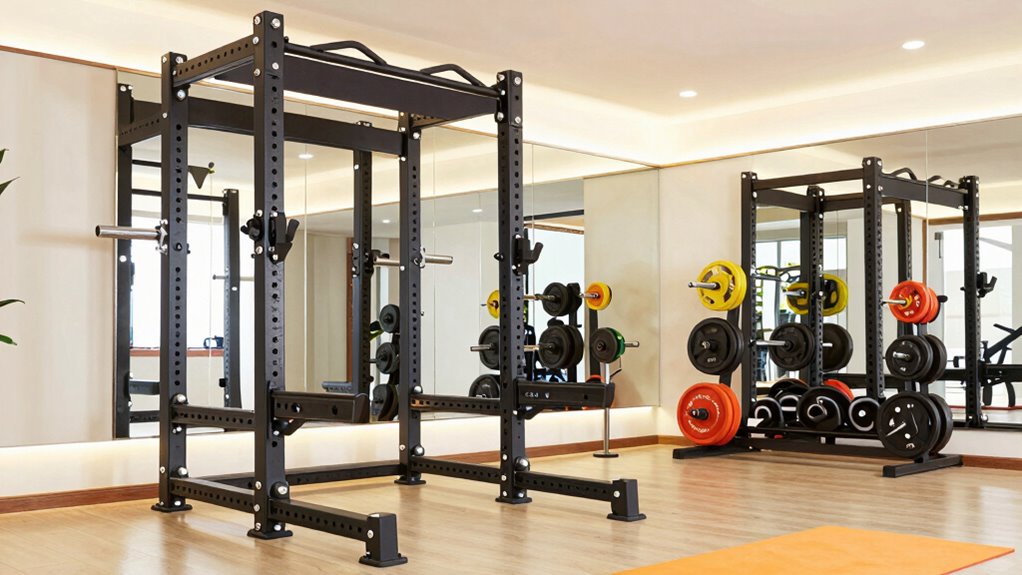
When choosing a power rack, you’ll want to focus on several key features that enhance your workout experience. Adjustable safety bars are essential for your safety, while multi-exercise capability maximizes versatility. A sturdy frame construction guarantees durability, giving you confidence during heavy lifts.
Adjustable Safety Bars
Adjustable safety bars are essential features that enhance both safety and versatility in your power rack. They give you peace of mind while lifting, allowing you to focus on your form and weight progression. Here are four must-have features to take into account:
- Adjustable Height: Verify the bars can be easily set to different levels, accommodating various exercises and user heights.
- Safety Bar Materials: Look for bars made from durable materials like steel that can withstand heavy impacts and resist wear.
- Locking Mechanism: A reliable locking system keeps the bars securely in place during your workout.
- Compatibility: Make certain the safety bars fit your power rack model to guarantee maximum stability and safety.
Investing in quality safety bars will enhance your lifting experience!
Multi-Exercise Capability
A power rack that offers multi-exercise capability opens up a world of workout possibilities, making it a versatile addition to your home gym. With the right power rack, you can perform a wide range of exercises, from squats and bench presses to pull-ups and overhead lifts. This exercise variety not only keeps your workouts engaging but also helps you target different muscle groups effectively. You’ll appreciate the workout flexibility that comes with having multiple attachment options, such as dip bars and landmine attachments, which enhance your training experience. By investing in a power rack with multi-exercise capability, you can adapt your routine to fit your goals, ensuring that every session is productive and enjoyable. Incorporating connected fitness equipment can further elevate your training by enabling real-time feedback and progress tracking.
Sturdy Frame Construction
While you might be tempted to focus solely on features like attachments and versatility, sturdy frame construction is essential for any power rack. A robust design guarantees your safety and performance when lifting heavy weights. Here are four key considerations for frame materials and stability factors:
- Steel Thickness: Look for at least 11-gauge steel for maximum strength and durability.
- Base Width: A wider base enhances stability, preventing wobbling during intense workouts.
- Weight Capacity: Make sure the rack can handle more than your maximum lift to avoid potential failure.
- J-Cup Design: Choose racks with secure J-cups that can hold the barbell firmly in place.
Evaluating Weight Capacity and Adjustability
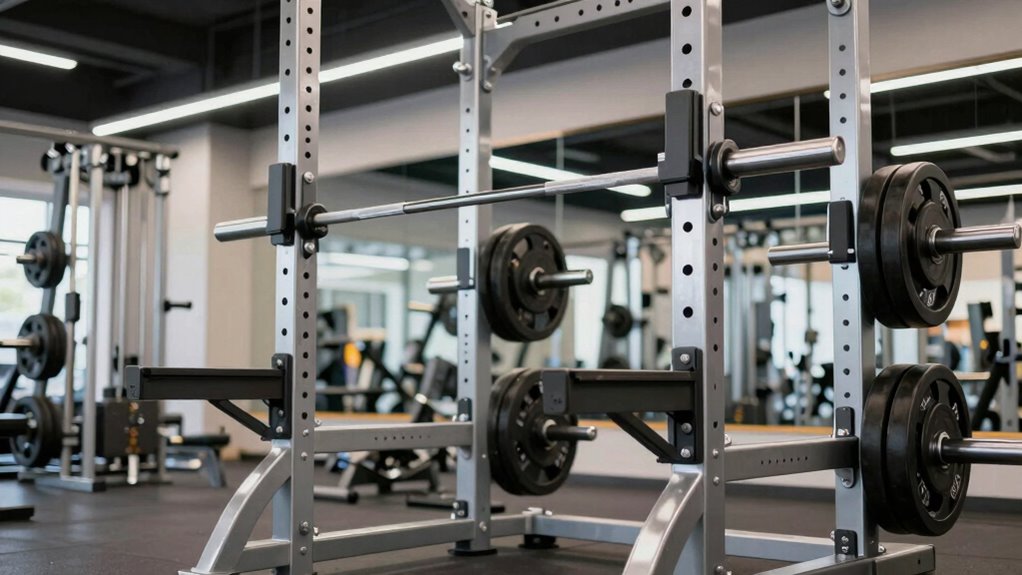
When choosing a power rack, understanding its weight capacity and adjustability is vital for guaranteeing safety and effectiveness during workouts. You should check the weight limits specified by the manufacturer, as exceeding these can lead to dangerous situations. Additionally, consider how the load distribution impacts stability; a well-designed rack evenly spreads weight to prevent tipping or collapsing. Adjustability is also important; look for racks that allow you to customize settings for different exercises and body types. This flexibility can enhance your training experience and accommodate your growth as you progress. By evaluating these factors, you’ll guarantee that your power rack is both safe and effective for your fitness journey.
Tips for Optimizing Your Power Rack Setup
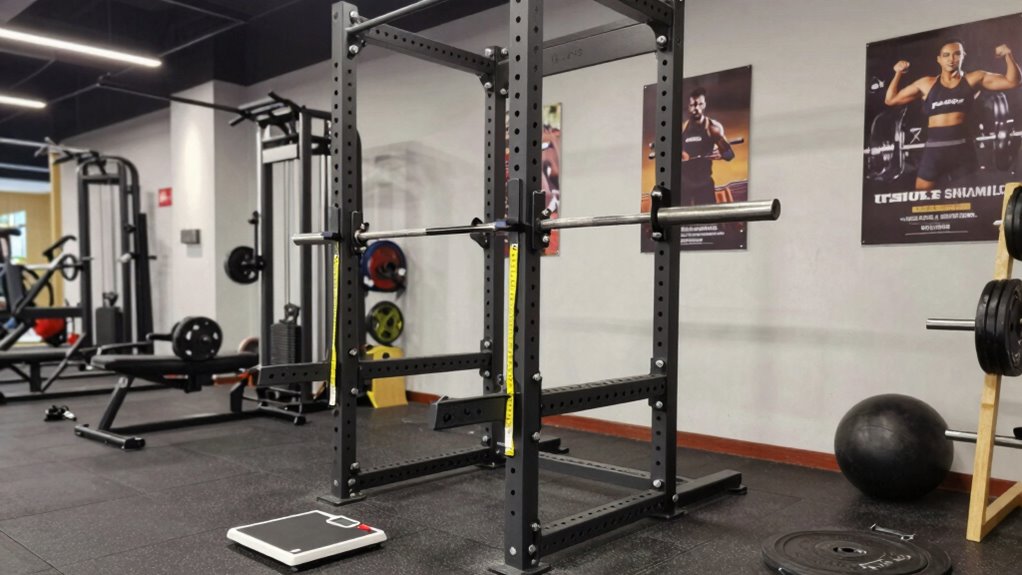
To optimize your power rack setup, start by verifying it’s positioned in a space that allows for free movement and easy access to equipment. This not only enhances safety but also boosts your workout efficiency. Here are some tips to get the most from your setup:
- Utilize Rack Accessories: Add attachments like dip bars or pull-up bars to diversify your workouts.
- Adjust the Height: Confirm the barbell’s height is suitable for your exercises to promote proper form.
- Clear Surroundings: Keep your workout area clutter-free to avoid accidents and distractions.
- Plan Your Routine: Organize your exercises to minimize equipment changes, maximizing your time under the bar.
- Check Compatibility: Make sure the rack’s dimensions are compatible with other fitness equipment you may want to incorporate into your training.
- Consider space planning to ensure your setup remains functional and adaptable as your training needs evolve.
What to Consider When Planning Your Workout Space?
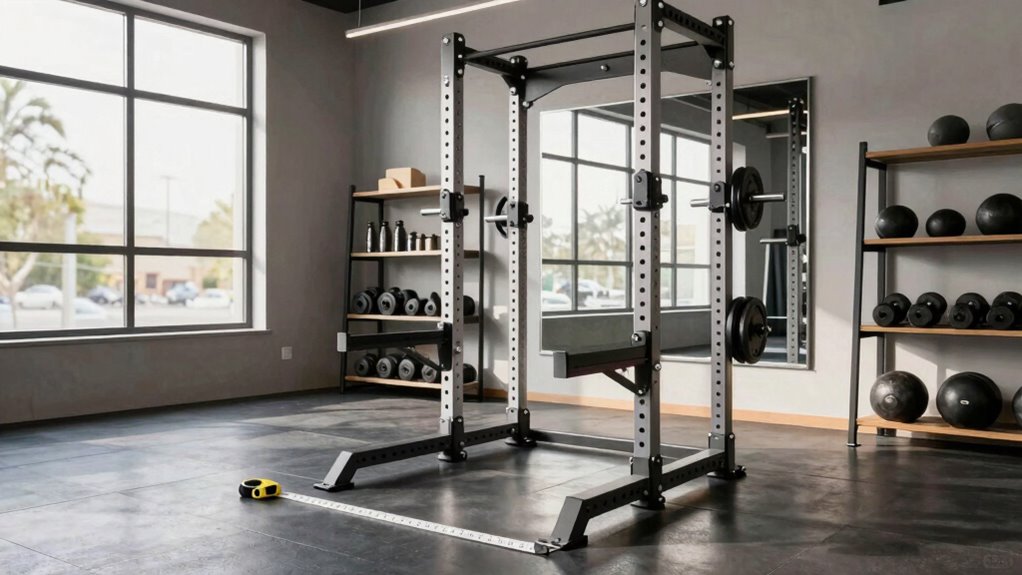
Creating an effective workout space goes hand in hand with optimizing your power rack setup. You need to think about space layout and equipment accessibility to maximize your training efficiency. Here are a few key considerations:
| Aspect | Importance | Tips |
|---|---|---|
| Space Layout | Aids movement | Keep pathways clear |
| Equipment Accessibility | Saves time | Arrange gear logically |
| Lighting | Enhances focus | Guarantee bright, even light |
Frequently Asked Questions
What Is the Average Weight of a Power Rack?
The average weight of a power rack typically ranges from 150 to 300 pounds, depending on the materials used. Most power racks are made from heavy-duty steel, which contributes to their sturdiness and weight capacity, often exceeding 1,000 pounds. When choosing a rack, consider both the weight and the materials to guarantee it meets your workout needs. A well-built power rack provides stability and safety during your lifting sessions.
Can Power Racks Be Used Outdoors?
Yes, you can use power racks outdoors, but there’s a catch. Not all racks are built to withstand the elements. You’ll need one that offers weather resistance to guarantee it lasts. Think about outdoor safety too; make certain it’s stable and secure on your chosen surface. If you don’t take these factors into account, you might end up with a rusted or unstable rack that could pose a risk during your workouts.
How Do I Maintain My Power Rack?
To maintain your power rack, start with regular cleaning to prevent rust and grime buildup. Wipe down the surfaces weekly using a damp cloth and mild detergent. Check for loose bolts or parts monthly, tightening them as needed. Inspect the finish for scratches or chips; touch them up to protect against corrosion. Finally, make sure your rack is set up in a stable environment to prolong its lifespan and enhance safety during workouts.
Are There Power Racks Specifically for Taller Users?
Yes, there are power racks specifically designed for taller users! When choosing a rack, consider tall user considerations like adjustable heights. Many models offer adjustable spotter arms and barbell settings, accommodating your height for a comfortable workout. Look for racks with higher ceilings or extended vertical posts to guarantee you have ample space for exercises like squats or overhead presses. This way, you can train safely and effectively without feeling cramped.
What Accessories Can Enhance My Power Rack Experience?
To enhance your power rack experience, consider adding band attachments and dip bars. Band attachments allow you to incorporate resistance bands for added support during lifts, improving your strength and stability. Dip bars provide an excellent way to work your triceps and chest, diversifying your workout routine. Together, these accessories can maximize your training potential, making your power rack more versatile and effective for achieving your fitness goals.
Conclusion
In wrapping up your journey to finding the perfect power rack, remember that the right dimensions can transform your home gym into a haven of strength and versatility. By considering features, weight capacity, and your workout space, you’re not just investing in equipment; you’re crafting a personal sanctuary for health and fitness. So, embrace this opportunity to elevate your training experience, and soon you’ll be reaping the rewards of your thoughtful choices in every lift.
Halloween Picks
halloween
As an affiliate, we earn on qualifying purchases.