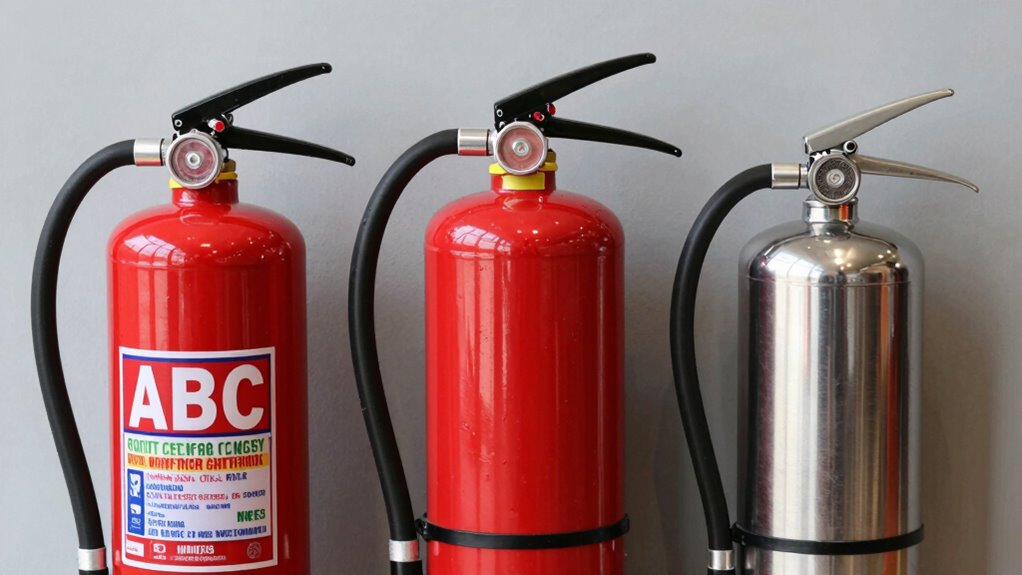

Understanding fire extinguisher types helps you respond effectively during emergencies. ABC extinguishers are versatile, targeting all fire classes including trash, electrical, and wood fires with a dry chemical powder. BC extinguishers focus on flammable liquids and electrical fires, while K extinguishers are designed specifically for kitchen grease or oil fires. Recognizing labels and knowing when to use each type can save lives and property—continue exploring to master the details.

Get the little things that make your day delivered free — and shop member deals
- Fast, free delivery on millions of items
- Access to Prime Big Deal Days deals on October 6–7
- Prime Video, Amazon Music and more included
Key Takeaways
- ABC extinguishers contain dry chemical powder effective against Class A (wood, paper), B (liquids), and C (electrical) fires.
- BC extinguishers use dry sodium bicarbonate, suitable for flammable liquids and electrical fires but not for Class A fires.
- K extinguishers utilize wet chemical solutions designed specifically for kitchen fires involving fats and oils.
- Color codes: red for ABC, yellow for BC, and black/gray for K extinguishers, aiding quick identification.
- Proper extinguisher selection depends on the fire type and environment to ensure safe and effective fire suppression.
As an affiliate, we earn on qualifying purchases.
What Are the Main Types of Fire Extinguishers and Their Uses
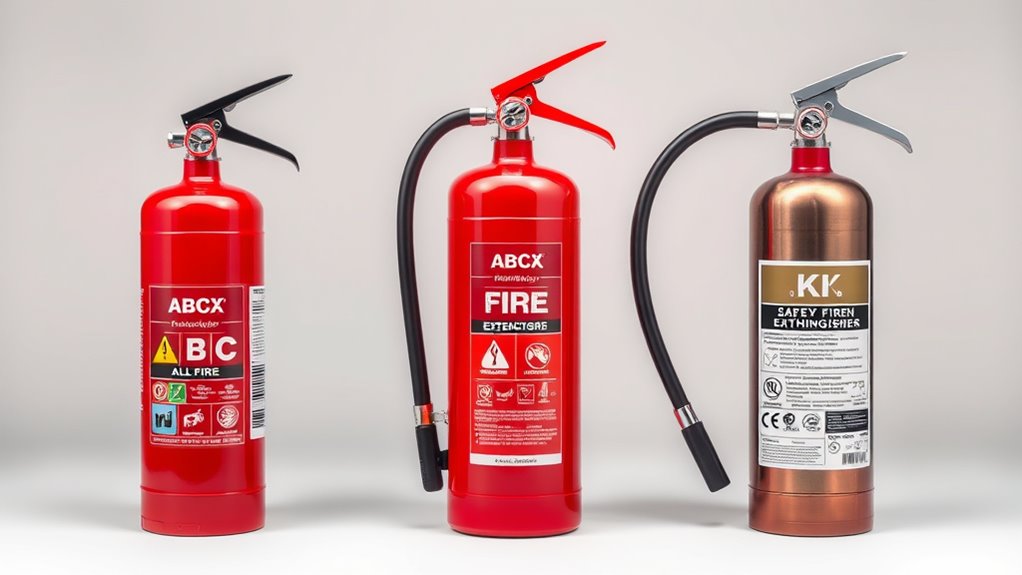
Understanding the main types of fire extinguishers is essential for effectively fighting different kinds of fires. Fire extinguisher history shows how chemical suppression methods have evolved to improve safety and efficiency. The most common types include water, foam, CO2, dry chemical, and wet chemical extinguishers, each designed for specific fire classes. Chemical suppression plays a crucial role, especially in dry chemical extinguishers, which interrupt the chemical reactions fueling fires. These extinguishers are versatile and widely used because they can handle multiple fire types. Recognizing which extinguisher suits a particular fire ensures you respond quickly and effectively, minimizing damage and danger. Knowing the main types and their uses empowers you to act confidently during an emergency. Understanding fire classes can help determine the appropriate extinguisher to use in various situations. Additionally, understanding fire extinguisher effectiveness can further improve safety measures and response times during emergencies. Being familiar with different fire suppression methods can also aid in choosing the right equipment for specific environments, especially with advancements in chemical suppression technologies that enhance safety and efficiency.
kitchen fire extinguisher K type
As an affiliate, we earn on qualifying purchases.
As an affiliate, we earn on qualifying purchases.
How Do ABC, BC, and K Fire Extinguishers Differ in Composition and Function
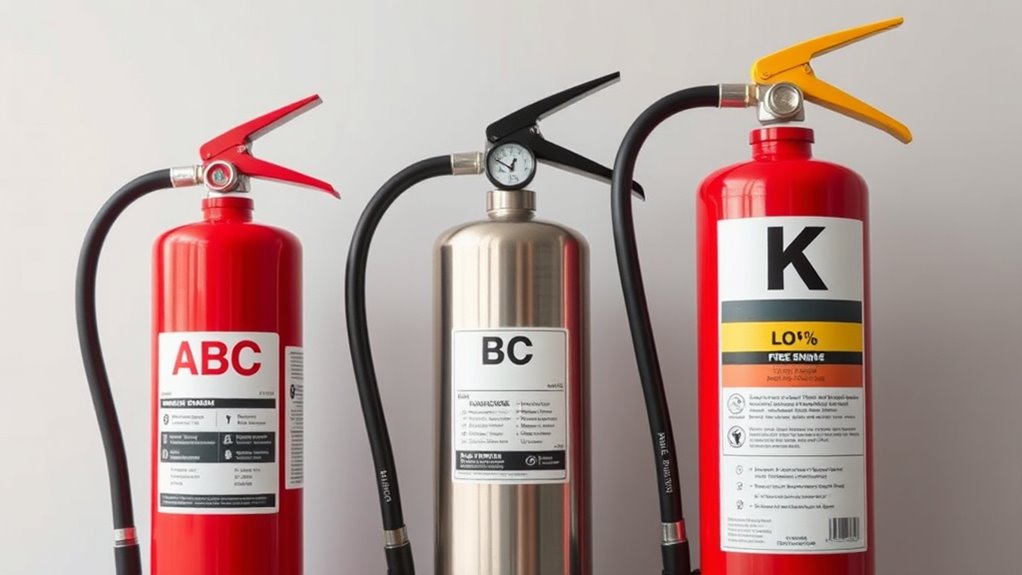
Ever wondered how ABC, BC, and K fire extinguishers differ in their composition and purpose? The key lies in their chemical composition and extinguishing mechanisms. ABC extinguishers contain dry chemical powder, usually a monoammonium phosphate, effective against Class A, B, and C fires. Their mechanism smothers flames by separating the fuel from oxygen and interrupting chemical reactions. BC extinguishers typically use dry sodium bicarbonate, targeting Class B and C fires, and work similarly by smothering flames and cooling the fire. K fire extinguishers, designed for kitchen fires, use a wet chemical solution—usually potassium acetate—whose extinguishing mechanism forms a soap-like layer over burning oils, preventing re-ignition. Each type’s composition optimizes them for specific fire classes and extinguishing strategies. Free Floating also plays a role in choosing the appropriate extinguisher based on the environment.
CO2 fire extinguisher for electrical fires
As an affiliate, we earn on qualifying purchases.
As an affiliate, we earn on qualifying purchases.
Which Fire Extinguisher Is Best for Home Safety and Residential Fires?
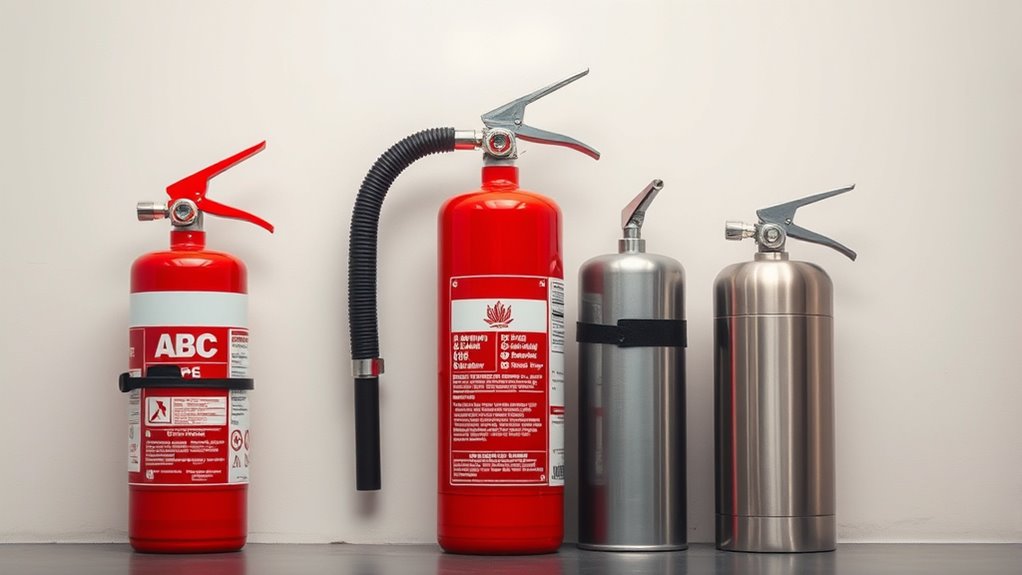
Choosing the right fire extinguisher for your home can make a critical difference in preventing small fires from escalating. For home protection, an ABC extinguisher is often the best choice because it handles a variety of fires, including trash, electrical, and wood fires. Its versatility makes it ideal for residential settings, where multiple fire types could occur. If you’re primarily concerned about kitchen fires, a K extinguisher specifically targets grease and oil fires, providing added safety. Additionally, fire extinguisher maintenance is crucial to ensure your safety equipment functions properly during an emergency. Regular inspections and proper storage help maintain the extinguisher’s effectiveness when needed most. Proper fire safety equipment is essential for effective emergency response in residential environments. Your extinguisher choice should prioritize ease of use and suitability for common household hazards, giving you peace of mind in safeguarding your home and loved ones. Implementing fire safety awareness can further enhance your preparedness and response strategies in case of emergencies.
As an affiliate, we earn on qualifying purchases.
When Should You Use BC or K Fire Extinguishers in Commercial or Kitchen Settings?
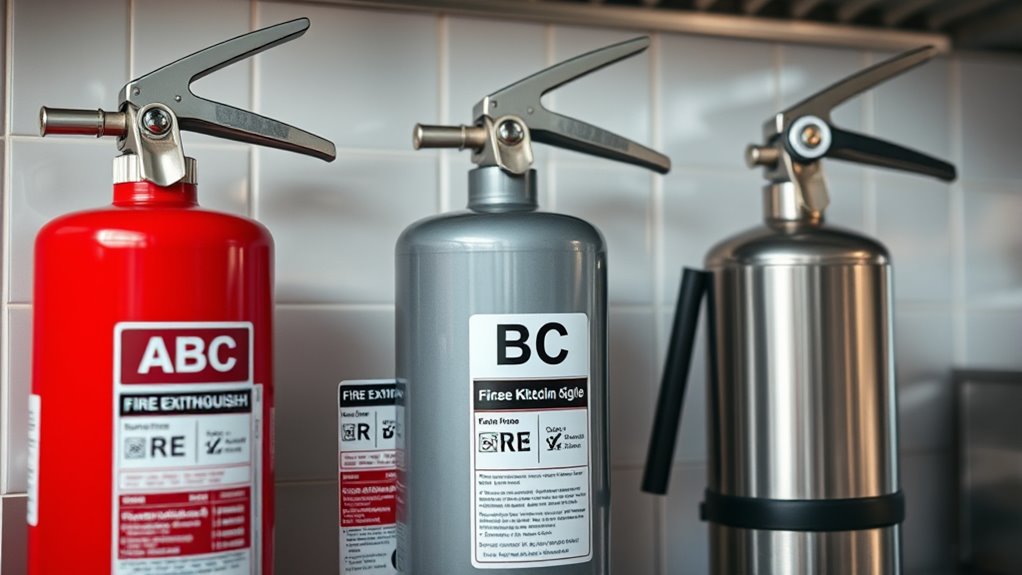
Knowing when to use BC or K fire extinguishers depends on the types of fires you might encounter in your commercial or kitchen space. You need to match the extinguisher to specific hazards and guarantee they’re placed where they’re most effective. Proper selection and placement help you respond quickly and safely to different fire scenarios.
Suitable Fire Types
Are you unsure which fire extinguisher to use in your commercial or kitchen setting? BC extinguishers target flammable liquids and electrical fires, common in garages and workshops. BC extinguishers are effective for electrical fires, which can occur with malfunctioning appliances or wiring issues. These extinguishers are particularly suitable for environments with flammable liquids, such as solvents or fuels. Selecting the appropriate extinguisher also involves considering fire classifications, which help identify the specific fire hazards present. Additionally, understanding fire hazard prevention can help reduce the risk of fire incidents before they occur. K extinguishers are designed for kitchen fires involving cooking oils and fats. Choosing the right extinguisher depends on the fire risks present; using the wrong type can be ineffective or dangerous. Consider fire extinguisher weights to guarantee easy handling and appropriate capacity. Regular maintenance schedules are essential to keep these extinguishers ready and functional, especially in high-risk areas. Properly matched extinguishers improve safety, minimize damage, and ensure compliance with safety standards in commercial and kitchen environments.
Kitchen Hazard Specifics
Ever wonder when to choose a BC extinguisher over a K extinguisher in your kitchen or commercial space? If you’re dealing with fires caused by cooking oils, a K extinguisher is your best option because it’s specifically designed to handle grease fires safely. K extinguishers use a wet chemical agent that suppresses the fire quickly and prevents re-ignition. BC extinguishers, on the other hand, are better suited for fires involving flammable liquids or gases but aren’t effective on grease fires. Using a BC extinguisher on a kitchen grease fire can be dangerous and ineffective. So, for cooking oils and grease fires, always opt for a K extinguisher to ensure safety and proper fire suppression.
Proper Extinguisher Placement
Choosing the right fire extinguisher placement in your commercial or kitchen space is vital for effective safety. Proper placement considers accessibility, visibility, and proximity to potential fire hazards. For BC extinguishers, place them near flammable liquids or chemical storage areas, ensuring they’re easy to grab quickly. K extinguishers should be positioned close to cooking appliances and grease buildup zones to respond rapidly during a kitchen fire. Regular fire extinguisher maintenance is essential to keep them functional, so check pressure gauges, seals, and accessibility regularly. Avoid blocking extinguishers with equipment or storage. Use clear signage to indicate their location. Proper placement not only guarantees quick response times but also encourages routine fire safety practices among staff. Understanding the fire extinguisher types can help determine the most suitable device for each hazard zone, especially when considering appropriate placement. Proper placement also involves considering fire safety regulations to ensure compliance with local codes. Implementing fire safety training for staff ensures everyone knows how to operate extinguishers effectively in an emergency, further enhancing safety outcomes.
How to Read Fire Extinguisher Labels and Know Which One to Use
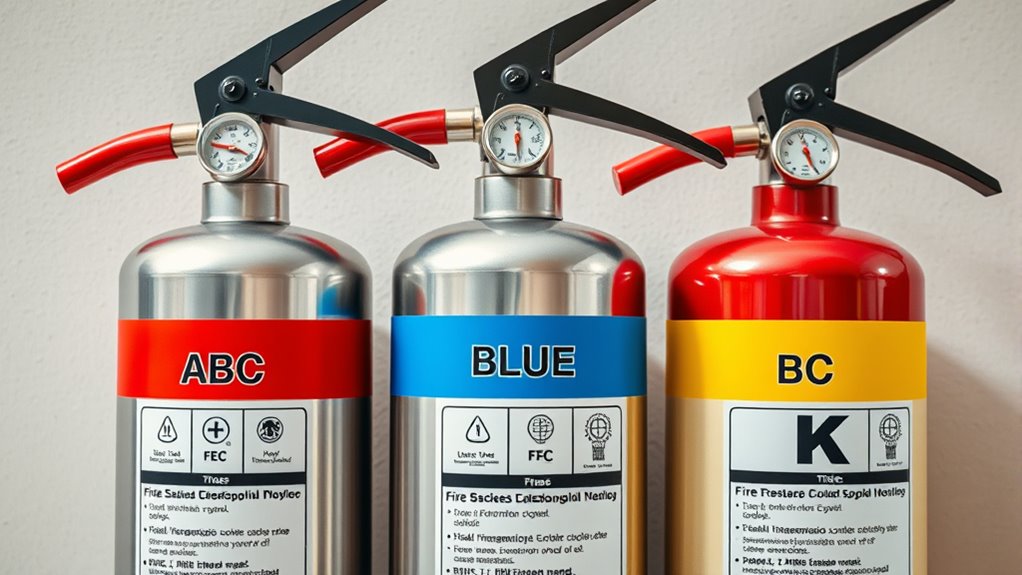
Understanding how to read fire extinguisher labels is essential for selecting the right one in an emergency. Start by looking for fire extinguisher symbols, which quickly indicate the types of fires it’s designed to fight. These symbols are universal and easy to recognize. Next, pay attention to the label color codes; each color corresponds to a specific extinguisher type, such as red for ABC, yellow for BC, and black or gray for K. The label also provides important information about the extinguisher’s contents and suitable uses. By familiarizing yourself with these symbols and color codes, you can quickly identify which extinguisher matches the fire you’re facing, ensuring you respond swiftly and appropriately. Additionally, understanding the different fire-related environments can help you choose the most effective extinguisher for particular situations. Recognizing the extinguisher types and their specific applications can improve safety and preparedness in diverse settings. Knowing the classification symbols used on labels enhances your ability to interpret these indicators accurately during emergencies. Moreover, being aware of fire safety protocols can further improve your emergency response skills. Being familiar with fire extinguisher maintenance can also ensure that your equipment functions properly when needed.
Safety Tips for Operating ABC, BC, and K Fire Extinguishers Properly
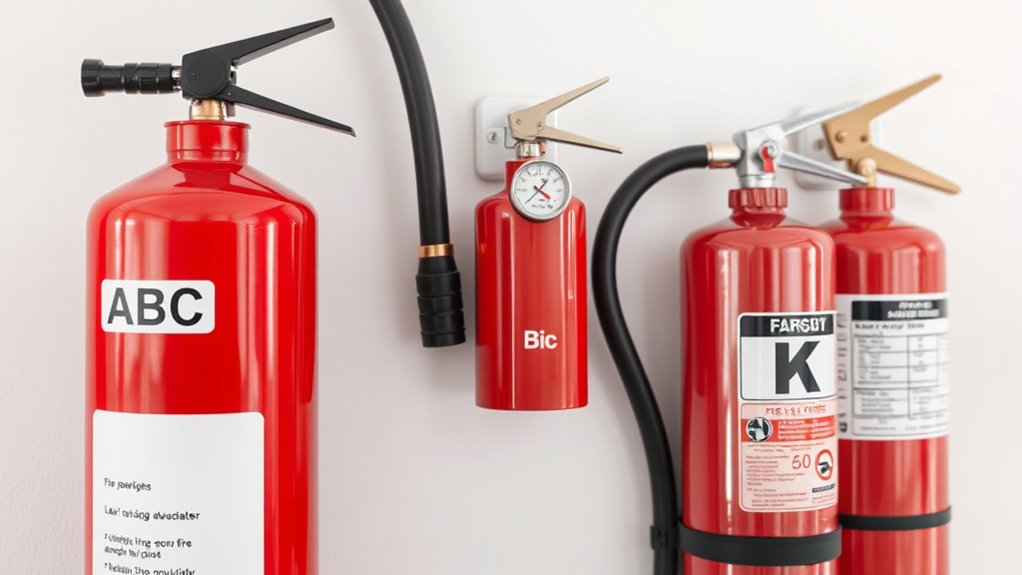
Are you familiar with the proper way to operate ABC, BC, and K fire extinguishers? Effective fire safety depends on correct extinguisher handling. Always remember to stay calm and assess the situation before acting. Pull the pin firmly to release the extinguisher, aim the nozzle at the base of the fire, and squeeze the handle to release the extinguishing agent. Use a sweeping motion from side to side until the fire is out. Keep a safe distance and avoid turning your back on the fire. If the fire reignites, repeat the process. Regularly check your extinguishers for proper pressure and damage. Proper extinguisher handling ensures you’re prepared and safe during a fire emergency, minimizing damage and potential injuries. Additionally, understanding the different types of extinguishers, such as fire extinguisher types, can help you select the right tool for each situation.
Factors to Consider When Choosing the Right Fire Extinguisher for Your Environment
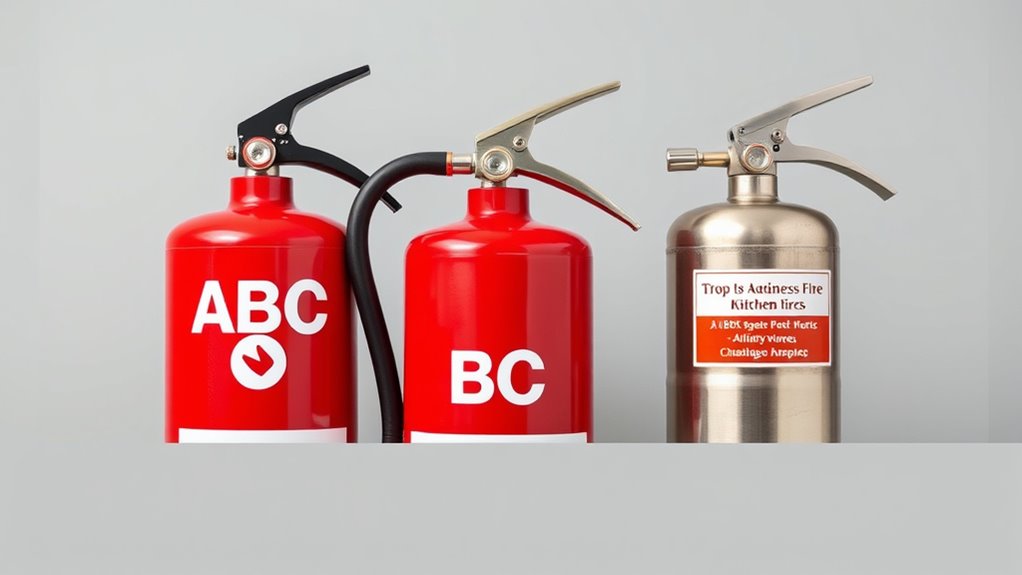
When selecting a fire extinguisher, you need to contemplate the specific fire risks in your environment. Make sure the extinguisher is compatible with the types of fires that could occur where you work or live. Choosing the right extinguisher depends on understanding both the potential hazards and the environment’s unique conditions.
Fire Risks Present
The type of fire risk present in your environment directly influences which fire extinguisher will be most effective. Proper hazard identification is essential for effective fire suppression, as different fires require specific agents. For example, electrical fires demand a Class B or C extinguisher, while kitchen fires involving grease need a Class K extinguisher. Understanding the hazards helps you select the right type and avoid ineffective suppression or dangerous reactions. Consider the materials present and potential ignition sources to assess the risks accurately. Ignoring these factors could lead to inadequate fire control or exacerbate the situation. By identifying the specific fire risks, you ensure that your fire extinguisher choice provides maximum safety and effective fire suppression tailored to your environment.
Environment Compatibility
Choosing the right fire extinguisher depends heavily on your environment’s specific conditions and materials. Different environments may involve various chemical reactions when a fire occurs, so selecting an extinguisher that minimizes harmful chemical reactions is vital. For example, in a commercial kitchen, a K extinguisher effectively handles grease fires without causing excessive environmental impact. In sensitive areas like laboratories or electronics rooms, you need extinguishers that won’t damage equipment or release toxic substances. Consider how the extinguisher’s contents interact with the environment and materials to prevent unintended chemical reactions. Also, think about environmental impact—some extinguishing agents may leave residues or harm the environment more than others. Choosing appropriately ensures safety, reduces damage, and minimizes ecological footprint.
Frequently Asked Questions
Can Fire Extinguishers Be Used on Electrical Fires Safely?
You should avoid using regular fire extinguishers on electrical fires unless they are specifically designed for electrical safety. Using the wrong extinguisher can cause electrical shock or worsen the fire. Always check extinguisher compatibility—look for Class C extinguishers for electrical safety. These are non-conductive and safe for electrical fires. If you’re unsure, call emergency services and evacuate the area to guarantee safety.
How Often Should Fire Extinguishers Be Inspected or Replaced?
A stitch in time saves nine, so you should inspect your fire extinguishers regularly. You need to follow the inspection schedule, usually monthly, checking for visible damage and pressure gauges. Replacement guidelines suggest replacing extinguishers every 5 to 15 years, depending on the type. Regular inspections ensure they’re ready when needed, preventing small issues from becoming big problems. Stay vigilant to keep yourself and others safe.
Are There Specific Disposal Procedures for Used Fire Extinguishers?
When it’s time to dispose of a used fire extinguisher, you should follow proper fire extinguisher disposal procedures. You can contact your local recycling center or fire department for guidance on used extinguisher recycling. Never puncture or throw a fire extinguisher in the trash, as it may contain pressurized contents. Proper disposal guarantees safety and environmental protection, making it essential to seek professional advice for safe fire extinguisher disposal.
Do Different Fire Extinguisher Types Require Specific Training to Operate?
You do need specific fire extinguisher training to operate different types effectively. While some extinguishers look similar, each requires operational knowledge to guarantee you use the right technique and suppress the fire safely. Don’t worry—proper training makes it straightforward, and it’s worth the effort. Knowing how to handle ABC, BC, or K extinguishers can make all the difference in an emergency, helping you respond confidently and correctly.
What Are the Legal Requirements for Fire Extinguisher Placement?
You must follow fire safety regulations and extinguisher placement guidelines to guarantee safety. Typically, fire extinguishers should be easily accessible, visible, and located near potential fire hazards. You’re required to install them on every level of your building, near exits, and in areas with high fire risk. Regular inspections and proper signage are also mandated to comply with legal standards, helping everyone respond quickly in emergencies.
Conclusion
Choosing the right fire extinguisher is like selecting a trusted shield for your castle. Whether it’s an ABC for versatile protection, BC for flammable liquids, or K for kitchen fires, knowing when and how to use each keeps you prepared. Think of it as arming yourself with the perfect tool in a sudden storm—your quick response can turn chaos into safety. Stay informed, stay ready, and keep your home and workplace protected.
NFL season / tailgating Picks
team gear
As an affiliate, we earn on qualifying purchases.