

Choosing the right R-value for your sleeping pad is key to your comfort during camping trips. For warm weather, go for a lower R-value (1-3), while cooler nights require a higher rating (4-6). If you’re camping in winter, aim for an R-value above 6. Keep in mind that insulation material also affects warmth and weight. Balancing these factors guarantees you stay cozy at night. There’s more to reflect upon, so let’s explore further.

Get the little things that make your day delivered free — and shop member deals
- Fast, free delivery on millions of items
- Access to Prime Big Deal Days deals on October 6–7
- Prime Video, Amazon Music and more included
Key Takeaways
- Determine the expected camping temperatures to select an appropriate R-value: lower (1-3) for warm weather, higher (4-6) for colder nights.
- For winter conditions, choose sleeping pads with R-values above 6 to ensure sufficient insulation against the cold ground.
- Consider the type of insulation material, as synthetic options typically offer different warmth levels compared to down insulation.
- Balance R-value with weight, as higher R-values may lead to heavier pads, impacting portability during hikes.
- Test different sleeping pad types in-store for comfort and ensure the chosen R-value aligns with your intended camping environment.
sleeping pad with high R-value for winter camping
As an affiliate, we earn on qualifying purchases.
As an affiliate, we earn on qualifying purchases.
Understanding R-Value: What It Means for Sleeping Pads

When it comes to choosing a sleeping pad, understanding R-value is essential for a comfortable night’s sleep. The R-value signifies how well your pad insulates you from the cold ground. Higher R-values mean better insulation efficiency, keeping you warmer during chilly nights. This value directly impacts your overall comfort, especially in varying temperatures. If you’re camping in colder conditions, opting for a pad with a higher R-value guarantees you stay cozy. Conversely, in milder weather, a lower R-value pad might suffice, providing a balance of comfort and weight. So, when selecting your sleeping pad, always consider the R-value significance to match your specific camping needs and guarantee restful slumber on your outdoor adventures.
lightweight sleeping pad for backpacking
As an affiliate, we earn on qualifying purchases.
As an affiliate, we earn on qualifying purchases.
How Does R-Value Impact Your Comfort in Various Temperatures?

R-value plays a significant role in your comfort levels during different temperatures while camping. It fundamentally measures how well your sleeping pad insulates you from the cold ground. In temperature extremes, a higher R-value means better insulation, keeping you warm during chilly nights. Conversely, if you’re camping in warmer conditions, a lower R-value can help you stay cool and comfortable. Choosing the right R-value guarantees you’re shielded from the cold when temperatures drop, preventing heat loss that can lead to restless nights. You’ll enjoy improved comfort levels by matching your sleeping pad’s R-value to the expected temperatures. Ultimately, understanding R-value lets you tailor your sleeping experience to suit the conditions, enhancing your overall camping adventure.
insulated camping sleeping pad synthetic down
As an affiliate, we earn on qualifying purchases.
As an affiliate, we earn on qualifying purchases.
How to Choose the Right R-Value for Your Camping Trip

How can you guarantee a good night’s sleep on your camping trip? Choosing the right R-value for your sleeping pad is essential. First, consider the sleeping pad types available. If you’re camping in warm weather, a lower R-value (1-3) might suffice. For chilly nights, aim for a higher R-value (4-6) to keep you warm. If you’re venturing into winter conditions, look for pads with an R-value above 6. Next, think about insulation materials. Synthetic materials provide decent warmth but can be heavier, while down insulation offers excellent warmth-to-weight ratios but may be pricier. By matching the R-value to your camping environment and personal comfort preferences, you’ll guarantee a restful night under the stars.
How R-Value Compares to Other Sleeping Pad Features

When considering R-Value, you also need to think about the warmth-to-weight ratio, durability, and material quality of the sleeping pad. These features can greatly impact your comfort and the overall experience on your camping trip. Balancing R-Value with these factors guarantees you get the best sleeping pad for your needs.
Warmth Versus Weight Ratio
While many campers focus on R-value as the primary indicator of warmth, it’s essential to contemplate the weight of the sleeping pad as well. A high R-value may indicate excellent warmth efficiency, but if the pad is too heavy, it can hinder your overall camping experience. You’ll want to strike a balance between warmth and weight considerations. Lightweight pads often have lower R-values, making them better suited for milder conditions. Conversely, if you’re camping in colder environments, investing in a heavier pad with a higher R-value could be worth it. Ultimately, think about how much insulation you truly need versus the weight you’ll be carrying. Finding that sweet spot will enhance your comfort without overburdening your pack.
Durability And Material Quality
Durability and material quality are just as important as R-value when choosing a sleeping pad. You’ll want to take into account the material types used in the pad’s construction, as they directly affect its longevity and performance. Common materials include ripstop nylon and polyester, known for their resilience. Durability factors such as thickness, tear resistance, and waterproofing play a vital role in how well your sleeping pad withstands wear and tear. A higher-quality material may cost more upfront, but it can save you money in the long run by lasting through many camping trips. Ultimately, balancing R-value with durability and material quality will guarantee you have a comfortable and reliable sleeping solution. Choose wisely, and enjoy restful nights outdoors!
Essential Tips for Testing and Selecting Your Sleeping Pad
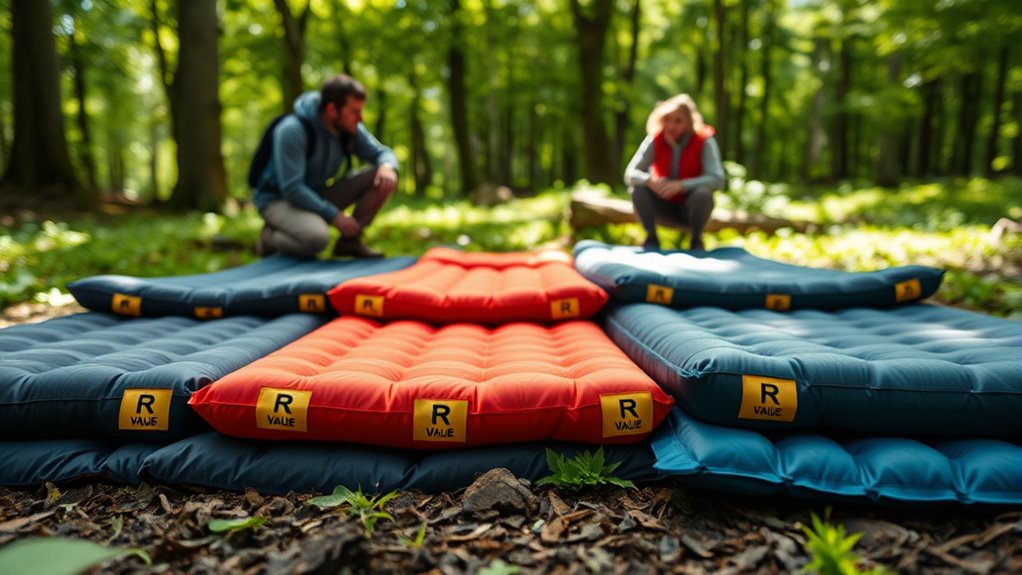
Selecting the right sleeping pad is essential for a comfortable night’s sleep, especially during outdoor adventures. Begin by identifying your preferred sleeping pad types, such as self-inflating, air, or closed-cell foam pads. Each type offers different levels of comfort and portability. Next, consider insulation materials like synthetic or down, which impact warmth and weight. Don’t forget to test the pad for comfort by lying on it in-store if possible. Pay attention to the R-value, guaranteeing it matches your intended use—higher for colder conditions. Check for ease of inflation and deflation, as well as packing size. Finally, read user reviews to see how the pad performs in real-world scenarios. This guarantees you make a well-informed decision for your outdoor experiences.
Debunking Common Myths About R-Value in Sleeping Pads

Many campers misunderstand the R-value of sleeping pads, believing it’s the only factor influencing warmth. This leads to several R-value misconceptions and sleeping pad myths that can affect your camping experience. Here are some important points to take into account:
- R-value measures insulation, but doesn’t account for factors like moisture and wind.
- A higher R-value doesn’t guarantee comfort; personal preferences vary.
- The pad’s material and thickness also play significant roles in warmth.
- Sleeping position and body heat can affect how well you stay warm.
- R-value ratings can differ between manufacturers, so always check specifics.
Frequently Asked Questions
Can I Use a Sleeping Pad Without Considering Its R-Value?
You can use a sleeping pad without considering its R-value, but it might affect your comfort and temperature regulation. Without the right R-value, you may find yourself too cold or uncomfortable during the night, especially in varying temperatures. While you might save some money, investing in a pad with a suitable R-value guarantees you stay cozy and well-rested on your outdoor adventures. So, it’s worth considering for a better experience.
How Does R-Value Affect Durability and Lifespan of Sleeping Pads?
Think of your sleeping pad like a cozy blanket on a chilly night; its R-value determines how well it protects you from the cold ground. A higher R-value enhances insulation effectiveness, keeping you warm and comfortable longer. This added warmth can lead to greater longevity, as it reduces wear and tear from prolonged exposure to cold conditions. So, choosing the right R-value not only boosts comfort but also extends your pad’s lifespan.
Are There Standard R-Value Ratings Across All Brands?
No, there aren’t universal R-value standards across all brands. Each manufacturer can have slightly different methods for testing and reporting their R-values, which can lead to confusion during an R-value comparison. When you’re shopping for a sleeping pad, it’s essential to take into account these discrepancies. Look for reviews and user feedback to gauge how well a pad performs in real-world conditions, rather than relying solely on the R-value listed by the brand.
What Materials Contribute to a Sleeping Pad’s R-Value?
Foam types and insulation materials play an essential role in a sleeping pad’s R-value. You’ll find that closed-cell foam offers decent insulation, while open-cell foam provides more comfort and compressibility. Synthetic materials like polyester or down alternatives enhance warmth without adding too much weight. When choosing a pad, consider how these materials impact the R-value to guarantee you stay warm and cozy during your outdoor adventures.
Does R-Value Change When a Sleeping Pad Is Compressed?
Yes, the R-value can change when you compress a sleeping pad. Compression effects reduce the insulation performance, as the air trapped in the material gets squeezed out, decreasing its ability to resist heat flow. This means that when you pack your pad tightly or sit on it for extended periods, it might not provide the same warmth as when it’s fully expanded. So, keep that in mind while choosing your sleeping gear!
Conclusion
Choosing the right R-value for your sleeping pad can make all the difference between a restful night under the stars and a chilly, uncomfortable experience. Remember, it’s not just about numbers; it’s about the warmth that wraps around you like a cozy blanket. As you drift off, imagine the laughter of friends around the campfire, knowing you’re snug and ready for tomorrow’s adventures. With the right pad, those memories become even sweeter. Happy camping!
Halloween Picks
halloween
As an affiliate, we earn on qualifying purchases.