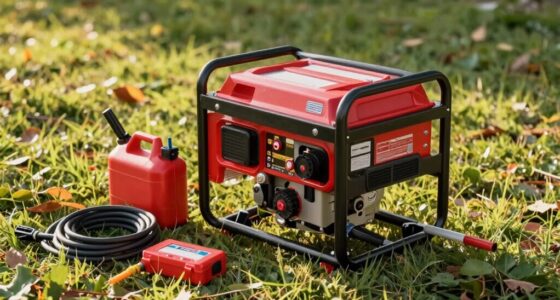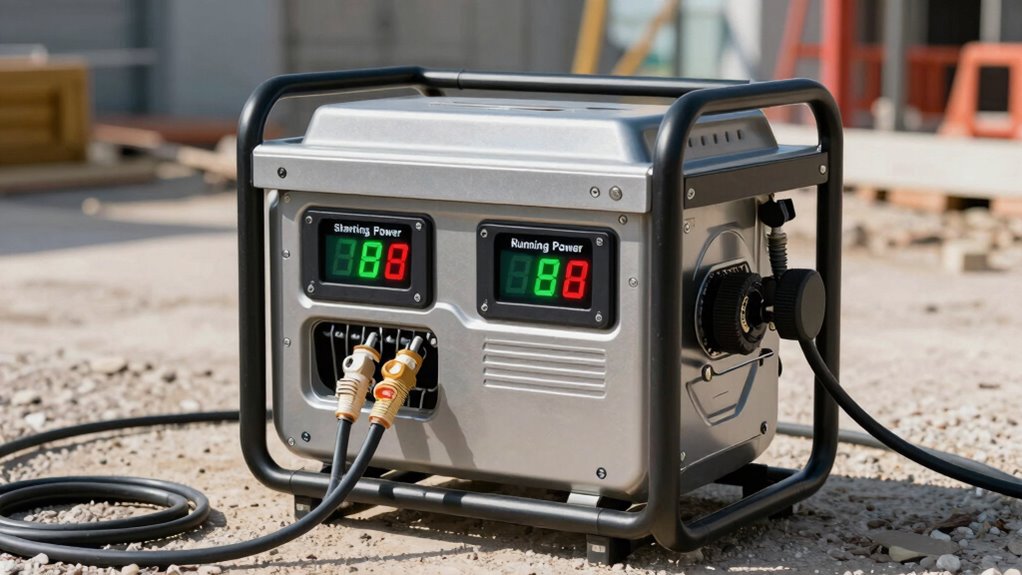

When choosing a generator, it’s important to understand the difference between starting and running wattage. Starting wattage is the initial surge needed to power appliances when they turn on, which can be 2-3 times the normal running wattage. Running wattage is the steady power required during operation. Matching your generator’s capacity with both types of wattage helps prevent overloads and startup issues. Keep exploring to learn how to select the right size for your needs.
Key Takeaways
- Starting power (surge wattage) is the initial energy needed to activate appliances, often 2-3 times higher than running wattage.
- Running power is the continuous energy required for appliances during normal operation.
- Matching generator wattage to both starting and running needs prevents overloads and startup issues.
- Knowing the surge wattage ensures the generator can handle appliances with high startup demands.
- Properly sizing for both starting and running wattage improves efficiency and extends generator lifespan.
Ever wonder how to choose the right generator wattage for your needs? Picking the correct wattage is essential because it guarantees your appliances run smoothly without overloading the system. To do this effectively, you need to understand the difference between starting and running power. Starting power, also known as surge wattage, is the extra power your generator needs momentarily when appliances or tools turn on. Running power, on the other hand, is the continuous wattage your generator provides during normal operation. Matching these wattages properly can prevent damage to your devices and keep your power supply dependable.
Choosing the right generator wattage ensures smooth operation and prevents overloads by matching starting and running power needs.
When selecting a generator, consider the total wattage of all the devices you plan to run simultaneously. For example, an air conditioner or refrigerator may have a high starting wattage, which can be two to three times their running wattage. If your generator isn’t rated to handle these surges, it might trip or fail to start the appliances. A key factor to bear in mind is fuel efficiency. Choosing a generator with the right wattage rating ensures you don’t waste fuel running a larger generator than necessary. Running a generator at or slightly above your needs minimizes fuel consumption and reduces the frequency of refueling, saving you money and effort over time.
Additionally, understanding the difference between starting and running wattage can help you make more accurate choices for your power needs. Being aware of power surge requirements** is crucial because it directly impacts how well your generator can handle sudden load increases. Knowing the typical startup times of appliances can also influence your generator selection, as some devices take longer to power up. It’s also beneficial to consider noise levels, especially if you plan to use your generator in quiet environments, as this can significantly affect your comfort and nearby neighbors. By selecting a generator with appropriate wattage, you can avoid overspending on a machine that’s louder than needed. Many modern generators come with noise-reducing features, but these are most effective when paired with the right wattage size for your setup. Additionally, understanding generator efficiency** can help you further optimize your choice for long-term operation.
Understanding the difference between starting and running wattage helps you optimize your generator choice, balancing power needs with fuel efficiency and noise levels. It’s all about matching your appliances’ surge requirements with a generator that provides enough continuous power without being excessively large. This way, you guarantee your equipment operates smoothly, efficiently, and quietly. When shopping around, always check the wattage ratings carefully and consider your future needs, so you don’t end up with a generator that’s either underpowered or unnecessarily oversized. Ultimately, making an informed decision about wattage helps you get the most out of your generator while keeping operational costs low and noise levels manageable.

Generac 12,500 Starting Watt Tri-Fuel Portable Generator, Electric Start
- Fuel Compatibility: Runs on gasoline, propane, or natural gas
- Power Output: 9500 running watts, 12500 starting watts
- Voltage Stability: Automatic voltage regulation for stable power
As an affiliate, we earn on qualifying purchases.
As an affiliate, we earn on qualifying purchases.
Frequently Asked Questions
How Do I Calculate the Total Wattage Needed for My Appliances?
To calculate the total wattage needed, list each appliance’s wattage and consider appliance efficiency. Add the starting wattage for devices with motors or compressors, as they require more power initially. Include a buffer for power surge management, usually 10-25%, to handle sudden spikes. This guarantees your generator can handle all appliances simultaneously without overload. Always check appliance labels for accurate wattage figures to make precise calculations.
Can a Generator’s Starting Wattage Handle All Appliances Simultaneously?
Your generator’s starting wattage can handle multiple appliances, but it’s like trying to lift a mountain—sometimes it strains. It depends on your appliances’ startup power needs. For reliable power efficiency and generator maintenance, avoid overloading it with everything at once. Always check the starting wattage requirements of each device, and make sure your generator’s capacity exceeds the total initial surge. This way, you prevent damage and keep everything running smoothly.
What Factors Affect a Generator’s Running Wattage Capacity?
Your generator’s running wattage depends on several factors. Fuel efficiency plays a key role, as a more efficient engine can sustain power longer without overload. Noise levels also impact performance; quieter models often have better-designed components that maintain consistent output. Additionally, the quality of the generator’s components and load management affect its capacity to deliver steady power. Regular maintenance guarantees peak performance, helping your generator handle ongoing demands effectively.
How Often Should I Test My Generator’s Wattage?
You should test your generator’s wattage at least once every three to six months to make certain it’s operating properly. Regular testing fits into your maintenance schedule and helps catch issues early, preventing unexpected breakdowns. When testing, monitor fuel efficiency and load capacity. This routine keeps your generator reliable, safe, and ready whenever you need it, guaranteeing it delivers the wattage you require during power outages or emergencies.
Is Higher Wattage Always Better for My Specific Needs?
Higher wattage isn’t always better. You might think more power means better performance, but it can lead to increased fuel consumption and noise levels, making your generator less efficient and more disruptive. If you overload it, you risk damage. Focus on matching your generator’s wattage to your actual needs, balancing power with fuel efficiency and noise levels. Sometimes, a well-chosen, lower wattage generator can serve you better and last longer.

Westinghouse 12500 Watt Dual Fuel Home Backup Portable Generator, Remote Electric Start, Transfer Switch Ready, Gas and Propane Powered
- Power Output: 9500W running, 12500W peak (gas)
- Fuel Options: Gasoline and propane compatible
- Start Type: Remote electric and recoil start
As an affiliate, we earn on qualifying purchases.
As an affiliate, we earn on qualifying purchases.
Conclusion
Understanding the difference between starting and running wattage helps you choose the right generator for your needs. It guarantees your appliances get the power they require, prevents overloads, and keeps your home running smoothly. By knowing what each wattage type offers, you make smarter decisions, avoid surprises, and enjoy peace of mind. In the end, knowing your generator’s wattage is about powering your life confidently, efficiently, and safely—because the right power makes all the difference.

SIOKIUU 2500W Portable Generator Super Quiet Inverter Generator Ultra Lightweight for Home Backup Outdoor Camping, CO Sensor Protect, EPA, ECO Mode
- Extended Runtime: Up to 17 hours on a full tank
- High Power Output: 2500W peak, 1900W running power
- Clean Power for Electronics: Less than 3% THD, safe for sensitive devices
As an affiliate, we earn on qualifying purchases.
As an affiliate, we earn on qualifying purchases.

SURAIELEC Outlet Watt Meter, 90-250V Wide Range Power Meter Cost Calculator
- Electric Usage Monitoring: Measures power, voltage, current, and more
- Wide Voltage Range: 90-250V AC, 0-16A, 0-3680W
- High Accuracy Standards: Class 1.0, precise readings
As an affiliate, we earn on qualifying purchases.
As an affiliate, we earn on qualifying purchases.