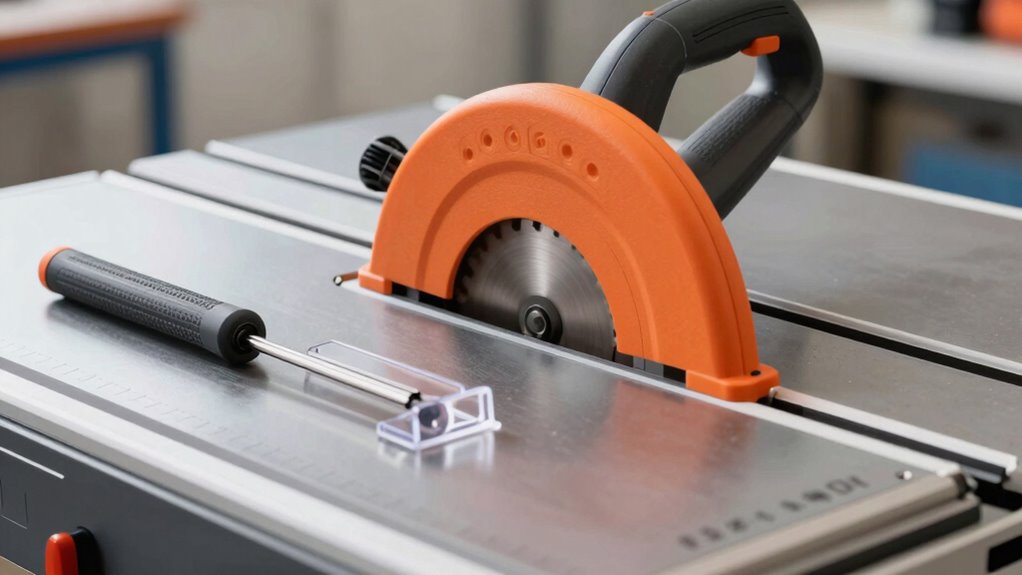

To guarantee your safety, focus on the essential features of a table saw. Use the blade guard to protect yourself from the spinning blade and contain debris. Always handle narrow cuts with a push stick to keep your hands safe and control your workpiece. Regularly maintain safety devices like riving knives and anti-kickback pawls to prevent accidents. Proper safety setup and understanding how these features work together can greatly reduce risks—stay tuned to learn more about keeping your work area safe.

Get the little things that make your day delivered free with Prime
- Fast, free delivery on millions of items
- Prime Video, Amazon Music and more included
- Member-only deals all year
Key Takeaways
- Blade guards provide a physical barrier and improve visibility, reducing accidental contact and debris inhalation.
- Push sticks keep hands at a safe distance during narrow or close-to-blade cuts.
- Regular maintenance of safety devices ensures they function effectively and prevent safety compromise.
- Riving knives and anti-kickback pawls prevent workpiece pinching and ejection, minimizing injury risks.
- Proper installation, cleaning, and understanding of safety features are essential for overall table saw safety.
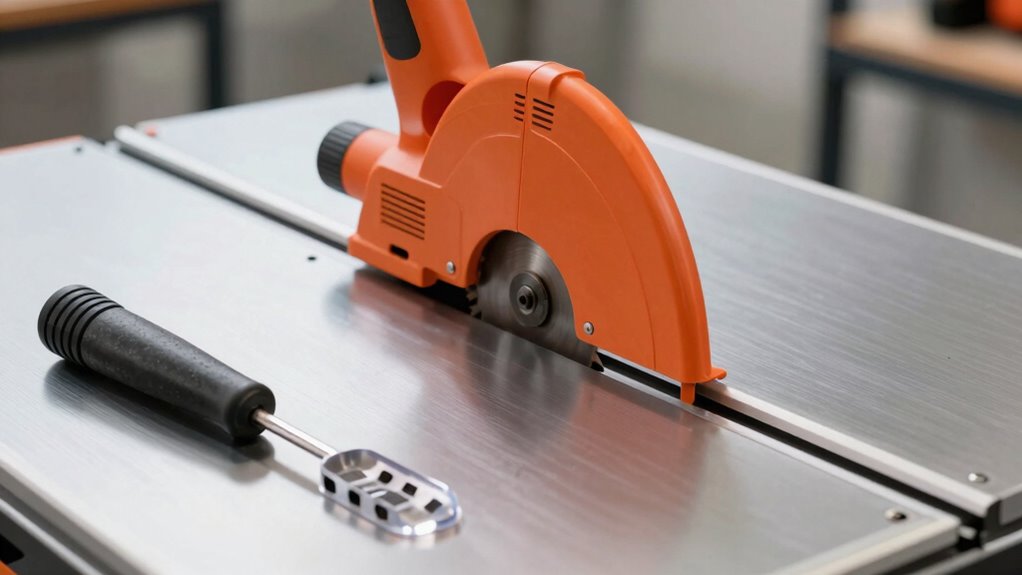
Have you ever wondered how to keep yourself safe while working with a powerful tool like a table saw? It’s essential to understand the safety features designed to protect you during operation. One of the most critical safety components is the blade guard. This transparent cover sits directly over the saw blade, acting as a physical barrier that prevents your hands from accidentally coming into contact with the spinning blade. The blade guard also helps contain sawdust and debris, reducing the risk of inhalation or eye injury. Modern blade guards are often easy to adjust, allowing you to expose only what’s necessary for the cut, which minimizes your risk without sacrificing visibility or control.
The blade guard is a transparent barrier that prevents contact with the spinning blade and contains sawdust for safer operation.
Alongside the blade guard, a push stick is another crucial safety tool you should always have nearby. When you’re making narrow cuts or working close to the blade, using a push stick keeps your hands at a safe distance from the blade’s path. It gives you better control over the workpiece, reducing the chance of slips or accidental contact. Push sticks are simple to use but incredibly effective, especially when handling small or thin materials that are difficult to grip securely with your hands alone. Keep a few different sizes within reach, and never bypass this safety step just to save time. Properly maintaining the safety devices ensures they perform effectively when needed most. Additionally, regularly inspecting safety features helps identify potential issues before they compromise your safety. Recognizing the importance of safety features is essential for preventing accidents and ensuring your protection.
Other safety features on modern table saws include riving knives and anti-kickback pawls. A riving knife sits behind the blade and prevents the cut material from pinching the blade, which can cause kickback—a sudden, dangerous ejection of the workpiece. Anti-kickback pawls, on the other hand, grip the wood and prevent it from being thrown back toward you if it binds or twists during the cut. Both features are designed to reduce the chance of injury and should be engaged and maintained properly. Understanding these safety mechanisms is vital for a safe woodworking experience. Ensuring that safety features are properly installed and functioning is vital for a safe woodworking experience. Regularly cleaning and lubricating these components can also prolong their effectiveness and reliability during use.
As an affiliate, we earn on qualifying purchases.
Frequently Asked Questions
How Often Should Safety Features on a Table Saw Be Inspected?
You should inspect safety features like blade guards and emergency stops before each use to make certain they’re functioning properly. Regular checks help you spot any damage or misalignment that could cause accidents. Make it a habit to verify these safety features every time you operate the saw, and promptly replace or repair any faulty components. Staying vigilant keeps your workspace safe and prevents potential injuries.
Are There Portable Table Saw Safety Features I Should Consider?
Think of portable table saw safety features as your trusty shield on a woodworking adventure. You should consider blade guards to keep your fingers safe from the spinning blade, and anti-kickback pawls to prevent sudden, dangerous thrashes. These features act like vigilant guards, alert and ready to protect you. Always make certain they’re functional and properly installed before you start cutting, turning your work into a safer, smoother journey.
Can Safety Features Be Added to Older Table Saw Models?
Yes, you can add safety features to older table saw models. Retrofit options like blade guards, riving knives, and anti-kickback pawls serve as effective safety upgrades. These enhancements improve your protection without replacing the entire saw. Before installing, confirm compatibility with your specific model and follow manufacturer instructions carefully. Upgrading safety features helps prevent accidents and keeps your workspace safer, regardless of your saw’s age.
What Training Is Recommended for Safe Table Saw Operation?
Think of safe table saw operation like a well-choreographed dance—you need to know the steps. You should take a hands-on safety course that covers using the blade guard and push stick properly. Learning how to handle the saw, understanding safety features, and practicing safe techniques help prevent accidents. Always wear protective gear, stay focused, and never rush. Proper training makes your work safer and more confident.
How Do Safety Features Impact Table Saw Performance?
Safety features like the blade guard and emergency stop greatly enhance your table saw’s performance by preventing accidents and allowing quick responses if something goes wrong. The blade guard keeps your hands safe from the cutting blade, while the emergency stop provides instant power shutdown in emergencies. These features boost your confidence, enabling you to work efficiently without compromising safety, ultimately leading to better precision and smoother operation.
As an affiliate, we earn on qualifying purchases.
Conclusion
By paying close attention to these safety features, you create a more secure environment for your woodworking adventures. Embracing these safeguards isn’t just about prevention; it’s about nurturing a cautious mindset that respects the tool’s power. When you respect the safety features, you’re gently guiding yourself away from potential mishaps, allowing your craftsmanship to flourish with confidence. Remember, a well-guarded workspace is the silent partner in every successful project, whispering safety into every cut you make.
As an affiliate, we earn on qualifying purchases.
As an affiliate, we earn on qualifying purchases.
Columbus Day / Indigenous Peoples' Day Picks
long weekend sales
As an affiliate, we earn on qualifying purchases.