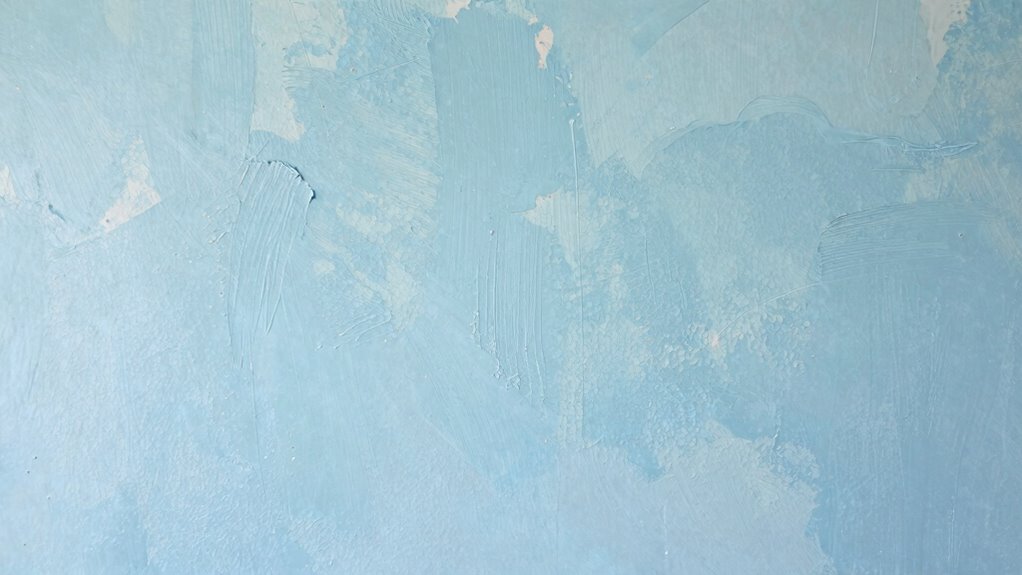

If your paint still looks patchy after two coats, it’s often due to uneven application, poor paint consistency, or rushed technique. Thick paint can leave streaks, while thin paint dries too fast, causing patches. Using the wrong tools or not evenly blending can also lead to visible imperfections. Environmental factors like temperature and lighting play a role too. To achieve a smooth finish, paying close attention to technique, application, and conditions is key—more tips are ahead to help you perfect your paint job.
Key Takeaways
- Paint may be too thick or unevenly mixed, causing inconsistent coverage and streaks.
- Applying paint with inconsistent brush technique or overbrushing leads to patchiness.
- Insufficient drying time between coats can result in uneven absorption and appearance.
- Environmental factors like temperature and lighting can reveal patches that need correction.
- Using improper tools or not maintaining a wet edge creates visible streaks and uneven patches.

Even after applying two coats of paint, you might still notice uneven patches on your walls. This frustrating outcome often leaves you questioning what went wrong, but the issue usually boils down to a few common factors. One of the main culprits is your brush technique. If you’re not applying paint with controlled, even strokes, you risk creating streaks and thin areas that become more visible after multiple coats. To avoid this, you need to use a consistent brush technique—loading your brush properly, working in the same direction, and avoiding overbrushing. This guarantees the paint is spread evenly across the wall surface, reducing patchiness and leaving a smoother finish.
Another critical factor is paint consistency. If your paint is too thick or too thin, it can lead to uneven coverage and stubborn patches. Thick paint tends to leave brush marks and may require more effort to spread out evenly, while thin paint can dry too quickly, making it difficult to blend and resulting in uneven patches. To achieve the best results, stir your paint thoroughly before applying and consider adding a paint extender or thinning it slightly if needed. Properly mixed paint flows more smoothly from your brush or roller, creating a uniform coat that adheres evenly to the wall. Additionally, ensuring your paint is properly mixed and thinned can make a significant difference in the final appearance. Using the correct paint tools also helps ensure a more even application, reducing the chances of patchiness. It’s also helpful to check the paint temperature during application, as temperature fluctuations can affect drying times and finish quality. Being aware of paint drying time and how it varies with environmental conditions can help you plan your application process more effectively.
Consistently mixed paint ensures smooth, even coverage and a flawless finish on your walls.
Inconsistent application techniques often cause patchiness, even if you’re using the right tools. For example, starting with a loaded brush and maintaining a wet edge helps prevent visible lines or streaks. If you work too slowly or lift your brush before the paint has dried, you risk creating thin spots or overlaps that appear patchy. Maintaining a steady pace and working in manageable sections ensures each coat builds up uniformly. Also, overlapping your strokes slightly helps blend the paint seamlessly, avoiding the appearance of streaks or patches. Proper technique consistency also involves paying attention to how much pressure you apply, which can influence the smoothness of your finish.
Lighting conditions during painting can also influence how patches appear once the paint dries. Under harsh or uneven lighting, subtle imperfections become more noticeable. It’s best to paint during consistent, natural light or in a well-lit room to better spot uneven areas and address them immediately. If you see patches after your second coat, it might be worth applying a third, but only after ensuring your technique and paint consistency are excellent. Proper preparation, steady application, and the right paint consistency are your best bets for achieving a smooth, even finish that looks professional and flawless.

Mister Rui 4 Inch Foam Paint Roller Kit, 8 Pack – Mini Roller Set with 4” Small Roller Covers, Frame, Tray & Liner for Smooth Painting on Walls, Trim, Furniture, Home DIY Projects
Complete 4" Mini Paint Roller Kit: This all-in-one professional painting kit includes (5) high-density foam roller covers, a…
As an affiliate, we earn on qualifying purchases.
As an affiliate, we earn on qualifying purchases.
Frequently Asked Questions
Can Lighting Affect the Appearance of Patchy Paint?
Lighting effects can definitely impact how patchy paint appears. Harsh or uneven lighting can highlight inconsistencies in your paint color, making patches more noticeable. Soft, even lighting helps your true paint color shine through and minimizes the appearance of patches. To get a more accurate view of your painted walls, consider adjusting your lighting or checking your paint color under different light conditions.
Does the Type of Paint Brand Matter for Coverage?
Yes, the paint brand really matters for coverage. Different brands have varying paint formulations that affect how well the paint adheres and covers surfaces. A good brand usually offers better paint consistency, which makes application smoother and more even. Cheaper or lower-quality paints often require more coats and still may look patchy. So, investing in a reputable brand guarantees better coverage and a more professional finish with fewer coats.
How Long Should I Wait Between Coats?
Think of paint drying like a delicate ballet—each step needs patience. You should wait at least 4-6 hours between coats, allowing the coating thickness to settle and dry thoroughly. Rushing this process risks uneven coverage, like a dancer stumbling. Proper drying time guarantees your second coat bonds well, creating a smooth, even finish. Trust the process, and give your walls the time they need to shine flawlessly.
Can Wall Texture Influence Paint Coverage?
Yes, wall texture can influence paint coverage. Rough or uneven surfaces require thorough surface preparation, like sanding or smoothing, to guarantee even paint application. Additionally, maintaining the right paint consistency helps it flow better over textured surfaces, reducing patchiness. When you prepare the surface properly and use consistent, well-mixed paint, you’ll achieve a more uniform finish, even on textured walls.
Is Primer Necessary Before Painting?
Yes, primer is necessary before painting to guarantee color consistency and better surface preparation. It creates a uniform base, helping the paint adhere properly and reducing patchiness. Without primer, uneven surfaces or previous colors may show through, causing patchy results even after two coats. Using primer enhances coverage, smooths out imperfections, and ensures your final color is vibrant and consistent across the entire wall.
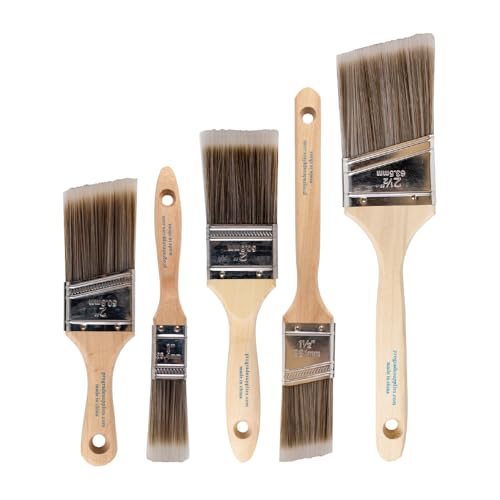
Pro Grade Paint Brushes, Paint Brush Set for Walls, Trim & Stain, 5-Piece
COMPLETE 5-PIECE BRUSH SET FOR EVERY PAINTING TASK — Includes 1 Inch Flat, 1.5 Inch Angle, 2 Inch…
As an affiliate, we earn on qualifying purchases.
As an affiliate, we earn on qualifying purchases.
Conclusion
Remember, patience is a virtue, especially when it comes to painting. If your paint still looks patchy after two coats, don’t rush to fix it immediately. Sometimes, it takes a little extra time and care to achieve that smooth, even finish you’re after. Keep in mind that every stroke counts, and as the saying goes, “Rome wasn’t built in a day.” With persistence, your walls will look flawless in no time.

25 Pack Paint Stir Sticks, 12 Inch Wooden Paint Sticks for Mixing, Paint Stirrers, Garden and Library Markers
Size: Length 12 inch, width 1 inch, thickness 0.12 inch, 25 pack in total.
As an affiliate, we earn on qualifying purchases.
As an affiliate, we earn on qualifying purchases.

Flood Floetrol Latex Paint Additive & Conditioner
IMPROVES PAINT FLOW & LEVELING: Floetrol latex paint additive conditions acrylic and latex paint so it flows smoothly,…
As an affiliate, we earn on qualifying purchases.
As an affiliate, we earn on qualifying purchases.