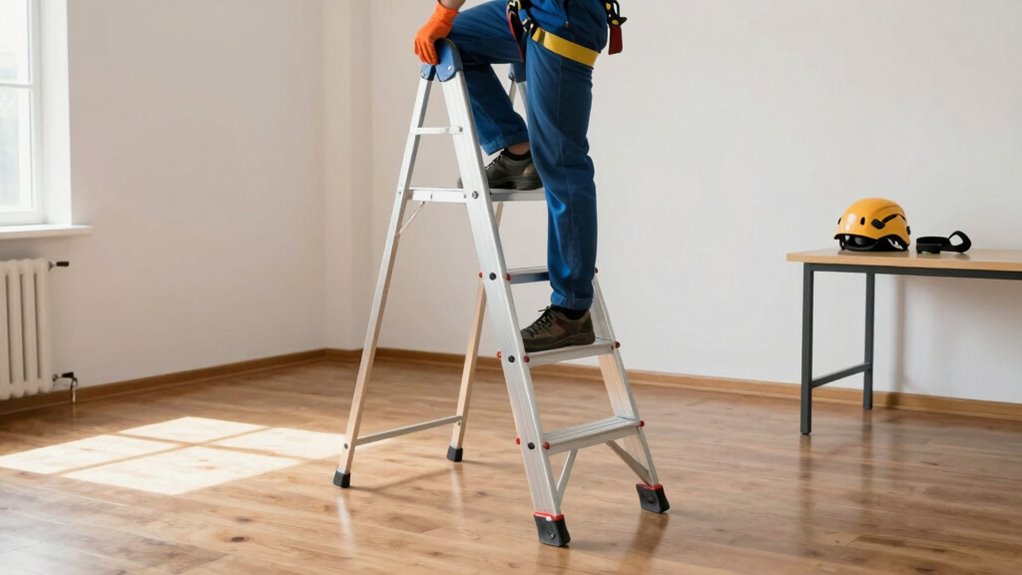

When working with ladders indoors, always check for electrical hazards like exposed wires or fixtures nearby, and turn off power if possible. Use a stable, non-slip surface and maintain your balance at all times. Store ladders safely in a dry, secure spot away from children, and regularly inspect for damage or rust. Avoid wet conditions and keep the area clear of tripping hazards. Keep these tips in mind, and you’ll be well on your way to safer indoor ladder use.
Key Takeaways
- Always inspect the ladder for damage and stability before use.
- Place the ladder on a flat, stable surface to prevent tipping.
- Keep electrical hazards in mind; avoid proximity to exposed wires or outlets.
- Maintain three points of contact while climbing for better balance.
- Store ladders safely in dry, secure locations away from children.

Have you ever thought about the risks of using a ladder indoors? It might seem straightforward, but working with a ladder inside your home can be dangerous if you don’t take the right precautions. One of the main concerns is electrical hazards. If there are exposed wires or electrical fixtures nearby, you could accidentally come into contact with live electricity, leading to shocks or even fires. Always check for electrical hazards before setting up your ladder. Turn off power to any nearby outlets or fixtures if possible, and keep a safe distance from electrical sources. Using a non-conductive ladder, such as one made of fiberglass or wood, can also prevent accidental shocks. Additionally, understanding electrical hazards and how to identify them can significantly improve your safety. Proper ladder storage is another critical aspect of indoor ladder safety. When you’re not using your ladder, store it in a safe, dry place where it won’t fall or cause a trip hazard. Avoid leaning it against walls where it could slip or fall, especially if the surface isn’t stable. Proper ladder storage not only extends the life of your ladder but also minimizes safety risks. Ensure that your ladder is inspected regularly for signs of wear and tear, such as cracks or corrosion, to prevent unexpected accidents. It’s also important to be aware of ladder stability and how to maintain proper balance during use. Make sure it’s stored upright or lying flat on a stable surface, away from children or pets who might accidentally knock it over. If your ladder is metal, be particularly cautious about moisture or rust, which can weaken its structure over time. Being aware of ladder safety tips and best practices can help prevent accidents and injuries during indoor use.

Louisville Ladder 6-Foot Fiberglass Step Ladder, 300-Pound Load Capacity, Type IA, FS1506
NON-CONDUCTIVE: Crafted with fiberglass for non-conductive safety assurance, this Fiberglass Stepladder combines strength and durability.
As an affiliate, we earn on qualifying purchases.
As an affiliate, we earn on qualifying purchases.
Frequently Asked Questions
How Do I Choose the Right Ladder for Indoor Use?
To choose the right ladder for indoor use, consider your task’s height and weight capacity needs. Make certain the ladder’s weight capacity matches or exceeds your weight plus tools. Opt for lightweight, durable materials like aluminum for easy mobility. Also, check if the ladder’s material is suitable for indoor environments—avoid metal near electrical sources. Picking the right ladder ensures safety, stability, and efficiency during your indoor projects.
What Are Common Signs of Ladder Damage or Wear?
You should regularly inspect your ladder for damage indicators like bent or cracked rungs, loose or missing hardware, and corrosion, especially if it’s made of metal. Check the ladder material for signs of wear, such as splinters or frayed fibers if it’s wood, or rust if it’s metal. Any dents, warping, or instability indicate damage, and you should replace or repair the ladder before using it again to guarantee safety.
Can I Use a Step Ladder on Uneven Indoor Floors?
You shouldn’t use a step ladder on uneven indoor floors because it risks instability. Make sure the ladder has non-slip feet and is on a flat surface to prevent slipping. Always check the weight capacity before climbing, ensuring it can support your weight plus tools or materials. If the floor is uneven, consider placing a board or leveling device beneath the ladder for added stability and safety.
What’s the Best Way to Store Ladders Safely Indoors?
Think of storing your ladder like tucking in a trusted friend—carefully and securely. Store your ladder vertically against a sturdy wall using storage accessories like hooks or brackets, ensuring it’s off the ground to prevent damage. For safety and longevity, opt for ladders made from durable materials like aluminum or fiberglass, and keep storage areas clear of clutter. Proper storage keeps your ladder safe and ready for your next project.
How Often Should I Inspect My Ladder for Safety?
You should inspect your ladder for safety at least once a month. Regular ladder maintenance and safety inspections help identify any damage, loose rungs, or corrosion that could cause accidents. Before each use, do a quick visual check for stability, cracked parts, or missing components. By staying diligent with inspections and maintenance, you guarantee your ladder remains safe, reducing the risk of falls or injuries during indoor tasks.

HBTower Step Ladder, Folding Step Stool with Wide Anti-Slip Pedal
UPGRADE STEP LADDER: Open: 20.1" x 26.8" x 40.9", Folded: 44.5" X 20.1" X 1.6", Net Weight: 11.5…
As an affiliate, we earn on qualifying purchases.
As an affiliate, we earn on qualifying purchases.
Conclusion
Remember, following proper ladder safety indoors keeps you safe and prevents accidents. Always inspect your ladder before use, maintain three points of contact, and avoid overreaching. Did you know that falls from ladders account for nearly 300 deaths annually in the U.S.? Staying cautious and attentive can make all the difference. Keep safety top of mind, and you’ll confidently tackle your indoor projects without worry. Stay safe and climb smart!

Louisville Ladder Aluminum Ladder Stabilizer, LP-2200-00
STABLE & SECURE: Keeps your ladder steady while working near windows, walls, and gutters for safer access
As an affiliate, we earn on qualifying purchases.
As an affiliate, we earn on qualifying purchases.

Werner Ladder Rack Hold 7 Ladders
Werner ladder rack for secure equipment transport
As an affiliate, we earn on qualifying purchases.
As an affiliate, we earn on qualifying purchases.