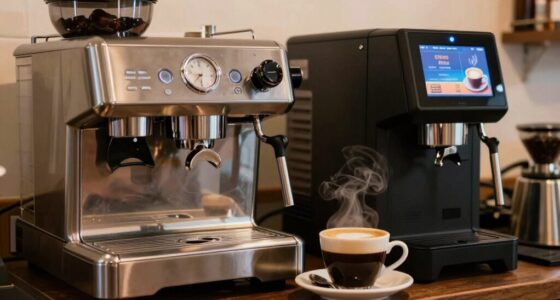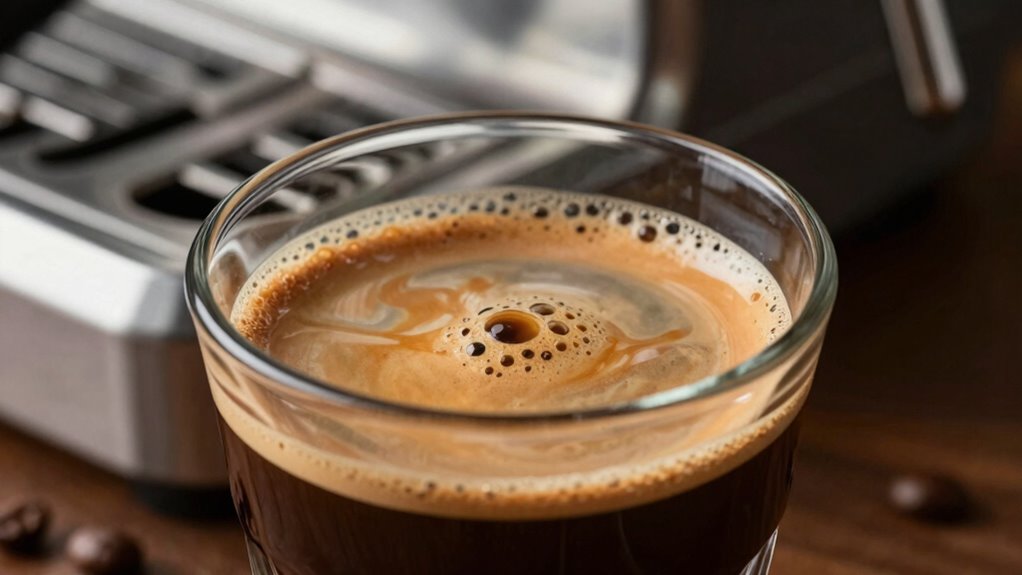

Your espresso tastes sour or bitter mainly because of improper extraction. If the grind is too coarse, water flows too quickly, resulting in under-extraction and a sour flavor. If it’s too fine, over-extraction introduces bitterness. Temperature, pressure, and extraction time also play essential roles—too cool or hot water, or too short or long extraction, upset the balance. Fine-tuning these variables helps you avoid flavor issues. Keep exploring to uncover how to perfect your brew environment.

Get the little things that make your day delivered free with Prime
- Fast, free delivery on millions of items
- Prime Video, Amazon Music and more included
- Member-only deals all year
Key Takeaways
- Under-extraction from coarse grind or low temperature causes sourness due to insufficient soluble compounds.
- Over-extraction from fine grind or high temperature results in bitterness from excessive bitter compounds.
- Improper brewing time (too short or too long) disrupts flavor balance, leading to sour or bitter tastes.
- Fluctuations in temperature or pressure during extraction can cause inconsistent, undesired flavors.
- Incorrect equipment settings or poor process control hinder optimal extraction, affecting flavor harmony.
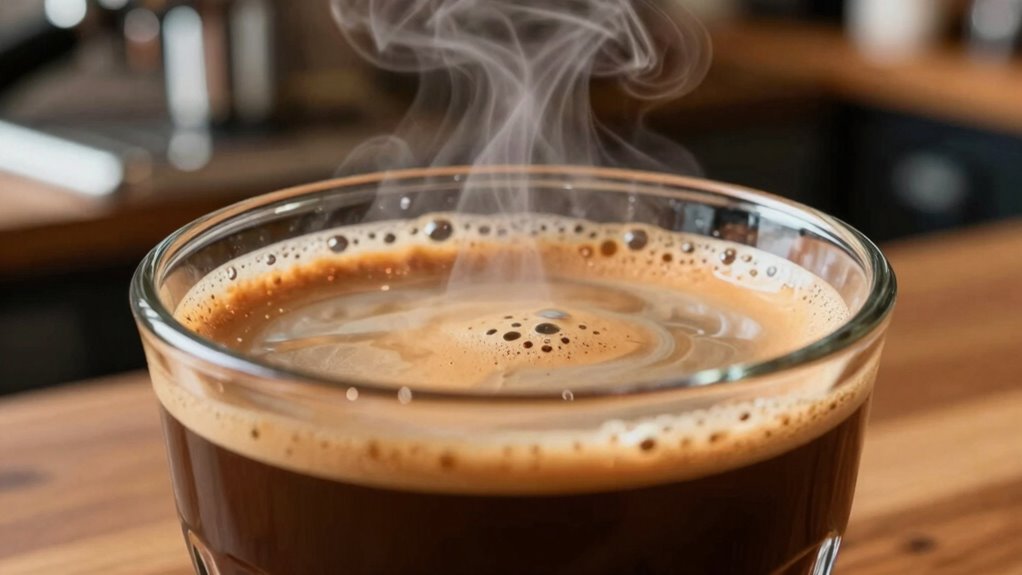
If your espresso tastes sour or bitter, the issue often lies in how it’s brewed rather than the beans themselves. Understanding flavor chemistry is key to pinpointing what’s going wrong. The complex interplay of acids, sugars, and bitter compounds in the coffee beans influences the final taste, but how you manipulate brewing variables determines whether those flavors shine or clash. When you’re faced with sourness, it usually indicates under-extraction, meaning not enough of the coffee’s soluble compounds have been dissolved. Conversely, bitterness often signals over-extraction, where too many bitter compounds are released, or the brewing process is too aggressive.
Your brewing variables—such as grind size, water temperature, extraction time, and pressure—are the main factors that control this delicate balance. If your grind is too coarse, water flows through the coffee too quickly, leaving behind many of the desirable sweet and acidic flavors, resulting in a sour taste. On the other hand, a grind that’s too fine can cause over-extraction because the water struggles to pass through, pulling out excessive bitter compounds. Adjusting your grind size to match your brewing method is essential for controlling flavor extraction and ensuring that the acids and sugars are properly balanced.
Adjust grind size carefully to balance extraction and enhance flavor harmony in your espresso.
Temperature plays a critical role as well. If your water’s too cool, the extraction process won’t reach its full potential, leading to under-extraction and sourness. If it’s too hot, you risk over-extraction, which can make your espresso bitter and harsh. Maintaining an optimal brewing temperature, generally between 195°F and 205°F, helps you hit the sweet spot where flavor chemistry works in your favor. Extraction time is another key variable; a shot pulled too quickly often results in under-extraction, while a shot pulled too long can extract undesirable bitter compounds. Strive for a balanced extraction time—typically around 25 to 30 seconds—for a fuller, more harmonious flavor profile. Additionally, pressure control can significantly influence how flavors are extracted and can help prevent common issues like sourness or bitterness. Proper temperature stability during extraction is also crucial because fluctuations can lead to inconsistent flavor results.
Focusing on pressure management can further improve flavor consistency, especially if your machine allows for adjustments, ensuring that the water interacts evenly with the coffee grounds. Proper pressure during extraction influences how flavors are extracted from the coffee grounds. Proper pressure ensures that water interacts evenly with the coffee, maximizing flavor extraction while minimizing bitterness. If your espresso is consistently sour or bitter, you should revisit these brewing variables methodically. Fine-tuning each element based on your specific equipment and beans allows you to influence the flavor chemistry directly, leading to a richer, more balanced espresso. Remember, small adjustments can make a big difference in controlling the complex chemistry behind each shot. Additionally, understanding specialized equipment like pressure regulators can help optimize extraction, especially if your machine allows for pressure adjustments.
espresso grinder for perfect extraction
As an affiliate, we earn on qualifying purchases.
As an affiliate, we earn on qualifying purchases.
Frequently Asked Questions
Does Water Temperature Affect Espresso Flavor?
Yes, water temperature directly impacts your espresso’s flavor during the extraction process. If water’s too hot, it can lead to over-extraction, making your espresso bitter, especially if the water has high mineral content. Conversely, too cold water causes under-extraction, resulting in sour notes. Maintaining ideal water temperature guarantees a balanced espresso, allowing the minerals and flavors to extract properly and produce a smooth, rich taste.
Can Grind Size Influence Espresso Bitterness?
Absolutely, your grind size can turn your espresso into a bitter masterpiece or a weak brew. If your grind isn’t consistent and particle distribution is uneven, you’ll extract too much bitter compounds or under-extract the flavors. Think of it as a dance—if one particle steps out of line, the whole rhythm suffers. So, perfecting your grind size and preserving uniformity guarantees a balanced, less bitter espresso.
How Does Roast Level Impact Espresso Sourness?
A darker roast level generally reduces espresso sourness because the longer roasting process breaks down acids, creating a richer, more bitter flavor. Your roast profile influences this, with darker roasts emphasizing roasted notes over acidity. Bean origin also matters; some origins naturally have higher acidity, which persists even in darker roasts. So, choosing a roast profile and bean origin suited to your taste can help control espresso sourness effectively.
Is Brewing Time Linked to Espresso Taste?
Brewing time plays a subtle role in shaping your espresso’s flavor balance. When you extend extraction, you often release more complex flavors, but too long can introduce bitterness, compromising consistency. Shorter brewing times may lead to under-extraction, making the shot sour. Finding that sweet spot guarantees a harmonious blend of acidity and richness, giving you a consistently delightful espresso experience. Adjust your timing carefully for best flavor balance.
Do Different Beans Produce Different Bitterness Levels?
Yes, different beans produce varying bitterness levels. You’ll notice that beans with strong, roasted flavors tend to be more bitter, while lighter roasts offer smoother, less bitter tastes. To maintain flavor consistency, it’s essential to use fresh beans because freshness markedly impacts bitterness. When beans are old, they can develop off-flavors or become overly bitter, affecting your espresso’s overall taste. Proper storage and selecting the right beans help you achieve a balanced, enjoyable shot.
temperature control espresso machine
As an affiliate, we earn on qualifying purchases.
As an affiliate, we earn on qualifying purchases.
Conclusion
Now that you know the real reasons behind sour or bitter espresso, you’re better equipped to tweak your brewing process and enjoy that perfect cup. Don’t throw in the towel when things don’t go as planned—sometimes, a small adjustment makes all the difference. Remember, every sip gets you closer to mastering your brew. Keep experimenting, because patience is a virtue, and soon enough, you’ll find that sweet spot where your espresso shines just right.
As an affiliate, we earn on qualifying purchases.
pressure gauge for espresso machine
As an affiliate, we earn on qualifying purchases.
As an affiliate, we earn on qualifying purchases.
Halloween Picks
halloween
As an affiliate, we earn on qualifying purchases.