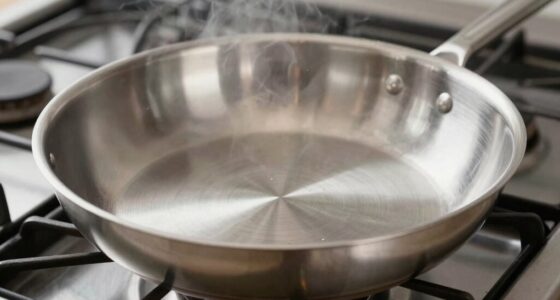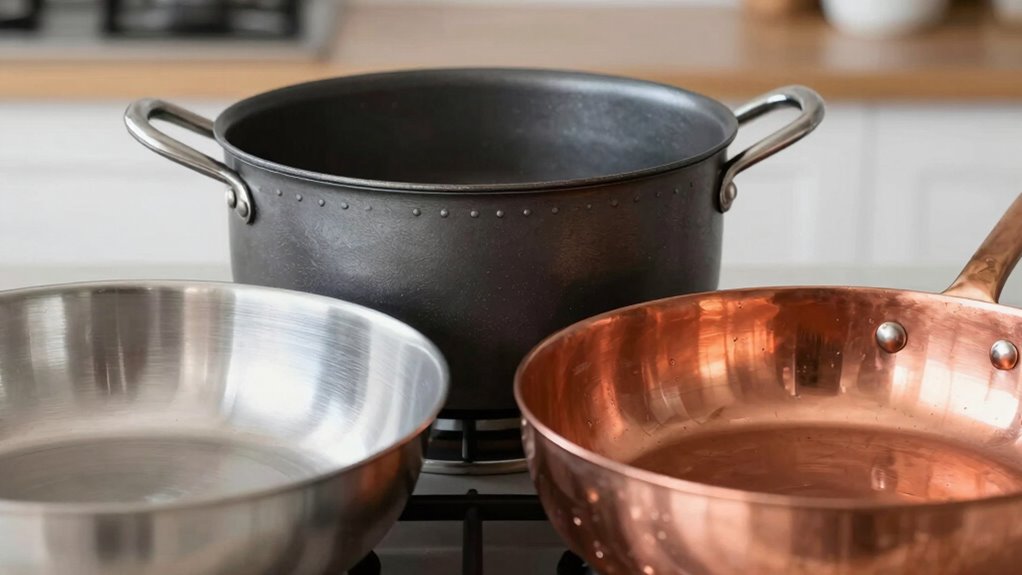

When choosing cookware, understanding aluminum, steel, and copper helps enhance your cooking. Aluminum is lightweight and heats quickly, but can react with acidic foods. Steel offers durability and even heat distribution, requiring regular maintenance. Copper excels in heat conductivity for precision cooking but needs frequent polishing. Each material has its pros and cons, impacting your cooking experience. Stick around to discover detailed insights on heat conductivity, maintenance tips, and how to choose the best cookware for your needs.

Get the little things that make your day delivered free with Prime
- Fast, free delivery on millions of items
- Prime Video, Amazon Music and more included
- Member-only deals all year
Key Takeaways
- Aluminum cookware is lightweight and heats quickly but may react with acidic foods; it’s easy to maintain with gentle cleaning techniques.
- Steel cookware is durable, provides even heat distribution, and requires regular seasoning and hand washing to preserve its quality.
- Copper cookware offers exceptional heat conductivity, allowing for precise temperature control, but needs regular polishing to maintain appearance.
- Each material has unique pros and cons; choose based on cooking style, durability needs, and maintenance preferences.
- Proper storage solutions, like stacking with liners or hanging, help maintain the condition of all cookware materials.
Products Worth Considering

Samsung 85-Inch M70H Series Mini LED 4K Smart TV (2026)

Dyson V8 Cyclone Cordless Vacuum

Shark Navigator Robot Vacuum with Self-Empty Base, Dark Grey (RV2120AE)
As an affiliate, we earn on qualifying purchases.
Making the Right Choice: Which Cookware Material Is Best for You?
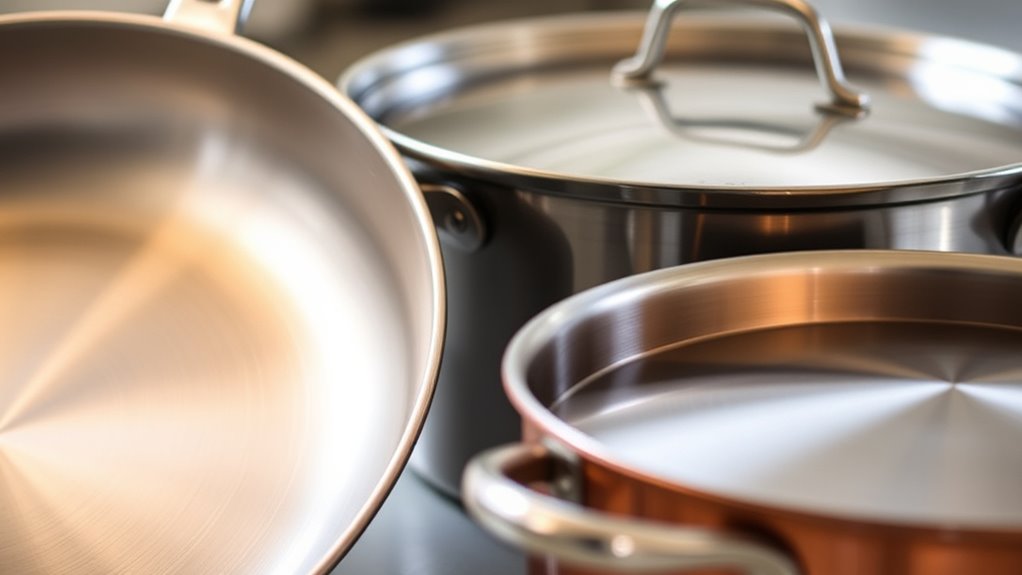
When choosing cookware, how do you know which material suits your cooking style best? Start by considering your cookware preferences. Are you looking for heat retention, durability, or versatility? Each material has its strengths and weaknesses, so it’s essential to make informed material comparisons. For example, stainless steel is great for browning and searing, while cast iron excels at heat retention. Nonstick surfaces make cooking and cleanup a breeze, but they may not handle high temperatures well. Copper provides excellent heat conductivity but often requires more maintenance. Ultimately, the right choice depends on your cooking habits and the types of dishes you frequently prepare. Evaluate your needs, and you’ll find the perfect cookware material for your kitchen adventures.
Aluminum Cookware: Pros and Cons
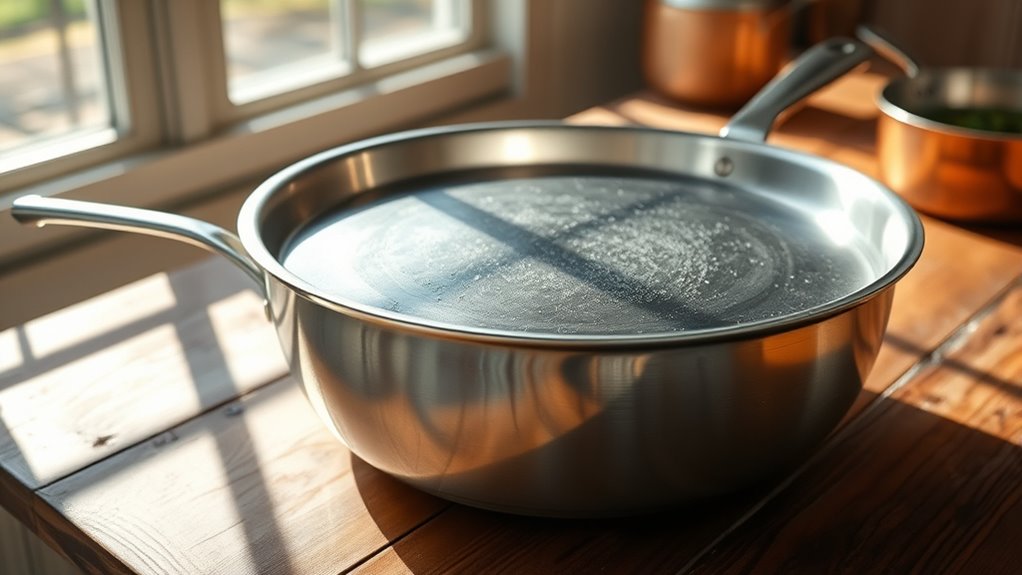
Aluminum cookware offers a blend of advantages and disadvantages that can impact your cooking experience. On the plus side, it’s lightweight, heats up quickly, and is generally affordable. However, there are aluminum safety concerns, mainly regarding its potential to react with acidic foods, which can affect flavor and may raise health questions for some people. If you’re worried about these issues, consider aluminum cookware alternatives like stainless steel or cast iron, which provide durability and resistance to corrosion. While they might be heavier and pricier, they offer different cooking benefits. Ultimately, the choice depends on your cooking style and preferences, so weigh the pros and cons carefully to find the best fit for your kitchen.
Steel Cookware: Key Advantages and Disadvantages
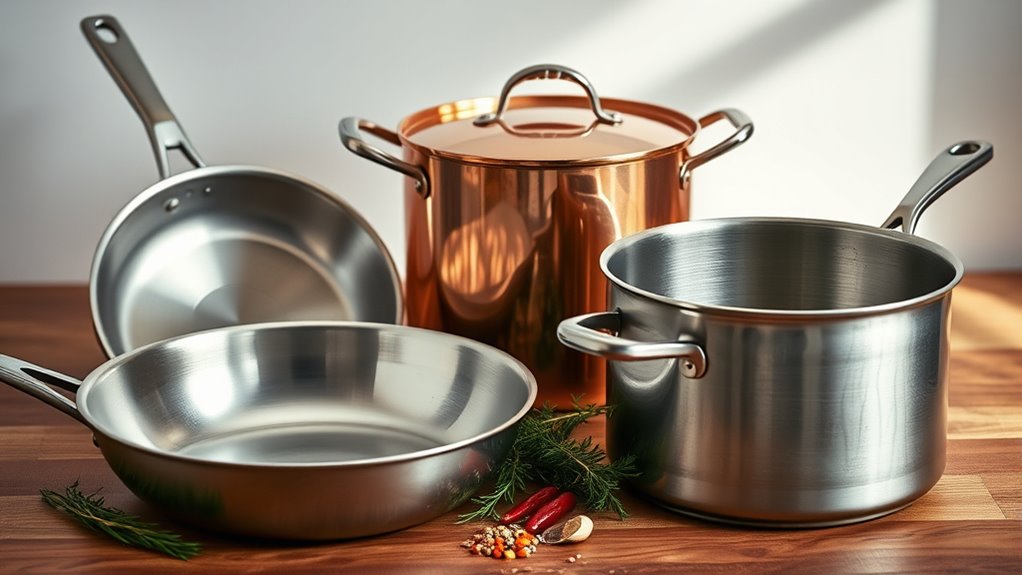
When it comes to steel cookware, you’ll appreciate its durability and long lifespan, making it a worthwhile investment for your kitchen. It also offers excellent heat distribution, ensuring your food cooks evenly. However, you’ll need to contemplate the maintenance and care it requires to keep it in top shape.
Durability And Longevity
Steel cookware stands out for its impressive durability and longevity, making it a favorite among both professional chefs and home cooks. Understanding the durability factors of steel is essential for maximizing its lifespan. Here are some longevity tips to keep your steel cookware in top shape:
| Durability Factors | Longevity Tips | Benefits |
|---|---|---|
| High resistance to rust | Regularly season it | Enhances non-stick quality |
| Scratch-resistant | Avoid metal utensils | Maintains surface integrity |
| Heat resilient | Hand wash when possible | Preserves finish and quality |
Heat Distribution Efficiency
While many cooks appreciate the durability of steel cookware, its heat distribution efficiency is equally important to contemplate. Steel typically has slower heat conductivity compared to materials like copper, which can impact your cooking performance. However, once heated, steel excels at heat retention, ensuring your food stays warm longer. This means you can achieve a nice sear on meats or maintain steady temperatures for simmering sauces. Just keep in mind that uneven heating can lead to hot spots, so you might need to adjust your stirring or cooking techniques. Ultimately, if you value reliable heat retention and durability, steel cookware can be a great addition to your kitchen arsenal, enhancing your overall culinary experience.
Maintenance And Care Requirements
Although many appreciate the durability of steel cookware, its maintenance and care requirements can be a bit demanding. To keep your steel cookware in top shape, you need to adopt proper cleaning techniques. Avoid abrasive sponges that can scratch the surface; instead, use mild detergents and soft cloths. After washing, dry your cookware immediately to prevent rust.
Seasoning is also essential. Apply a thin layer of oil before first use and periodically thereafter to maintain a non-stick surface. Heat the oiled cookware until it smokes slightly, then let it cool. This process helps create a protective layer. By following these cleaning techniques and seasoning tips, you’ll guarantee your steel cookware lasts for years while providing excellent cooking performance.
Copper Cookware: Why Is It Ideal for Precision Cooking?
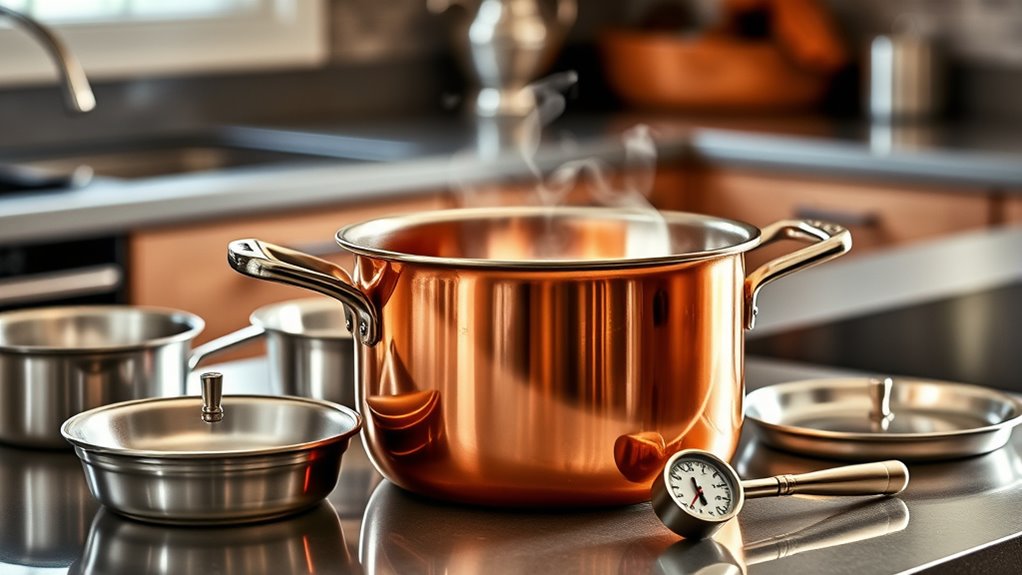
If you’re aiming for precision in your cooking, copper cookware is your best bet. Its exceptional heat conductivity allows for quick and even heating, giving you the control you need for delicate dishes. Plus, the quick response time means you can adjust temperatures instantly, ensuring perfect results every time.
Exceptional Heat Conductivity
When it comes to precision cooking, few materials rival copper cookware due to its exceptional heat conductivity. This unique property enables you to achieve unparalleled thermal efficiency and cooking performance. With copper, you’ll notice a swift response to temperature changes, allowing you to master delicate sauces or perfectly sear meats with ease.
| Benefit | Copper Cookware | Other Materials |
|---|---|---|
| Heat Distribution | Excellent | Varies |
| Cooking Precision | High | Moderate to Low |
| Response Time | Instant | Slower |
| Durability | Moderate (with care) | High |
Choosing copper cookware means you can truly enhance your culinary skills, making every dish a masterpiece.
Precision Temperature Control
Precision temperature control is a hallmark of copper cookware, empowering you to achieve exact cooking results effortlessly. With copper’s superior heat conductivity, you can easily utilize various temperature regulation techniques. Whether you’re simmering sauces or searing meats, copper allows for quick adjustments to heat, ensuring your dishes cook evenly without hot spots. This responsiveness is vital for mastering cooking precision methods, allowing you to maintain the ideal temperature throughout the cooking process. You’ll find that delicate tasks, like preparing custards or melting chocolate, become far more manageable. By choosing copper cookware, you’re investing in a tool that enhances your culinary skills, making it easier to create perfectly cooked meals every time. Embrace the art of precision cooking today!
Quick Response Time
Copper cookware stands out for its quick response time, making it an excellent choice for precision cooking. When you heat copper, it warms up rapidly, allowing you to achieve quick heating that’s essential for delicate tasks like making sauces or sautéing vegetables. This responsiveness means you can adjust the temperature instantly, preventing overcooking or burning. With copper, you’ll find that your cooking becomes more intuitive, as you can easily maintain the exact temperature needed for your dish. The ability to respond quickly to heat changes allows for better control, enhancing your overall cooking experience. If you’re serious about precision in the kitchen, investing in copper cookware will elevate your skills and results markedly.
Heat Conductivity Comparison: Aluminum, Steel, and Copper
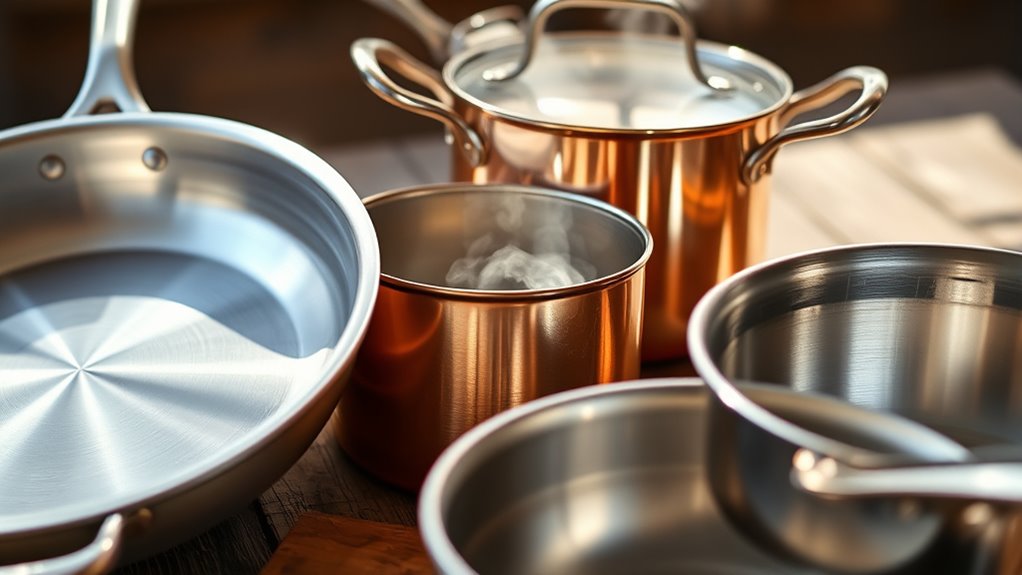
As you explore different cookware materials, understanding their heat conductivity can make a significant difference in your cooking results. Aluminum is known for its excellent heat conductivity, heating up quickly and providing even cooking. However, it doesn’t retain heat as well as copper or some steel options. Copper, on the other hand, excels not only in heat conductivity but also in heat retention, offering superior cooking performance for delicate dishes. Stainless steel, while less conductive, can still perform well, especially when combined with aluminum or copper cores. By choosing the right material, you can achieve better results in your dishes, enhancing not just the cooking experience but also the flavors you bring to the table.
Maintenance Guide for Different Cookware Materials

While each cookware material offers unique advantages, proper maintenance is key to ensuring their longevity and performance. For aluminum, use gentle cleaning techniques like warm soapy water and avoid abrasive sponges to prevent scratching. Stainless steel needs a bit more care; scrub with a non-abrasive cleaner to keep it shiny. Copper cookware requires regular polishing to maintain its appearance, so use a vinegar and salt mixture as a safe cleaning technique. Store your pots and pans properly, stacking them with protective liners to prevent scratches. Additionally, hang your copper cookware to keep it looking great. By following these cleaning techniques and storage solutions, you’ll extend the life of your cookware and enjoy cooking with them for years to come.
Frequently Asked Questions
Can I Use Metal Utensils With All Cookware Materials?
You can’t use metal utensils with all cookware materials. Some cookware, like nonstick or certain types of ceramic, can scratch easily, so it’s best to stick with silicone or wooden utensils. However, stainless steel and cast iron are more scratch-resistant and can handle metal utensils. Always check your cookware’s guidelines for specific recommendations to guarantee you maintain its quality and longevity while avoiding damage from metal utensil compatibility issues.
How Does Cookware Material Affect Food Flavor?
Cookware material greatly affects food flavor due to flavor absorption and material reactivity. For instance, reactive materials like aluminum can interact with acidic foods, altering their taste. On the other hand, non-reactive materials, such as stainless steel, won’t impact your dish’s flavors. If you want to preserve the true essence of your ingredients, choose non-reactive cookware to guarantee that the flavors remain intact and pure during the cooking process.
Are There Eco-Friendly Cookware Options Available?
Absolutely, there are eco-friendly cookware options that’ll make you feel like a culinary superhero! Think sustainable materials like bamboo or recycled stainless steel, which are not just kind to the planet but also durable. Plus, you’ll find non-toxic coatings that won’t leach harmful chemicals into your meals. With these choices, you’re cooking up a storm while saving the Earth—now that’s a deliciously guilt-free way to whip up your favorite dishes!
What Is the Lifespan of Each Cookware Material?
The lifespan of cookware materials varies considerably. Aluminum generally lasts around 5-10 years, while stainless steel can endure 10-30 years with proper care. Copper’s lifespan can exceed 50 years if maintained well. For a durability comparison, remember that stainless steel is the most resilient. To extend your cookware’s life, avoid harsh scrubbing and always hand wash. Regularly check for scratches or warping to confirm they remain safe and effective for cooking.
Can I Use My Cookware on Induction Stoves?
You can definitely use your cookware on induction stoves, but not all materials are induction compatible. In fact, around 70% of cookware on the market isn’t suitable for induction cooking. To verify maximum cookware efficiency, look for pots and pans made from magnetic materials like cast iron or stainless steel. Always check the bottom of your cookware for an induction symbol to guarantee it’ll work well on your induction stove.
Conclusion
In the end, choosing the right cookware material boils down to your cooking style and preferences. Whether you crave the lightweight efficiency of aluminum, the robust durability of steel, or the precise heat control of copper, each option has its unique charm. So, why settle for anything less than the best? With the right cookware in your kitchen, you’ll not only elevate your dishes but also enjoy the art of cooking like never before.