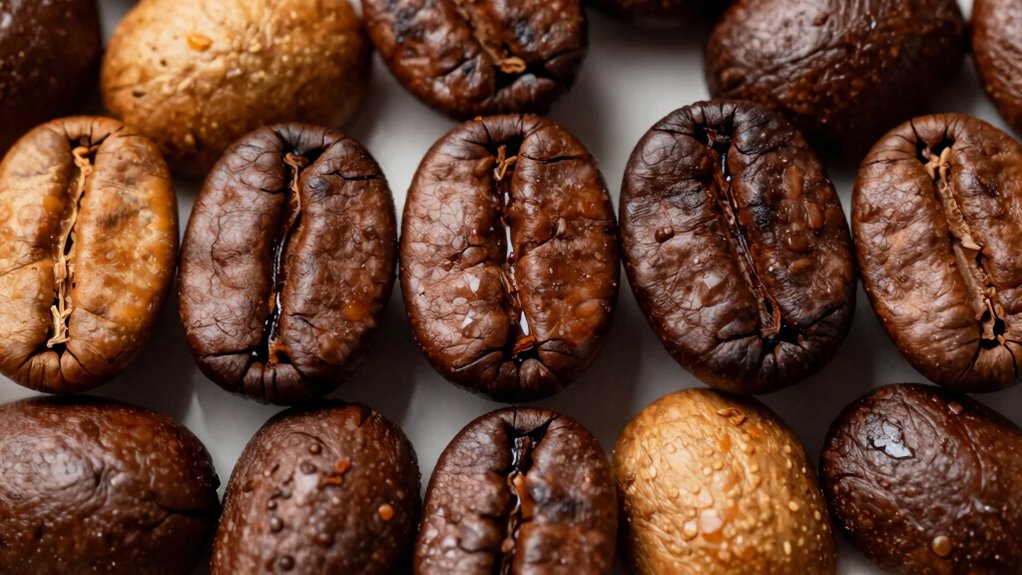

When you choose different roast levels, you change the chemical makeup of your coffee beans, which affects flavor and aroma. Light roasts preserve more of the beans’ original fruity and floral notes, while dark roasts bring out smoky, chocolaty, and bitter flavors. Throughout roasting, chemical reactions like Maillard and caramelization transform the beans, influencing what you smell and taste. Want to discover how these changes shape your coffee experience? Keep exploring to learn more.

Get the little things that make your day delivered free with Prime
- Fast, free delivery on millions of items
- Prime Video, Amazon Music and more included
- Member-only deals all year
Key Takeaways
- Roast levels alter the chemical composition, affecting flavor, aroma, and overall sensory profile of the coffee.
- Light, medium, and dark roasts develop distinct aromatic compounds through Maillard reaction and caramelization.
- The flavor shifts from bright, fruity notes in light roasts to deep, smoky, and bitter flavors in dark roasts.
- Aroma profiles evolve, with lighter roasts emphasizing floral and fruity scents, while darker roasts offer toasted or smoky aromas.
- The degree of roasting influences the preservation or masking of the bean’s natural characteristics.
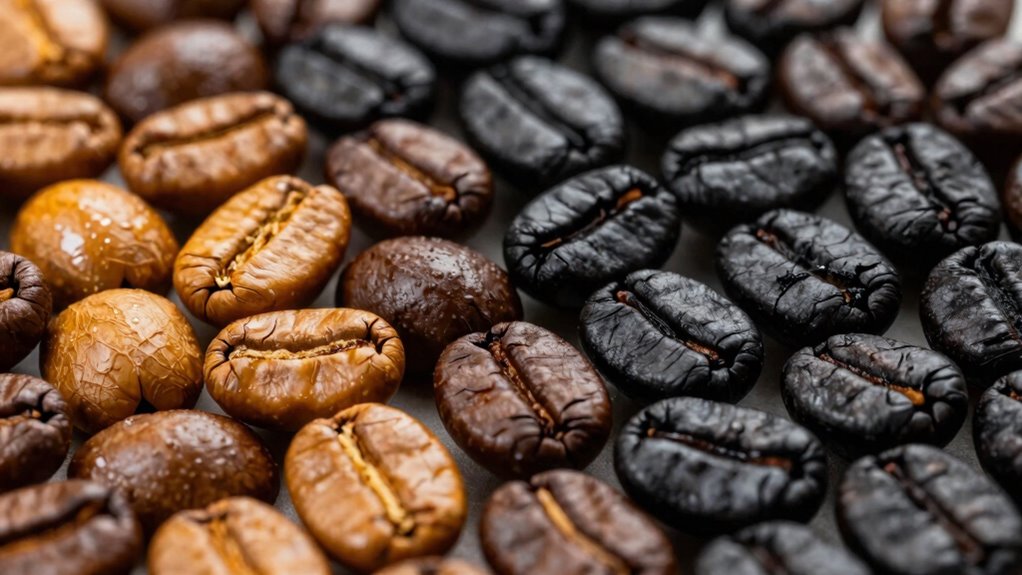
Have you ever wondered why your coffee can taste so different from one brew to another? The answer often lies in the roast level, which markedly influences what you experience in each cup. When coffee beans are roasted, they undergo chemical changes that transform their flavor profile and aroma development. Lighter roasts tend to preserve more of the beans’ original characteristics, highlighting bright, fruity, and floral notes. As you move toward darker roasts, the flavors shift, becoming more robust, smoky, and bitter, with the beans developing a richer, sometimes more intense aroma. These changes happen because the heat causes complex reactions in the beans, altering their chemical makeup and consequently their taste and smell.
The roast level directly impacts the flavor profile you perceive. Light roasts often showcase the beans’ intrinsic qualities—think of citrus, berry, or floral hints—giving your coffee a lively, nuanced character. Medium roasts strike a balance, offering a more rounded taste that combines the beans’ natural flavors with the roasted notes introduced during processing. Dark roasts, on the other hand, emphasize deep, roasted flavors like chocolate, caramel, or even burnt undertones, which mask some of the bean’s original nuances. So, when you choose a roast level, you’re choosing how much of the bean’s natural essence versus roasted intensity you want to experience.
Aroma development is another key aspect affected by roast levels. Lighter roasts tend to have a more complex, vibrant aroma that highlights fresh, fruity, and floral scents. These aromas are often more delicate but richly layered, giving each brew a fresh and lively smell. As the roast darkens, the aroma becomes bolder, with smoky, toasted, or even charred notes taking center stage. This shift can make the coffee smell more intense and comforting for those who enjoy a richer sensory experience. The development of aroma is a direct result of the Maillard reaction and caramelization processes occurring during roasting, which produce the aromatic compounds that define each roast’s character. Additionally, chemical reactions during roasting significantly influence the aromatic profile, making this an essential aspect of the process. Understanding the chemical changes that occur helps explain why different roast levels produce such varied sensory experiences. Moreover, the chemical composition of the beans evolves throughout roasting, further impacting flavor and aroma development, which can be observed through the changing aroma profile. Recognizing these chemical processes can help enthusiasts better appreciate the nuanced differences between roasts.
In essence, changing the roast level alters both what you taste and smell in your coffee. It’s not just about darkness or lightness; it’s about how the chemical transformations shape the entire sensory experience. Whether you prefer the bright, lively notes of a light roast or the deep, smoky richness of a dark roast, understanding these changes helps you select the perfect brew to match your taste preferences.
As an affiliate, we earn on qualifying purchases.
Frequently Asked Questions
How Do Roast Levels Affect Coffee Acidity?
Roast levels profoundly influence coffee acidity, with lighter roasts retaining higher acidity that enhances flavor complexity and aroma development. As you move to darker roasts, acidity diminishes, resulting in bolder, less tangy flavors. If you prefer a bright, lively cup, choose a light roast. For richer, smoother profiles, opt for medium or dark roasts. Your choice affects not just acidity but also the overall aroma and flavor nuances of your coffee.
Do Darker Roasts Contain More Caffeine?
Darker roasts don’t necessarily contain more caffeine; in fact, lighter roasts often have slightly more because the roasting process affects coffee bean density. As beans roast longer, they lose moisture and become less dense, so a scoop of dark roast has less coffee than a scoop of light roast. The roasting process effects, like roasting time and temperature, influence caffeine content and flavor, but overall, caffeine levels are quite similar across roast levels.
Can Roast Levels Influence Coffee Flavor Longevity?
You might wonder if roast levels affect your coffee’s flavor longevity. The answer is yes—darker roasts tend to lose their aroma faster, reducing aroma preservation over time, while lighter roasts maintain better flavor stability. As you savor your brew, think about how the delicate, nuanced aromas in lighter roasts linger longer, offering a fresher, more vibrant experience. Darkness might bring boldness, but it can also hasten flavor fade.
Are Certain Roast Levels Better for Specific Brewing Methods?
You’ll find that medium roasts often suit drip brewing, highlighting balanced flavor profiles, while dark roasts excel with espresso, emphasizing bold, rich flavors. Light roasts are great for pour-over, showcasing intricate nuances. To achieve consistent flavor profiles across brewing methods, focus on roast consistency. Different roast levels bring out distinct characteristics, so choose based on your preferred brewing style and flavor preferences for the best experience.
How Do Roast Levels Impact Coffee Bean Nutritional Content?
You might think darker roasts lose essential nutrients, but surprisingly, they retain many antioxidants that combat free radicals, unlike lighter roasts that preserve more vitamins. However, as roast levels increase, nutrient degradation occurs, reducing some beneficial compounds. While darker beans develop richer flavors, their nutritional profile shifts, making you weigh the bold taste against potential nutrient loss. Ultimately, your choice balances flavor preferences with nutritional considerations.
As an affiliate, we earn on qualifying purchases.
Conclusion
Now that you know how each roast level impacts flavor, aroma, and acidity, you’re better equipped to choose your perfect brew. Whether you prefer the bright, fruity notes of a light roast or the bold, smoky richness of a dark roast, it’s all about your personal taste. So, next time you sip your coffee, ask yourself: aren’t the subtle differences worth exploring? After all, isn’t discovering your ideal cup part of the fun?
As an affiliate, we earn on qualifying purchases.
As an affiliate, we earn on qualifying purchases.
NFL season / tailgating Picks
team gear
As an affiliate, we earn on qualifying purchases.