
To use RPE effectively without guesswork, regularly practice self-assessment by honestly rating each set’s effort on the scale, and log your scores to track patterns over time. Be mindful of factors like sleep, stress, and nutrition that influence effort perception. Develop body awareness by paying close attention to how your body feels during workouts. Staying consistent with this process helps you gauge effort accurately and adjust your training smarter—if you want to learn more, keep exploring these strategies.
Listen free for 30 days with Audible
Thousands of audiobooks and originals — cancel anytime.
As an affiliate, we earn on qualifying purchases.
Key Takeaways
- Regularly practice and calibrate your effort perception to improve accuracy over time.
- Log RPE immediately after each set to reinforce consistent self-assessment.
- Consider external factors like fatigue, stress, and sleep to contextualize effort levels.
- Use training journals or apps to track RPE trends and avoid subjective guesswork.
- Trust your body’s signals and adjust effort accordingly, rather than relying solely on intuition.
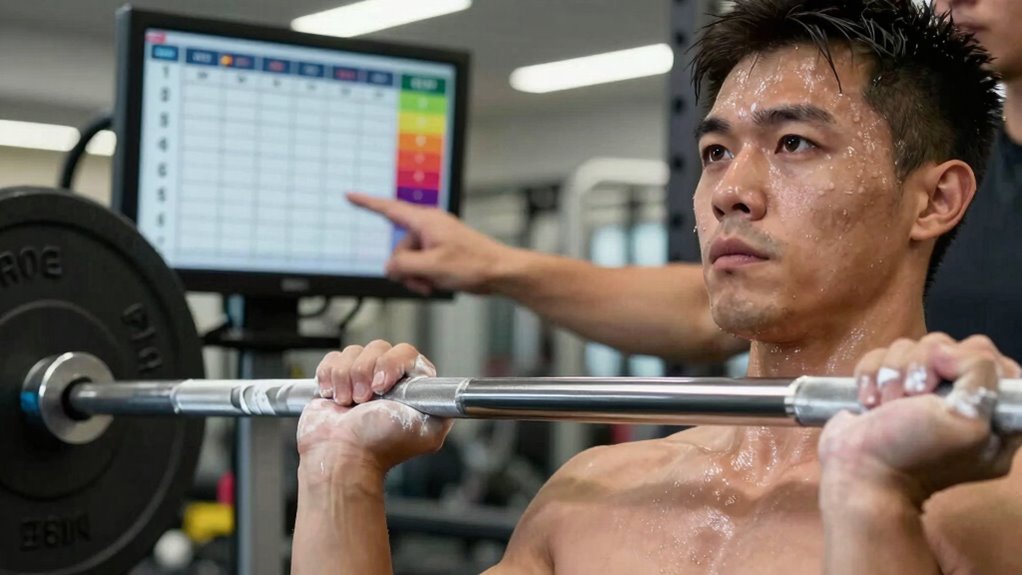
Are you unsure how to effectively gauge your workout intensity? Using Rate of Perceived Exertion (RPE) can be a powerful tool, but only if you apply it correctly. When you understand how to interpret your effort levels accurately, you can optimize training adaptation and manage fatigue more effectively. Without proper guidance, though, RPE can become a guessing game, leading to inconsistent results and potential overtraining or undertraining.
First, recognize that RPE isn’t just about subjective feelings; it’s a reflection of your body’s response to effort. To use it effectively, you need to develop a clear sense of what each level feels like. Start by familiarizing yourself with the scale, typically from 1 to 10, where 1 is very light activity and 10 is maximal effort. During your workouts, pay close attention to how hard each set feels, and assign an RPE score accordingly. Over time, this awareness becomes sharper, helping you make real-time adjustments rather than relying on guesswork. Practicing consistent self-assessment can help sharpen this internal awareness and improve your ability to interpret effort levels more accurately.
Training adaptation hinges on balancing effort and recovery. When you train at an appropriate RPE, you stimulate muscle growth and endurance without pushing into excessive fatigue. If you consistently train too hard, your body may not recover adequately, increasing the risk of burnout or injury. Conversely, training too lightly delays progress. By accurately gauging your effort through RPE, you guarantee that you’re challenging yourself enough to promote adaptation while avoiding fatigue overload. This precise approach helps you build resilience gradually, making your progress sustainable. Developing body awareness can also enhance your ability to interpret effort levels more accurately.
Balancing effort and recovery with RPE promotes sustainable progress and reduces injury risk.
Fatigue management is another vital aspect where RPE shines. When you listen to your body and assign honest effort levels, you can prevent overtraining. If you notice that your RPE feels higher than usual for the same weights or reps, it signals that your body is fatigued and needs more recovery. Conversely, if you’re feeling fresh, you can push slightly harder, maximizing workout efficiency. Tracking your RPE over time allows you to identify patterns, so you can plan rest days or deload weeks before fatigue accumulates to harmful levels. Incorporating consistent self-assessment** into your routine enhances your ability to interpret effort levels accurately. To avoid turning RPE into guesswork, incorporate consistent self-assessment into your routine. Use a training journal or app to log your RPE after each session, noting factors like sleep, stress, and nutrition that influence effort perception**. With consistent practice, you’ll develop a more accurate internal gauge of effort, making your training smarter and more responsive. When you trust your body’s signals and adjust accordingly, you’ll optimize training adaptation and maintain better fatigue management, leading to steady, sustainable progress.
training journal for RPE tracking
As an affiliate, we earn on qualifying purchases.
As an affiliate, we earn on qualifying purchases.
Frequently Asked Questions
Can RPE Be Used for All Types of Exercises?
Yes, RPE can be used for all types of exercises, but exercise specificity matters. Whether you’re lifting weights, doing cardio, or bodyweight training, RPE helps you gauge effort accurately. It promotes proper training adaptation by adjusting intensity based on how you feel, ensuring you’re not overtraining or undertraining. Just remember to tailor your RPE use to each exercise type, and you’ll optimize your progress safely and effectively.
How Often Should I Reassess My RPE?
You should reassess your RPE weekly or after significant changes in your training routine to maintain accuracy. Consistent training helps you better gauge your effort levels, so stay committed. Incorporate recovery strategies like proper rest and nutrition, which can influence your perceived exertion. Regularly updating your RPE guarantees your training remains effective and safe, preventing overtraining and helping you track progress accurately.
Is RPE Suitable for Beginners?
Yes, RPE is suitable for beginners because it promotes effective progression planning and encourages training consistency. As a beginner, you can use RPE to gauge your effort, helping you avoid overtraining or injury. It simplifies the process of adjusting weights and intensity, making it easier to stay consistent with your workouts. Over time, you’ll develop a better sense of effort, allowing for more precise progression and sustainable progress.
How Do Mental State and Motivation Affect RPE?
Like a clear sky clears the storm, your mental state and motivation shape your RPE perception. When your mental clarity is high, you accurately gauge effort; emotional resilience helps you push through fatigue without overestimating. If you’re motivated, you may underestimate effort, risking injury. Stay aware of your mental and emotional condition to keep RPE honest, ensuring safe, effective training that aligns with your true effort levels.
Can RPE Be Inaccurate for Certain Fitness Levels?
Yes, RPE can be inaccurate for certain fitness levels. Beginners might overestimate or underestimate perceived exertion because they’re still learning how their body feels during different intensities. Conversely, experienced athletes may develop a more precise sense of exertion. To guarantee accurate perceived exertion and maintain training consistency, regularly calibrate your RPE, listen to your body, and adjust based on your fitness progress.
As an affiliate, we earn on qualifying purchases.
Conclusion
By mastering RPE, you unlock a secret weapon that transforms your training from guesswork into pure precision. When you listen to your body and accurately gauge effort, you’ll crush your goals with the finesse of a maestro conducting a symphony. No more guessing games—just confident, intentional workouts that push you to the edge without risking burnout. Embrace RPE, and watch your progress skyrocket faster than you ever thought possible. Your best training session awaits—seize it!
As an affiliate, we earn on qualifying purchases.
As an affiliate, we earn on qualifying purchases.
NFL season / tailgating Picks
team gear
As an affiliate, we earn on qualifying purchases.