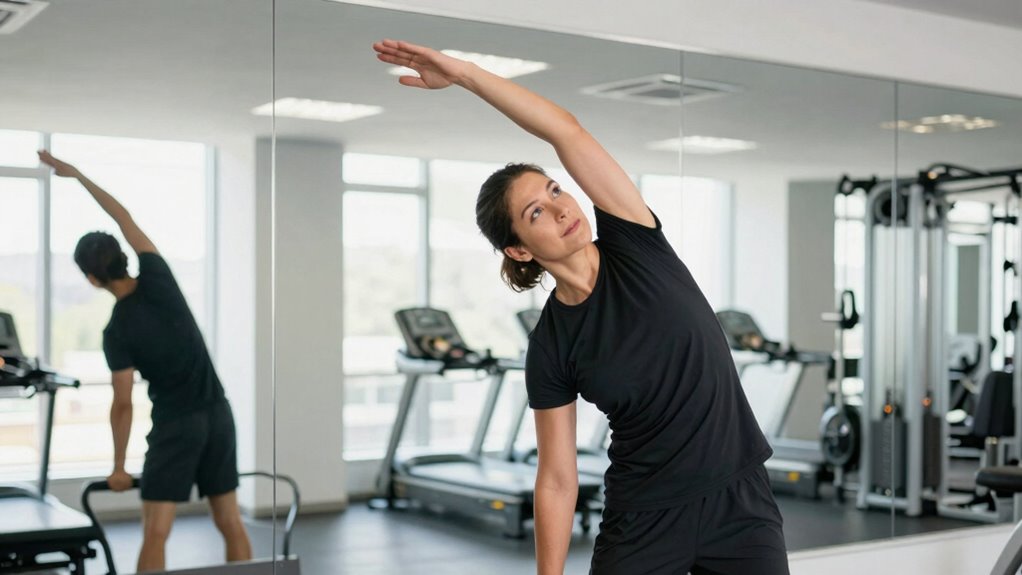

Proper posture during training is essential for preventing injuries, improving performance, and ensuring long-term progress. Small ergonomic adjustments, like setting the right bench height or eye-level screens, can make a big difference. Incorporate corrective exercises that target muscle imbalances to support good alignment and stability. Neglecting these tips can lead to poor habits and increased pain. Keep refining your approach, and you’ll see how sustained focus on posture can boost your results over time.

Get the little things that make your day delivered free — and shop member deals
- Fast, free delivery on millions of items
- Access to Prime Big Deal Days deals on October 6–7
- Prime Video, Amazon Music and more included
Key Takeaways
- Proper posture is crucial for maximizing performance and preventing injuries during training.
- Ergonomic adjustments support correct alignment and reduce discomfort, enhancing training effectiveness.
- Corrective exercises target muscle imbalances, improving posture through controlled, purposeful movements.
- Neglecting posture can lead to ingrained bad habits, increased injury risk, and reduced training efficiency.
- Continuous posture monitoring and routine adjustments are essential for long-term improvements and safety.

Maintaining proper posture during training is essential for maximizing performance and preventing injuries. When you focus on your alignment, you guarantee your body moves efficiently, reducing strain on muscles and joints. One of the most effective ways to support good posture is through ergonomic adjustments. These are small, intentional changes to your training environment or equipment that make it easier for you to maintain correct form. For example, adjusting the height of your bench or positioning your screens at eye level can considerably reduce strain. Paying attention to these details helps keep your spine aligned and minimizes fatigue.
In addition to ergonomic adjustments, incorporating corrective exercises into your routine plays an important role in fixing posture issues. Corrective exercises target specific muscle imbalances or weaknesses that might be pulling your posture out of alignment. For instance, if you tend to slouch, exercises that strengthen your upper back and shoulders can help pull your chest up and stabilize your spine. These exercises aren’t about pushing your limits but about restoring balance and proper function to your muscles. They often involve slow, controlled movements that increase awareness of your posture and reinforce muscle memory for better alignment during training.
You might find that neglecting these adjustments and exercises leads to a cycle of poor posture and increasing discomfort. Over time, bad habits can become ingrained, making it harder to correct your posture without targeted effort. That’s why it’s important to be proactive—regularly checking your positioning, making ergonomic adjustments, and dedicating time to corrective exercises. These steps not only improve your posture but also boost your overall training efficiency. When your body is properly aligned, you can generate more power, sustain workouts longer, and recover faster.
Remember that posture correction isn’t a quick fix; it’s a continuous process. Consistency is key. As you become more aware of your body’s positioning, you’ll start to notice subtle improvements in how you move and feel during your workouts. Integrate ergonomic adjustments into your training setup and make corrective exercises a regular part of your routine. Over time, these small, intentional changes will pay off by reducing pain, increasing strength, and enhancing your overall performance. Proper posture isn’t just about looking good—it’s about training smarter, safer, and more effectively.
ergonomic adjustable workout bench
As an affiliate, we earn on qualifying purchases.
As an affiliate, we earn on qualifying purchases.
Frequently Asked Questions
Are Posture Fixes Effective for Chronic Back Pain?
Posture fixes can be effective for chronic back pain, especially when combined with ergonomic accessories and a posture sensor. These tools help you become more aware of your posture throughout the day, encouraging better habits. Consistent use supports long-term improvements. However, it’s crucial to address underlying issues with professional guidance, as posture fixes alone might not fully resolve chronic pain. Stay proactive and integrate these solutions for maximum results.
How Long Does It Take to See Posture Improvements?
You can typically see posture improvements within a few weeks to a couple of months, especially if you incorporate ergonomic adjustments and muscle strengthening exercises regularly. Consistency is key; by actively practicing good posture habits, adjusting your workspace, and strengthening core muscles, your body responds faster. Remember, individual progress varies, but with dedication and proper technique, noticeable changes often occur within this timeframe.
Can Posture Exercises Replace Professional Therapy?
No, posture exercises can’t fully replace professional therapy—think of it like trying to fix a skyscraper with a hammer. While ergonomic adjustments and muscle strengthening exercises can considerably improve your posture, they often aren’t enough for serious issues. A professional therapist assesses the root causes, offers personalized treatment, and guides your progress safely. So, combine both for the best results and avoid risking long-term damage.
Are There Any Risks Associated With Posture Correction Exercises?
Yes, there are risks with posture correction exercises if you’re not careful. You might strain muscles or worsen existing issues if you ignore ergonomic adjustments or push too hard during stretching routines. It is crucial to listen to your body, start slowly, and consult a professional if you experience pain. Properly incorporating ergonomic adjustments and gentle stretching routines can help minimize risks and support effective posture improvement.
Do Posture Fixes Work the Same for Everyone?
Think of your body as a unique puzzle—posture fixes don’t fit everyone the same. While ergonomic adjustments and increased posture awareness help, their effectiveness varies based on your habits and body type. You’ll see better results if you tailor exercises to your needs, rather than relying solely on generic fixes. Remember, consistency and personalized approaches are key to truly improving your posture and preventing discomfort.
posture correction exercises for training
As an affiliate, we earn on qualifying purchases.
As an affiliate, we earn on qualifying purchases.
Conclusion
Remember, good posture isn’t just about quick fixes; it’s about building habits that last. Don’t expect overnight miracles—think of your posture as a garden that needs daily tending. Stay consistent, be mindful, and give yourself time to see genuine improvement. As the saying goes, “Rome wasn’t built in a day,” so embrace the journey. With patience and effort, you’ll lay a solid foundation for lasting health and confidence.
ergonomic monitor stand for desk
As an affiliate, we earn on qualifying purchases.
As an affiliate, we earn on qualifying purchases.
As an affiliate, we earn on qualifying purchases.
Fall Picks
fall essentials
As an affiliate, we earn on qualifying purchases.