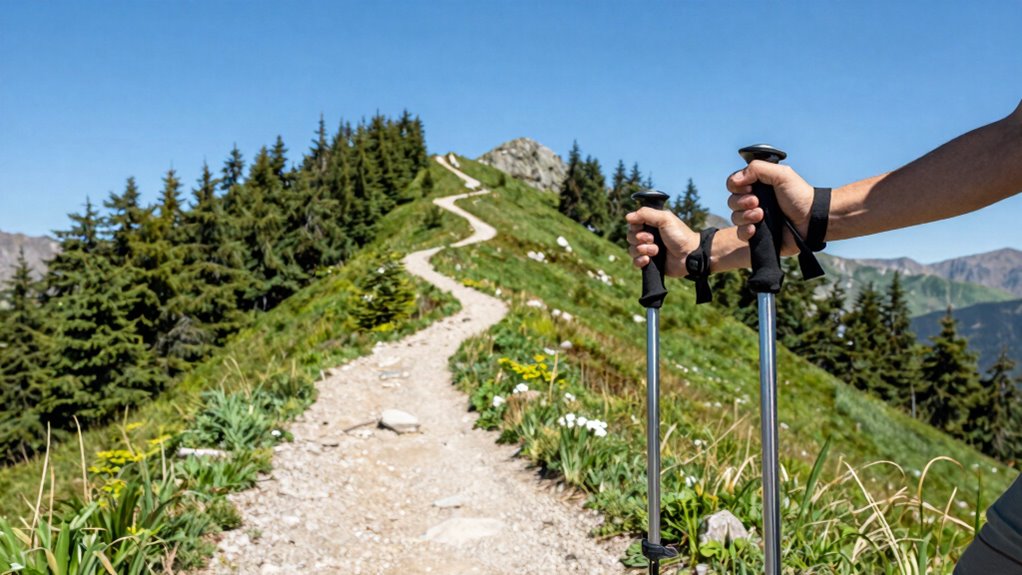

To get your hiking pole height right, stand upright and bend your elbows to about 90 degrees; your poles should match this angle when held comfortably with ergonomic grips. Proper sizing guarantees better support, reduces fatigue, and helps maintain good posture on different terrains. Aluminum and carbon fiber poles offer durability and weight benefits, but you’ll want to lock adjustable poles securely to stay safe. Keep these tips in mind, and you’ll discover how perfect height makes a big difference on your trail.

Get the little things that make your day delivered free — and shop member deals
- Fast, free delivery on millions of items
- Access to Prime Big Deal Days deals on October 6–7
- Prime Video, Amazon Music and more included
Key Takeaways
- No universal hiking pole height; it varies based on individual height and terrain.
- Adjust poles so elbows are at approximately 90 degrees for optimal support.
- Proper sizing reduces fatigue and improves posture during hikes.
- Adjustable poles with secure locking mechanisms allow customization for different terrains.
- Ergonomic grips and correct height settings enhance comfort and minimize hand and wrist strain.
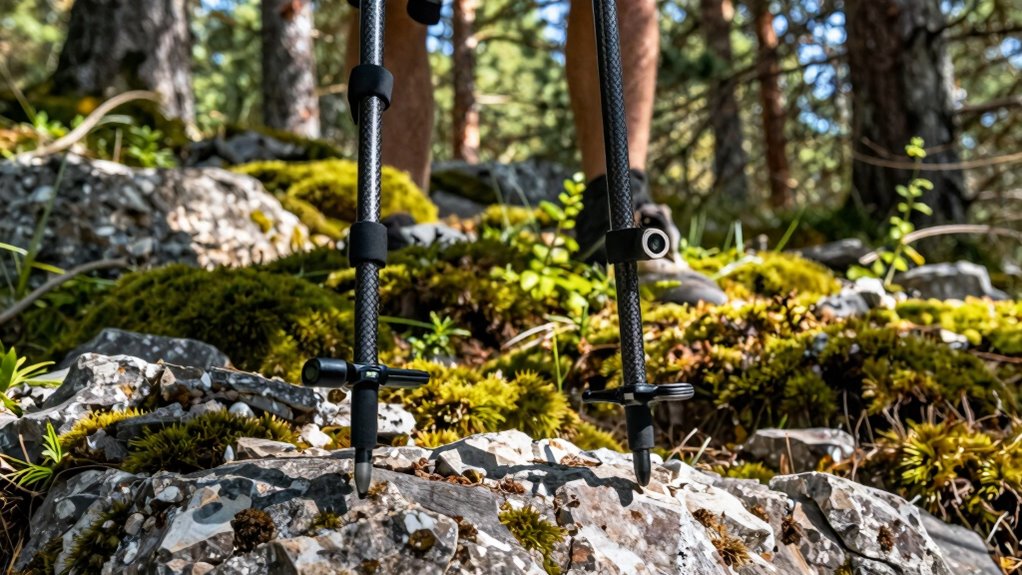
When it comes to choosing the right hiking pole height, many people believe there’s a one-size-fits-all answer, but the truth is more nuanced. Your ideal pole height depends on factors like your height, walking terrain, and personal comfort. A good starting point is to stand upright with your arms relaxed at your sides, then bend your elbows to approximately 90 degrees. Your poles should match this angle when you hold them with an ergonomic grip. An ergonomic grip isn’t just about comfort; it helps distribute pressure evenly across your hand and wrist, reducing fatigue over long hikes. Look for poles with padded, contoured handles that fit naturally into your palm, especially if you plan to hike for hours.
Choose hiking pole height based on your height, terrain, and comfort for safer, more enjoyable hikes.
Material durability plays a critical role in selecting hiking poles. Aluminum is popular because it strikes a good balance between strength and weight. It resists bending under pressure and can withstand rough terrain, making it ideal for demanding hikes. Carbon fiber, on the other hand, is lighter and absorbs vibrations better, but it’s more prone to cracking if you hit a sharp rock. You need to contemplate how tough the terrain will be and what kind of durability you require. If you hike rocky paths regularly, investing in more durable material makes sense, even if it adds a little weight.
Adjustable-length poles are often the best choice because they allow you to customize your height on the go. When set correctly, they help maintain proper posture, reduce strain on your knees, and improve stability. Be sure to lock your poles securely; a loose lock can compromise safety. When adjusting, pay attention to the locking mechanism—twist locks tend to be more reliable than flip locks in wet conditions, though both work well if properly maintained. Additionally, choosing appropriate pole height can prevent discomfort and injury during prolonged hikes. Proper sizing also ensures that your ergonomic grip provides maximum support, minimizing fatigue. Remember that adjustable features give you flexibility to adapt to changing terrain and conditions, which can enhance your overall hiking experience. It’s also helpful to select poles made from materials that balance material durability with weight, especially for longer treks.
Finally, don’t ignore the importance of proper sizing during your hike. Even the best pole won’t help if it’s set incorrectly. As you hike, your posture should stay upright, with your elbows at about 90 degrees and your hands comfortably gripping the ergonomic handle. This position maximizes the benefits of your poles, providing support without causing discomfort. To further optimize your experience, understanding how to properly set your hiking pole height can make a significant difference. By paying attention to these details—ergonomic grip, material durability, and correct height—you’ll enjoy safer, more comfortable hikes that keep you going longer and feeling better afterward.
Frequently Asked Questions
Can You Customize Hiking Pole Height for Different Activities?
Yes, you can customize hiking pole height for different activities. For personalized fitting, adjust the length based on your activity—shorter for uphill, longer for downhill. Keep in mind, proper gear maintenance guarantees smooth adjustments and longevity. Regularly check and tighten the locks or mechanisms, especially when switching terrains. Customizing your hiking poles enhances comfort and safety, making your outdoor adventures more enjoyable and efficient.
Does Pole Height Affect Uphill Versus Downhill Stability?
Yes, pole height affects your stability on uphill and downhill hikes by influencing gait efficiency and muscle engagement. When you adjust poles correctly, you maintain better balance, reducing fatigue. Longer poles help stabilize you downhill by engaging core and leg muscles more effectively, while shorter ones improve gait efficiency uphill. Properly set poles make sure you stay steady, conserve energy, and prevent strain, making your hike safer and more comfortable.
How Often Should I Adjust My Hiking Pole Height?
You should adjust your hiking pole height whenever your activity changes, like shifting from urban walking to trail running. For urban walking, keep the poles shorter for better maneuverability, while trail running may require slightly longer poles for stability. During uphill climbs, extend your poles for support, and shorten them for downhill descents. Regularly check and adjust your pole height to stay comfortable and maintain proper form, especially when progressing between different terrains.
Do Hiking Pole Heights Vary by Terrain Type?
Yes, hiking pole heights vary by terrain type. When you’re on steep or uneven ground, you might want to shorten or lengthen your poles for stability. Consider pole material and weight considerations; lightweight poles made from materials like carbon fiber are easier to adjust and carry. Heavier poles, like those made from aluminum, might require more effort to change height but offer durability. Adapt your pole height for comfort and safety across different terrains.
Can Incorrect Pole Height Cause Injury?
Using incorrect hiking pole height can increase your risk of injury, especially since improper weight distribution puts extra strain on your shoulders and wrists. Did you know that 65% of hikers experience hand fatigue or discomfort? When your poles aren’t set right, you may overcompensate, leading to joint issues or muscle strain. Properly adjusted poles help you maintain balance, reduce fatigue, and prevent injuries on tough terrains.
Conclusion
Choosing the right hiking pole height is like tuning a musical instrument—you need to find that perfect pitch to keep your rhythm steady. When your poles are just right, they become an extension of your stride, guiding you smoothly over every trail. Don’t settle for a one-size-fits-all setting; instead, adjust to find your harmony. With the right height, each step becomes a confident note in your adventure’s symphony.
Fall Picks
fall essentials
As an affiliate, we earn on qualifying purchases.