When it comes to sleeping pads, understanding R-value is essential for a good night’s sleep outdoors. R-value measures heat retention, indicating how well a pad insulates you from the cold ground. Higher numbers typically mean better insulation, but comfort and material type also matter. Different sleeping pad types can have varying R-values, affecting your choice based on seasonal needs. Stick around to learn more about selecting the right R-value and common misconceptions that could influence your decision.
Open a free Amazon Business account
Business pricing, bulk buying and tax-exempt orders.
As an affiliate, we earn on qualifying purchases.
Key Takeaways
- R-value measures insulation effectiveness; higher values typically indicate better heat retention, especially in cold conditions.
- Different materials and constructions affect R-values, so not all high R-values guarantee superior performance.
- Seasonal recommendations suggest R-values of 1-2 for summer, 2-4 for spring/fall, and 4-6+ for winter camping.
- Comfort is influenced by personal preferences, sleeping position, and thickness, not solely by R-value.
- Test insulation performance by comparing temperature differences on various surfaces, simulating real camping conditions.
sleeping pad R-value for winter camping
As an affiliate, we earn on qualifying purchases.
As an affiliate, we earn on qualifying purchases.
What’s the Deal With R-Value Ratings?
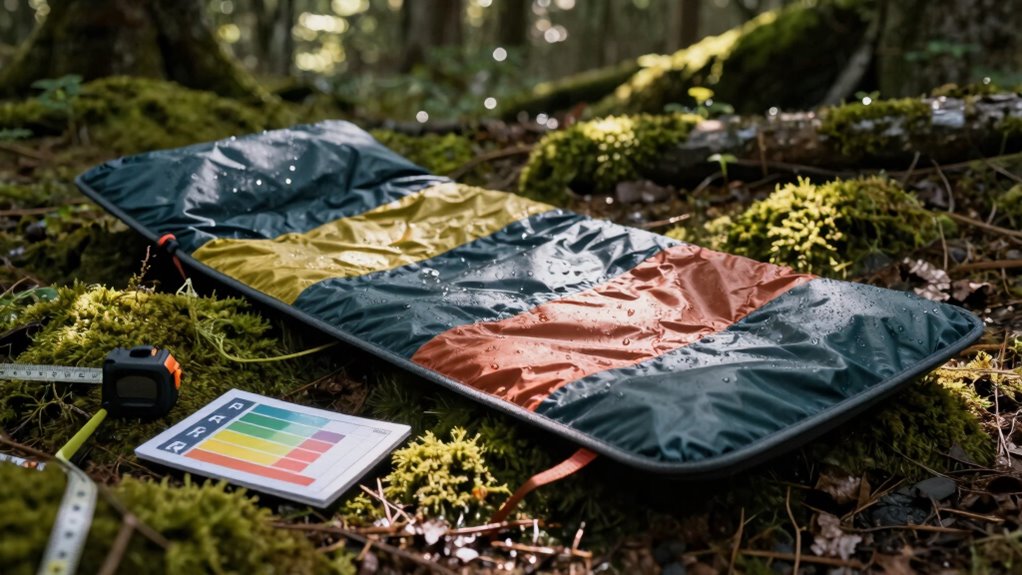
When choosing a sleeping pad, understanding R-value ratings is vital because they indicate how well the pad insulates you from the cold ground. Many people fall for R-value myths, believing that higher numbers always guarantee better warmth. This isn’t the full picture. Insulation misconceptions often lead to confusion; R-values can vary based on materials and construction. A pad with a high R-value might not perform well if it’s poorly designed. It’s important to take into account the context, like the temperature and duration of use. You should also know that R-values can fluctuate with humidity and compression. So, don’t just rely on the numbers; evaluate the overall quality and suitability of your sleeping pad for your specific needs.
insulated sleeping pad for cold weather
As an affiliate, we earn on qualifying purchases.
As an affiliate, we earn on qualifying purchases.
How R-Value Impacts Your Sleeping Pad’s Insulation

Understanding R-value is essential for choosing the right sleeping pad, as it directly influences how well you’ll stay warm at night. You’ll want to take into account temperature ratings and the types of insulating materials used in the pad to guarantee it meets your needs. A higher R-value generally means better insulation, but it’s important to find the right balance for your specific camping conditions.
Understanding R-Value Definition
R-value is a critical measure of a sleeping pad’s insulation, as it indicates how well the pad can resist heat flow. Understanding R-value significance is essential for ensuring you stay warm during your outdoor adventures. A higher R-value means better insulation, which is especially important in colder conditions. However, there are some common R value misconceptions. For instance, people often think that a higher R-value is always necessary, but it really depends on the temperatures you’ll encounter and the type of camping you do. Knowing the right R-value for your needs helps you choose a sleeping pad that balances comfort and warmth, ensuring you’re well-prepared for your next trip without overpacking or underestimating your insulation needs.
Temperature Rating Considerations
Choosing the right R-value for your sleeping pad directly influences how well it performs in varying temperatures. A higher R-value means better insulation, which is vital for maintaining a comfortable sleeping temperature during colder nights. If you’re camping in the winter, you’ll want a pad with a higher R-value to combat the chill from the ground. Conversely, for summer camping, a lower R-value may suffice, as excessive insulation can lead to overheating. Seasonal considerations play a big role in your decision-making. Always think about the typical temperatures you’ll encounter and choose an R-value that aligns with those conditions. Balancing comfort and functionality will guarantee you get the best sleep possible, regardless of the season. Additionally, proper use of backup power systems can ensure a warm and comfortable environment in emergency situations or during power outages.
Types Of Insulating Materials
When selecting a sleeping pad, the type of insulating material considerably affects its R-value and overall performance. You’ll find two main categories: synthetic insulation and natural insulation. Synthetic materials, like polyester or foam, are often lighter, more affordable, and maintain warmth even when wet. They’re great for those who prioritize durability and cost-effectiveness. On the other hand, natural insulation, such as down, offers superior warmth-to-weight ratios and packs down smaller, but it can lose its insulating properties when damp. Depending on your adventure and climate, choosing the right insulation type is essential. Make sure to evaluate how each material aligns with your needs for warmth, weight, and moisture resistance to maximize your comfort during your outdoor experiences.
best sleeping pad for summer camping
As an affiliate, we earn on qualifying purchases.
As an affiliate, we earn on qualifying purchases.
R-Value Ratings Explained
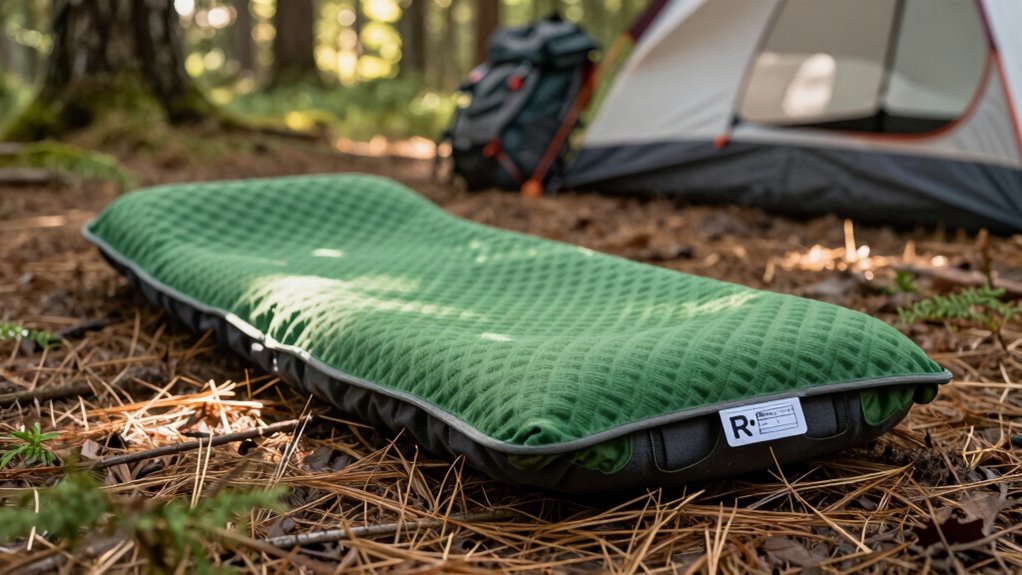
Understanding R-value ratings is essential for choosing the right sleeping pad. These ratings reflect the insulation’s effectiveness, helping you stay warm in various conditions. By grasping the basics, you’ll make a more informed decision for your outdoor adventures.
Understanding R-Value Basics
While you might be enthusiastic to hit the trails, knowing the R-value of your sleeping pad is essential for a comfortable night’s sleep. The R-value measures insulation efficiency, indicating how well your pad resists heat flow. Higher R-values mean better insulation, which is vital for colder conditions. It’s important to debunk some R value myths; for instance, a higher number doesn’t always mean a heavier pad. You can find lightweight options with impressive R-values. Remember, R-values can vary between sleeping pads, so always check the specifications. Understanding these basics helps you choose the right pad for your adventures, ensuring you stay warm and rested during your outdoor escapades. Don’t underestimate the power of a good night’s sleep! Additionally, considering proper technique and form when setting up your sleeping area can improve comfort and insulation effectiveness. Proper setup, including the use of ground insulation, can significantly enhance your sleeping experience by reducing heat loss. Being aware of the R-value ratings can also guide you in selecting the appropriate pad for different environments and temperatures.
Importance Of Insulation
Insulation plays an essential role in keeping you warm during your outdoor adventures, and understanding R-value ratings helps you make informed choices. The R-value measures how effective insulation materials are at resisting heat flow. Higher R-values indicate better insulation efficiency, which is vital for maintaining warmth in colder conditions. When you choose a sleeping pad, consider how its insulation materials contribute to the overall R-value. Different materials, such as foam or air-filled designs, offer varying levels of insulation efficiency. Knowing the R-value can guide you in selecting the right pad for your specific needs, ensuring you stay cozy throughout your night under the stars. Making these choices can greatly enhance your camping experience.
Choosing The Right Pad
How do you choose the right sleeping pad based on R-value ratings? Start by considering your camping environment and the temperatures you’ll encounter. A pad’s R-value indicates its insulation efficiency, so you want to match it with your needs. Here are three key factors to keep in mind:
- Pad Thickness: Thicker pads generally offer higher R-values, but balance comfort and weight according to your adventure type.
- Material Quality: High-quality materials can enhance insulation and durability. Look for pads made from reliable fabrics and foams.
- Seasonal Use: For summer camping, a lower R-value (around 2-3) suffices, while winter camping requires a higher rating (5+).
As an affiliate, we earn on qualifying purchases.
Key Factors Affecting R-Value in Sleeping Pads
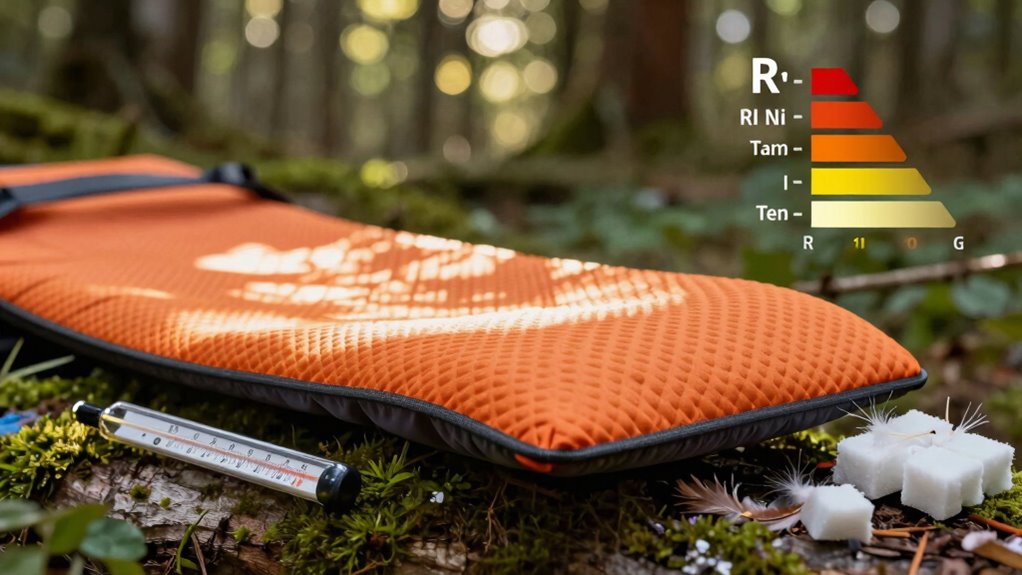
When choosing a sleeping pad, it’s crucial to understand the key factors that influence its R-value. The R-value indicates how well a pad insulates against heat loss. Two primary factors affecting this are material density and heat retention.
Here’s a quick overview:
| Factor | Description | Impact on R-Value |
|---|---|---|
| Material Density | Denser materials trap more air | Higher R-value |
| Heat Retention | Ability to maintain warmth | Increases comfort |
| Thickness | Thicker pads provide more insulation | Boosts R-value |
Comparing Sleeping Pad Types and Their R-Values

Which sleeping pad type best suits your needs? It’s essential to compare the R-values and inflation methods of different options. Here’s a quick breakdown:
Choosing the right sleeping pad involves comparing R-values and inflation methods to match your comfort and adventure needs.
- Air Pads: These pads offer high R-values, but you’ll need to take into account the inflation methods. They can be inflated manually or with a pump, making them versatile.
- Self-Inflating Pads: These combine foam and air, providing decent insulation. They automatically inflate, but R-values might not be as high as air pads.
- Closed-Cell Foam Pads: Durable and lightweight, these pads have lower R-values but excel in material comparisons. They’re great for minimalist campers.
Choosing the right type depends on your comfort needs and the conditions you’ll face during your adventure.
How to Choose the Right R-Value for Your Sleeping Pad

Understanding the R-value of your sleeping pad is key to ensuring a comfortable night’s sleep in varying conditions. To choose the right R-value, consider your pad thickness and seasonal usage. A thicker pad generally offers a higher R-value, providing better insulation.
| Season | Recommended R-Value |
|---|---|
| Summer | 1-2 |
| Spring/Fall | 2-4 |
| Winter | 4-6+ |
For summer camping, a lower R-value suffices, while colder months demand a higher rating. Keep in mind your planned activities and temperatures. By aligning your sleeping pad’s R-value with your needs, you’ll enhance your outdoor experience greatly.
Top Misunderstandings About R-Value Explained

Many campers mistakenly assume that a higher R-value always means better comfort, but this isn’t necessarily true. Understanding common misconceptions about R-values can help you make more informed choices for your sleeping pad. Here are three r-value myths to reflect upon:
- R-value is the only factor: Comfort also depends on sleeping position, pad thickness, and personal preferences.
- All pads with the same R-value perform equally: Different materials and construction methods can affect insulation performance.
- Higher R-value means it’s suitable for all seasons: You still need to evaluate temperature ranges and your specific needs.
How to Test Your Sleeping Pad’s Insulation Performance
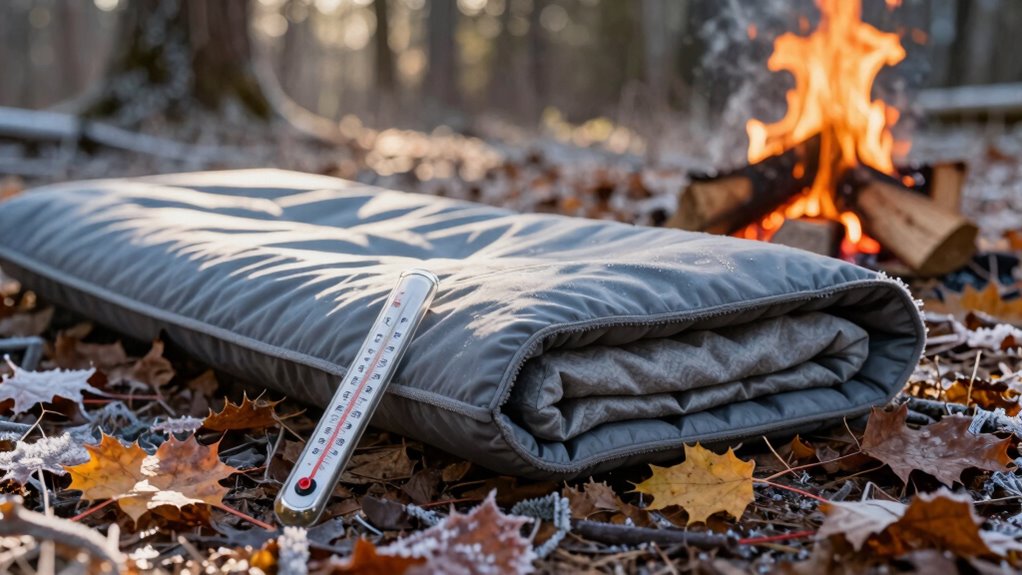
To accurately gauge your sleeping pad’s insulation performance, you’ll want to conduct a simple test that simulates real camping conditions. Start by laying your sleeping pad on a cold surface, like grass or a concrete floor. Next, lie down on the pad wearing your typical camping attire. Spend at least 30 minutes to get a true feel for how it insulates you from the cold ground below. You can also use a thermometer to measure the temperature difference between the ground and your body. Compare this with other sleeping pads to evaluate insulation performance. Remember, different testing methods can yield varying results, so it’s best to try this in different environments for a thorough assessment.
Tips for Maximizing Warmth With Your Sleeping Pad

While you might think your sleeping pad alone will keep you warm, there are several strategies to enhance its insulating effectiveness. By incorporating smart layering techniques and effective temperature management, you can greatly boost your comfort during cold nights.
- Use an Insulating Layer: Place a foam pad or a blanket beneath your sleeping pad to add extra insulation and reduce heat loss.
- Choose the Right Sleeping Bag: Opt for a sleeping bag with a higher R-value to complement your pad, trapping more warmth.
- Wear Warm Clothing: Dressing in thermal layers and using a beanie can help retain body heat, making your sleeping setup even cozier.
Frequently Asked Questions
Can I Combine Sleeping Pads for Higher R-Value?
Yes, you can combine sleeping pads for a higher R-value. By stacking sleeping pad layers, you enhance insulation effectiveness, giving you better warmth during cold nights. Just make sure to balance weight and comfort; adding too many layers might make your setup bulky or less comfortable. Experiment with different combinations to find what works best for you, ensuring you stay cozy while enjoying the great outdoors.
Does R-Value Change With Temperature Fluctuations?
Oh sure, just because you’re cozy one minute doesn’t mean you’ll stay that way! The R-value can indeed fluctuate with temperature effects. As temperatures drop, insulation performance often declines, making your pad less effective. So, if you think your sleeping pad’s R-value is a steadfast guardian against the cold, think again! Keep an eye on the weather, and don’t underestimate how temperature changes can mess with your sleeping comfort.
How Long Do Sleeping Pads Typically Retain Their R-Value?
Sleeping pads typically retain their R-value for about 5 to 10 years, depending on usage and care. As you use your pad, keep in mind that insulation degradation can occur over time, especially with frequent compression or exposure to moisture. To maximize your sleeping pad’s lifespan, store it properly, avoid direct sunlight, and clean it according to the manufacturer’s instructions. This way, you can enjoy reliable warmth on your adventures for years to come.
Are There R-Value Standards for Different Climates?
Yes, there are R-value standards for different climates. You might think all pads are the same, but temperature ratings really matter. A sleeping pad’s R-value indicates its insulation effectiveness, which varies based on the environment. In colder climates, you’ll need a higher R-value to stay warm, while milder areas require less insulation. Choosing the right pad guarantees you stay comfortable, no matter where your adventures take you. Don’t underestimate the importance of R-values!
What Materials Offer the Best R-Value for Weight?
For the best R-value-to-weight ratio, look for sleeping pads made with high-quality foam insulation or those featuring air chambers. Closed-cell foam provides excellent insulation without adding much weight, while air chambers can greatly enhance warmth and compressibility. Combining these materials often yields the best results, giving you a lightweight pad that keeps you cozy in cold conditions. Remember, the right combination will depend on your specific needs and preferences.
Conclusion
Now that you’ve unraveled the mystery of R-value ratings, you can confidently choose the perfect sleeping pad for your adventures. Think of your pad as a cozy blanket against the chill of the night, wrapping you in warmth and comfort. With the right R-value, you’ll drift off to sleep like a bear in hibernation, ready to tackle the trails come dawn. So gear up, embrace the great outdoors, and rest easy knowing you’re well-prepared for whatever the night brings!
Flea & tick season Picks
flea and tick prevention
As an affiliate, we earn on qualifying purchases.