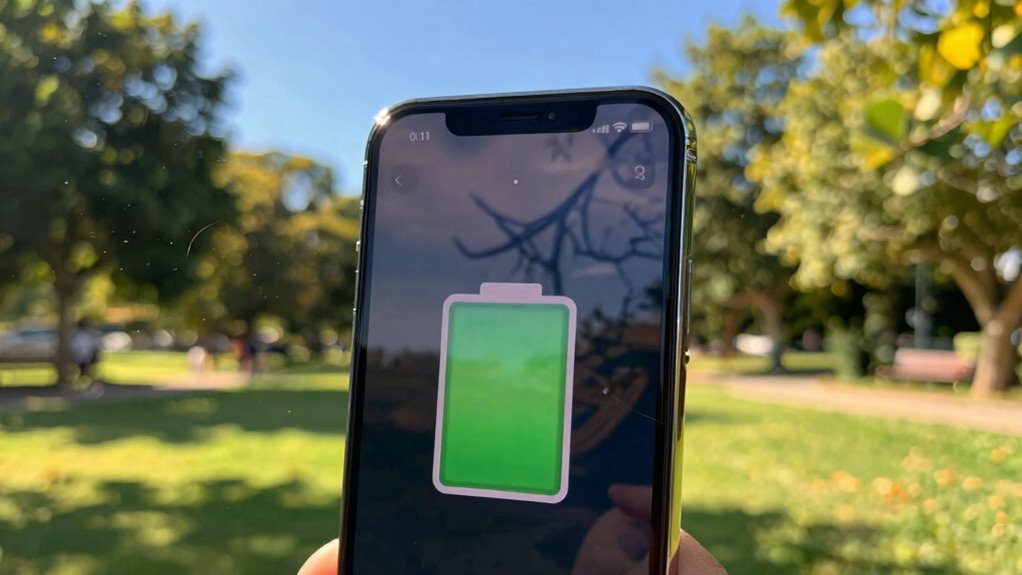

Your phone’s battery drains faster outside mainly due to extreme temperatures and weak signals. Cold weather slows chemical reactions inside the battery, while heat can cause it to heat up and temporarily lose capacity. Poor signal strength makes your device work harder to stay connected, consuming more power. Shielding your phone from the sun and using Wi-Fi indoors can help, but if you keep exploring, you’ll learn more about protecting your battery outdoors.

Get the little things that make your day delivered free with Prime
- Fast, free delivery on millions of items
- Prime Video, Amazon Music and more included
- Member-only deals all year
Key Takeaways
- Extreme temperatures slow chemical reactions in batteries, reducing efficiency and causing faster drain outdoors.
- Cold weather increases energy use as the device works harder to maintain performance.
- Signal interference outdoors prompts the phone to boost transmitter power, depleting the battery faster.
- Weak outdoor signals force the device to exert more effort, speeding up battery depletion.
- High temperatures can temporarily reduce battery capacity to prevent overheating, leading to quicker power loss.
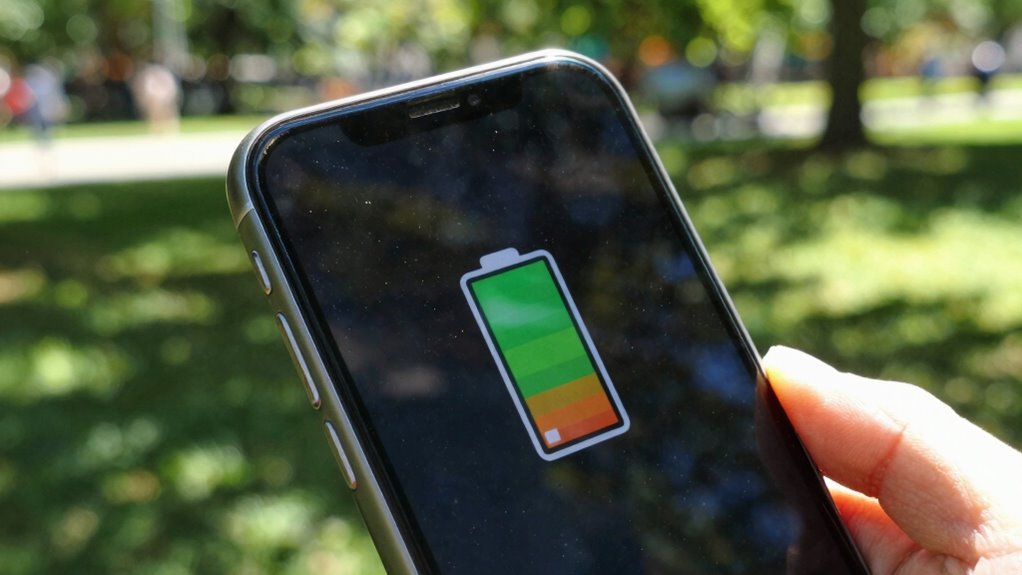
Have you ever noticed your phone battery draining faster when you’re outside, only to find it back to normal indoors? If so, you’re not imagining things. Several factors influence your battery’s performance, and two of the most overlooked are battery temperature and signal interference. When you step outside, your phone faces conditions that can cause the battery to work harder and drain quicker.
Battery temperature plays a vital role in how efficiently your phone operates. Extreme heat or cold can cause your battery to become less stable, leading to increased energy consumption. Cold temperatures, common outdoors during winter, slow down chemical reactions inside the battery, prompting your phone to work overtime to maintain performance. This increased effort drains your battery faster. Conversely, high temperatures, such as hot summer days, accelerate chemical reactions, causing the battery to heat up even more. When the battery gets too hot, it may temporarily reduce its capacity to prevent damage, but in the meantime, your phone’s processor and screen may draw more power, leading to quicker depletion. Keeping your phone at moderate temperatures, or shielding it from direct sunlight, can help maintain healthier battery performance. Additionally, battery chemistry can be affected by temperature extremes, further impacting overall battery life. Understanding these chemical processes can help you better manage your device’s health outdoors. Moreover, temperature fluctuations can also cause short-term instability in your device’s operation, contributing to unexpected battery drain.
Another essential factor is signal interference. When you’re outside, your phone constantly searches for the best network signal, especially if you’re in an area with poor reception or crowded networks. This process requires more energy, as your device boosts its transmitter power to establish and maintain a stable connection. The stronger the signal interference, the more your phone has to work to stay connected. This increased activity causes additional battery drain. Indoors, where Wi-Fi and cellular signals are usually stronger and more stable, your phone doesn’t need to exert as much effort to stay connected, which helps conserve battery life. Additionally, signal interference can be worsened by environmental factors like buildings and weather, further increasing the workload on your device. Being aware of these environmental influences can help you optimize your device usage outdoors.
phone battery temperature protector
As an affiliate, we earn on qualifying purchases.
As an affiliate, we earn on qualifying purchases.
Frequently Asked Questions
How Does Cold Weather Specifically Affect Battery Chemistry?
Cold weather impacts your phone battery by slowing down battery chemistry, which reduces its efficiency. The cold impact causes the chemical reactions inside your battery to occur more slowly, leading to less power output and quicker drainage. When temperatures drop, your battery’s ability to deliver energy diminishes because the chemical processes can’t operate at their best rate. This is why your phone’s battery seems to die faster in colder conditions.
Can Using a Phone in Cold Weather Damage the Battery Long-Term?
Using your phone in cold weather can harm the battery long-term if you don’t practice proper thermal management. The cold can cause your battery to become uncalibrated, leading to inaccurate battery readings and reduced lifespan. To protect it, keep your device warm when possible and perform regular battery calibration by fully charging and discharging it. Proper thermal management helps maintain battery health and prevents long-term damage caused by cold exposure.
Are Certain Phone Brands More Resistant to Battery Drain Outdoors?
Think of some brands like Samsung or Apple as sturdy ships built to weather storms. They tend to have better resistance to outdoor battery drain, thanks to superior battery lifespan and brand durability. While no phone is immune to cold, these brands often perform better in chilly conditions, making them a smarter choice for outdoor use. So, if you’re planning adventures, pick a brand known for its resilience.
What’s the Best Way to Protect My Phone Battery Outside?
To protect your phone battery outside, start by calibrating it regularly, which helps maintain accurate battery readings. Use power management settings to reduce screen brightness, disable unnecessary apps, and turn on battery saver mode. Keep your device in a shaded area to prevent overheating. These steps optimize battery performance outdoors, ensuring your phone lasts longer and remains functional in varying conditions.
Does Turning off Features Help Conserve Battery in Cold Conditions?
Turning off features definitely helps conserve battery in cold conditions. When you disable unnecessary functions, you optimize your battery’s life, especially outside where cold temperatures drain it faster. Activate power saving modes to further maximize your battery’s endurance. This approach reduces energy consumption, preventing your phone from dying unexpectedly. Think of it as giving your device a supercharged shield against the freezing cold, keeping it alive longer when you need it most.
As an affiliate, we earn on qualifying purchases.
Conclusion
Think of your phone’s battery as a tiny traveler venturing through a winter forest. When the cold bites, it’s like the traveler’s energy slipping away into the frosty air, leaving them stranded. To keep your phone alive outdoors, shield it from the cold, just like you’d protect a traveler with warm clothing. By understanding this hidden villain, you can guarantee your device stays lively, ready to guide you through every winter adventure without losing its spark.
thermal phone case for extreme weather
As an affiliate, we earn on qualifying purchases.
As an affiliate, we earn on qualifying purchases.
As an affiliate, we earn on qualifying purchases.
NFL season / tailgating Picks
team gear
As an affiliate, we earn on qualifying purchases.