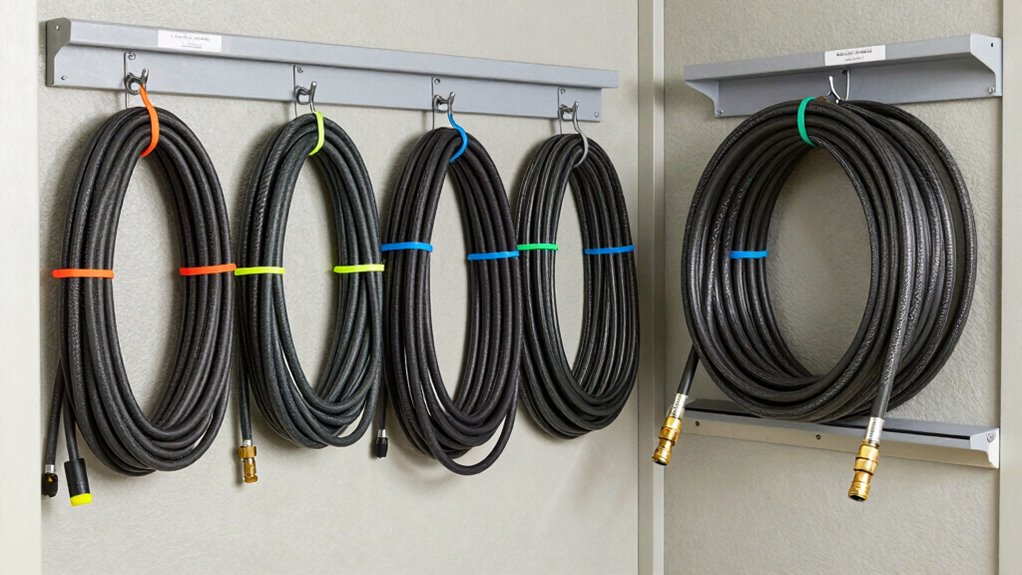
To store extension cords and hoses properly, hang them on hooks or racks in a dry, cool space away from sunlight and sharp objects. Coil cords in a figure-eight pattern and secure them with Velcro straps to prevent kinks, and drain hoses to prevent mold. Label containers for easy access and keep items away from heat or chemicals. Following these practices helps extend their lifespan and keeps your workspace safe—stick around to learn more effective storage tips.

Get the little things that make your day delivered free with Prime
- Fast, free delivery on millions of items
- Prime Video, Amazon Music and more included
- Member-only deals all year
Key Takeaways
- Unplug cords before storing and coil them loosely in a figure-eight pattern to prevent damage.
- Use designated storage containers and label them for easy identification and organization.
- Secure coiled cords and hoses with straps or Velcro to prevent tangling and kinks.
- Store in a dry, cool area away from moisture, heat sources, and sharp objects.
- Regularly inspect for wear or damage and repair or replace as needed.
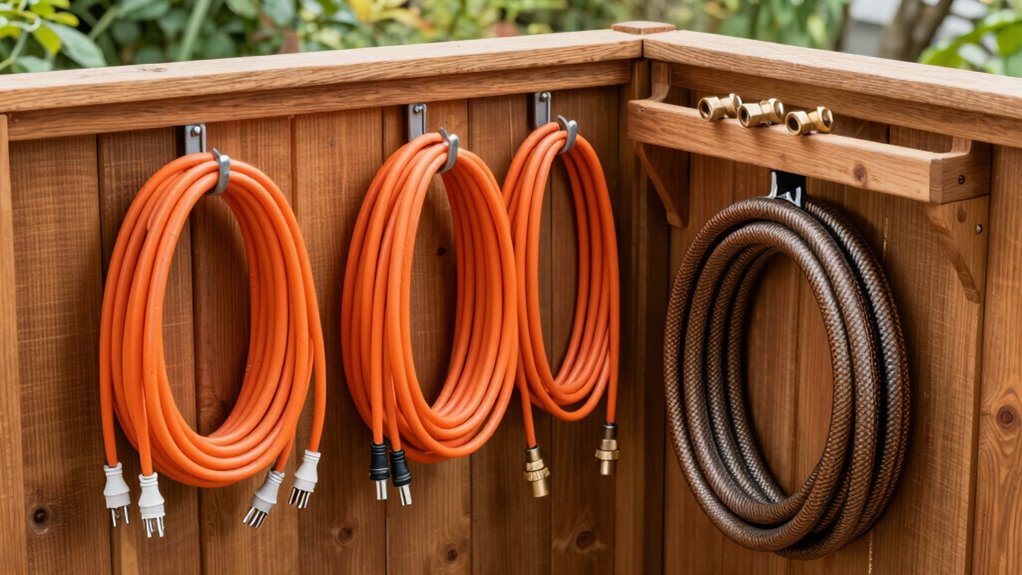
Properly storing extension cords and hoses is essential to keep them in good condition and guarantee safety around your home. When it comes to indoor storage, it’s best to find a dedicated space that keeps these items organized and protected from damage. Use hooks, racks, or wall-mounted brackets to hang cords and hoses securely. This not only prevents tangles and kinks but also makes it easier to access them when needed. Avoid leaving extension cords or hoses lying on the floor where they can become tripped hazards or get damaged by foot traffic or furniture. Instead, designate a storage area that’s dry, cool, and out of direct sunlight, which can degrade these materials over time. Proper storage not only prolongs the lifespan of your cords and hoses but also promotes a safe environment in your home.
Safety tips are key when storing extension cords and hoses. Always unplug cords before storing them to prevent electrical hazards. Coil cords loosely with a figure-eight pattern to avoid internal damage and minimize stress on the wires. When storing, keep the plugs and connectors away from moisture and dust, which can lead to corrosion or electrical failures. For hoses, drain any remaining water to prevent mold growth or mildew, especially if you plan to store them indoors for long periods. Avoid storing hoses in areas prone to extreme temperature fluctuations, as this can cause the material to crack or weaken. Additionally, consider using storage containers that are specifically designed for these items to further protect them from environmental damage and facilitate organization. Using proper storage practices helps maintain the integrity and safety of your extension cords and hoses over time. Regular inspection of your stored items can help identify early signs of wear, preventing potential safety hazards.
A common mistake is leaving extension cords or hoses tangled or stuffed into boxes. Proper storage involves neatly coiling cords and hoses, securing them with straps or Velcro fasteners. This prevents kinks and makes it easier to unwind them without damage. For added safety, consider using labeled storage bins or dedicated containers so you can quickly identify the right cord or hose when needed. Keep extension cords away from heat sources and chemicals, which can compromise their insulation and safety. Similarly, store hoses away from sharp objects that could puncture or tear the material. Regularly inspecting your stored cords and hoses for signs of wear or damage ensures ongoing safety and functionality. Being proactive about maintenance can help extend the lifespan of your tools and prevent accidents.
Products Worth Considering

Dyson Ball Animal 3 Corded Upright Vacuum

Samsung 85 M80H Series Mini LED 4K Smart TV (2026)

Levoit Core 400S-P Smart Air Purifier for Large Rooms
As an affiliate, we earn on qualifying purchases.
Frequently Asked Questions
Can Extension Cords Be Stored Outside Without Damage?
Yes, you can store extension cords outside, but you need to guarantee proper outdoor storage and cord protection. Keep cords in a dry, shaded area to prevent damage caused by UV rays and moisture. Use weatherproof containers or reels to avoid exposure to elements. Proper outdoor storage helps extend the life of your extension cords, preventing cracking, fraying, or electrical issues caused by weather damage.
What’s the Best Way to Prevent Hoses From Cracking?
By the by, to prevent hoses from cracking, you should carefully choose hose material suited for your climate—rubber hoses are flexible, but vinyl ones can crack in extreme cold. Store them in sturdy, weatherproof storage containers and avoid direct sunlight, which accelerates deterioration. Properly coiling your hoses prevents kinks and stress points, extending their life. Regularly inspect and drain them after use, ensuring they stay supple and crack-free for years.
How Often Should I Replace Stored Extension Cords?
You should replace stored extension cords when you notice signs of damage, such as fraying or cracks, to maintain electrical safety and guarantee cord durability. Regularly inspect your cords, especially if they’ve been stored improperly or exposed to extreme conditions. Don’t ignore small issues; replacing damaged cords prevents electrical hazards and prolongs their lifespan. Always prioritize safety and replace cords promptly to keep your workspace secure and efficient.
Are There Specific Storage Tips for Heavy-Duty Hoses?
Storing heavy-duty hoses is like giving them a spa day—gentle, careful, and organized. To keep them in top shape, use heavy-duty storage solutions like wall-mounted reels or sturdy hooks. Coil hoses neatly to prevent kinks, and avoid sharp bends. Regular hose maintenance, like checking for leaks and cleaning, prolongs their life. Proper storage guarantees your hoses stay flexible and ready for your next project.
How Do Temperature Changes Affect Stored Extension Cords?
Temperature fluctuations can impact stored extension cords by causing the cord insulation to expand or contract, potentially leading to cracks or damage over time. When you store cords in areas with extreme temperature changes, it’s essential to keep them in a cool, dry place to prevent deterioration. Proper storage minimizes the effects of these fluctuations, preserving the cord’s insulation and ensuring it stays safe and functional when you need it.
Conclusion
Storing extension cords and hoses properly keeps your space tidy and ready for action. Think of your storage method as the backbone of a well-organized workshop—supporting everything else with ease. When you keep cords coiled neatly and hoses hung securely, you’re preventing tangles and damage, just like a well-tended garden. With these simple tips, you’ll keep your tools in top shape, making your next project flow smoothly—like a well-oiled machine ready to roll.