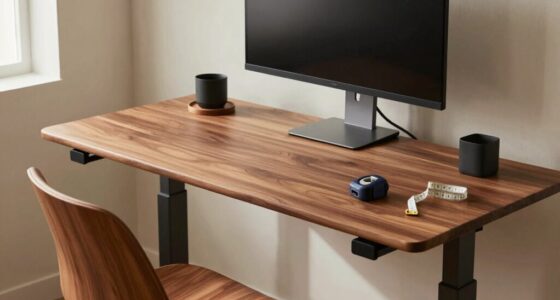

To sit better without spending any money, start by evaluating your posture; make sure your back has a natural curve and your feet rest flat on the floor. Optimize your workspace by positioning your screen at eye level. Use household items like rolled towels for lumbar support or boxes to elevate your chair. Remember to take movement breaks every 30 to 60 minutes and practice mindfulness techniques to stay aware of your posture. Discover more tips for improvement ahead.
Key Takeaways
- Assess and adjust your sitting posture by ensuring your back is straight and feet flat on the floor.
- Use rolled towels or blankets for lumbar support behind your lower back to enhance comfort.
- Take movement breaks every 30 to 60 minutes to stand, stretch, and reset your posture.
- Practice mindful breathing techniques to reduce tension and improve focus while seated.
- Create awareness of your body alignment throughout the day to maintain better sitting habits.

OPTP The Original McKenzie Lumbar Roll – USA-Made Low Back Lumbar Support for Office Chair & Car Seat Back Support Cushion. The Preferred Lumbar Pillow by Physical Therapists – Standard Density
Standard Density Lumbar Support Pillow: Measures approximately 11” long x 4.75” diameter. Offers moderate support. Also available in…
As an affiliate, we earn on qualifying purchases.
As an affiliate, we earn on qualifying purchases.
Assess Your Sitting Posture
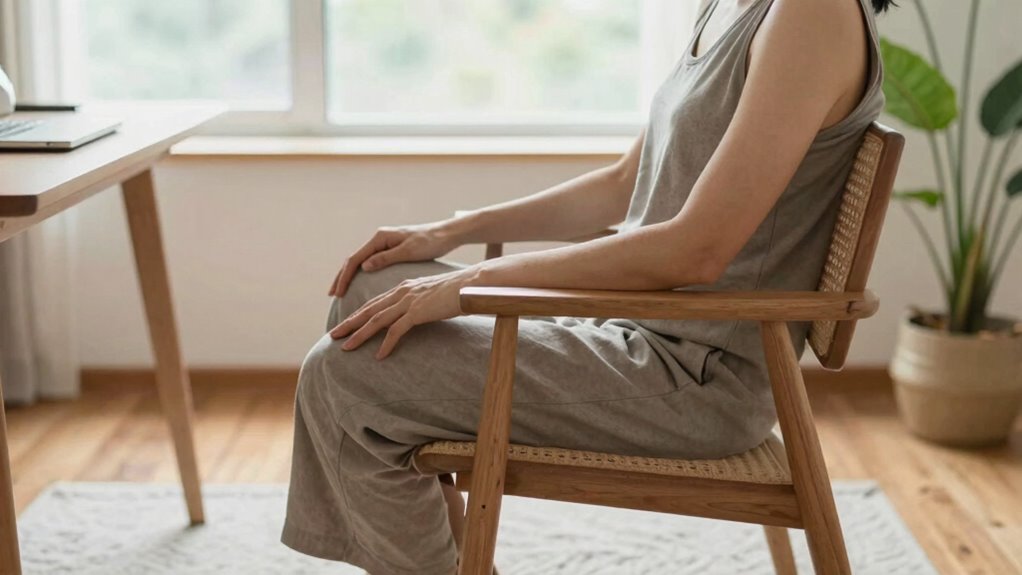
How can you tell if your sitting posture is doing more harm than good? Start by developing posture awareness. Pay attention to how your body feels while you sit. Is your back hunched, or are your shoulders rounded? These signs often indicate poor body alignment. Your feet should rest flat on the floor, knees at a right angle, and your back should have a natural curve. If you’re slouching, you may experience discomfort or fatigue. Regularly check in with your posture throughout the day; minor adjustments can make a huge difference. Incorporating ergonomic principles into your sitting habits can further improve support and comfort. By being mindful of your sitting position, you can prevent long-term issues and promote better overall health. Take the time to assess your posture, and your body will thank you.

CasaZenith Foot Rest, Six Heights Adjustable Foot Rest for Under Desk at Work, Ergonomic Foots Stool for Under Office Desks, Under Desk Footrest with Foot Massage Roller, Chair Footrest for Leg Rests
Desk Foot Rest with 6 Six Height Adjustment: Our foot stool can be adjusted according to your height,…
As an affiliate, we earn on qualifying purchases.
As an affiliate, we earn on qualifying purchases.
Optimize Your Workspace Setup for Better Sitting Posture
To improve your sitting posture, start by adjusting your chair height so your feet are flat on the ground. Next, make sure your screen is at eye level to reduce strain on your neck. These simple tweaks can make a big difference in how you feel throughout the day, especially when considering ergonomic home office setups for better comfort.
Adjust Chair Height
Finding the right chair height is essential for maintaining good posture while you work. Start by adjusting your chair so that your feet rest flat on the floor, with your knees at a 90-degree angle. This chair adjustment helps reduce strain on your back and promotes better alignment. If your feet don’t touch the ground, use a footrest to provide support. Remember, your hips should be slightly higher than your knees for ideal comfort. Incorporating these ergonomic tips not only enhances your posture but also boosts productivity. Regularly check your chair height, especially if you’re sharing a workspace. A few tweaks can make a significant difference in how you feel throughout the day.
Screen Eye Level
Ensuring your screen is at eye level is essential for maintaining a comfortable posture while working. When your screen is positioned correctly, you reduce the risk of slouching or leaning forward, which can lead to discomfort and tension. Adjust the height of your monitor so that the top of the screen aligns with your eyes. If you’re using a laptop, propping it up with books can help. Proper workspace ergonomics helps prevent strain and promotes better overall comfort. Also, pay attention to screen brightness. If it’s too dim, you’ll strain your eyes, and if it’s too bright, it can be harsh on your vision. Find a balance that minimizes eye strain and enhances your focus. By optimizing your screen setup, you’ll feel better and work more efficiently.

WALI Computer Monitor Stand for Desk, Adjustable Laptop Riser, Desk Monitor Stand Underneath Storage for Office, Home, School Supplies (STT003), 1 Pack, Black
Design: The monitor stand for the desk has a large 14.6 x 9.3 inches metal shelf that fits…
As an affiliate, we earn on qualifying purchases.
As an affiliate, we earn on qualifying purchases.
Use Household Items for Additional Support
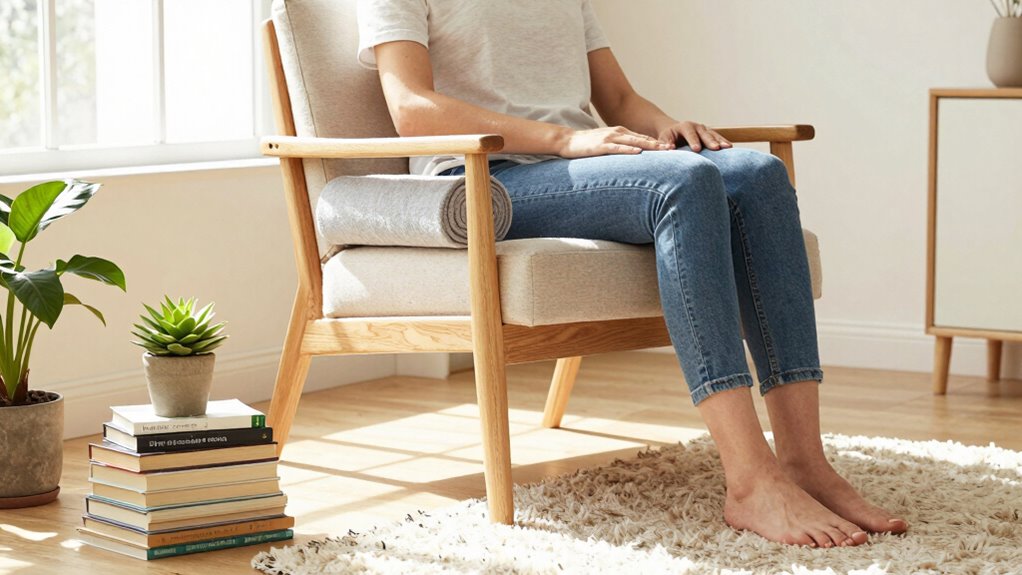
You can enhance your sitting posture using simple household items that provide extra support. Start by using rolled towels or blankets for lumbar support, placing them behind your lower back. If your chair feels too low, consider box elevation to raise your seat height. Cushion layering can improve comfort; stack pillows for better support. For your feet, a footrest alternative like a sturdy box or cushion keeps them elevated, promoting circulation. Incorporating ergonomic principles can further optimize your sitting setup for comfort and health.
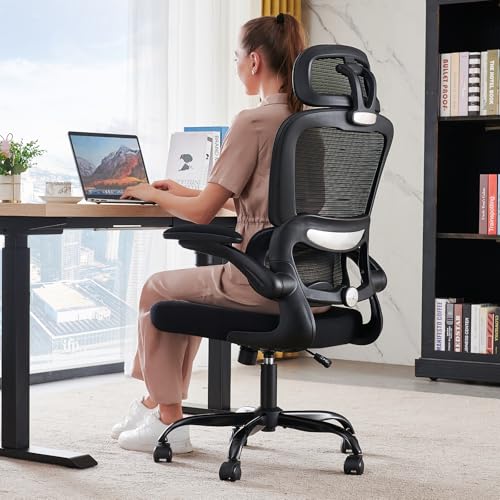
TRALT Office Chair Ergonomic Desk Chair, 330 LBS Home Mesh Office Desk Chairs with Wheels, Comfortable Gaming Chairs (Black)
Ergonomic Office Chair: Experience unparalleled support with our ergonomic office chair, designed to provide comprehensive assistance for your…
As an affiliate, we earn on qualifying purchases.
As an affiliate, we earn on qualifying purchases.
Add Movement and Regular Breaks
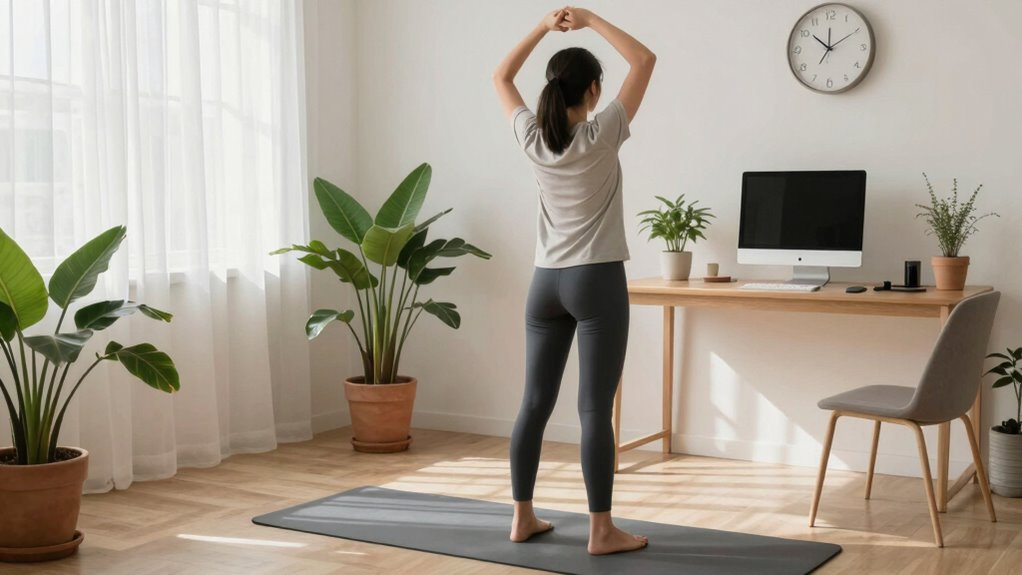
Even with proper support from household items, staying in one position for too long can lead to discomfort. To combat this, make it a habit to take regular movement breaks. Set a timer every 30 to 60 minutes to remind yourself to stand up and stretch. Incorporate dynamic stretches, like arm circles or leg swings, to energize your muscles and improve circulation. These quick breaks not only relieve tension but also boost your focus and productivity. When you feel the urge to slouch, use these moments to reset your posture. Remember, movement is key to maintaining comfort while sitting. Engaging in play-based activities can also support your child’s mental health by encouraging natural movement and exploration. By adding these simple routines to your day, you’ll feel better and more engaged while working or relaxing.
Develop Mindfulness Techniques for Better Posture

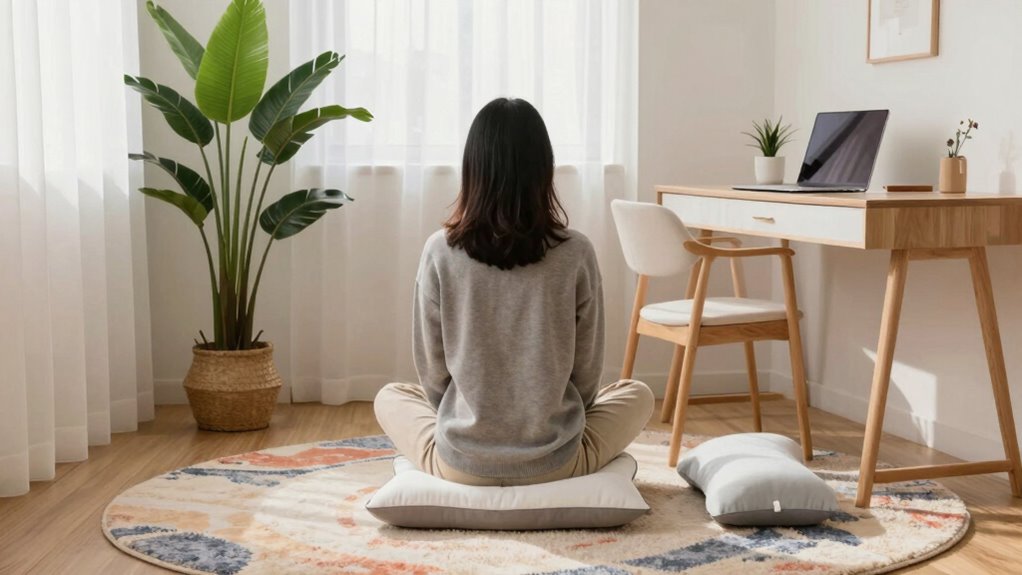
While it’s easy to lose track of your posture during long periods of sitting, developing mindfulness techniques can help you stay aware and aligned. Start by practicing mindful awareness—take a moment to notice how you’re sitting. Are your shoulders hunched? Is your back straight? Next, try a body scan. Close your eyes and mentally check in with each part of your body, from your head to your toes. Notice any tension or discomfort, and consciously relax those areas. Set reminders throughout the day to pause and reassess your posture. With consistent mindfulness practice, you’ll become more attuned to your body’s alignment, helping you maintain a better sitting posture naturally. Remember, awareness is the first step toward improvement. Cultivating creative thinking can also help you find new ways to stay engaged with your posture and comfort throughout the day.
Establish a Comfortable Sitting Routine
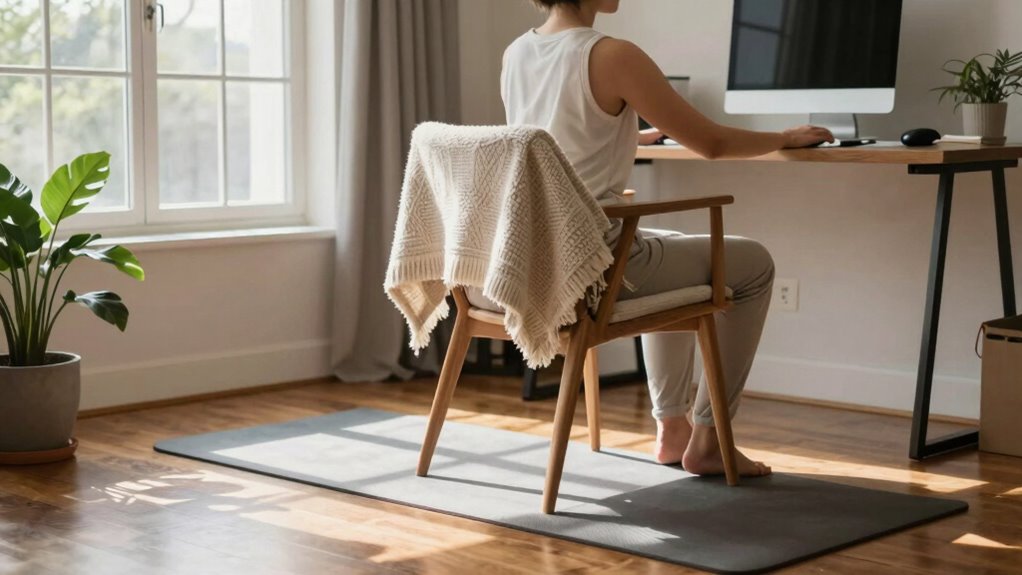
To establish a comfortable sitting routine, start by evaluating your current posture to identify any issues. Make it a habit to schedule regular breaks so you can stretch and move around. Incorporating mindful breathing techniques can also help you stay relaxed and focused throughout your day.
Assess Your Current Posture
Evaluating your current posture is essential for establishing a comfortable sitting routine that promotes health and productivity. Start by enhancing your posture awareness and ensuring proper body alignment. Here’s how to assess your posture effectively:
- Check your back: Sit upright, ensuring your back is straight and shoulders are relaxed. Avoid slouching.
- Align your feet: Keep your feet flat on the ground or on a footrest, with knees at a 90-degree angle. This supports stability.
- Position your screen: Make sure your computer screen is at eye level, so you’re not leaning forward or straining your neck.
- Monitor your pressure: Be mindful of the pressure points that can develop from prolonged sitting, and adjust your posture accordingly to reduce discomfort pressure distribution.
Schedule Regular Breaks
After evaluating your current posture, it’s important to incorporate regular breaks into your sitting routine. A well-structured sitting schedule can drastically improve your comfort and productivity. Set break reminders every 30 to 60 minutes to stand, stretch, or walk briefly. This simple practice helps reduce fatigue and maintain focus. Incorporating practical, room-by-room solutions can make these routines easier to implement and sustain over time.
Mindful Breathing Techniques
How can you enhance your sitting experience with mindful breathing techniques? By practicing breath awareness, you can transform your time spent seated into a more comfortable and relaxed experience. Here are three simple techniques to incorporate:
- Deep Belly Breathing: Inhale deeply through your nose, allowing your belly to expand. Exhale slowly through your mouth. Repeat this several times to promote relaxation.
- 4-7-8 Technique: Inhale for four counts, hold for seven, and exhale for eight. This helps calm your mind and body.
- Box Breathing: Inhale for four counts, hold for four, exhale for four, and hold for four again. This rhythmic pattern enhances focus and reduces stress.
Utilizing these relaxation techniques can make a significant difference in your sitting routine. Mindful breathing can also help you cultivate a sense of presence and reduce mental clutter during your seated moments.
Frequently Asked Questions
How Can I Remind Myself to Check My Posture Regularly?
To remind yourself to check your posture regularly, set daily check-ins throughout your day. Use alarms on your phone or sticky notes in visible places as posture reminders. When you hear your alarm or see a note, take a moment to assess your posture. Make it a habit by associating the check-ins with other daily activities, like taking a break or standing up. Soon enough, it’ll become second nature to maintain good posture.
What Are Signs That My Sitting Posture Is Improving?
You’ll notice several improvement indicators as your sitting posture gets better. First, you might feel less tension in your neck and shoulders, which means fewer aches. You could also find it easier to focus, thanks to improved blood flow. Another sign is increased energy and reduced fatigue during the day. These posture benefits add up, making you more comfortable and productive. Keep being mindful, and you’ll continue to see progress!
Can My Footwear Affect My Sitting Posture?
Absolutely, your footwear can greatly affect your sitting posture! Think about it: if your shoes lack proper support or sole cushioning, it can throw off your alignment, making it harder to sit up straight. When you wear shoes that cradle your feet and provide stability, it encourages better posture, even when seated. So, next time you slip on a pair, consider how they might impact your overall alignment and comfort.
How Often Should I Change My Sitting Position?
You should change your sitting position every 30 to 60 minutes to maintain good posture and reduce discomfort. This sitting frequency helps keep your muscles engaged and prevents stiffness. Stay aware of your posture; make sure your back is straight and your feet are flat on the floor. By being mindful and shifting your position regularly, you’ll promote better circulation and overall comfort throughout the day.
What Stretches Can I Do While Sitting?
You might think seated stretches aren’t effective, but they can really make a difference. While sitting, try simple desk exercises like neck rolls, seated twists, or shoulder shrugs to relieve tension. Stretch your arms overhead, and lean side to side to elongate your torso. Don’t forget to flex and point your feet to keep your legs engaged. These quick routines boost circulation and help you feel more comfortable throughout the day.
Conclusion
By focusing on your sitting posture and making simple adjustments, you can transform your comfort and well-being without spending a dime. Think of your body as a plant; if it’s not positioned well in the sunlight, it won’t thrive. Just like a plant needs the right angle to flourish, you need mindful adjustments to sit better. With a few changes and some awareness, you can cultivate a healthier sitting habit and enjoy the benefits of improved posture.