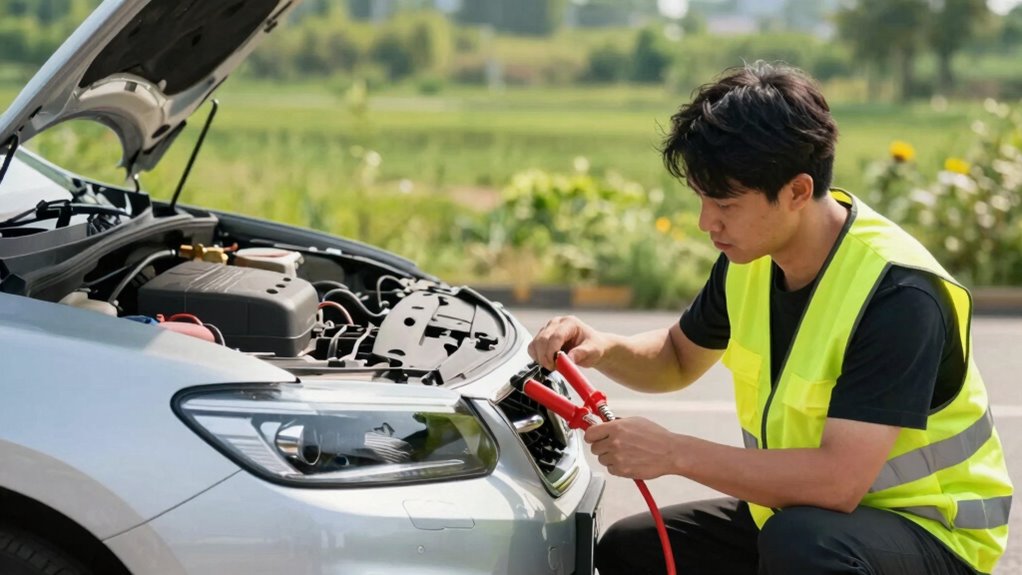
When you need to jump start your car, first gather essential tools like jumper cables and safety gear. Verify both vehicles are off, and carefully connect the red clamps to the dead battery and then to the good one. Attach the black clamp to the good battery and to a grounded surface on the dead car. Start the working car, then try starting the dead vehicle. There’s more to learn about this process to verify safety and effectiveness.
Key Takeaways
- Ensure both vehicles are turned off, parked on stable ground, and engaged in parking brakes before starting the jump process.
- Connect jumper cables: red to the dead battery, red to the good battery, black to the good battery, and black to a grounded metal surface on the dead car.
- Start the working vehicle first and let it run for a few minutes before attempting to start the dead vehicle.
- Remove the cables in reverse order: black from the dead car, black from the working battery, red from the working battery, and finally red from the dead battery.
- Always wear gloves and safety goggles, and keep a safe distance from the batteries during the entire process to avoid hazards.
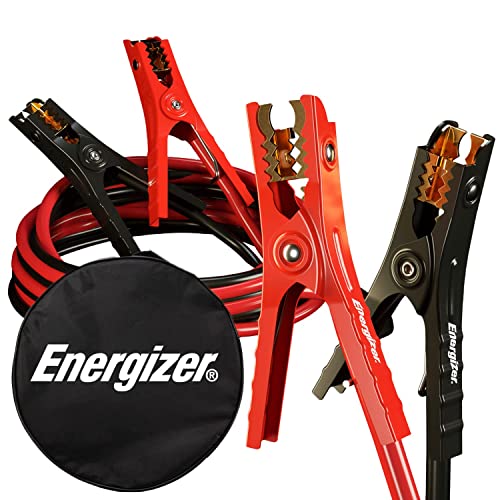
Energizer Jumper Cables for Car Battery, Heavy Duty Automotive Booster Cables for Jump Starting Dead or Weak Batteries with Carrying Bag Included (16-Feet (6-Gauge)
ENERGIZER 16 FEET JUMPER CABLES – 6 Gauge, 16 FT booster battery jumper cables for jump starting a…
As an affiliate, we earn on qualifying purchases.
As an affiliate, we earn on qualifying purchases.
When Should You Jump Start Your Car?
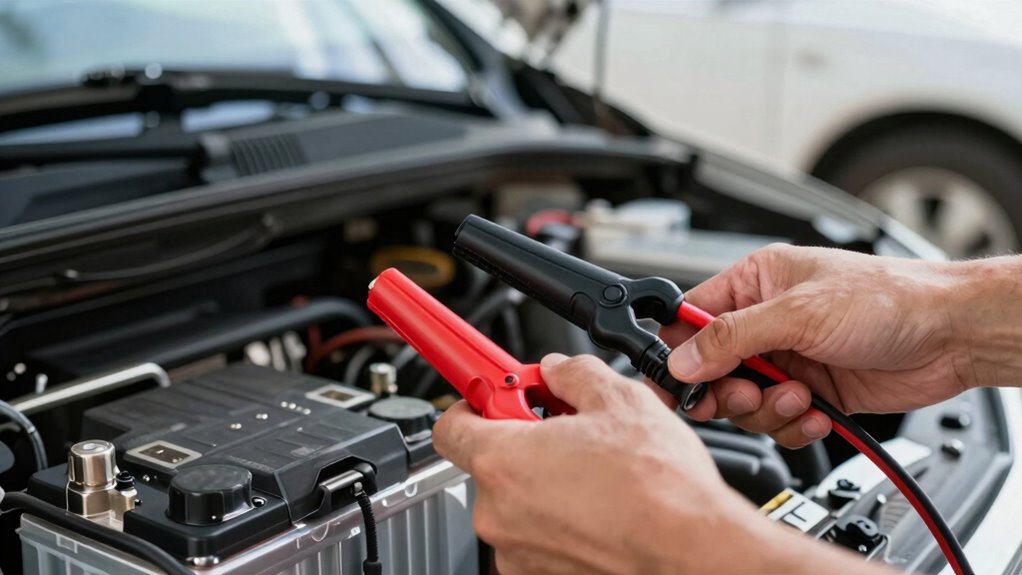
Have you ever found yourself stranded with a dead battery? Recognizing car battery signs can save you from that frustrating experience. Pay attention to jump start indicators like dimming headlights, slow engine cranking, or electrical issues. If your dashboard lights flicker or your radio cuts out unexpectedly, it’s likely time to contemplate jump starting your car. Additionally, if your battery’s over three years old, it’s wise to be proactive. Regularly check for corrosion or damage, as these can also signal a problem. When you notice these signs, don’t hesitate; addressing them early can prevent a breakdown. Knowing when to jump start your car guarantees you’re ready to hit the road again without delay.

DEWALT DPG82-11 Concealer Clear Anti-Fog Dual Mold Safety Goggle, Clear Lens, 1 Pair
DEWALT ToughCoat hard coated lens provides tough protection against scratches.
As an affiliate, we earn on qualifying purchases.
As an affiliate, we earn on qualifying purchases.
Gathering Tools for Jump Starting
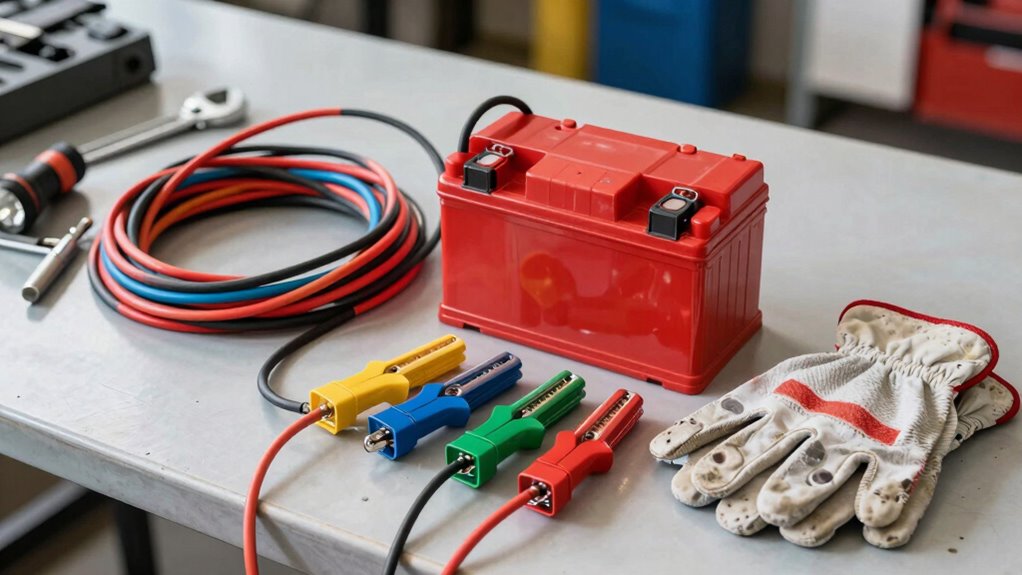
Once you’ve determined it’s time to jump start your car, gathering the right tools is your next step. You’ll need a set of jumper cables, which are essential for connecting your car’s battery to another vehicle. Make sure the cables are in good condition—no frays or breaks. Next, identify the battery types involved. If you’re jump starting a standard lead-acid battery, most cables will work, but if you’re dealing with AGM or gel batteries, check your cable specifications. Having gloves and safety glasses can add an extra layer of safety. With these tools ready, you’ll be well-prepared to tackle the jump start process confidently and efficiently.

Portable Jump Starter with Air Compressor 8000A 160PSI, 16-in-1 Car Battery Jump Starter with Emergency Kit, Auto-Shutoff Tire Inflator, Jumper Cables, Jump Box Car Battery for All Gas/14L Diesel
【START COMPLETELY DEAD BATTERIES】This car jump starter delivers 8000A peak current and FORCE START function for dual protection….
As an affiliate, we earn on qualifying purchases.
As an affiliate, we earn on qualifying purchases.
Preparing Both Vehicles for a Jump Start
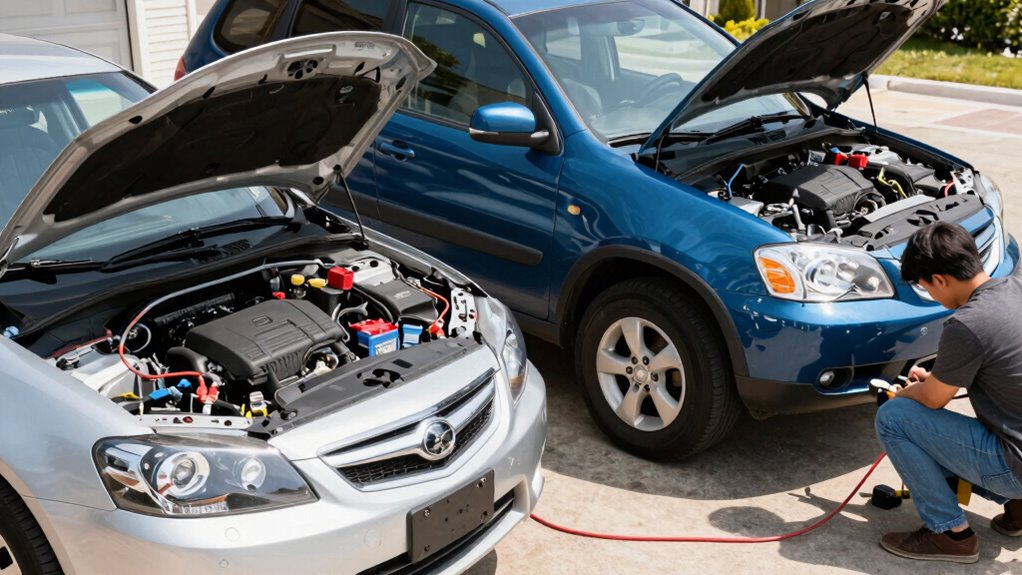
Before you start the jump start process, make certain both vehicles are parked close enough for the jumper cables to reach, but not touching. Check the battery condition of both cars to verify they’re suitable for the jump. This step is essential for a safe and effective jump start.
Position Vehicles Correctly
To set the stage for a successful jump start, position both vehicles correctly within close proximity to each other, guaranteeing they’re parked on stable, flat ground. Proper car alignment is key to making the connection easier and safer.
Here’s how to do it:
- Turn off both vehicles to prevent electrical surges.
- Position them nose-to-nose or side-by-side, but close enough for the jumper cables to reach.
- Ascertain the parking brakes are engaged on both vehicles to prevent any rolling.
- Keep away from traffic and verify the area is clear of obstacles for safety.
Check Battery Condition
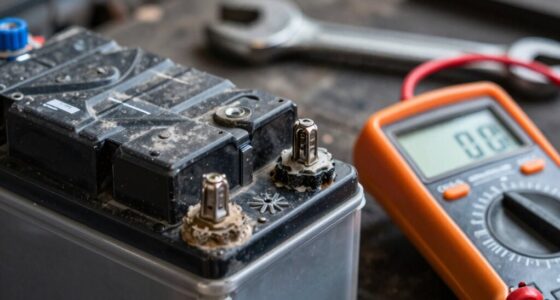
Checking the battery condition is vital for a successful jump start. Start by inspecting the battery age; if it’s over three to five years, it might struggle to hold a charge. Next, perform a corrosion check. Look for any white, ashy residue around the battery terminals, which indicates corrosion. If you spot any, it’s important to clean it off using a mixture of baking soda and water. Make certain to wear gloves and safety glasses during this process. Afterward, verify that the battery terminals are tight and secure. If everything looks good, you’re ready to proceed with the jump start. Taking these steps helps guarantee safety and increases the chances of reviving your vehicle without complications.
grounded metal surface for jump starting
As an affiliate, we earn on qualifying purchases.
As an affiliate, we earn on qualifying purchases.
How to Jump Start Your Car: A Step-by-Step Guide
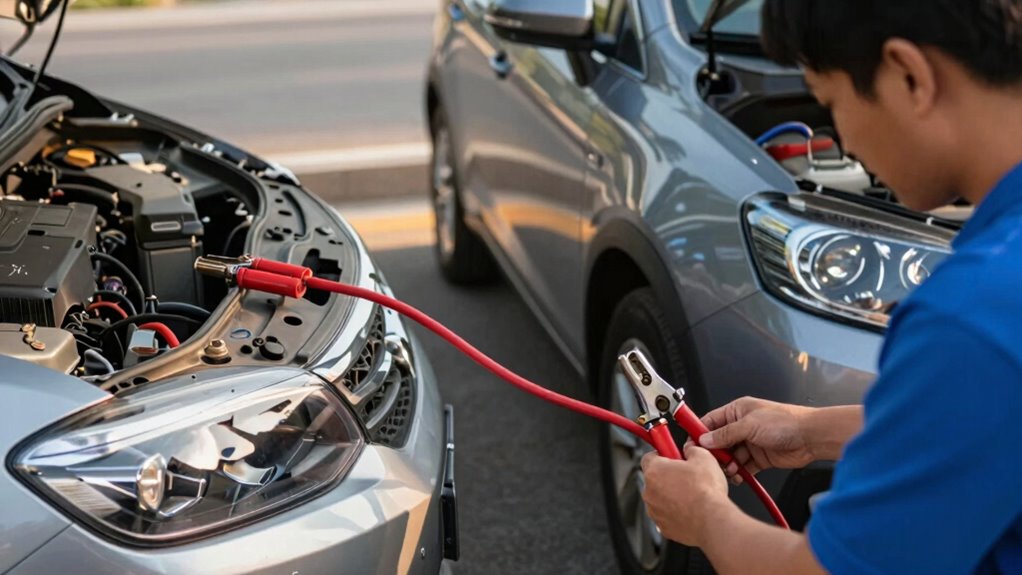
Before you jump start your car, you’ll need a few essential tools, like jumper cables and a working vehicle. It’s also vital to follow safety precautions to protect yourself and both cars. Let’s walk through the steps to get you back on the road safely.
Essential Tools Needed
Jump starting a car requires a few essential tools to guarantee the process goes smoothly and safely. Before you get started, make sure you have the following items on hand:
- Jumper cables – These are vital for connecting your dead battery to a working one.
- Battery charger – This can be a backup option if you prefer charging the battery instead of jump starting.
- Gloves – Wearing gloves can protect your hands from battery acid and prevent slips while handling cables.
- Safety glasses – Protect your eyes from any potential sparks during the jump start.
Having these tools ready will make the jump-starting process easier and safer for everyone involved. Don’t forget to check the condition of your jumper cables before use!
Safety Precautions To Follow
Having the right tools is just the start; following safety precautions is essential to guarantee a successful jump start. First, verify both cars are turned off before connecting cables. Don’t ignore battery maintenance tips—check for corrosion and confirm terminals are clean. Always connect the red clamp to the dead battery first, then to the good battery. Next, attach the black clamp to the good battery and the other end to a grounded metal surface on the dead car. Avoid common jump start myths, like revving the engine of the working car; it’s unnecessary and can damage electronics. Once connected, start the working car and then attempt to start the dead vehicle. Always wear safety glasses for extra protection.
Common Mistakes to Avoid When Jump Starting
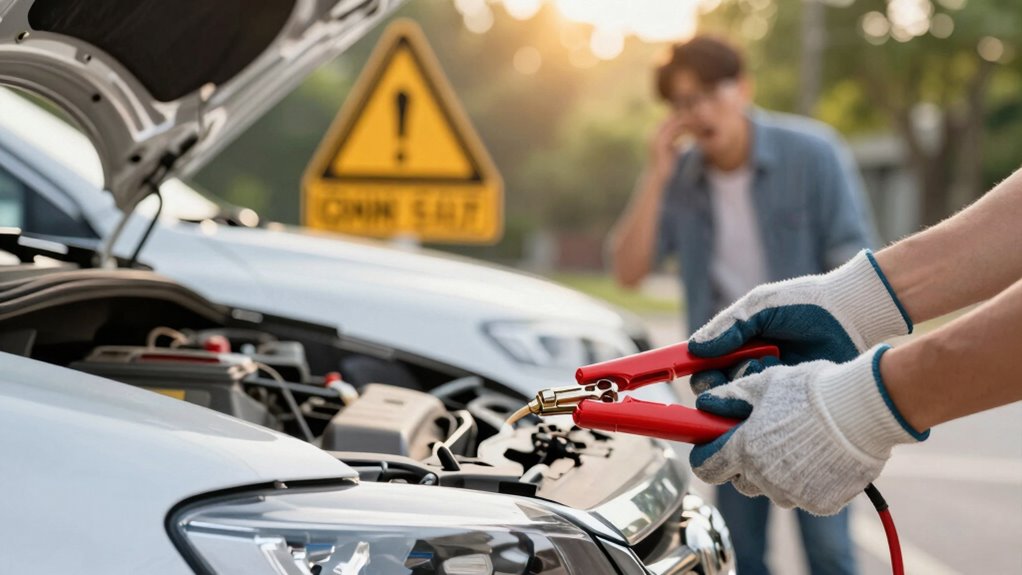
While it may seem straightforward, many people make common mistakes when jump starting a car that can lead to safety hazards or damage. To help you avoid these pitfalls, keep an eye out for the following:
Many people overlook key steps when jump starting a car, risking safety and damage; stay informed to avoid these common mistakes.
- Using wrong cables: Always make sure you’re using appropriate jumper cables. Cheap or damaged cables can cause problems.
- Making improper connections: Connect the clamps correctly—positive to positive and negative to negative—to avoid sparks or short circuits.
- Checking battery compatibility: Verify the batteries are compatible regarding voltage and type before attempting a jump.
- Neglecting vehicle positioning: Position the vehicles close enough for the cables to reach but avoid them touching to prevent electrical issues.
- Ignoring safety precautions: Always wear personal protective equipment and follow safety tips to minimize risks when jump starting.
How to Know When to Replace Your Car Battery?
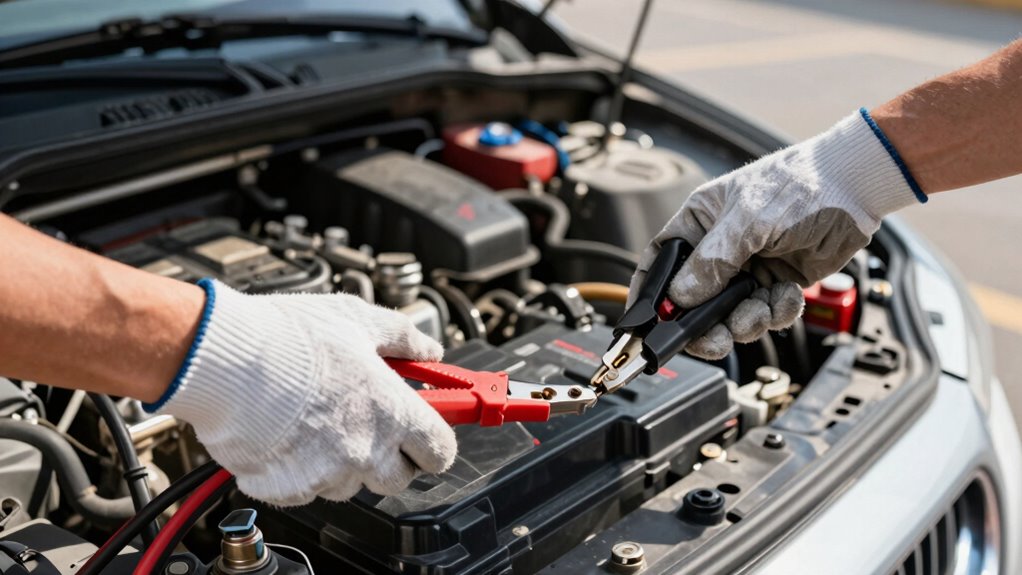
How can you tell when it’s time to replace your car battery? First, pay attention to battery lifespan signs. Most batteries last between three to five years, so if yours is nearing that age, it’s wise to start monitoring its performance. Look for slow engine cranking or dimming lights when you start your vehicle; these can indicate a weakening battery. Testing battery health is crucial too—many auto parts stores offer free testing services. If your battery fails the test or shows signs of corrosion, it’s likely time for a replacement. Don’t wait until you’re stranded; proactive maintenance guarantees your car runs smoothly and keeps you on the road. Additionally, being familiar with car repair basics can help you handle small issues before they become major problems.
What to Do After a Jump Start
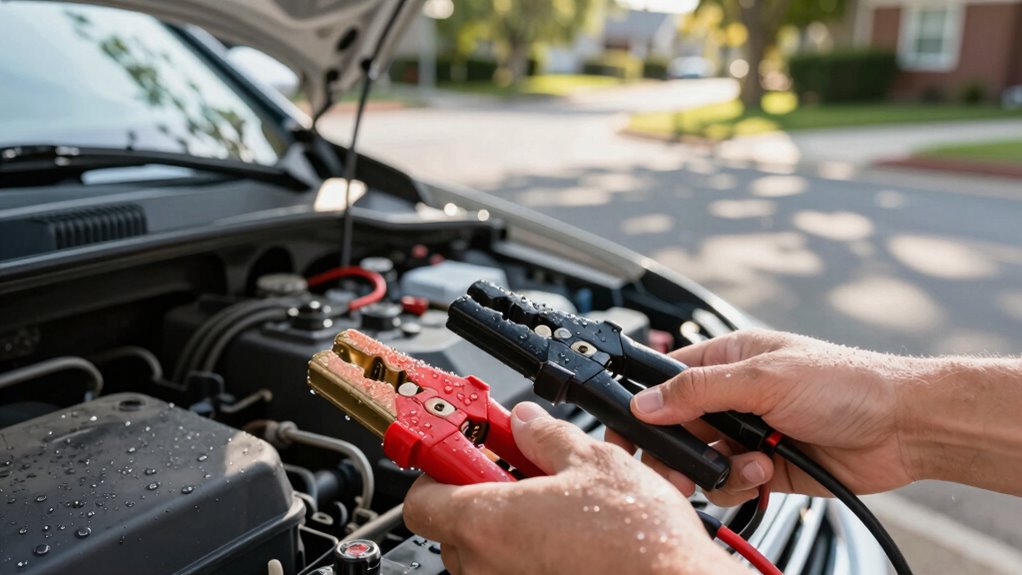
After successfully jump-starting your car, it’s important to take a few steps to guarantee your vehicle operates smoothly. Here’s what you should do next:
- Drive for at least 20 minutes: This helps recharge your battery and avoids it dying again.
- Inspect battery connections: Make sure the cables are tight and free of corrosion for better battery maintenance.
- Check warning lights: Keep an eye on your dashboard for any alerts that could indicate issues.
- Consider a battery test: If you experience repeated failures, have your battery and charging system tested to avoid future problems.
Stay Safe While Jump Starting Your Car!
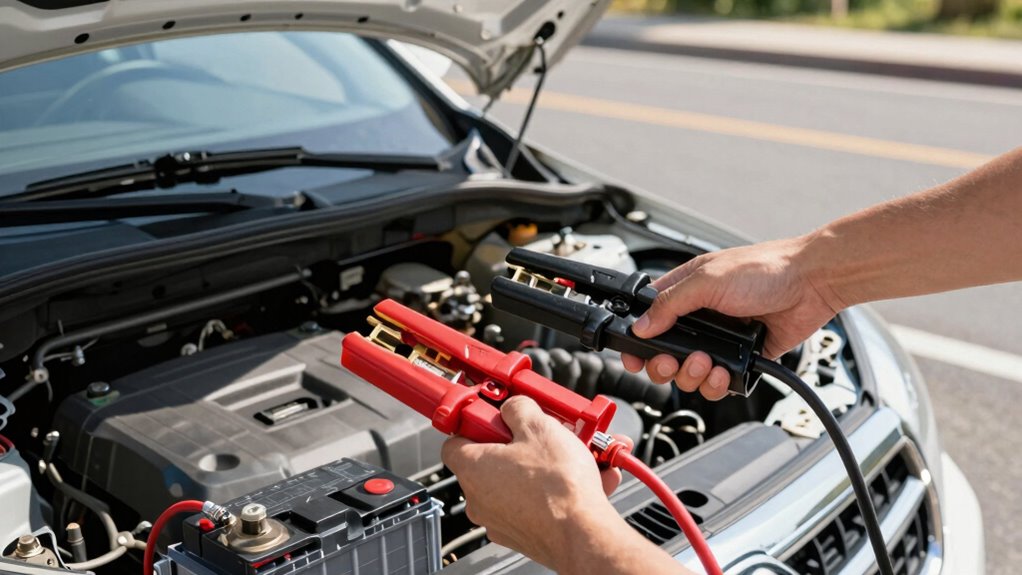
Jump starting your car can be a straightforward process, but safety should always come first. Before you start, make sure both vehicles are turned off and in park. Inspect the jump cables for any damage; frayed or broken cables can cause accidents. When connecting the jump cable, always attach the red clamp to the dead car battery’s positive terminal first, followed by the working battery. Next, connect the black clamp to the working battery’s negative terminal, and then attach the other end to an unpainted metal surface on the dead car. This helps prevent sparks near the battery. Once finished, remove the cables in reverse order. Always wear gloves and safety goggles to protect yourself from any unexpected incidents.
Frequently Asked Questions
Can I Jump Start My Car in Cold Weather?
Yes, you can jump start your car in cold weather, but you need to take some precautions. Cold weather can affect battery performance, so verify both batteries are fully charged and in good condition. Check the jumper cables for any damage, and make sure connections are secure. Also, let your car’s engine run for a few minutes before trying to start it. This helps boost the battery’s power in low temperatures.
Will Jump Starting Damage My Car’s Electronics?
Jump starting your car typically won’t damage your car’s electronics, as long as you follow the proper steps. However, if your battery health is poor or your electronic systems are sensitive, you might encounter issues. Confirm both vehicles are off before connecting cables, and avoid reverse polarity. If you’re concerned, consider using a jump starter instead of another vehicle to minimize risks to your car’s delicate electronic systems.
How Long Should I Run My Car After a Jump Start?
You should run your car for at least 20 to 30 minutes after a jump start. This helps recharge your battery and guarantees it gets enough voltage. While you’re driving, keep an eye on the voltage check if available; it’ll help you monitor the battery’s condition. Regular battery maintenance is key, so don’t forget to check connections and clean any corrosion to keep your car running smoothly in the future.
Can I Jump Start a Hybrid or Electric Vehicle?
Yes, you can jump start a hybrid or electric vehicle, but it’s a bit different. Hybrid batteries and electric systems are sensitive, so you should check the owner’s manual first. If the manual allows it, make sure you use the correct jump-starting procedure to avoid damaging the battery or electrical components. Always connect cables carefully and guarantee you’re following safety guidelines to prevent any issues during the process.
Is It Safe to Jump Start With a Portable Jump Starter?
Yes, it’s safe to jump start with a portable jump starter, as long as you follow safety precautions. Imagine this: you’re stranded, and your portable jumper could be your lifesaver. Just make sure you read the instructions, check the charge level, and connect the clamps correctly. Avoid any contact with metal surfaces and keep flammable materials away. With the right approach, you’ll have your vehicle running in no time!
Conclusion
Jump starting your car doesn’t have to feel like rocket science! By following these steps, you can easily get back on the road and tackle your day. Remember, keeping your tools handy and avoiding common mistakes makes all the difference. If you’re ever in doubt, don’t hesitate to seek help. Now that you’re equipped with this knowledge, you’re practically a car-jumping superhero! Stay safe, and may your battery always be charged!