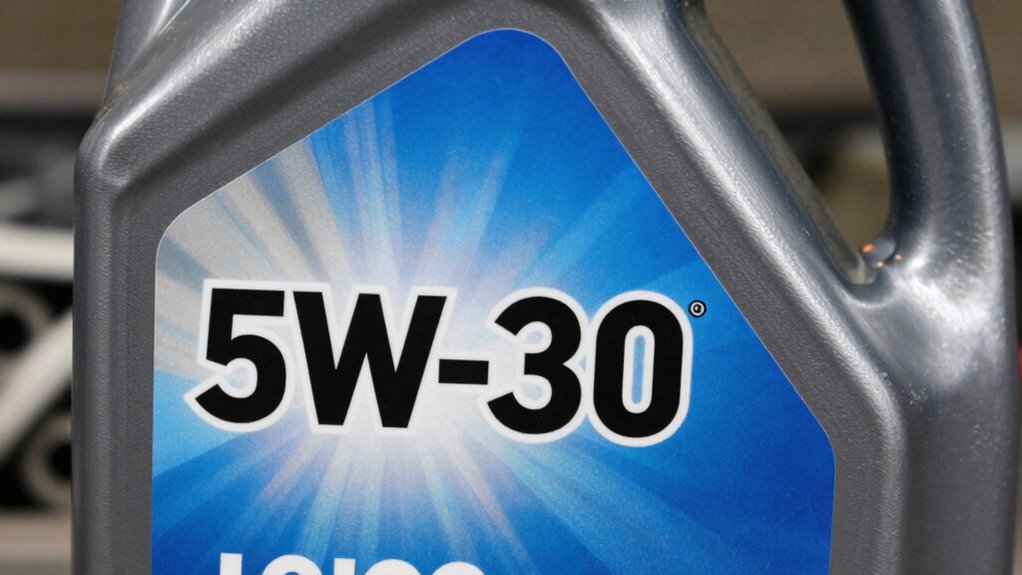
Motor oil weight labels tell you how an oil flows at different temperatures, helping you choose the right viscosity for your climate. The first number with a ‘W’ (like 5W) indicates cold weather performance, while the second number shows how it acts when hot. Higher second numbers mean thicker oil at operating temperature. Understanding these labels guarantees your engine runs smoothly and lasts longer. Stick around to discover more about selecting the best oil for your needs.

Get the little things that make your day delivered free with Prime
- Fast, free delivery on millions of items
- Prime Video, Amazon Music and more included
- Member-only deals all year
Key Takeaways
- Oil weight labels like 5W-30 indicate cold flow and hot viscosity, affecting engine startup and performance.
- The first number with W shows cold weather flow; lower numbers mean better cold start lubrication.
- The second number reflects oil thickness at engine operating temperature; higher numbers mean thicker oil.
- Synthetic and synthetic blend oils typically have more stable viscosity ratings across temperature ranges.
- Choosing the correct oil weight ensures optimal engine protection, efficiency, and longevity for specific climates.

Motor oil weight labels provide essential information about the viscosity of the oil, which determines how well it flows at different temperatures. When you’re choosing oil for your vehicle, understanding these labels helps you pick the right product for peak engine performance. Many drivers overlook the significance of viscosity ratings, but they’re crucial because they tell you how thick or thin the oil remains under various conditions. For example, an oil labeled 5W-30 flows easily in cold weather, ensuring your engine gets proper lubrication during startup, while still maintaining enough thickness at higher temperatures to protect engine parts.
Choosing the right oil viscosity ensures optimal engine performance and protection across different temperatures.
You might also notice labels mentioning synthetic blends. These oils combine conventional mineral oil with synthetic components, offering a middle ground in performance and price. Synthetic blends tend to have more consistent viscosity ratings compared to regular oils, which means they perform better across temperature swings. They provide improved flow in cold starts and better stability at high temperatures, making them a popular choice for drivers who want some of the benefits of fully synthetic oils without the higher cost. These blends typically have viscosity ratings that fall within a specific range, ensuring your engine stays protected whether it’s freezing outside or you’re cruising on a hot day. Additionally, understanding the viscosity standards used by manufacturers can further assist in choosing the best oil for your engine’s needs. Recognizing how these standards are maintained helps ensure the oil you select meets the necessary performance criteria.
Understanding viscosity ratings is essential because they’re standardized measurements that describe how thick or thin an oil is at certain temperatures. The first number, followed by a W (like 5W), indicates how the oil behaves in winter, or cold conditions. The second number (such as 30 in 5W-30) shows how the oil performs at operating temperature. A higher second number generally means thicker oil at engine temperature, which can be better for high-mileage or high-stress engines. Conversely, lower numbers mean thinner oil, which flows more easily, especially in cold weather. Moreover, these ratings help ensure engine protection by matching the oil’s viscosity to the engine’s requirements and operating environment.
In essence, these labels are your guide to selecting the right oil for your climate and driving style. If you live in a colder region, you’ll want a lower first number, like 0W or 5W, to ensure quick startup lubrication. For hotter climates, a higher second number might be better. Recognizing that synthetic blends often feature specific viscosity ratings can help you make an informed decision, balancing performance and cost. Furthermore, viscosity ratings are part of the standardized measurements that help ensure oils meet specific performance criteria. Using the correct viscosity rated oil not only improves engine efficiency but also reduces the risk of engine wear, which can extend the lifespan of your vehicle. So, take a moment to read those labels carefully—your engine relies on it.
As an affiliate, we earn on qualifying purchases.
Frequently Asked Questions
Can You Mix Different Viscosity Oils Safely?
Mixing different viscosity oils isn’t always safe, as oil compatibility varies. If you decide to do it, be cautious about viscosity mixing, because incompatible oils can cause engine issues or reduce lubrication effectiveness. Always check manufacturer recommendations and consider sticking to the same viscosity grade to guarantee peak engine performance. When in doubt, consult your vehicle’s manual or a professional mechanic to prevent potential damage.
How Often Should I Change My Motor Oil?
You should change your motor oil every 5,000 to 7,500 miles, but it depends on your vehicle’s engine temperature and driving conditions. If your engine runs hotter or you frequently tow or drive in harsh conditions, consider more frequent changes. Proper oil longevity guarantees your engine stays well-lubricated and cool. Regular oil changes help maintain peak engine performance and prevent costly damage down the line.
Do Oil Weights Affect Fuel Economy?
Yes, oil viscosity impacts fuel efficiency. Thinner oils with lower viscosity flow more easily, reducing engine friction and helping your vehicle use less fuel. Conversely, thicker oils with higher viscosity can increase resistance, potentially lowering fuel economy. Choosing the right oil weight for your engine guarantees ideal lubrication without sacrificing efficiency. Always follow your vehicle manufacturer’s recommendations to balance engine protection and fuel savings effectively.
What Does “Multi-Viscosity” Mean?
“Multi-viscosity” means the oil adapts to different temperatures, thanks to its unique properties. Interestingly, around 75% of engine wear occurs during cold starts, so this oil’s ability to flow easily when cold is crucial. It combines different oil viscosities, like 5W-30, to provide ideal lubrication whether it’s cold or hot. This blend ensures your engine runs smoothly, reducing wear and improving performance across various driving conditions.
Are Synthetic Oils Better Than Conventional Oils?
Synthetic oils are generally better than conventional oils because they offer superior engine protection, better viscosity stability, and improved performance in extreme temperatures. Synthetic advantages include longer-lasting lubrication and better engine cleanliness. In a conventional comparison, synthetic oils often cost more upfront but can save you money over time by reducing oil changes and engine wear. Overall, synthetic oils provide enhanced protection and efficiency for your vehicle.
As an affiliate, we earn on qualifying purchases.
Conclusion
Understanding motor oil weight labels helps you choose the right oil for your vehicle, ensuring smooth sailing on the road. Remember, just like a trusty steed from yesteryear, your engine needs the proper lubrication to keep running efficiently. Don’t let confusion about weights throw you off—stick to the labels that match your climate and driving needs. With this knowledge, you’ll be well-equipped to keep your car humming like a well-tuned orchestra, even in the age of the horseless carriage.
As an affiliate, we earn on qualifying purchases.
As an affiliate, we earn on qualifying purchases.
Fall Picks
fall essentials
As an affiliate, we earn on qualifying purchases.