
Using a torque wrench properly is key to preventing over-tightening. Start by checking the specified torque settings for your task. Adjust the wrench to the correct setting and apply steady pressure until you hear a click. This guarantees your fasteners are secure without risking damage. Don’t forget to maintain your wrench to keep it accurate. There’s more to learn about different types and techniques that can make your projects safer and more effective.
Key Takeaways
- Use a calibrated torque wrench to ensure accurate torque settings and prevent over-tightening.
- Follow manufacturer specifications for torque to avoid damaging components.
- Apply steady, consistent pressure when using the wrench until the click signals the desired torque is reached.
- Regularly maintain and calibrate your torque wrench to ensure its effectiveness and accuracy.
- Double-check your work after tightening to confirm secure and safe connections.

LEXIVON Torque Wrench 1/2-Inch Drive Click 10~150 Ft-Lb/13.6~203.5 Nm (LX-183)
PRECISE & HIGH QUALITY – Manufactured in Taiwan, our torque wrench is engineered for superior precision. It ships…
As an affiliate, we earn on qualifying purchases.
As an affiliate, we earn on qualifying purchases.
How to Use a Torque Wrench: A Beginner’s Guide
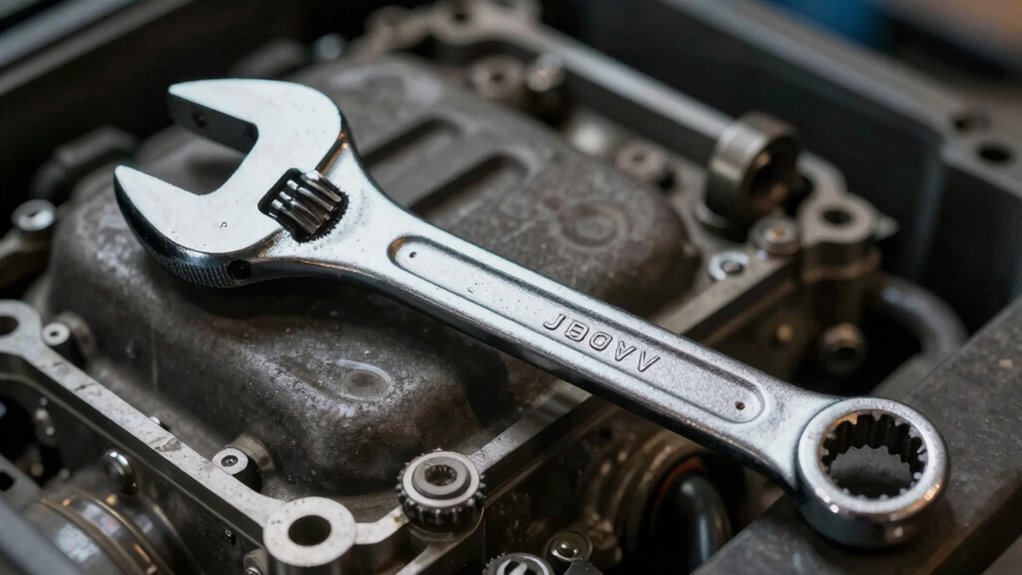
When you’re tackling a project that requires precise fastening, using a torque wrench is essential. Start by checking the torque settings specified for your task; these values guarantee you apply the right amount of force. Before using the wrench, make certain it’s properly calibrated. If it’s off, your fasteners won’t be secure, which could lead to problems later on.
To use the torque wrench, adjust it to the desired torque setting by twisting the handle. Grip the wrench firmly and apply steady pressure until you hear a click or feel a break in tension. This indicates you’ve reached the correct torque level. Always return the wrench to its lowest setting after use to maintain calibration, guaranteeing reliable performance for your next project.
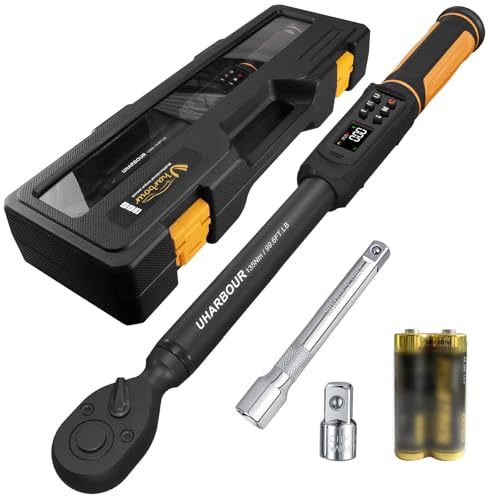
Uharbour Digital Torque Wrench 3/8 Drive, 1.5-99.5 ft-lbs./6.8-135Nm Range, Electric Torque Wrench with Dual Direction Ratchet, ±1% Accuracy with Vibration, Buzzer and LED Alert
Wide Torque Range: Offers a versatile torque range of 1.5-99.5 ft-lbs./6.8-135Nm, making it suitable for various automotive, bike,…
As an affiliate, we earn on qualifying purchases.
As an affiliate, we earn on qualifying purchases.
Why Getting Torque Right Is Crucial
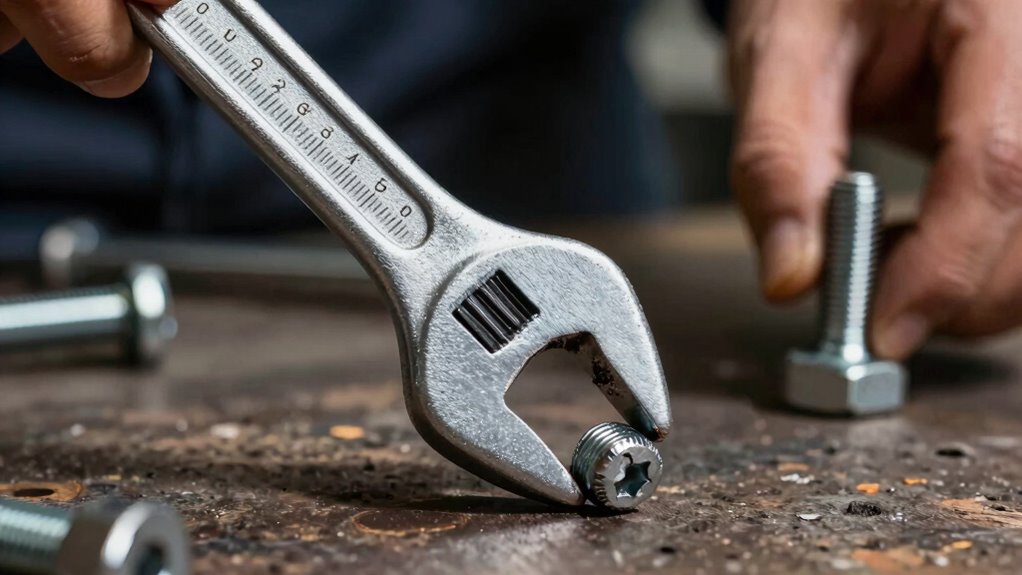
Getting the torque right is essential for guaranteeing your project’s success. When you follow the correct torque specifications, you’ll achieve a secure connection that can withstand stress and strain, preventing failures down the line. If you over-tighten, you risk damaging components or stripping threads, leading to costly repairs. On the other hand, under-tightening can cause joints to loosen, compromising safety and performance. Mastering proper fastening techniques helps you maintain consistency and reliability in your work. Always consult the manufacturer’s guidelines for torque specifications, as they’re designed for ideal performance. By paying attention to these details, you not only enhance the durability of your project but also guarantee your efforts result in a job well done.
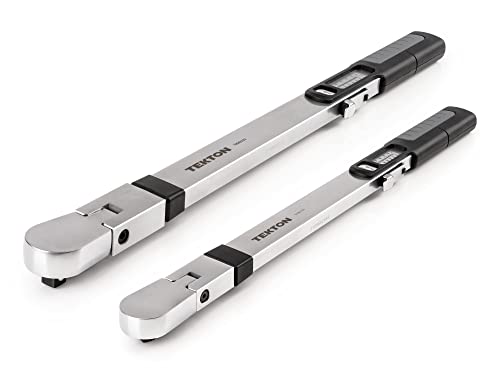
TEKTON 3/8, 1/2 Inch Drive 72-Tooth Split Beam Torque Wrench Set with Cases, 2-Piece (20-100 ft-lb, 40-250 ft-lb) | TRQ99902
Includes 1-pc. 3/8 in. drive split beam torque wrench; 1-pc. 1/2 in. drive split beam torque wrench
As an affiliate, we earn on qualifying purchases.
As an affiliate, we earn on qualifying purchases.
Types of Torque Wrenches You Should Consider
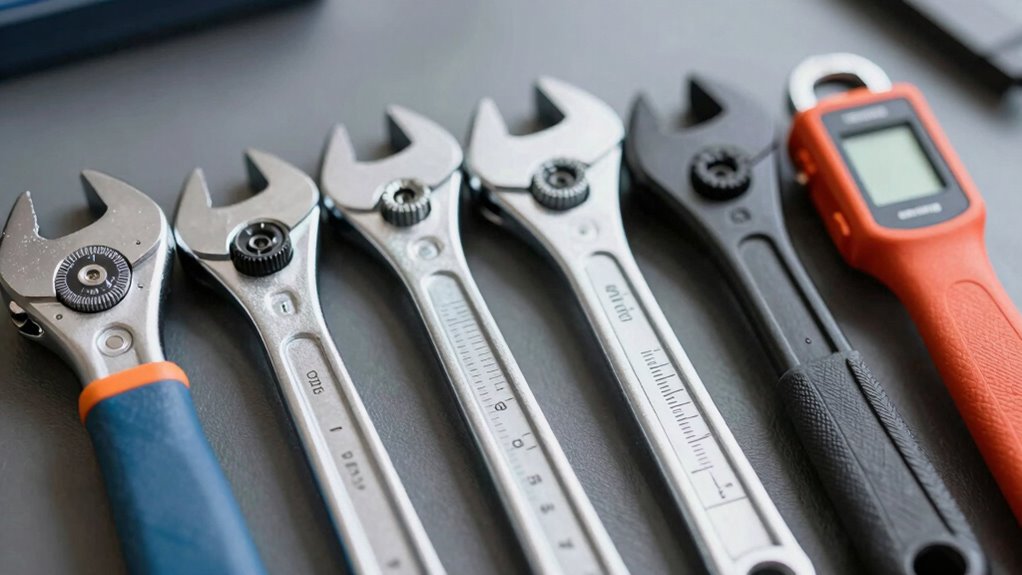
Using the right torque wrench is key to achieving those precise torque specifications. You’ve got a couple of popular options: click type wrenches and beam wrenches. Each has its own strengths, so it’s worth considering your needs before making a choice. Proper tool maintenance and understanding of operating procedures can also enhance accuracy and longevity.

LEXIVON Bike Torque Wrench 1/4-Inch Dr. 15-Piece Kit | 72-Tooth Gear, Dual-Direction Click Type 2~26 Nm / 17.7~230.1 in-lb (LX-191)
THE ULTIMATE BIKE TOOL – This 15-Piece bicycle torque wrench features precise scales of 2~26 Newton Meter (17.7~230.1…
As an affiliate, we earn on qualifying purchases.
As an affiliate, we earn on qualifying purchases.
How to Use a Torque Wrench Correctly for Safe Fastening
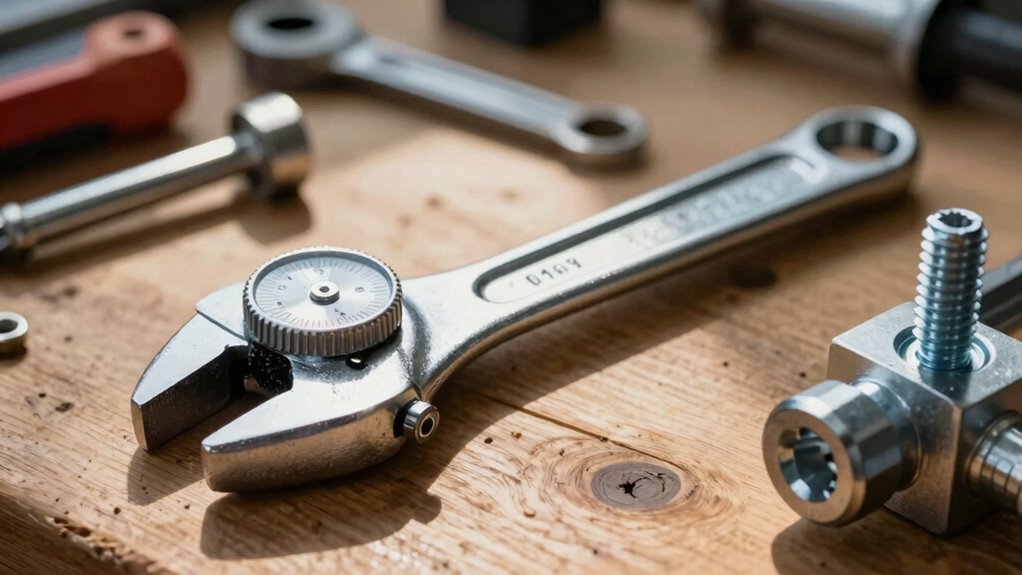
A properly calibrated torque wrench is essential for safe fastening, guaranteeing that fasteners are tightened to the correct specifications. To use your torque wrench correctly, first, set the desired torque settings based on your project’s requirements. Always remember to pull the wrench in a smooth, steady motion; jerking or twisting can lead to inaccurate readings. When fastening, apply consistent pressure until you hear or feel a click, indicating that you’ve reached the set torque. Use the appropriate fastening techniques, such as aligning the wrench properly to avoid stripping the fastener. Finally, double-check your work before moving on, as this guarantees safety and reliability in your assembly. Proper usage will prevent over-tightening and potential damage.
How to Maintain Your Torque Wrench for Accurate Readings
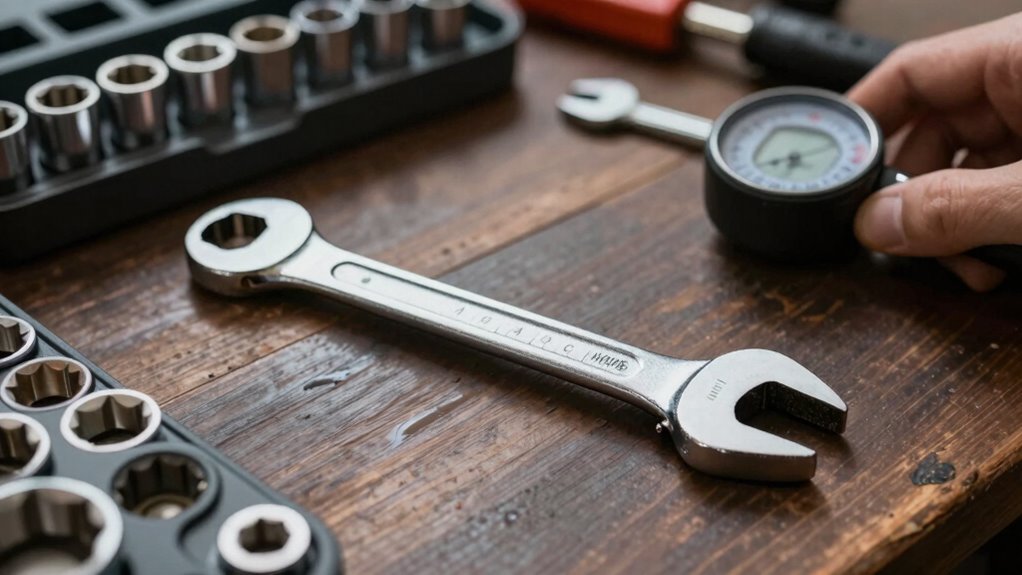
To guarantee your torque wrench delivers accurate readings over time, regular maintenance is essential. Start by following proper calibration techniques to verify it measures torque correctly. Check the manufacturer’s guidelines for calibration intervals, and consider using a calibration service if you’re unsure.
Additionally, focus on proper storage practices. Always store your torque wrench in a protective case, and avoid leaving it under tension, as this can lead to inaccurate readings. Keep it in a dry, clean environment to prevent rust and damage. Regularly inspect the tool for wear and tear, and replace any damaged parts promptly. By maintaining your torque wrench properly, you’ll verify it remains reliable and delivers precise results every time you use it.
Frequently Asked Questions
What Are the Common Mistakes When Using a Torque Wrench?
Common mistakes when using a torque wrench include setting it incorrectly and applying uneven pressure. If you don’t calibrate the wrench properly, you risk over-tightening or under-tightening. Additionally, using inconsistent force while turning can lead to inaccurate torque readings. Always remember to hold the wrench steadily and check your settings before starting. By avoiding these pitfalls, you’ll guarantee your work is precise and reliable, keeping your projects safe and effective.
Can I Use a Torque Wrench for All Types of Fasteners?
No, you can’t use a torque wrench for all types of fasteners. Different torque wrench types—like beam, click, and digital—work better with specific fastener compatibility. Some fasteners require a specific torque range or design, which may not match your wrench. Always check the manufacturer’s specifications to guarantee you’re using the right tool for the job. This way, you’ll avoid damaging fasteners and guarantee a proper fit.
How Do I Know if My Torque Wrench Is Calibrated Correctly?
Knowing if your torque wrench is calibrated correctly is like checking the accuracy of a scale before weighing ingredients. You can use calibration techniques such as comparing your wrench against a known standard or a calibrated tool. Regularly testing for torque accuracy helps guarantee it delivers the right amount of force. If you’re consistently getting unexpected results, it might be time to recalibrate or replace your torque wrench for reliable performance.
What Materials Are Best for Torque Wrench Handles?
The best materials for torque wrench handles are rubber grips and aluminum handles. A rubber grip provides excellent traction and comfort, preventing slippage during use. On the other hand, aluminum handles are lightweight and durable, ensuring your tool remains easy to handle while withstanding wear and tear. Combining these materials can enhance your overall experience, giving you better control and accuracy in your tasks. Choose a torque wrench that balances both features for ideal performance.
What Are the Signs of a Worn-Out Torque Wrench?
If your torque wrench starts acting like a rebellious teenager, it’s probably worn out. Look for signs like inconsistent readings, a slipping head, or visible damage on the handle. Regular wrench maintenance is essential for tool longevity, so if you notice any of these issues, consider replacing it. A reliable wrench guarantees you get accurate torque every time, keeping your projects safe and efficient. Don’t let a faulty wrench ruin your hard work!
Conclusion
Now that you’ve grasped the basics of using a torque wrench, imagine the peace of mind you’ll feel knowing your fastenings are just right. Picture yourself confidently tackling your next project, avoiding the dreaded over-tightening mishaps. But what if you could release even more precision with just a few extra maintenance tips? Stay tuned, because the secret to ensuring your torque wrench remains a reliable tool is just around the corner. Don’t miss out!