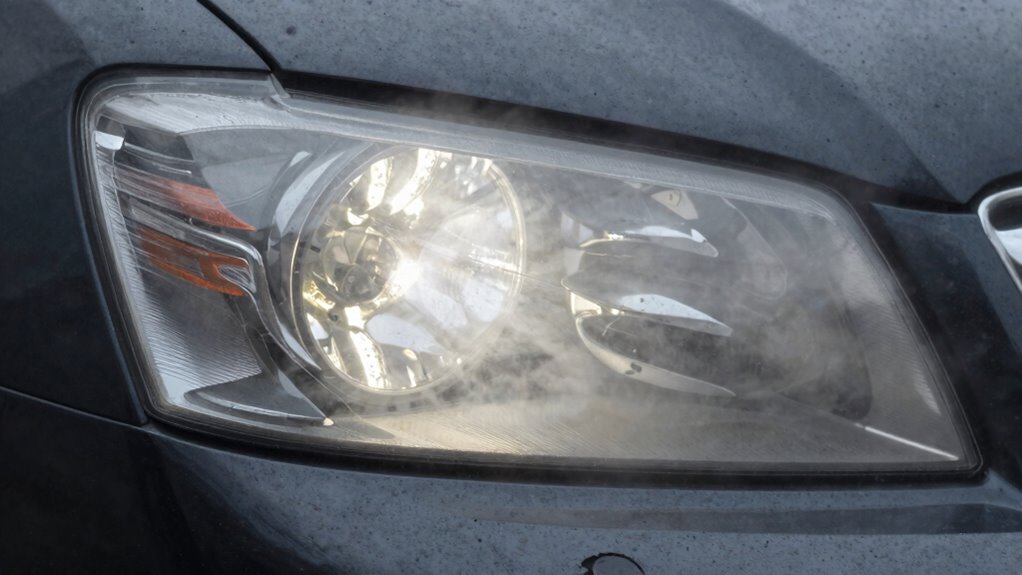
Your headlights can look foggy quickly due to exposure to UV rays, which break down the plastic and cause cloudiness or yellowing. Dirt buildup and grime also stick to the surface, making the foggy appearance worse. Without protective coatings, the plastic deteriorates faster, often within 1-2 years, reducing brightness and visibility at night. If you want to keep your headlights clearer longer, understanding the causes and solutions can help.

Get the little things that make your day delivered free with Prime
- Fast, free delivery on millions of items
- Prime Video, Amazon Music and more included
- Member-only deals all year
Key Takeaways
- UV rays break down plastic, causing quick cloudiness and yellowing of headlights.
- Lack of protective coatings accelerates oxidation and grime buildup.
- Frequent outdoor exposure and sunlight speed up headlight deterioration.
- Dirt and debris adhere to the surface, worsening foggy appearance over time.
- Insufficient maintenance and cleaning reduce headlight clarity and lifespan.
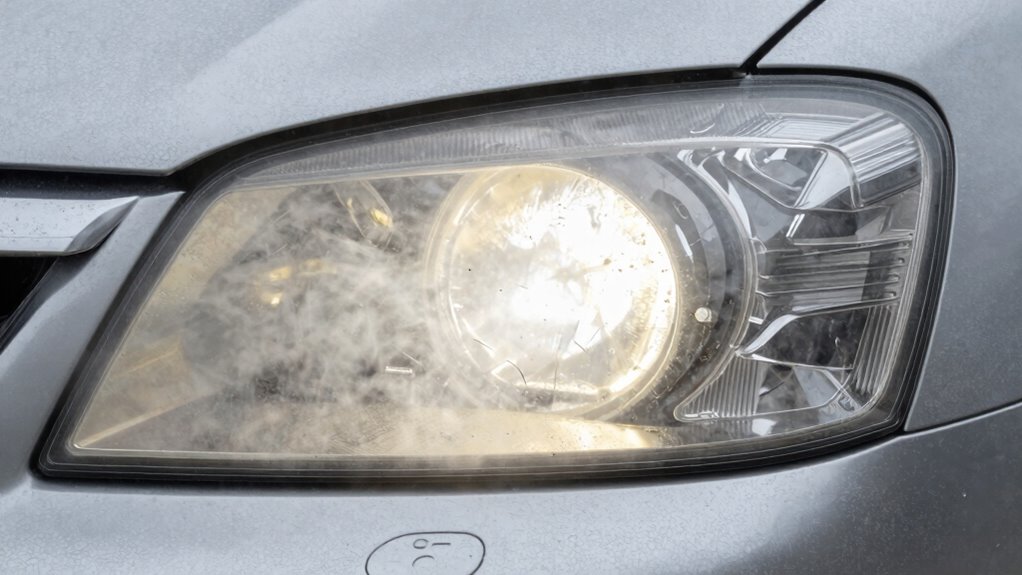
If your headlights look foggy, it’s usually due to a buildup of oxidation, dirt, and grime on the surface. Over time, exposure to the sun’s UV rays causes the plastic lens to break down, leading to a loss of headlight clarity. This UV damage causes the outer layer of your headlights to become cloudy and yellowed, which diminishes the amount of light that passes through effectively. You may notice that your headlights aren’t shining as brightly as before, making night driving more dangerous and decreasing your vehicle’s overall visibility.
Foggy headlights result from UV damage, dirt buildup, and oxidation, reducing brightness and impairing night visibility.
The primary reason headlights turn foggy so quickly is because the plastic lens is vulnerable to environmental factors. Dirt, debris, and road grime stick to the surface, but the real culprit behind rapid deterioration is UV damage. Sunlight’s ultraviolet rays penetrate the plastic, breaking down the molecular structure of the outer surface. This process creates a hazy, foggy appearance and prevents the light from dispersing evenly. As a result, your headlight clarity diminishes, and you’re left with a dull, yellowed lens that hampers your ability to see clearly at night.
Many vehicle owners underestimate how much UV damage accelerates the foggy appearance. Without proper protection or maintenance, the plastic becomes more brittle and less transparent over a relatively short period. This is why headlights can look foggy even after just a year or two of use, especially if your car is frequently parked outdoors or exposed to harsh sunlight. The buildup of grime on top of UV-damaged plastic compounds the problem, making the headlights look even worse and further reducing their effectiveness. Regular application of UV-resistant coatings can help protect the plastic from further damage. Additionally, understanding the effects of UV damage on plastics can help you better care for your vehicle’s headlights and extend their lifespan.
Preventing headlights from becoming foggy so quickly largely depends on safeguarding them from UV damage. Applying a UV-resistant clear coat or headlight sealant can slow down the degradation process. Regular cleaning removes dirt and grime that obscure the lens, but it won’t stop the effects of UV exposure. You should also consider parking your vehicle in shaded areas or using a headlight cover when possible, especially during prolonged sunlight exposure. Furthermore, UV radiation is a major factor that accelerates plastic deterioration, so using protective products designed specifically for automotive plastics can be highly beneficial. Recognizing the importance of UV protection can significantly extend the clarity and lifespan of your headlights. Restoring headlight clarity isn’t just about appearance; it’s about safety—clear headlights ensure you see the road, obstacles, and signs clearly at night.
Products Worth Considering

Bose TV Speaker (2nd Gen) Compact Soundbar with Bluetooth and HDMI-ARC, Black

Bose TV Speaker Compact Soundbar with Bluetooth and HDMI-ARC, Black

Ring Battery Doorbell (1st Gen), 2-Pack, Satin Nickel
As an affiliate, we earn on qualifying purchases.
Frequently Asked Questions
Can Weather Conditions Affect Headlight Fogginess?
Yes, weather conditions can make your headlights foggy faster. Exposure to moisture, snow, and rain can cause the plastic to degrade, especially if your headlights lack proper UV protection. Over time, UV rays weaken the plastic, leading to fogginess and corrosion. To prevent this, use headlight sealants that provide UV protection and corrosion prevention, helping your headlights stay clear longer despite harsh weather conditions.
Do Different Bulb Types Cause Foggy Headlights?
Different bulb types can cause foggy headlights, especially if you choose bulbs with varying brightness and light color. Brightness levels influence how intensely the light shines, which can accelerate foggy residue buildup. Light color also plays a role, as certain hues may reflect dirt and grime more readily, making your headlights appear foggy sooner. Switching to the right bulb type helps maintain clarity, saving you from frequent cleaning and ensuring safer night driving.
How Often Should I Replace Headlight Covers?
You should replace your headlight covers every 5 to 10 years, depending on headlight materials and cover durability. Over time, exposure to UV rays, dirt, and weather causes them to become cloudy and brittle. Regular inspections help you catch deterioration early. If you notice significant fogging or cracks, it’s time for a replacement to guarantee maximum visibility and safety. Proper maintenance extends cover life and keeps headlights clear.
Are There Permanent Solutions for Foggy Headlights?
Yes, there are permanent solutions for foggy headlights. You can opt for professional headlight restoration, which removes the haze and restores clarity. Make sure the restoration includes UV protection, as this prevents future yellowing and fogging caused by sun exposure. Regular maintenance and applying a UV sealant can prolong the clarity of your headlights, making the solution more lasting and effective over time.
Does Headlight Cleaning Damage the Lens?
You might worry that headlight cleaning damages the lens, but proper headlight restoration methods actually protect it. When you use the right products and techniques, like gentle polishing and lens protection treatments, you prevent scratches and preserve clarity. Over-aggressive cleaning or harsh abrasives can harm the lens, so stick to recommended procedures. This way, you maintain your headlights’ durability and appearance without risking damage.
Conclusion
So, now you know why your headlights turn foggy so quickly—they’re like a sponge soaking up dirt, UV rays, and oxidation. Regular cleaning and protective treatments act as your headlights’ shield, keeping them clear and bright. Think of it like giving your car a fresh pair of glasses—suddenly, everything looks sharper. Keep up with maintenance, and your headlights will shine like beacons, guiding your way through the darkest nights without losing their clarity.