
Your core is more than just abs; it’s the powerhouse of your body, involving the muscles in your abdomen, back, hips, and pelvis. A strong core enhances stability, supports good posture, and prevents injuries, making it essential for daily activities and athletic performance. By engaging all core muscles, you’ll achieve balanced strength. Want to know how to effectively train your core and avoid common pitfalls? There’s more to explore for better results!

Get the little things that make your day delivered free with Prime
- Fast, free delivery on millions of items
- Prime Video, Amazon Music and more included
- Member-only deals all year
Key Takeaways
- The core includes muscles in the abdomen, back, hips, and pelvis, providing stability and support for the entire body.
- Strong core muscles enhance posture, balance, and reduce the risk of injury during physical activities.
- Key core muscle groups include the rectus abdominis, transverse abdominis, obliques, and pelvic floor.
- Effective core training involves a mix of endurance exercises, dynamic movements, and flexibility work for balanced strength.
- Consistent core training, with a focus on proper form and all muscle groups, leads to better performance and injury prevention.
core training exercise equipment
As an affiliate, we earn on qualifying purchases.
As an affiliate, we earn on qualifying purchases.
What Is the Core and Why It Matters?
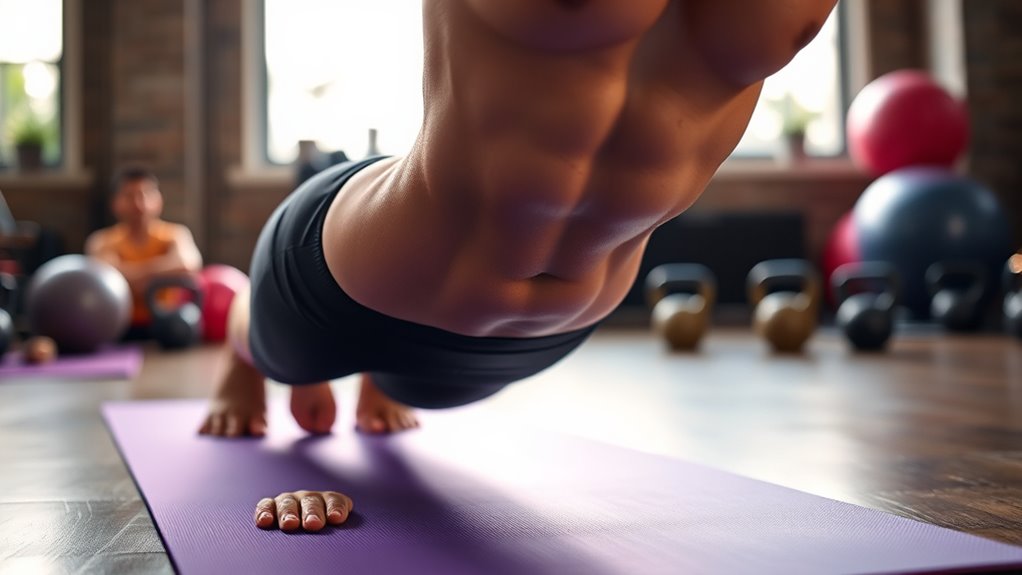
The core is more than just a buzzword in fitness; it’s the powerhouse of your body. It includes muscles in your abdomen, back, hips, and pelvis, all working together to provide core stability. This stability is essential for maintaining balance and proper posture during everyday activities and workouts. When you focus on building a strong core, you’re not just enhancing your appearance; you’re improving your overall functional fitness. A strong core supports nearly every movement you make, from lifting groceries to executing complex gym exercises. By prioritizing core training, you create a solid foundation that allows you to perform better and reduce the risk of injury. Incorporating core stability exercises into your routine can further enhance your ability to transfer force efficiently across your body. Additionally, engaging in evidence-based training methods can optimize your core strength development. So, invest time in your core, and you’ll see the benefits in every aspect of your life.
As an affiliate, we earn on qualifying purchases.
Health Benefits of a Strong Core

While many people focus on aesthetics when it comes to core training, the health benefits of a strong core extend far beyond just a toned midsection. A strong core supports posture improvement, helping you stand taller and reduce strain on your back. It also plays an essential role in injury prevention, as a stable core can absorb impact and protect your body during physical activities. Enhanced athletic performance is another perk, as a powerful core translates into better movement efficiency. You’ll notice improved daily functionality, making tasks like lifting or reaching easier. Additionally, balance enhancement comes from a strong core, allowing you to navigate uneven surfaces with confidence. Overall, a strong core provides vital stability support for your body.
stability ball for core exercises
As an affiliate, we earn on qualifying purchases.
As an affiliate, we earn on qualifying purchases.
Meet Your Core Muscles

To build a strong core, it’s vital to understand what core muscles are and the different types that exist. Your core isn’t just about your abs; it includes various muscles that support your stability and movement. Let’s explore these critical muscle groups and their roles in your overall fitness. A well-rounded core training program also emphasizes the importance of muscle activation techniques to effectively engage these muscles during exercise.
Core Muscle Definition
Understanding your core muscles is essential for achieving overall strength and stability. Your core isn’t just your abs; it includes various muscles that support your spine and pelvis. Knowing the core muscle anatomy helps you appreciate how these muscles work together for balance and movement. Here’s a quick look at their functions:
| Core Muscle Anatomy | Core Muscle Functions |
|---|---|
| Rectus Abdominis | Flexion of the spine |
| Transverse Abdominis | Stabilizes internal organs |
| Obliques | Rotates and bends the torso |
Types Of Core Muscles
Core muscles come in various types, each playing a unique role in your body’s functionality. Understanding these muscle groups helps you enhance your core training effectively. Here are the key types of core muscles you should know:
- Rectus Abdominis: Often referred to as the “six-pack,” it helps with flexing your spine.
- Oblique Muscles: Located on the sides, they assist in rotation and lateral movements.
- Transverse Abdominis: This deep muscle stabilizes your core and supports your spine.
- Pelvic Floor: Essential for pelvic stability and control, it supports internal organs.
As an affiliate, we earn on qualifying purchases.
Effective Core Exercises for Strength Beyond Crunches
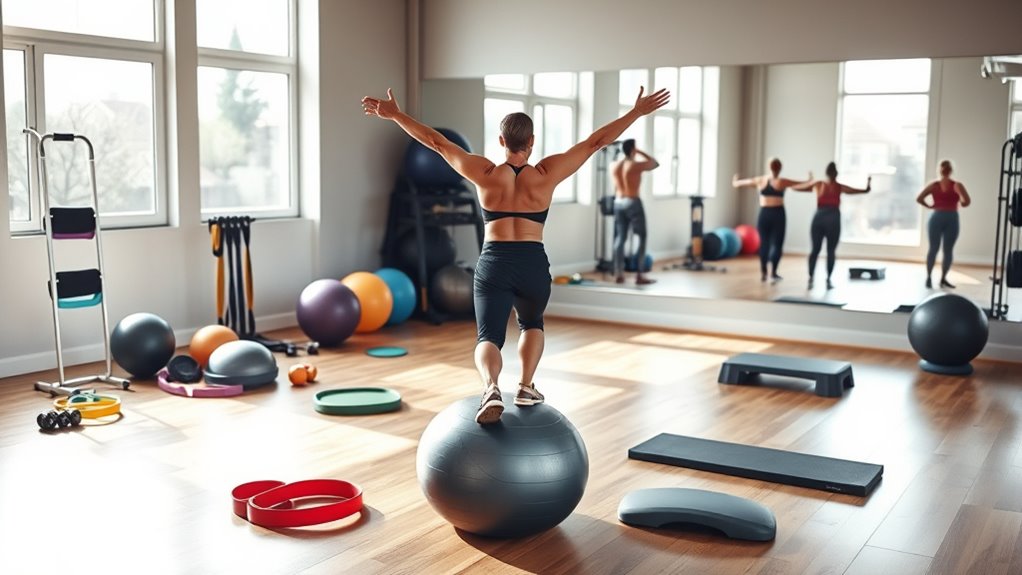
While crunches are often the go-to exercise for core strengthening, they hardly represent the full spectrum of effective workouts you can incorporate into your routine. To build a strong core, consider adding plank variations and stability ball exercises to your regimen. These not only engage your abdominal muscles but also improve overall stability and coordination. Incorporating soundproofing techniques can also help create a quieter environment that complements your physical training space.
Top 5 Mistakes to Avoid in Core Training

When it comes to core training, it’s easy to make some common mistakes that can hinder your progress. You might be ignoring proper form, overemphasizing abdominal work, or neglecting other muscle groups. Let’s break down these pitfalls so you can optimize your routine and see real results.
Ignoring Proper Form
Ignoring proper form during core training can lead to ineffective workouts and increased risk of injury. When you neglect proper alignment, you’re more likely to make form mistakes that hinder your progress. Here are some common pitfalls to watch out for:
- Rounding your back: This can strain your spine and decrease effectiveness.
- Holding your breath: Breathing is essential for maintaining stability and control.
- Not engaging your core: If your core isn’t activated, you won’t get the full benefits.
- Speeding through reps: Moving too quickly can compromise form and lead to injuries.
Focus on maintaining proper alignment to maximize your core training results and stay injury-free. Remember, quality always trumps quantity when it comes to your workouts!
Overemphasizing Abdominal Work
How often do you find yourself focusing solely on abdominal exercises during your core training? Many people fall into the abdominal myth that strong abs are the key to a strong core. While ab workouts are important, they shouldn’t dominate your routine. Achieving exercise balance is vital for overall core strength. Incorporating pet-friendly home tips can create a safer and more comfortable environment for your workouts. Diversifying your workouts will help you develop a well-rounded core and enhance your overall performance. Embracing exercise variety is essential to prevent overuse injuries and promote balanced muscle development. Additionally, paying attention to ergonomic accessories can support your posture and core stability during workouts and daily activities. Recognizing the importance of core stability can further optimize your training results and prevent injuries. Embrace variety for better results!
Neglecting Other Muscle Groups
Many individuals concentrate heavily on abdominal exercises, but neglecting other muscle groups can hinder your core training progress. A well-rounded core routine engages all areas, including the glutes and obliques. Here are common mistakes to avoid:
- Neglecting glutes: Strong glutes stabilize your pelvis and support your overall core strength.
- Overlooking obliques: These muscles help with rotational movements and balance, essential for daily activities.
- Ignoring lower back: A strong lower back complements core stability and prevents injury. Incorporating muscle balance exercises can help achieve this.
- Disregarding hip flexors: They play a role in overall core function, assisting in movements and posture.
- Forgetting about mobility: Improving joint mobility can enhance your ability to perform core exercises safely and effectively. Additionally, maintaining good flexibility can prevent compensations that limit core engagement.
Creating a Balanced Core Training Routine
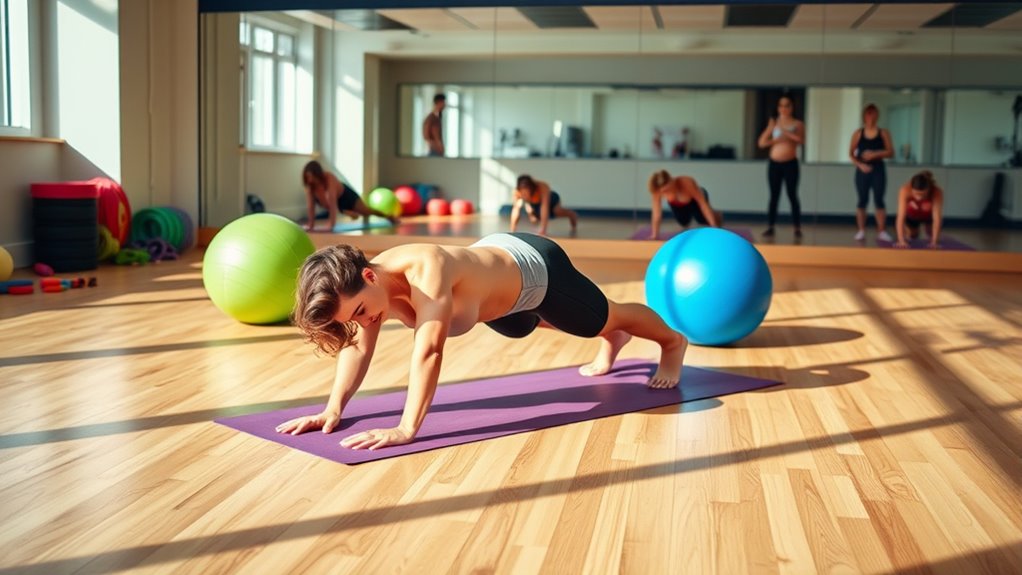
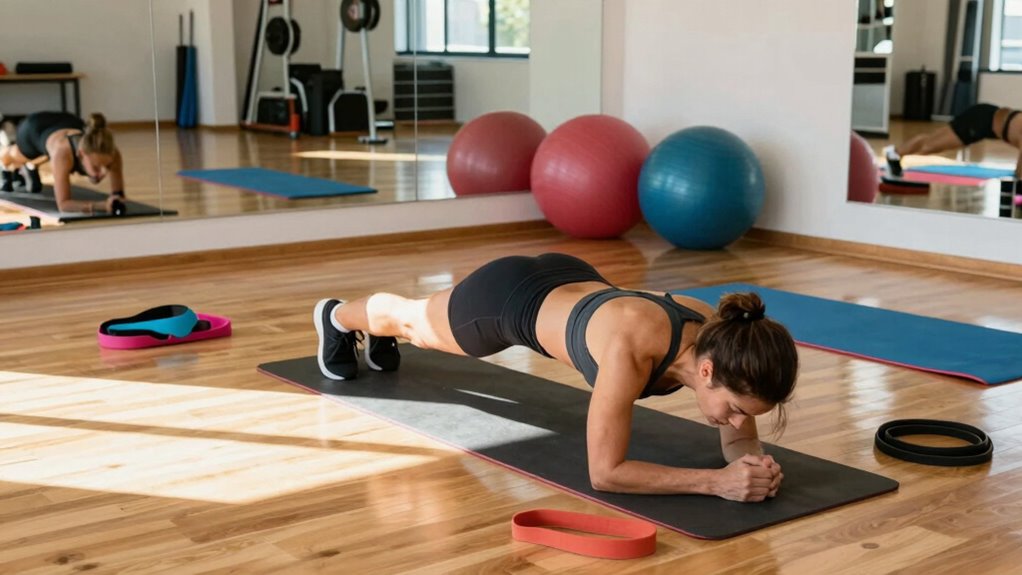
When you set out to create a balanced core training routine, it’s essential to contemplate the various muscles that make up your core, including the abdominals, obliques, lower back, and pelvic floor. To achieve core stability, you need workouts that target all these areas equally. Incorporate exercises like planks for endurance, Russian twists for oblique strength, and bridges for lower back support. Aim for balanced workouts by mixing dynamic movements with static holds. Don’t forget to include flexibility work, such as yoga poses, to enhance your routine. By addressing all muscle groups, you’ll not only develop a strong core but also improve your overall functional strength and stability. Remember, consistency is key for lasting results!
Frequently Asked Questions
Can Core Training Improve Athletic Performance in Specific Sports?
Yes, core training can definitely improve your athletic performance in specific sports. By enhancing your core strength, you’ll boost your stability and balance, which are essential for many activities. This strength allows you to transfer power more efficiently, improving your agility and athletic endurance. Whether you’re sprinting, swimming, or playing soccer, a strong core helps you maintain control and reduce the risk of injury, ultimately elevating your performance on the field or court.
How Often Should I Train My Core for Optimal Results?
To achieve ideal results, you should aim for core training frequency of 2 to 4 times a week. Each session can last between 15 to 30 minutes. Focus on quality over quantity; make certain you’re engaging various core muscles during your workouts. Incorporate exercises like planks, bridges, and rotational movements. This balanced approach guarantees your core remains strong and stable, enhancing your overall athletic performance without risking overtraining or injury.
Is It Possible to Overtrain My Core Muscles?
Yes, it’s possible to overtrain your core muscles. If you push too hard without allowing for proper muscle recovery, you may experience core fatigue, which can lead to decreased performance and even injury. To avoid this, balance your workouts with rest days and listen to your body. When you feel fatigued, it’s a sign to give your core a break and let it recover for ideal strength and function.
Can I Train My Core Without Equipment?
Absolutely, you can train your core without equipment! Think of your body as a well-tuned instrument, ready to perform with bodyweight exercises like planks, mountain climbers, and bicycle crunches. These functional movements engage your core effectively, building strength and stability. As you flow through these exercises, you’ll feel your body becoming a powerhouse, capable of supporting you in everyday tasks and athletic endeavors alike. Embrace the journey, and your core will thank you!
What Is the Best Time of Day to Do Core Workouts?
The best time of day to do core workouts really depends on your schedule and personal preference. Morning workouts can kickstart your metabolism and energize you for the day ahead. On the other hand, evening sessions might help you relieve stress after a long day. Whichever you choose, consistency is key. Listen to your body and find the time that fits your lifestyle best, ensuring you stay committed to your core training routine.
Conclusion
Incorporating core training into your routine is essential for overall strength and stability. Remember, “a strong core is the foundation of a strong body.” By understanding your core muscles and avoiding common mistakes, you can create a balanced routine that promotes health and performance. So, get started on those effective exercises and watch how your strength and agility improve. Your core’s not just about looks; it’s about supporting everything you do every day!
NFL season / tailgating Picks
team gear
As an affiliate, we earn on qualifying purchases.