Progressive overload is all about gradually increasing the demands on your body during workouts. By lifting heavier weights, doing more reps, or bumping up intensity, you challenge your muscles to grow stronger. This method prevents plateaus and guarantees you’re always pushing your limits. Tracking your progress and remaining consistent is key to effective training. By incorporating smart techniques, you can avoid common mistakes and optimize your gains. If you want to know more ways to implement this strategy, keep exploring!
Key Takeaways
- Progressive overload means gradually increasing exercise demands to stimulate muscle growth and strength gains.
- You can implement it by increasing weights, reps, or workout intensity over time.
- Tracking your progress with logs helps identify growth patterns and necessary adjustments.
- Common mistakes include pushing too hard, neglecting recovery, and solely focusing on weights.
- Consistency and variation in your workouts prevent plateaus and enhance overall performance.

TYZDMY Adjustable Dumbbells Set of 2,Free Weights Dumbbells Set,Adjustable Dumbbell Set,52.5 lbs pair 105 lbs,15 in 1,for Men/Women Gym Equipment for Home Strength Training Equipment
【15 in1 Adjustable Dumbbells】You will receive a pair of 52.5 lb dumbbells, each adjustable in 15 different weights:…
As an affiliate, we earn on qualifying purchases.
As an affiliate, we earn on qualifying purchases.
What Is Progressive Overload and Why It Matters

Progressive overload is vital for anyone looking to improve their strength and fitness, as it involves gradually increasing the demands placed on your body during exercise. In simple terms, progressive overload means challenging your muscles by lifting heavier weights, increasing repetitions, or enhancing workout intensity. Understanding this definition overview is significant for your training success.
The importance of progressive overload lies in its ability to stimulate muscle growth and strength gains. By consistently pushing your limits, you’ll avoid plateaus and keep your workouts effective. The benefits are clear: improved performance, enhanced endurance, and increased muscle mass. Embracing this concept not only helps you reach your fitness goals but also guarantees a healthier lifestyle in the long run. So, start applying progressive overload today!

Fitness Logbook (Black) – A5 Undated Workout Journal For Men & Women – Plastic Cover & Thick Paper – Planner Log Book To Track Weight Loss, Muscle Gain, Gym Exercise, Bodybuilding Progress
THOUGHTFUL LAYOUT. Simple, clean, and time-tested. Plenty of space to record exercises, weights, reps, cardio and notes. Before…
As an affiliate, we earn on qualifying purchases.
As an affiliate, we earn on qualifying purchases.
Implementing Progressive Overload in Workouts
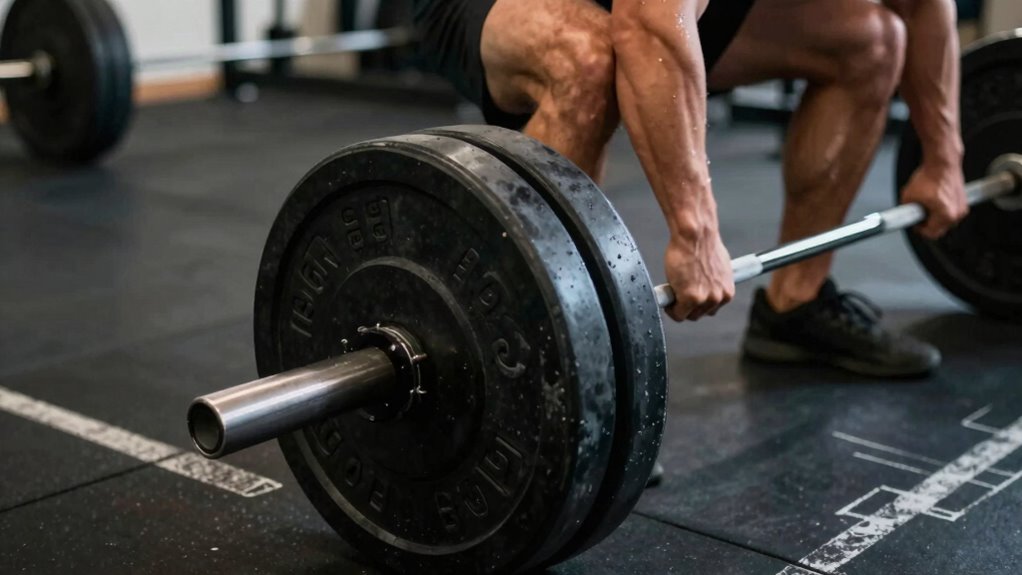
To effectively implement progressive overload in your workouts, you need to focus on a few key strategies. Start by gradually increasing your workout intensity and using resistance increments. This guarantees your muscles continuously adapt and grow stronger. Here’s a simple table to help you track your progress:
| Week | Weight (lbs) | Reps |
|---|---|---|
| 1 | 50 | 10 |
| 2 | 55 | 10 |
| 3 | 55 | 12 |
Each week, aim to either add weight or increase your repetitions. By systematically applying these changes, you’ll enhance your strength and overall fitness. Remember, consistency is vital, so monitor your progress and adjust accordingly to keep challenging yourself. Incorporating smart programming ensures your progression remains effective and safe.

Harbinger Padded Cotton Lift Straps, Black – Soft, Supportive Neotek Wrist Pads – 21.5" Length, 1.5" Width – Reinforced Edges & Heavy-duty Stitching – Cushions Wrists for Lifting Support
CUSHIONS WRISTS FOR HEAVY LIFTS: Neotek wrist pads made of soft and supportive material helps reduce pressure and…
As an affiliate, we earn on qualifying purchases.
As an affiliate, we earn on qualifying purchases.
Exploring Various Progressive Overload Techniques

When you want to maximize your strength gains, exploring various progressive overload techniques can be be a game changer. You can start with a volume increase, adding more sets or reps to your workouts. This gradual rise in workload helps your muscles adapt and grow stronger. Another effective method is intensity variation; you can alternate between lifting heavier weights for fewer reps and lighter weights for higher reps. This not only keeps your workouts fresh but also challenges your muscles in different ways. Combining these techniques allows you to avoid plateaus and continuously push your limits. Experiment with both volume increase and intensity variation to find what works best for you, and watch your strength soar! training principles

HPYGN Resistance Band with Handles & Door Anchor and Ankle Straps, for Exercise, Fitness, Heavy Resistance Training, Physical Therapy, Shape Body, Yoga, Home Workouts Set, 150 Lbs, Grey
5-Level Resistance Bands for Full-Body Workouts: Achieve up to 150lbs total resistance with 5 stackable training bands (10-50lbs…
As an affiliate, we earn on qualifying purchases.
As an affiliate, we earn on qualifying purchases.
Avoid These Common Mistakes With Progressive Overload

While it’s essential to embrace progressive overload for strength gains, many people fall into common traps that hinder their progress. One major mistake is pushing too hard too soon, which can lead to overtraining symptoms like fatigue and decreased performance. Remember, your body needs time to adapt. Neglecting proper recovery strategies, such as rest days and nutrition, can derail your efforts. Instead of constantly increasing weights, consider varying your routines or focusing on form. It’s vital to listen to your body; if you feel persistent soreness or fatigue, it’s a sign to take a step back. Prioritize recovery to enhance your strength gains and avoid stagnation. By avoiding these pitfalls, you’ll maximize your results with progressive overload.
Tracking Progress With Progressive Overload
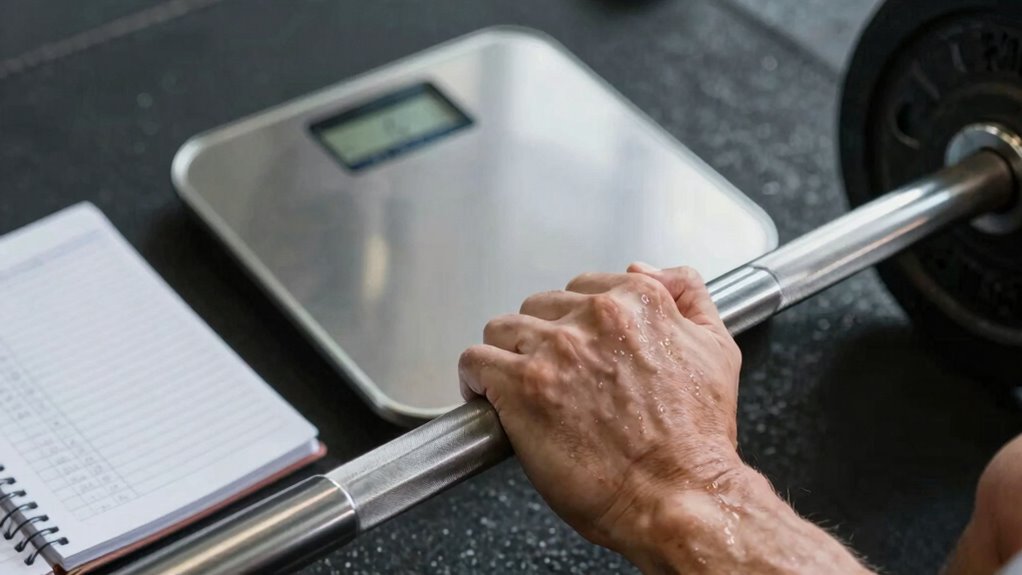
Maximizing your progress with progressive overload means keeping a close eye on your improvements. Effective progress tracking is essential, as it helps you identify where you’re excelling and where you need to push harder. Start by maintaining detailed workout logs to record your exercises, sets, reps, and weights. This way, you can visually see your growth over time.
Regularly reviewing your logs allows you to spot patterns and adjust your routine accordingly. If you notice a plateau, it’s time to increase the weights or change the exercises. Remember, the key is to challenge your muscles consistently. By staying organized and committed to progress tracking, you’ll guarantee you’re always on the path to achieving your fitness goals with progressive overload.
Frequently Asked Questions
How Quickly Should I Increase Weights Using Progressive Overload?
You should aim to increase weights in small increments, typically around 5% to 10% at a time, depending on your current strength level. This gradual approach helps guarantee you’re making consistent strength gains without risking injury. Pay attention to how your body responds; if you can complete your sets with good form, it’s a sign you’re ready to add more weight. Always prioritize safety and listen to your body during your progress.
Can Beginners Use Progressive Overload Effectively?
Absolutely, you can use progressive overload effectively as a beginner! Many people have misconceptions about lifting weights; they think they need to lift heavy from day one. Instead, focus on gradual progress. Start with manageable weights and slowly increase them as your strength builds. This approach not only helps prevent injuries but also encourages consistent gains. Remember, it’s all about steady improvement, so embrace the journey and enjoy every step!
Is Progressive Overload Suitable for All Fitness Levels?
Yes, progressive overload is suitable for all fitness levels. It’s all about fitness adaptability; you can tailor your approach based on your current abilities and goals. As you progress, you’ll want to focus on individualized progression, adjusting the intensity, volume, or frequency of your workouts. Whether you’re a beginner or an advanced athlete, applying progressive overload guarantees you’re constantly challenging your body, leading to improvements over time while minimizing the risk of injury.
How Often Should I Change My Workout Routine?
You should change your workout routine every 4 to 6 weeks for ideal results. Studies show that varying your routine can boost motivation and prevent plateaus, which affects about 70% of gym-goers. By incorporating routine variation, you keep your muscles challenged and engaged. If you’re working out 3 to 5 times a week, consider altering exercises, intensity, or volume to maintain progress and excitement in your fitness journey.
What Happens if I Don’t See Progress With Progressive Overload?
If you don’t see progress with progressive overload, you might hit a plateau. This can happen for various reasons, like insufficient rest, poor nutrition, or not varying your workouts enough. To tackle this, focus on motivation strategies, like setting smaller goals or mixing up your routine to keep things fresh. Remember, consistency is key, and sometimes progress takes time—so don’t get discouraged! Keep pushing, and you’ll eventually see results.
Conclusion
In the grand symphony of fitness, progressive overload is your conductor, guiding you toward strength and growth. Embrace its rhythm, and watch your potential unfold like a blooming flower. Stay mindful, avoid pitfalls, and track your journey to guarantee every note resonates. Remember, each small step you take builds a powerful crescendo, leading to the masterpiece that is your body. So, keep pushing, keep evolving, and let the magic of progressive overload transform your workouts into a symphony of success.