

To progress from zero to solid push-up reps, start with wall push-ups to build comfort and strength. As you gain confidence, move to knee push-ups while maintaining a straight body line. Focus on engaging your core and improving form. Gradually increase your reps and sets. Once you’re ready, master the standard push-up technique with proper alignment. With dedication, you can make steady improvements. There are many variations to challenge yourself further, and you’ll find them just ahead.

Get the little things that make your day delivered free with Prime
- Fast, free delivery on millions of items
- Prime Video, Amazon Music and more included
- Member-only deals all year
Key Takeaways
- Start with wall push-ups to build comfort and gradually increase difficulty as strength improves.
- Transition to knee push-ups while maintaining a straight body line for effective core engagement.
- Focus on mastering proper form and technique before progressing to standard push-ups.
- Gradually increase repetitions and sets to celebrate your progress and enhance endurance.
- Incorporate various push-up styles like incline or decline to target different muscle groups effectively.
Products Worth Considering

Philips Hue Secure Wired Video Doorbell, 2K, Black

Sonos Era 100 SL Compact Microphone-Free Speaker, Black

Ring Battery Doorbell (2nd Gen), Indoor Cam Plus, and Chime (3rd Gen) Bundle
As an affiliate, we earn on qualifying purchases.
Understanding the Benefits of Push-Ups for Strength

Push-ups are a powerhouse exercise that can greatly enhance your upper body strength. With roots tracing back to ancient military training, push-ups have evolved over time, becoming a staple in fitness routines worldwide. This exercise primarily targets your chest, shoulders, and triceps, but it also engages your core, leading to significant muscle activation throughout your body. When you perform push-ups, you’re not just building strength; you’re also improving your endurance and stability. As you progress, you’ll notice increased muscle definition and functional strength that translates to other activities. By incorporating push-ups into your routine, you’re investing in a time-tested method that promotes overall fitness and resilience. So, get down and start pushing yourself to new strength levels!
Essential Mistakes to Avoid When Starting Push-Ups

When you start doing push-ups, it’s essential to pay attention to your hand placement and engage your core. Incorrect hand positioning can lead to poor form and increase the risk of injury. Plus, neglecting your core means you’re missing out on the full benefits of this effective exercise. Focusing on smart programming ensures you progress safely and effectively over time.
Incorrect Hand Placement
One common mistake beginners make with push-ups is incorrect hand placement. It’s vital to find the right hand width to guarantee proper wrist alignment and support during the exercise. If your hands are too wide or too narrow, you can strain your wrists and shoulders.
| Hand Width | Wrist Alignment | Result |
|---|---|---|
| Too Wide | Poor Alignment | Increased shoulder strain |
| Too Narrow | Poor Alignment | Wrist discomfort |
| Just Right | Proper Alignment | ideal performance |
| Adjust as Needed | Monitor Comfort | Prevent injuries |
Neglecting Core Engagement
Failing to engage your core during push-ups can undermine your efforts and lead to poor form. Without proper core activation, your body loses core stability, which makes it harder to maintain a straight line from your head to heels. This can result in sagging hips or an arched back, putting unnecessary strain on your lower back. To prevent this, focus on tightening your abdominal muscles throughout the movement. Think about pulling your belly button towards your spine; this will help you achieve better alignment. Remember, a strong core not only supports your push-up form but also enhances your overall strength. So, before you lower yourself down, make certain your core is engaged and ready to support you.
Beginner-Friendly Alternatives to Build Strength

If you’re new to push-ups, there are some great alternatives to help you build strength. Wall push-ups are perfect for starting out, as they reduce the weight on your arms while still engaging your muscles. Knee push-ups also offer benefits by allowing you to maintain proper form without overexerting yourself. Incorporating progressive training techniques can help you gradually increase your reps and strength over time.
Wall Push-Ups Explained
As you commence your fitness journey, wall push-ups serve as a perfect starting point for building upper body strength. These exercises are simple and effective, allowing you to learn proper wall push-up techniques while minimizing strain. Position yourself a few feet from a wall, place your hands on it, and lower your body towards the wall, engaging your chest and arms. Incorporating exfoliation benefits can further enhance your skincare routine by promoting a brighter complexion and smoother skin. Understanding muscle engagement ensures you get the most out of each movement and avoid injury. Additionally, focusing on proper form and technique helps maximize effectiveness and safety during your workouts. Proper setup is key to ensuring that your form remains correct and that you target the right muscles effectively. Maintaining airflow around the unit can also improve the purifier’s performance and longevity. Wall push-ups offer numerous benefits. They improve muscular endurance, enhance stability, and build confidence as you progress. Plus, they’re adaptable for various fitness levels, making them accessible for everyone. As you master this movement, you’ll develop the foundation needed for more challenging push-up variations. Start with wall push-ups, and watch your strength grow!
Knee Push-Ups Benefits
Knee push-ups are an excellent next step in your push-up progression, especially if you’re looking to build strength without overwhelming yourself. These modified push-ups allow you to engage your upper body and core while reducing the strain on your joints. By practicing knee push-ups, you’ll gain the necessary strength in your chest, shoulders, and triceps, setting a solid foundation for full push-ups later on. Incorporating smart home fitness technology can also help track your progress and keep you motivated as you advance. One of the key beginner benefits is that they help improve your form, ensuring you learn proper alignment. Plus, they boost your confidence, making it easier to shift to standard push-ups when you’re ready. Additionally, proper technique is essential to prevent injury and maximize effectiveness, which knee push-ups help reinforce early on. Incorporating knee push-ups into your routine will surely enhance your overall fitness and prepare you for more challenging variations.
Progressing Your Push-Ups: From Wall to Kneeling

Progressing your push-ups can be an empowering journey that builds strength and confidence. Start with wall modifications, where you place your hands on a sturdy wall and lean into it. This helps you get comfortable with the motion while minimizing strain. As you gain confidence, shift to knee techniques. Begin on all fours, lowering your chest while keeping your knees on the ground. This variation maintains core engagement and prepares you for full push-ups. Focus on your form—keep your body straight and avoid sagging hips. Gradually increase your repetitions and sets, celebrating each small victory. Remember, the goal is to build strength progressively, so listen to your body and enjoy the journey! Incorporating balance exercises can further enhance stability and performance during push-up progression. Including progressive overload strategies ensures continuous improvement without risking injury. Additionally, practicing proper technique helps prevent injury and maximizes the effectiveness of your workouts. To optimize your progress, paying attention to muscle engagement can lead to more effective strength development. Engaging in core stability exercises can also support proper push-up form and reduce the risk of injury.
Mastering Standard Push-Ups

Once you feel confident with your kneeling push-ups, it’s time to take the leap into standard push-ups. Focus on your push-up technique as you position yourself face down on the floor. Your hands should be slightly wider than shoulder-width apart, and your toes should be tucked under. As you lower your body, maintain proper body alignment by keeping a straight line from your head to your heels. Avoid sagging or arching your back. Engage your core and breathe steadily as you push through your palms to return to the starting position. Start with a few reps, and gradually increase as your strength improves. Remember, consistency is key to mastering standard push-ups and building a solid foundation for your fitness journey.
Challenging Push-Up Variations to Increase Strength

As you build strength with standard push-ups, incorporating challenging variations can elevate your workout and target different muscle groups. Try explosive push-ups for a power boost; they’ll engage your chest and triceps while improving your overall explosiveness. Diamond push-ups will focus on your triceps, giving them a solid workout. Decline push-ups shift the emphasis to your upper chest, enhancing your strength. For an impressive twist, clapping push-ups challenge your coordination and upper body power. One-arm push-ups require stability and strength, pushing your limits further. Finally, spiderman push-ups not only work your chest and triceps but also engage your core, providing a full-body challenge. Mix these variations into your routine for a well-rounded strength-building experience.
How to Add Push-Ups to Your Workout

Incorporating push-ups into your workout routine can considerably enhance your upper body strength and endurance. Start by mastering basic push-up techniques, ensuring your form is correct. This’ll prevent injury and maximize effectiveness. You can begin with modified versions, like knee push-ups, and gradually progress to standard ones. Proper technique is essential to ensure you gain the maximum benefits and reduce injury risk. Aim to include push-ups in your routine at least two to three times a week, adjusting your workout frequency to match your fitness level. You might incorporate them into a circuit or use them as a warm-up. Remember to vary the styles—try incline or decline push-ups—to target different muscle groups. Consistency is key, so keep challenging yourself and track your improvements to stay motivated on your fitness journey.
Tracking Your Push-Up Progress for Continuous Improvement
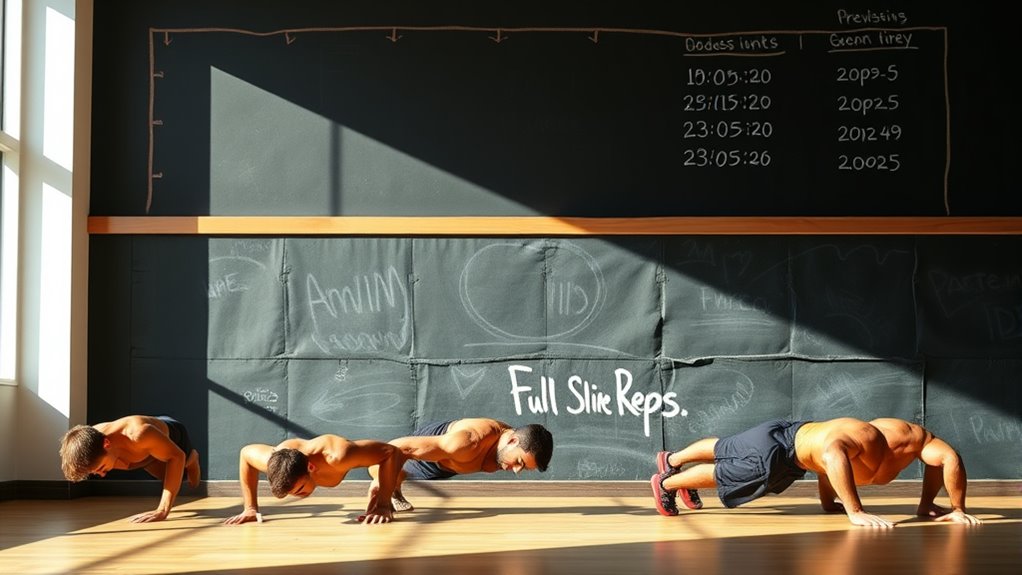
To make the most of your push-up routine, tracking your progress is essential for continuous improvement. By keeping a record of your push-up sessions, you can identify patterns and measure improvement metrics over time. Start by noting the number of reps you can complete in a set, and gradually increase that number as you build strength. Consider using a journal or fitness app for progress tracking; this helps you stay motivated and accountable. You might also track other factors, like form or speed, to gain deeper insights into your performance. Regularly reviewing your progress not only shows how far you’ve come, but it also guides you in setting realistic goals, ensuring you continue to challenge yourself effectively.
Frequently Asked Questions
How Many Push-Ups Should I Aim for Daily?
You should aim for 10 to 20 push-ups daily if you’re starting out, but listen to your body. As you build strength, gradually increase your push-up goals. Incorporating them into your daily routines will help you stay consistent. Consider setting a specific time each day, like morning or evening, to establish a habit. Remember, quality matters more than quantity, so focus on proper form to maximize your progress and reduce the risk of injury.
Can Push-Ups Help With Weight Loss?
Yes, push-ups can aid in weight loss. When you do them, you’re not just engaging your chest and arms; you’re also boosting your caloric burn through full-body muscle engagement. Each rep helps build strength and endurance, which can lead to a higher metabolism. So, as you push yourself up, you’re also pushing down those extra pounds. Make them a regular part of your routine, and you’ll likely see results!
What’s the Best Time of Day for Push-Ups?
The best time of day for push-ups really depends on your schedule and energy levels. If you’re a morning person, morning workouts can kickstart your day, boost your metabolism, and heighten your focus. On the other hand, if you prefer evening routines, doing push-ups after work can help you relieve stress and unwind. Listen to your body and find the time that fits your lifestyle best for ideal results.
Are Push-Ups Safe for Everyone?
Yes, push-ups are generally safe for everyone, but your fitness level matters. They offer great push-up benefits, like building upper body strength and improving core stability. If you’re new to exercise or have any health concerns, it’s smart to start slowly and focus on form. Listen to your body, and don’t hesitate to modify the movement as needed. With consistency, you can safely progress and enjoy the benefits push-ups provide.
How Can I Prevent Wrist Pain During Push-Ups?
To prevent wrist pain during push-ups, focus on proper wrist alignment. Keep your wrists directly under your shoulders and distribute your weight evenly. You can also try push-up variations like elevated push-ups or knuckle push-ups to reduce strain. Additionally, using push-up bars might help maintain a neutral wrist position. Remember to warm up your wrists before starting and listen to your body—if it hurts, adjust your form or switch to a gentler variation.
Conclusion
Incorporating push-ups into your routine can transform your strength and overall fitness. Did you know that just 10 push-ups a day can greatly improve your upper body strength over time? By avoiding common mistakes and following the progression outlined, you’ll not only build muscle but also boost your confidence. Remember, every rep counts, so start small and celebrate your progress. Embrace the challenge, and soon those solid reps will become second nature!