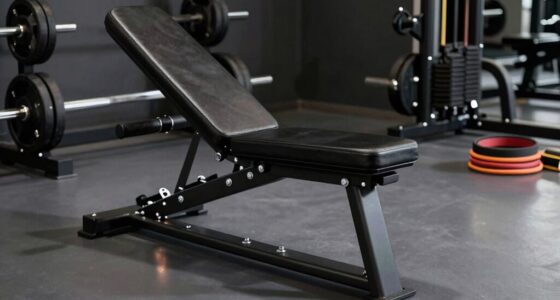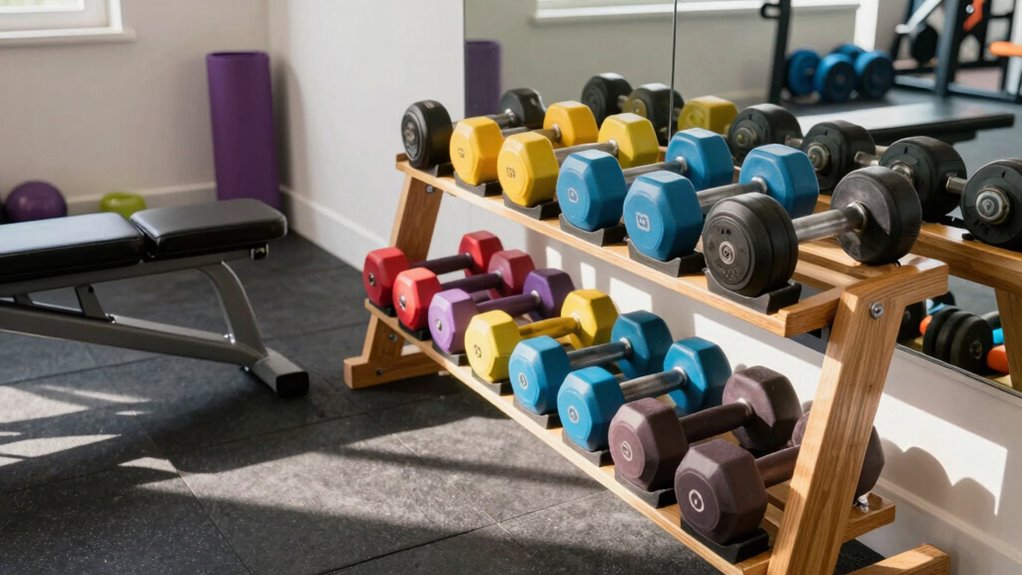

Strength training matters because it builds a solid foundation for your overall fitness. Start by understanding muscle anatomy and using the right equipment. Set up a balanced routine with compound and isolation exercises, focusing on proper form to avoid injuries. Nutrition plays a key role too, so prioritize lean proteins and hydration. Stay motivated by tracking your progress and setting realistic goals. If you’re curious about more tips and techniques, there’s plenty to explore.
Key Takeaways
- Understand major muscle groups and fiber types to tailor your workouts for strength and endurance.
- Start with essential equipment like dumbbells and resistance bands, focusing on proper usage for safety.
- Create a balanced routine with compound movements, isolation exercises, and bodyweight training, aiming for 3-5 days of workouts per week.
- Prioritize nutrition by incorporating lean proteins, complex carbohydrates, and staying hydrated to support muscle growth and recovery.
- Track progress consistently through journals or metrics, adjusting routines based on fatigue and soreness for optimal results.

Amazon Basics Neoprene Dumbbell Hand Weights with Easy to Assemble Stand, 3 Pairs (3, 5, and 8 Pounds), Purple/Green/Yellow
2 each: 3, 5, and 8 pound dumbbells (6 total) for exercise and strength training, plus an easy-to-assemble…
As an affiliate, we earn on qualifying purchases.
As an affiliate, we earn on qualifying purchases.
Why Strength Training Matters for Beginners
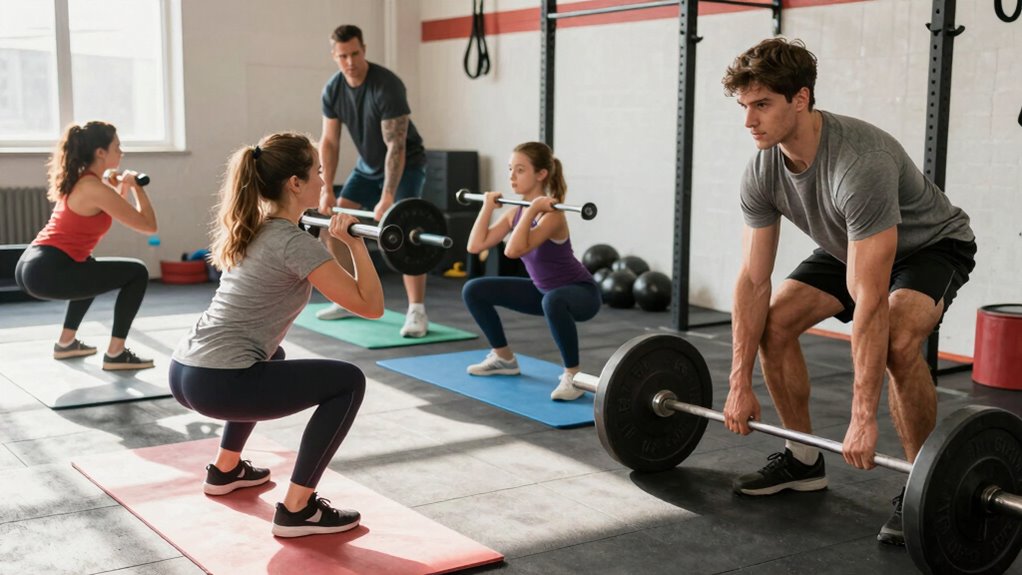
Strength training matters for beginners because it lays a solid foundation for overall fitness and health. By incorporating strength training into your routine, you boost your metabolism, improve muscle tone, and enhance your endurance. These benefits can serve as excellent motivation strategies to keep you committed as you commence on your fitness journey. Additionally, focusing on proper techniques guarantees injury prevention, allowing you to enjoy your workouts without setbacks. Start with lighter weights to master the movements and gradually increase the load as you gain confidence. Remember, every small step you take contributes to your overall progress. Incorporating training principles such as progressive overload and smart programming can maximize your results and minimize injury risk. Embrace this essential aspect of fitness, and you’ll find yourself stronger and more resilient, both physically and mentally.

Fit Simplify Resistance Loop Exercise Bands with Instruction Guide and Carry Bag, Set of 5
High End Exercise Bands. Our 12"³ By 2"³ Heavy Duty Loop Resistance Bands Come In 5 Varying Resistance…
As an affiliate, we earn on qualifying purchases.
As an affiliate, we earn on qualifying purchases.
Muscle Anatomy Basics for Beginners

Understanding muscle anatomy is key to enhancing your strength training routine. You’ll learn about the major muscle groups, the different types of muscle fibers, and how these elements work together to help you achieve your fitness goals. Let’s break down the basics so you can train smarter and more effectively.
Major Muscle Groups Overview
When you start your strength training journey, it’s vital to know the major muscle groups you’ll be working with. You’ll focus on the upper body, including your chest, back, and arms, as well as the lower body, which consists of your quads, hamstrings, and calves. Core strength is important, too, as it supports joint stability and helps prevent injury. Incorporating various exercise variations will enhance muscle endurance and promote effective muscle recovery. Be mindful of muscle imbalances; targeting all muscle groups guarantees balanced development. Regular strength training not only builds muscle but also improves overall fitness, contributing to a healthier lifestyle. Keep these aspects in mind, and you’ll set a solid foundation for your training progress.
Muscle Fiber Types Explained
Muscle fibers are the building blocks of your strength training journey, and knowing their types can enhance your workout effectiveness. Understanding the difference between fast twitch fibers and slow twitch fibers will help you tailor your training for best results.
- Fast Twitch Fibers: Ideal for explosive movements and strength; they fatigue quickly.
- Slow Twitch Fibers: Excellent for endurance; they can sustain activity for longer periods.
- Hybrid Fibers: A mix of both types, offering versatility in performance.
- Training Focus: Target fast twitch fibers for strength and power, while slow twitch fibers are best for stamina and endurance.
Functionality of Muscle Anatomy
Having grasped the different types of muscle fibers, you’re now ready to explore how muscle anatomy functions in strength training. Your muscles work through a process called muscle contraction, where fibers shorten and produce force. This contraction allows you to lift weights, push, and pull during your workouts. Each muscle group’s unique structure contributes to its strength and endurance capabilities.
After intense training, muscle recovery becomes essential. This process repairs damaged fibers, making them stronger for future workouts. Proper recovery includes rest, nutrition, and hydration. Remember, your strength gains depend on how well you train and recover, so prioritize both aspects for ideal results in your strength training journey.

MQRW Push Up Board,Home Gym,Portable Exercise Equipment,Pilates Bar and 20 Fitness Accessories with Resistance Bands and Ab Roller Wheel,Full Body Workout at Home
Push Up Board
As an affiliate, we earn on qualifying purchases.
As an affiliate, we earn on qualifying purchases.
Essential Equipment for Starting Your Strength Training
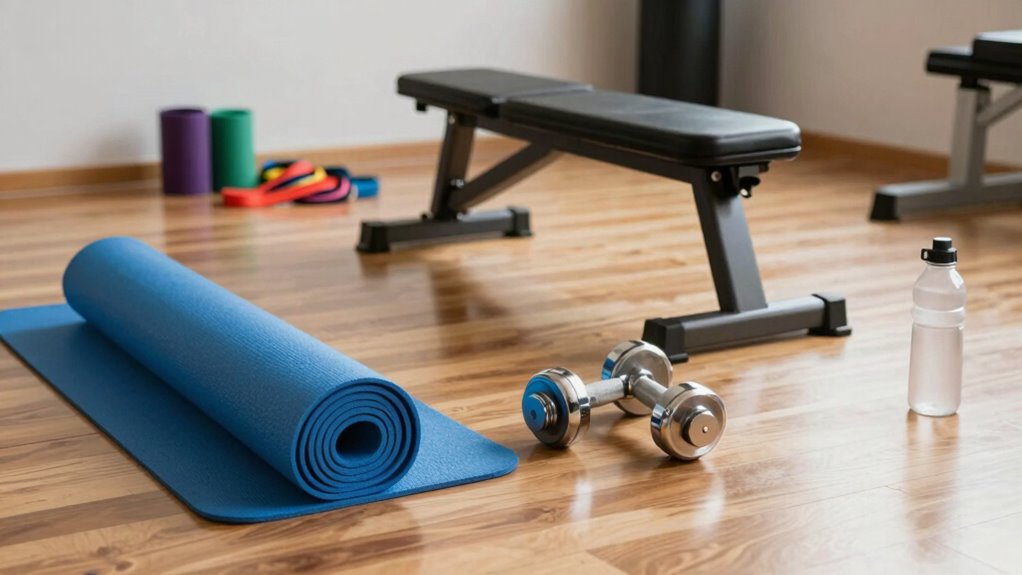
To kick off your strength training journey, you’ll need some essential equipment that can set the foundation for your workouts. Investing in home gym essentials doesn’t have to break the bank; there are plenty of budget-friendly equipment options to get you started. Here’s a quick list of what you should consider:
Start your strength training journey with essential, budget-friendly equipment to build a solid workout foundation.
- Dumbbells: Versatile and great for various exercises.
- Resistance Bands: Perfect for strength training and easy to store.
- Exercise Mat: Provides comfort during floor workouts.
- Kettlebell: Excellent for dynamic movements and full-body workouts.
- Incorporating training programming basics can help structure your workouts for consistent progress.
With these items, you’ll have the basics to effectively begin your strength training routine. Remember, it’s all about consistency and gradually increasing your intensity as you progress!

Palace Learning Muscular & Skeletal System Anatomical Poster Set – LAMINATED 2 Chart Set – Human Skeleton & Muscle Anatomy – (18" x 24")
Muscular & Skeletal System Anatomical Chart Set – LAMINATED
As an affiliate, we earn on qualifying purchases.
As an affiliate, we earn on qualifying purchases.
Creating Your Balanced Strength Training Routine

To create a balanced strength training routine, you’ll want to incorporate key exercise categories that target different muscle groups. It’s also important to establish a weekly workout frequency that fits your schedule and goals. Plus, tracking your progress will help you stay motivated and make adjustments as needed.
Key Exercise Categories
A balanced strength training routine includes three key exercise categories: compound movements, isolation exercises, and functional training. By incorporating these, you’ll build strength effectively and safely. Using smart ideas can help optimize your workout space and ensure efficient use of equipment.
- Compound Movements: These exercises work multiple muscle groups at once, like squats and deadlifts.
- Isolation Exercises: Focus on individual muscles, such as bicep curls or tricep extensions, to enhance specific areas.
- Bodyweight Training: Utilize your own weight for resistance, with moves like push-ups and planks.
- Resistance Bands: These versatile tools add resistance to your workouts, perfect for all fitness levels.
Weekly Workout Frequency
How often should you work out to achieve a balanced strength training routine? Ideally, aim for three to five days per week. This frequency allows you to target different muscle groups while ensuring adequate recovery time. You can split your workout schedule into upper body, lower body, and core days or incorporate full-body sessions.
Listen to your body; if you’re feeling fatigued or sore, don’t hesitate to adjust your routine. It’s essential to prioritize recovery time, as it helps prevent injuries and promotes muscle growth. Remember, consistency is key, but so is allowing your muscles to rest and repair. By finding the right balance, you’ll maximize your strength gains and stay motivated on your fitness journey.
Progress Tracking Methods
Tracking your progress is essential for creating a balanced strength training routine. It helps you stay motivated and make necessary adjustments. Here are some effective progress tracking methods you can use:
- Progress Journals: Write down your workouts, noting weights lifted and reps completed.
- Performance Metrics: Track improvements in strength, endurance, or body measurements.
- Regular Assessments: Schedule monthly check-ins to evaluate your performance against your goals.
- Visual Records: Take photos to visually document your physical changes over time.
Why Proper Form Is Key in Strength Training

While many people focus on lifting heavier weights, mastering proper form is essential for effective strength training. When you prioritize correct technique, you minimize the risk of form breakdown, which can lead to injuries. Good form guarantees that you’re engaging the right muscles, maximizing your workout’s effectiveness and efficiency. It also promotes proper alignment, reducing stress on your joints and connective tissues. This way, you can maintain a sustainable training regimen without setbacks caused by injuries. Remember, it’s not just about how much you lift, but how you lift it. By focusing on form, you set a strong foundation for your strength training journey, enhancing both your results and your overall safety.
Common Starting Exercises for Beginners

With a solid understanding of proper form, you’re ready to explore some common starting exercises that can help build your strength. Incorporating bodyweight exercises and resistance bands into your routine is a great way to begin. Here are some effective exercises to try:
- Push-ups: Strengthen your chest, shoulders, and triceps.
- Squats: Build lower body strength and stability.
- Resistance band rows: Target your back and improve posture.
- Plank: Engage your core for overall stability.
These exercises not only enhance your strength but also improve your mobility and overall fitness. Start slow, focus on your form, and gradually increase your intensity as you get more comfortable. You’ll be on your way to a stronger, healthier you!
Using Your Strength Training Equipment
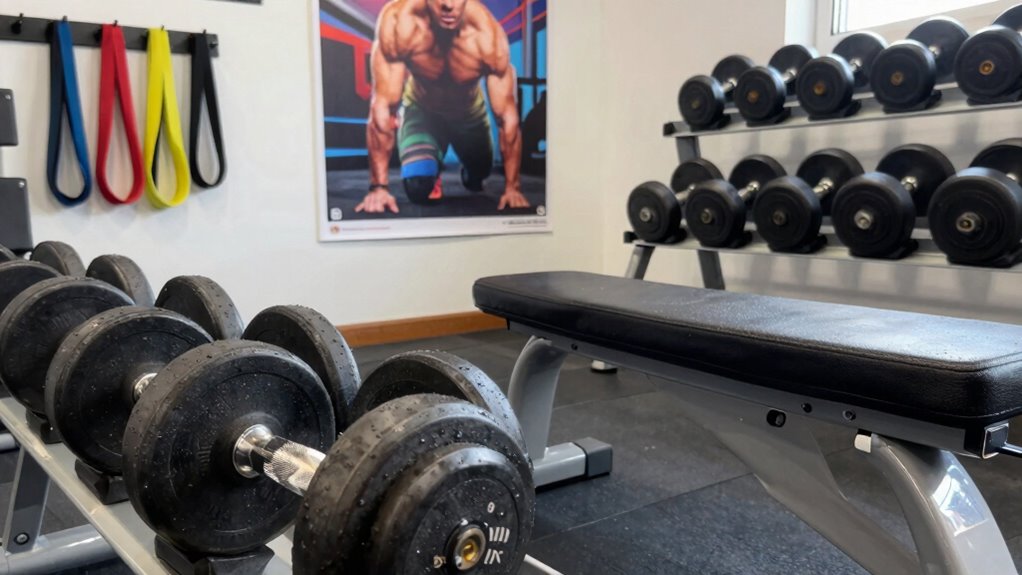
When it comes to strength training, choosing the right equipment is essential for your success. You need to know how to use it safely to avoid injuries and maximize your workouts. Let’s explore the best practices for selecting and using your strength training gear effectively. Proper maintenance routines can extend the lifespan of your equipment and ensure safe operation.
Proper Equipment Selection
Choosing the right strength training equipment can greatly impact your workout results and overall experience. Understanding various equipment types and reputable equipment brands is essential for making informed choices. Here’s what to take into account:
- Purpose: Identify your fitness goals; different equipment suits various training styles.
- Quality: Opt for durable materials and trusted brands to guarantee safety and longevity.
- Space: Assess your workout area; select compact equipment if you have limited space.
- Budget: Determine your budget; prioritize essential items before investing in extras.
- Smart technology integration: Incorporating connected equipment can enhance your training with real-time feedback and tracking.
Safe Usage Techniques
Understanding how to use your strength training equipment safely is just as important as selecting it. Always start with a proper warm-up to prepare your muscles. When lifting, focus on safe lifting techniques like maintaining a neutral spine and using your legs to drive the weight, rather than straining your back. Keep your movements controlled to enhance injury prevention. Ascertain you’ve set the equipment correctly before starting your workout, and don’t hesitate to ask for help if you’re unsure. Use spotters when lifting heavy weights, and listen to your body—if something feels wrong, stop immediately. By prioritizing safety and employing proper techniques, you’ll create a more effective and enjoyable strength training experience.
Essential Nutrition for Strength Training Beginners

Nutrition plays a crucial role in maximizing your strength training efforts. To fuel your workouts effectively, focus on nutrient timing and high-quality protein sources. Consuming the right nutrients at the right times can boost your performance and recovery. Incorporating healthy eating tips into your routine can enhance your results and overall well-being. Prioritize lean protein sources like chicken, fish, and legumes to support muscle growth. Incorporate complex carbohydrates, such as whole grains and sweet potatoes, for sustained energy. Don’t forget healthy fats from sources like avocados and nuts to aid hormone production. Stay hydrated and consider post-workout nutrition to replenish glycogen stores.
Building Mental Strength for Your Training

While physical strength is essential, building mental resilience is equally crucial for your training journey. You’ll face challenges along the way, but developing a positive mindset can help you overcome them. Start by embracing setbacks as learning opportunities; this shift in perspective can greatly enhance your resilience. Surround yourself with supportive individuals who encourage you and share similar goals. Visualization techniques can also be powerful—imagine yourself achieving your training milestones. Remember to celebrate small victories; they’ll boost your confidence and reinforce that positive mindset. Consistency is key, so commit to your training routine, even on tough days. Incorporating research‑backed insights into your approach can further strengthen your mental game. By nurturing your mental strength, you’ll not only improve your performance but also enjoy the journey much more.
Setting Realistic Goals and Tracking Your Progress
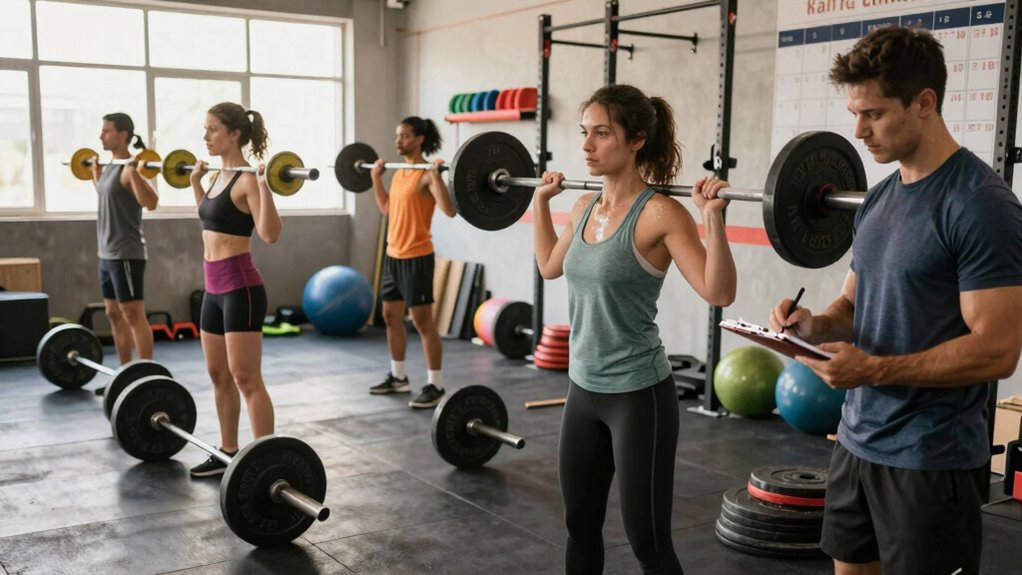
Setting realistic goals is essential for maintaining motivation and tracking your progress effectively. By using smart goal setting strategies, you can guarantee your objectives are achievable and measurable. Here are some tips to help you:
- Define specific goals: Focus on what you want to achieve, whether it’s lifting a certain weight or completing a workout routine.
- Set a timeline: Give yourself a deadline to reach each goal, but be flexible with adjustments as needed.
- Use progress tracking tools: Apps or journals can help you log workouts, weights, and personal bests.
- Celebrate small victories: Acknowledge your achievements along the way to keep your motivation high.
Frequently Asked Questions
How Often Should Beginners Strength Train Each Week?
As a beginner, you should aim for strength training frequency of about two to three times a week. This allows your muscles to recover and adapt, which is essential when starting out. A balanced beginner workout schedule might include full-body routines on non-consecutive days, giving your body time to rest. Remember to focus on proper form and gradually increase intensity to avoid injuries while building strength effectively.
Can Strength Training Help With Weight Loss?
Yes, strength training can definitely help with weight loss. By building muscle, you boost your metabolism, which helps you burn more calories, even at rest. This is vital for achieving a caloric deficit, essential for weight loss. Plus, strength training aids in muscle preservation, ensuring you lose fat instead of muscle when you’re cutting calories. Combine it with a balanced diet, and you’ll see great results on your weight loss journey.
What Are Common Mistakes Beginners Make?
Common mistakes beginners make include neglecting proper form technique and pushing themselves too hard, which can lead to injuries. You might think more weight equals better results, but it’s vital to master technique first. Also, avoid overtraining; giving your body time to recover is essential for progress. Prioritize consistency over intensity, and remember that building a solid foundation will pay off in the long run. Focus on quality workouts, not just quantity.
Should I Warm up Before Strength Training?
Yes, you should definitely warm up before strength training. Warming up benefits you by increasing blood flow to your muscles, enhancing flexibility, and reducing injury risk. Simple warm-up techniques include dynamic stretches, light cardio, or mobility exercises targeting the muscles you’ll use. Spend about 5-10 minutes on this, and you’ll feel more prepared and energized for your workout, making it more effective and enjoyable. Don’t skip this essential step!
How Do I Know if I’m Lifting Enough Weight?
How do you know if you’re lifting enough weight? If you can complete your sets with perfect lifting techniques and still have energy left, it’s time to increase the weight. Aim for a weight that challenges you, but allows you to maintain good form. Pay attention to your body—if you can’t finish your last few reps, you’re on the right track. Gradually incorporate weight progression to keep advancing your strength!
Conclusion
So, there you have it! Strength training isn’t just for bodybuilders or gym rats—it’s your ticket to a stronger, healthier you. Imagine transforming into a superhero, lifting cars and conquering mountains, all while feeling fantastic! By mastering the basics, using the right equipment, and fueling your body, you’ll crush your goals in no time. Don’t wait for tomorrow; start today, and watch your strength soar to unimaginable heights! Your future self will thank you—trust us!