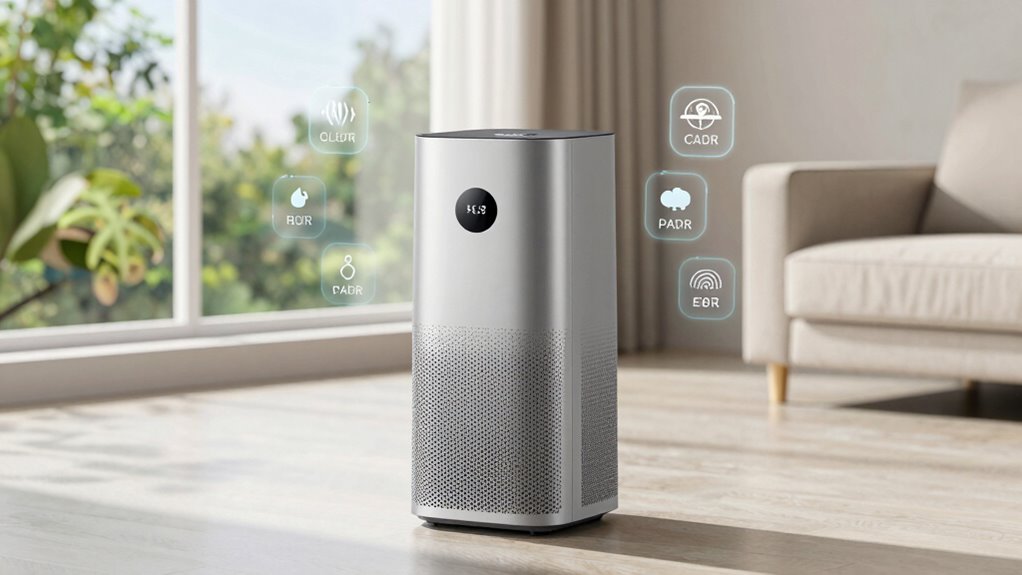
To choose the right air purifier size quickly, focus on understanding CADR (Clean Air Delivery Rate), which shows how effectively the unit cleans pollutants like dust and smoke. Calculate your room’s volume and select a model with a CADR that can cycle the air 4 to 6 times per hour for your space. Don’t overlook noise and filter maintenance. Keep these tips in mind, and you’ll find the best fit for your needs—more details await if you continue exploring.
Key Takeaways
- Calculate your room’s volume and aim for a CADR that filters the air 4-6 times per hour for optimal efficiency.
- Higher CADR ratings remove pollutants faster but may produce more noise; balance performance with comfort.
- Match the CADR to your room size: small spaces need lower CADR, larger spaces require higher values.
- Consider pollution levels and air quality sensors to determine if you need a higher CADR for more polluted environments.
- Regular filter maintenance ensures consistent CADR performance and effective air purification over time.
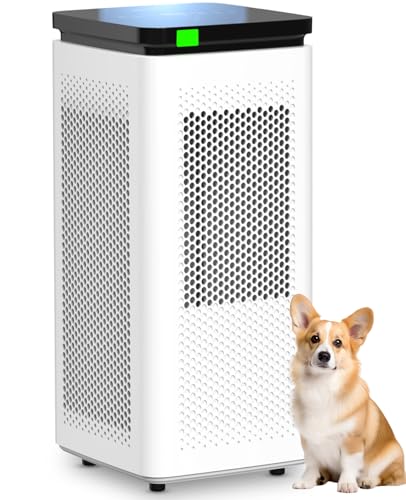
Air Purifiers for Home Large Rooms up to 3500 Ft², H13 True HEPA 0.1 Micron 99.97% Filtration with Carbon Filter, 235 CFM CADR, Removes Allergens, Pet Odor, Smoke, VOCs, 30dB Sleep Mode, PM2.5 Display
H13 True HEPA + Carbon Filter – Removes Allergens, Odors & Smoke: Equipped with H13 True HEPA (0.1μm,…
As an affiliate, we earn on qualifying purchases.
As an affiliate, we earn on qualifying purchases.
What Is CADR and Why Is It Key to Choosing the Right Air Purifier?
Have you ever wondered how to determine if an air purifier will effectively clean your space? The answer lies in understanding CADR, or Clean Air Delivery Rate. CADR measures how well an air purifier improves air quality by indicating how quickly it can remove pollutants like dust, smoke, and pollen. When choosing a purifier, consider its fan speed, as higher speeds generally increase CADR, but might also generate more noise. A device with a suitable CADR guarantees that the air purifier can handle your room size efficiently, filtering the air quickly enough to maintain good air quality. Additionally, air purifier technology plays a significant role in enhancing filtration efficiency and overall performance. So, focusing on CADR helps you pick a model that balances performance and noise, ensuring cleaner air without unnecessary disruptions.

LEVOIT Air Purifiers for Bedroom Home Dorm, AHAM Verified, 3-in-1 Filter Cleaner With Aroma Pad, Filters Smoke, Allergens, Pet Dander, Odor, Dust, Office, Desktop, Core Mini-P, White
𝗥𝗘𝗠𝗢𝗩𝗘 𝗣𝗢𝗟𝗟𝗨𝗧𝗔𝗡𝗧𝗦 𝗘𝗩𝗘𝗥𝗬𝗪𝗛𝗘𝗥𝗘: Our Pre-Filter and Main Filter capture allergens as lint, hair, pet dander, pet hair, fine…
As an affiliate, we earn on qualifying purchases.
As an affiliate, we earn on qualifying purchases.
How to Calculate the Ideal CADR for Your Room Size and Air Quality Needs
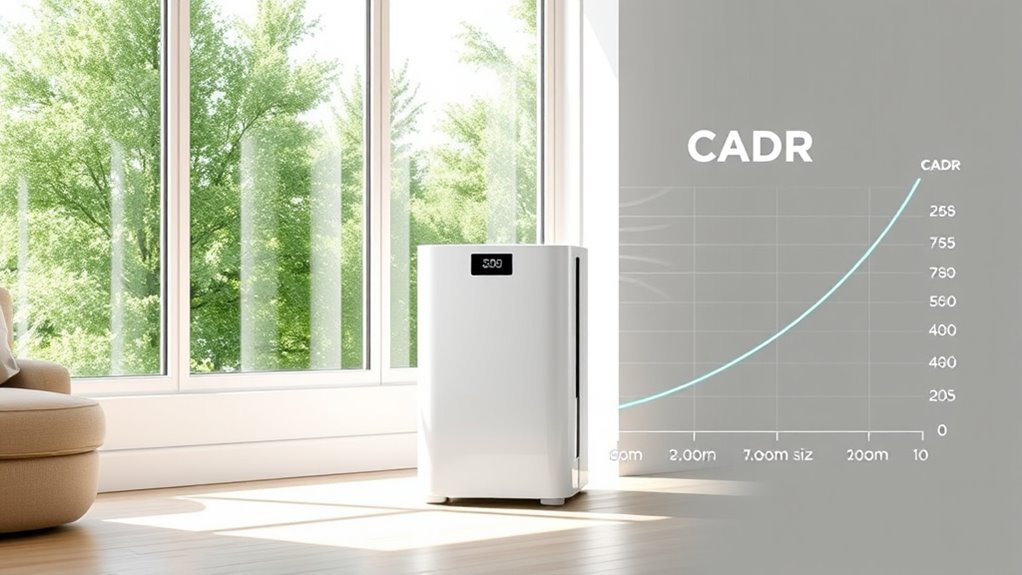
To determine the ideal CADR for your space, start by calculating the room’s volume in cubic feet or meters, which involves multiplying the length, width, and height. Next, consider your air quality needs, especially if you have indoor plants or sensitivities. For better accuracy, use air quality sensors to assess pollutant levels, guiding you toward a higher CADR if needed. A general rule is to aim for a CADR that can filter the room’s air at least 4 to 6 times per hour. For example:
Calculate your room’s volume and select a CADR that filters the air 4–6 times per hour for optimal air quality.
- Smaller rooms with minimal pollutants may need a lower CADR.
- Larger or heavily polluted spaces benefit from a higher CADR.
- Indoor plants can improve air quality but may require a more powerful purifier if pollutants are high.
- Understanding air exchange rates can help you select the most effective purifier for your environment.
- Additionally, considering air circulation can enhance the overall efficiency of your air purification setup.
- Ensuring proper ventilation can further optimize air quality and purifier performance.
- Factoring in airflow patterns can help prevent stagnant zones and improve overall purification efficiency.
- Monitoring microplastic particles in indoor dust can provide insights into additional filtration needs for cleaner air.
This approach guarantees your purifier effectively cleans your space.

Amazon Smart Air Quality Monitor – Know your air, Works with Alexa
Know your air – Amazon Smart Air Quality Monitor makes it easy to understand what’s in your indoor…
As an affiliate, we earn on qualifying purchases.
As an affiliate, we earn on qualifying purchases.
How CADR Ratings Help You Compare Air Purifiers Effectively
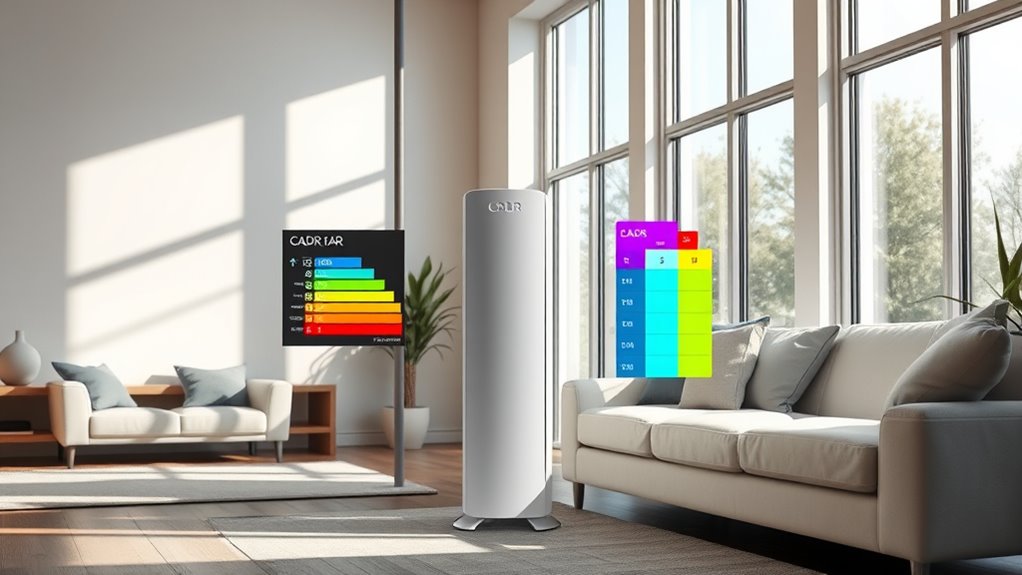
Understanding CADR ratings makes comparing air purifiers straightforward. They show how well a unit cleans the air in a specific time, making it easier to choose based on your needs. For example, higher CADR means faster removal of dust, pollen, and smoke. When comparing models, consider HEPA filters for better allergen capture and noise levels for quiet operation. Use the table below to visualize key differences:
| Air Purifier Model | CADR (CFM) | Noise Level (dB) |
|---|---|---|
| Model A | 150 | 50 |
| Model B | 200 | 55 |
| Model C | 180 | 45 |
This helps you quickly identify which purifier suits your space, preferences, and air quality needs. Additionally, understanding CADR ratings can help you select a unit that balances performance and noise levels effectively. Knowing how CADR values are determined can further aid in making an informed choice. For instance, air quality standards set benchmarks that guide manufacturers in testing and rating their units, ensuring reliability. Moreover, room size considerations are crucial when choosing a purifier with the appropriate CADR for your space.

Purivortex Air Purifiers for Bedroom, Quiet Air Purifier with HEPA Filter for Pollen, Smoke, Dust, Pet Dander, Odor, Hair, Ozone Free, Covers Up to 880 Sq Ft, PX500 Black
Cleaner Air In Minutes: Purivortex is proven to filter common pollutants from your home’s air. This air purifier…
As an affiliate, we earn on qualifying purchases.
As an affiliate, we earn on qualifying purchases.
How to Pick the Best Air Purifier Size for Your Space
Choosing the right air purifier size guarantees it effectively cleans your space without wasting energy or creating unnecessary noise. To do this, consider your room dimensions and the air quality you desire. Measure your room’s square footage and ceiling height to determine its volume. Then, match this with an air purifier’s Clean Air Delivery Rate (CADR) to ensure it can handle your space. Understanding air exchange rates helps ensure you select a device that maintains optimal indoor air quality efficiently. Properly matching the CADR to your room size can prevent air changes from being too infrequent or excessive, which optimizes performance. Additionally, considering the air quality goals allows you to choose a device that aligns with your specific needs. Recognizing the importance of filter types can also enhance your selection process, ensuring the purifier meets your specific air purification needs. Knowing your room’s volume helps you determine the appropriate CADR for effective air cleaning. Imagine a small bedroom, a large living room, or a home office:
Choosing the right air purifier size ensures optimal cleaning without wasting energy or noise.
- Compact purifier for tight spaces
- Medium-sized unit for average rooms
- Larger unit for open, high-ceilinged areas
Focusing on your room’s size and the targeted air quality helps you choose a device that efficiently improves air quality without overworking or underperforming.
Common Mistakes to Avoid When Using CADR to Choose Your Air Purifier
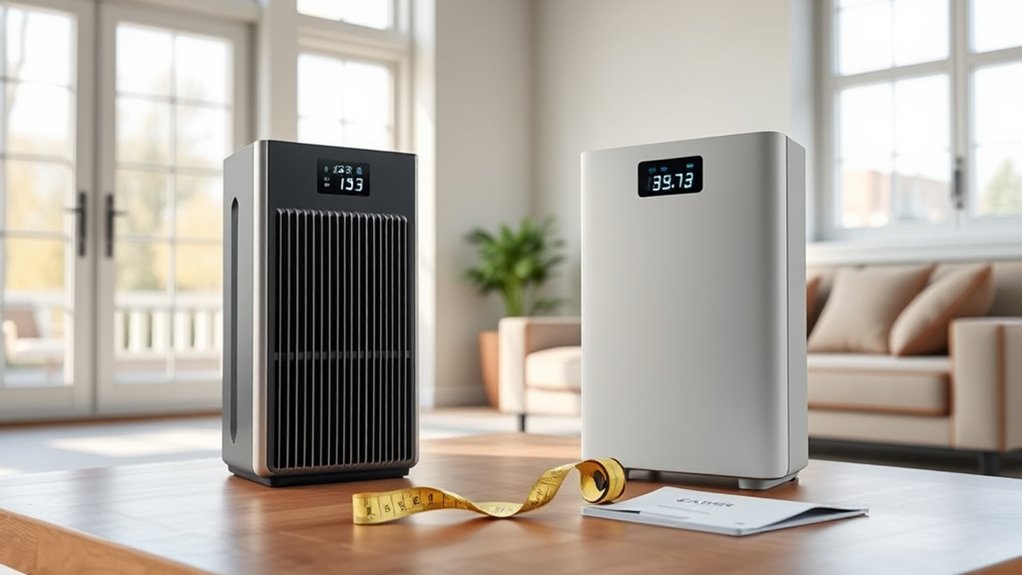
While relying solely on a high CADR rating might seem like the best way to guarantee clean air, it’s a common mistake to overlook other important factors. One mistake is choosing an air purifier with a CADR that’s too large for your space, which can cause excess noise levels and unnecessary dust accumulation due to overworking the unit. Conversely, selecting a purifier with a too-low CADR may leave airborne pollutants lingering. Also, don’t ignore maintenance; dust accumulation on filters reduces efficiency and can increase noise. Regularly monitoring filter performance can help you track filter lifespan and maintenance schedules to ensure optimal performance. Additionally, filter replacement frequency is crucial for maintaining air quality and device efficiency, so staying aware of when to replace filters helps prevent performance drops. Proper data management can help you track filter lifespan and maintenance schedules to ensure optimal performance. To optimize your air purifier’s effectiveness, understanding CADR ratings can guide you in selecting the right size for your room. Avoid the trap of focusing only on numbers—consider your room size, comfort, and noise preferences for ideal air quality. Being aware of the cultural significance of Indonesian masks can also inspire you to choose decor that enhances your space’s aesthetic and cultural harmony.
Frequently Asked Questions
How Often Should I Replace the Air Purifier Filter Based on CADR?
Think of your filter as a sponge soaking up pollutants—eventually, it gets saturated and needs changing. Typically, you should replace your air purifier filter every 6 to 12 months, depending on CADR size and usage. Higher CADR models work harder, so their filter lifespan shortens, meaning more frequent replacements. Keep an eye on your filter’s condition and follow the manufacturer’s recommended replacement frequency for fresh, clean air.
Can a Higher CADR Always Mean Better Air Quality?
A higher CADR doesn’t always mean better air quality, but it does indicate quicker removal of particles. Keep in mind, proper air purifier maintenance and adhering to air quality standards are essential for maximum performance. Select a unit with the right CADR for your room size, and regularly change filters as recommended. This way, you ensure your air stays clean and healthy without overestimating the benefits of a higher CADR.
Does Room Shape Affect the Effectiveness of the CADR Rating?
Think of your room as a river, and the air purifier as a boat. The shape of the river, or room, influences how well the boat, or airflow, moves. Curved or irregular room shapes can create turbulence, making the CADR less effective. So, yes, room shape impacts air flow, and ultimately, the purifier’s ability to clean the air efficiently. Proper placement and understanding your space help optimize performance.
How Does CADR Relate to Noise Levels in Air Purifiers?
Higher CADR generally means faster air cleaning, but it can also lead to increased noise levels because of higher fan speeds. If you’re sensitive to noise, you might notice that purifiers with a high CADR produce louder sounds at maximum settings. To balance air quality and noise, consider choosing a model with adjustable fan speeds, so you can set a quieter level when needed without sacrificing too much air purification efficiency.
Are There Specific CADR Values Recommended for Allergy Sufferers?
Think of your air purifier as a guardian with a shield. For allergy sufferers, look for a CADR of at least 150 for dust and pollen, ensuring HEPA filtration captures tiny particles. If you deal with VOCs, aim for a higher CADR, around 200 or more, to effectively remove airborne chemicals. This balance keeps your air clean, fighting allergens and VOCs with swift, powerful action.
Conclusion
Now that you know how to choose the right CADR for your space, you’re one step closer to cleaner air. But remember, selecting the perfect purifier isn’t just about numbers—there’s more to consider. Are you ready to reveal the secret to truly fresh air at home? Keep exploring, and you’ll discover how the right size can transform your environment in ways you never imagined. The best air purifier might be closer than you think.