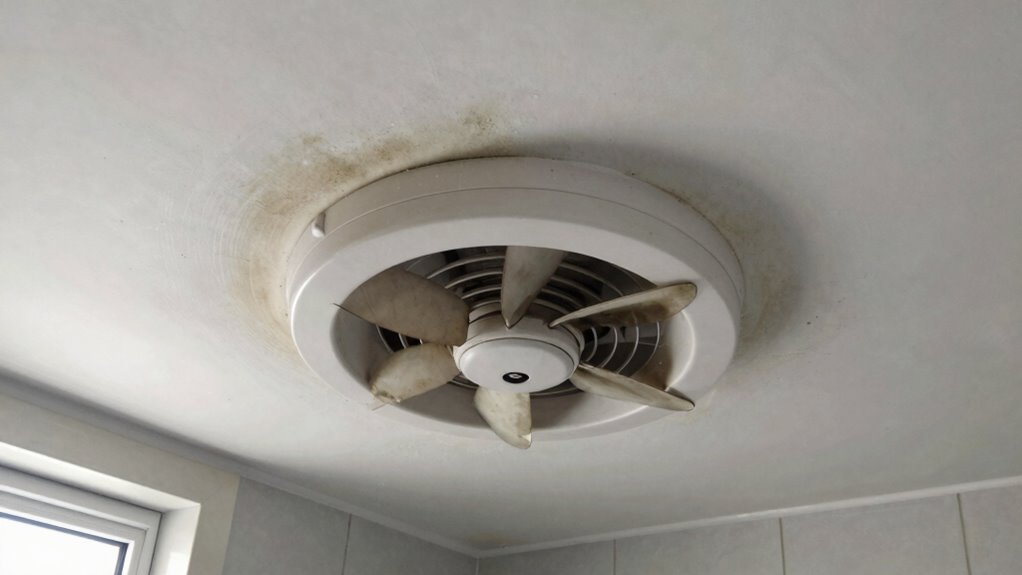

One common mistake you make with bathroom fans is improperly venting them outside, which allows moist air to escape into attics or crawl spaces, causing humidity buildup and potential mold growth. Many forget to regularly check and clear external vent caps to prevent obstructions. Poor ductwork design, such as sharp bends or long runs, reduces airflow efficiency. By avoiding these mistakes, you can improve your fan’s performance and prevent secondary issues. Keep going to discover more ways to optimize your bathroom ventilation.

Get the little things that make your day delivered free with Prime
- Fast, free delivery on millions of items
- Prime Video, Amazon Music and more included
- Member-only deals all year
Key Takeaways
- Venting fans into attics or crawl spaces instead of outside causes humidity buildup and mold growth.
- Improper duct routing with excessive bends reduces airflow and ventilation efficiency.
- Neglecting external vent cap maintenance allows debris and obstructions to block airflow.
- Installing fans without considering proper system design can lead to air leaks and poor humidity control.
- Using incorrect installation techniques can damage the fan and diminish its effectiveness over time.
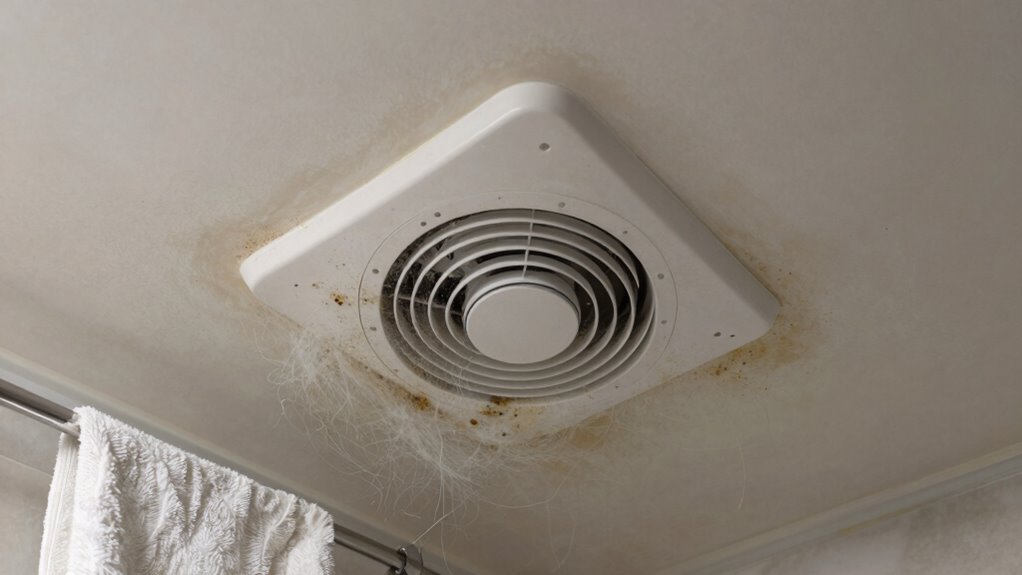
A bathroom fan might seem like a simple appliance, but many homeowners make common mistakes that can reduce its effectiveness and even cause damage. One of the biggest errors is installing the fan without considering ventilation efficiency. If your fan isn’t properly vented to the outside, moist air can linger in your bathroom, leading to mold growth, peeling paint, and lingering odors. Instead of venting directly outside, some people vent into attics or crawl spaces, which defeats the purpose of the fan altogether. To maximize ventilation efficiency, you need to ensure the ductwork is as straight and short as possible, with minimal bends, and that the vent cap outside is unobstructed. Proper installation is key to guaranteeing your bathroom stays dry and free from excess humidity. Additionally, ensuring the ventilation system is correctly designed can prevent air leaks and improve overall air quality. Using the correct ductwork materials can also help maintain optimal airflow and durability over time. Selecting the appropriate installation techniques can further enhance the longevity and effectiveness of your bathroom fan, especially when considering airflow optimization strategies.
bathroom exhaust fan with outside venting
As an affiliate, we earn on qualifying purchases.
As an affiliate, we earn on qualifying purchases.
Frequently Asked Questions
How Often Should I Replace My Bathroom Fan?
You should replace your bathroom fan every 8 to 15 years, depending on its ventilation efficiency and noise levels. If it becomes louder, less effective at removing moisture, or starts making unusual noises, it’s a sign it’s time for a new one. Regularly cleaning the fan and checking its performance helps maintain proper ventilation, ensuring your bathroom stays mold-free and comfortable. Don’t wait too long to upgrade for ideal air quality.
Are Expensive Fans Always Better Than Cheaper Ones?
Are expensive bathroom fans always better? Not necessarily. While high-end models often boast luxury features and a strong brand reputation, they don’t automatically perform better than more affordable options. You should consider your specific needs, size of your bathroom, and ventilation requirements. Sometimes, a well-chosen budget fan can deliver excellent performance, but if durability and advanced features matter most, investing in a pricier model might be worth it.
Can a Bathroom Fan Help Reduce Mold Growth?
Yes, a bathroom fan helps reduce mold growth by improving ventilation efficiency and moisture control. It removes excess humidity from your bathroom after showers or baths, preventing mold spores from thriving. To maximize effectiveness, guarantee your fan runs long enough and is properly vented outside. Regular maintenance, like cleaning the fan and filter, also keeps moisture levels low, protecting your home from mold damage and improving air quality.
What Size Bathroom Fan Do I Need?
Think of your bathroom fan as the heart of fresh air flow—size matters. For ideal ventilation efficiency, choose a fan rated at 50 CFM per square foot of your bathroom. If noise levels concern you, look for models with quieter operation, ensuring comfort during use. An appropriately sized fan quietly and effectively whisks away moisture, preventing mold and maintaining a healthy space, like a steady heartbeat of cleanliness.
Is It Necessary to Have a Timer for the Fan?
Yes, having a timer for your bathroom fan is necessary. It allows you to set the timer settings, ensuring the fan runs long enough to remove moisture and odors effectively. Without a timer, you might forget to turn it off, leading to unnecessary fan noise and energy waste. A timer also helps maintain proper ventilation, preventing mold and mildew buildup, and keeps noise levels manageable by automatically shutting off the fan after a set period.
external vent cap for bathroom fan
As an affiliate, we earn on qualifying purchases.
As an affiliate, we earn on qualifying purchases.
Conclusion
Don’t let bathroom fan mistakes be the silent thief of your space’s comfort. By avoiding common pitfalls, you’re not just maintaining your fan—you’re safeguarding your home’s air quality and longevity. Remember, a well-maintained fan is like a trusted friend, always there when you need it. So, take action today; your bathroom’s freshness depends on it. After all, isn’t it worth the effort to keep your sanctuary clean and clear?
ducting for bathroom ventilation
As an affiliate, we earn on qualifying purchases.
As an affiliate, we earn on qualifying purchases.
As an affiliate, we earn on qualifying purchases.
Halloween Picks
halloween
As an affiliate, we earn on qualifying purchases.