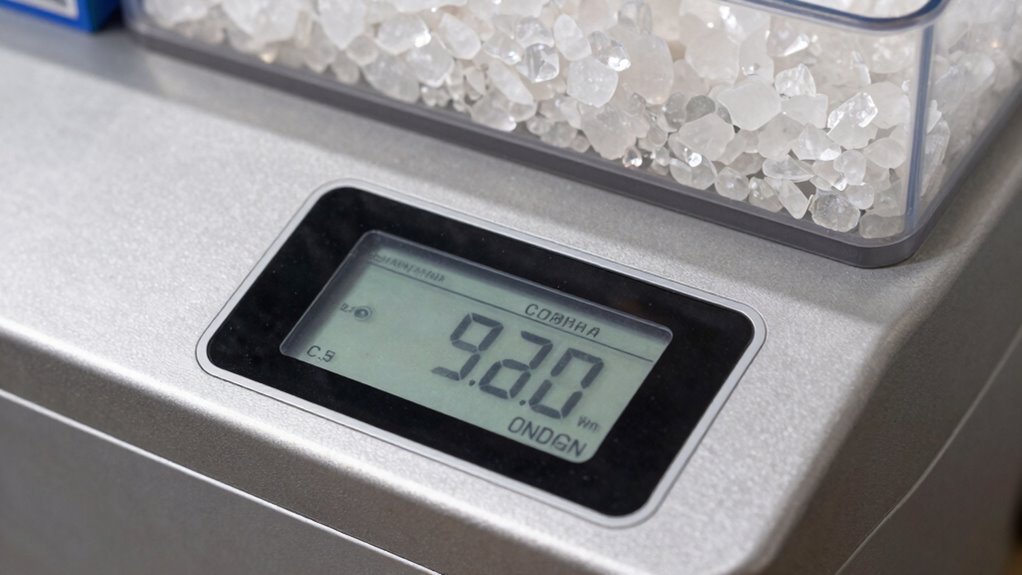

Your water softener’s grain capacity shows how much mineral content it can remove before needing to regenerate. Higher capacity units handle more water and minerals, reducing the frequency of regeneration and maintenance. It’s crucial to match the capacity with your household’s water usage and hardness level to keep your system efficient and durable. Properly sized softeners prevent mineral buildup, protect appliances, and save you money. To discover more about choosing the right grain capacity, keep exploring.

Get the little things that make your day delivered free with Prime
- Fast, free delivery on millions of items
- Prime Video, Amazon Music and more included
- Member-only deals all year
Key Takeaways
- Grain capacity indicates how much mineral removal a water softener can handle before needing regeneration.
- Higher capacity softeners are suitable for households with high water usage or hard water levels.
- Proper sizing prevents mineral buildup, system overload, and reduces maintenance frequency.
- Water hardness and household water consumption determine the appropriate grain capacity.
- Regeneration resets resin beads, maintaining softener efficiency and prolonging system lifespan.
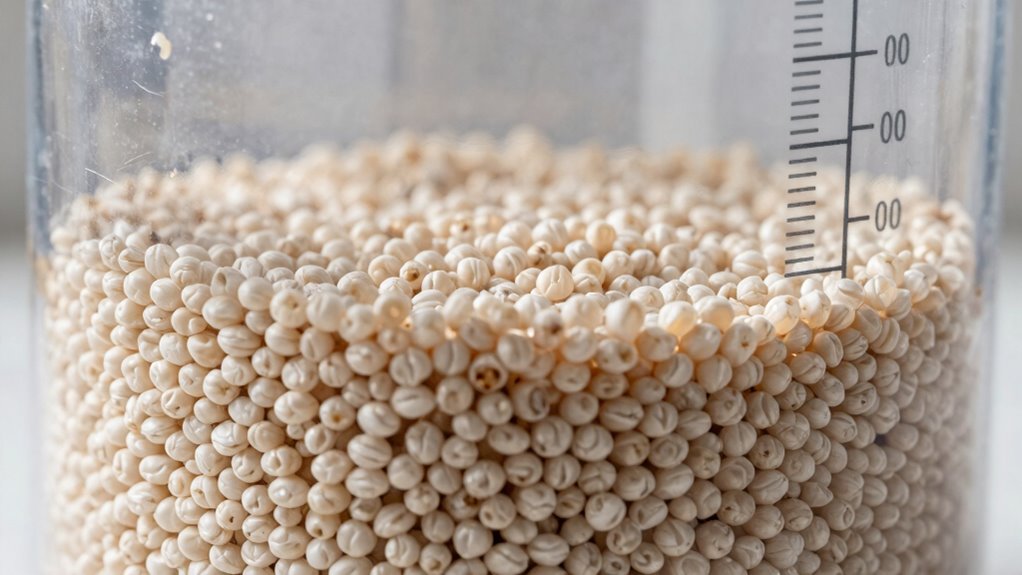
Understanding water softener grain capacity is essential because it determines how effectively your system can treat hard water. When your water contains high levels of minerals like calcium and magnesium, these minerals tend to cause mineral buildup in pipes, fixtures, and appliances. A water softener with the right grain capacity guarantees you won’t have to deal with frequent salt regeneration cycles or mineral deposits, making your system more efficient and cost-effective.
Grain capacity refers to the amount of hardness minerals a water softener can remove before needing to regenerate. It’s measured in grains, and knowing this number helps you match your water usage to the softener’s ability. For example, a softener with a 30,000-grain capacity can handle a larger volume of hard water than one rated at 20,000 grains. If your household uses a lot of water daily, selecting a unit with a higher grain capacity means fewer regeneration cycles and less maintenance. Conversely, smaller capacities are suitable for smaller households or areas with less mineral content.
Salt regeneration is an important process that resets your softener’s ability to remove minerals. During regeneration, salt, typically sodium chloride, is used to rinse away mineral buildup inside the resin tank. The resin beads, which attract and hold onto calcium and magnesium ions, become saturated over time. Without proper salt regeneration, the resin can’t effectively soften water, leading to increased mineral buildup and reduced system efficiency. If your softener’s grain capacity isn’t sufficient for your water hardness level, you might notice mineral buildup in your pipes or appliances, which can cause damage over time. That’s why choosing a softener with an appropriate grain capacity is vital—it guarantees your system regenerates at the right intervals, maintaining its ability to treat water and prevent mineral buildup. Additionally, understanding the water hardness level in your area helps determine the ideal grain capacity for your softener, as local mineral content directly impacts your system’s performance. Regular testing of your water can help you stay aware of your specific hardness levels and adjust your system accordingly. Properly sizing your softener based on water usage can also extend the lifespan of the system and improve overall water quality. Knowing your water consumption patterns ensures that you select a softener with suitable capacity for your household’s needs.
Products Worth Considering

Shark Navigator Robot Vacuum with Self-Empty Base, Dark Grey (RV2120AE)

Philips Hue Bridge Pro Smart Lighting Hub

Samsung 85 M80H Series Mini LED 4K Smart TV (2026)
As an affiliate, we earn on qualifying purchases.
Frequently Asked Questions
How Often Should I Regenerate My Water Softener?
You should regenerate your water softener when the salt levels are low or after about 7-14 days, depending on your water quality and usage. Regular regeneration helps maintain softener efficiency, ensuring better water quality and extending the softener’s lifespan. Keep an eye on the salt level and your water hardness to prevent over- or under-regenerating, which can impact softener performance and durability.
Can I Upgrade My Water Softener’s Grain Capacity Later?
Yes, you can upgrade your water softener’s grain capacity later. When considering a system upgrade, look for models with higher grain capacity to better handle your water usage. Upgrading guarantees your new system can effectively remove minerals and reduce regeneration frequency. Keep in mind, you’ll need to match the new softener’s grain capacity with your household’s water hardness and size for maximum performance.
Does Water Hardness Fluctuate Seasonally?
Yes, water hardness can fluctuate seasonally due to mineral variations and temperature impacts. During warmer months, you might notice softer water because higher temperatures can reduce mineral solubility. Conversely, colder seasons often bring harder water as minerals become more soluble. These seasonal mineral variations and temperature impact fluctuations mean you may need to adjust your water softener settings or perform regular maintenance to guarantee peak performance year-round.
What’s the Best Way to Test My Water Hardness?
To test your water hardness, start with a water testing kit available at hardware stores or online. Follow the instructions carefully to measure hardness levels accurately. These kits typically involve collecting a water sample and adding a reagent to observe color changes. Regular water testing helps you monitor your water’s hardness, ensuring your water softener functions efficiently and prevents issues caused by fluctuating hardness levels.
How Does Temperature Affect Softener Performance?
Think of your water softener as a delicate dance partner—temperature impact can throw it off. When water’s too hot or cold, softener efficiency drops, like trying to dance in heavy boots. Cold water slows ion exchange, reducing effectiveness, while hot water can damage resin beads. To keep the dance smooth, maintain a steady temperature, ideally around 50-77°F, ensuring your softener performs at its best and keeps your water perfectly softened.
Conclusion
So, next time you’re choosing a water softener, don’t just pick the biggest or the cheapest. Remember, the grain capacity isn’t just a number—it’s your ticket to endless soft water or a soggy, salty mess. Irony strikes: you might think bigger is better, but sometimes, a smaller capacity fit perfectly is what saves your pipes and wallet. After all, who knew soft water could be such a surprisingly tricky game?